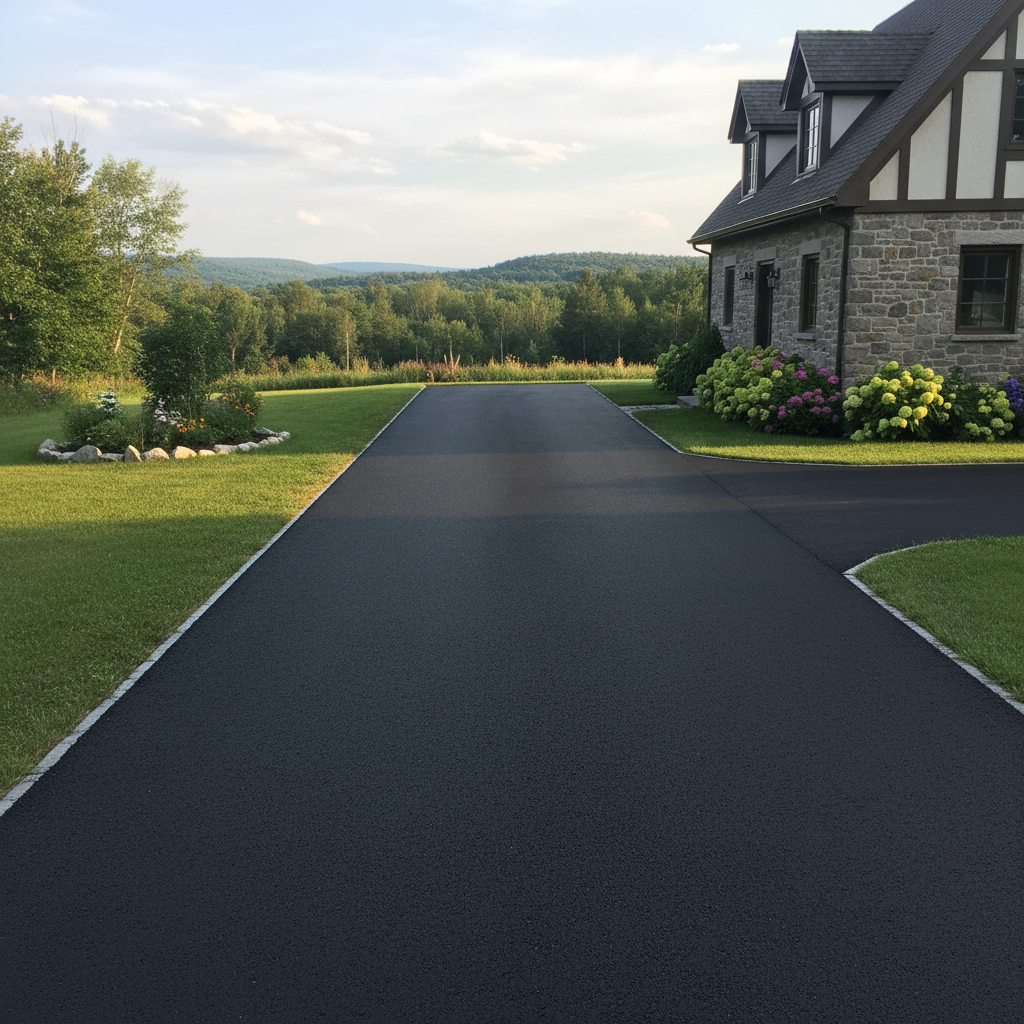
Driveway paving options and costs in Pleasant View
Pleasant View, Ontario is a great place to update a driveway, but the real pricing conversation starts with Toronto’s freeze–thaw reality. With a population of 15,818 (Statistics Canada, 2021 Census), the area reflects a steady mix of long-term homeowners and ongoing neighbourhood upgrades, and private-driveway work tends to be a constant need. In practice, most driveway projects here are for attached or detached residential properties where access, grading, and drainage decisions directly affect the final cost.
In the Toronto economic region, frost depth and cycling are primary cost drivers. Ground freezing to roughly 3–4 feet means the paving system needs a deeper, well-compacted granular base plus reliable drainage so water can’t sit under the pavement. Add late fall/winter/early spring freeze–thaw cycles, and even small base or edge mistakes can lead to heaving or cracking sooner than expected. On top of that, the paving season is effectively late spring through early fall, because hot-mix asphalt placement depends on workable soil and air temperatures. When contractors are booked tightly for prime dates, pricing can move quickly.
One area where driveway paving is especially in demand in Pleasant View is around the older residential pockets near local arterial roads, where residents commonly replace failing asphalt or rebuild surfaces after years of salt exposure and ploughing. To help you compare options side-by-side, use the table below as a realistic cost range starting point for typical residential driveway projects in the Toronto market.
| Material |
Lifespan |
Maintenance |
Best For |
Price per sq ft |
Price Range |
| Asphalt (new installation, proper base) |
15–25 years |
Seal every 3–5 years |
Best value when the base and drainage are engineered for frost |
$7.50–$14.00 |
$3,500–$8,000 |
| Asphalt (overlay on existing gravel base) |
10–18 years |
Seal every 3–5 years; monitor edges |
When removal is limited and the base is sound |
$6.50–$12.50 |
$3,250–$7,200 |
| Interlocking concrete pavers |
25–40 years |
Weed control; re-sand joints as needed |
Curb appeal and easier localized repairs |
$14.00–$25.00 |
$9,000–$20,000 |
| Poured concrete (broom finish) |
20–30 years |
Limited; consider sealant for salt protection |
Low maintenance and a clean, uniform look |
$10.00–$18.00 |
$6,000–$15,000 |
| Exposed aggregate concrete |
20–30 years |
Seal periodically; keep drains clear |
Improved traction and premium appearance |
$12.00–$21.00 |
$7,000–$17,000 |
| Gravel / crushed stone (budget option) |
3–10 years |
Top up; re-grade annually; weed management |
Temporary solution or low-budget approach |
$3.00–$7.00 |
$2,000–$5,000 |
Prices are estimates only and vary by project scope, site access and material selection.
What affects the price of paving in Pleasant View
In Toronto and the wider Ontario market, quotes for the same driveway can swing by 30–50% because the “same driveway” often isn’t the same excavation, base build-up, or drainage plan. Two contractors might quote identical finished square footage, but one may include a full tear-out to sound subgrade and a frost-rated base, while the other assumes you can reuse existing material that’s been holding moisture. Add tight paving schedules in the short late spring-to-early fall window, and labour demand rises; on busy prime dates, that scheduling pressure feeds directly into your total.
For Pleasant View projects, frost depth and freeze–thaw cycles are decisive cost factors in the Toronto economic region. With ground freezing to roughly 3–4 feet, deeper compacted granular base is typically required to prevent heaving and cracking when water expands as it freezes. In colder inland areas like ours, a common approach is building granular thickness in the range of about 6–12 inches for the driveway base system, depending on existing soil condition and drainage. Asphalt mix design also matters here: freeze–thaw-rated asphalt can cost more than a generic mix, but it’s designed to better withstand Ontario’s repeated winter and shoulder-season cycles.
Concrete pricing can change depending on drainage and crack-control detailing. For example, if your site needs additional grading to shed water away from the slab, labour rises and concrete can end up costing closer to the higher end of the $6,000–$15,000 driveway band. Conversely, if your drainage is already well-established and the subgrade is stable, poured concrete can land nearer the lower end. Meanwhile, asphalt sealing requirements influence lifetime cost: if you seal consistently, you protect the binder from water intrusion; if not, you often see early raveling and faster deterioration.
| Price Factor |
Why It Matters |
Cost Impact |
| Driveway area in sq ft |
The more square footage, the more paving, base material, and labour |
Highest impact; often accounts for most of the variation |
| Base depth required |
Frost line drives granular thickness to prevent heaving and cracking |
Can move cost meaningfully, especially if subgrade is wet/soft |
| Grading and drainage work |
Correct slope and drain paths stop water pooling under asphalt or slabs |
Frequently the difference between “mid” and “high” quote ranges |
| Tear-out of existing surface |
Breaking up old concrete or milling asphalt plus hauling increases labour |
Usually adds substantial cost if there’s thick, deteriorated material |
| Edge restraints and curbing |
Pavers need restraint so interlock doesn’t spread; asphalt benefits from solid edging |
Can add line-item cost, but prevents premature edge failure |
| Sealing requirement |
Asphalt binder protection depends on sealing after installation (often within 6–12 months) |
Small added expense now, but reduces long-term water damage |
| Site access |
Narrow lots or long equipment paths slow paving and increase handling time |
Moderate increase through additional labour and setup time |
| Asphalt mix specifications |
Freeze–thaw-rated mix costs more but improves performance in Ontario cycles |
Upgrades may push asphalt toward the upper end of the band |
Permits & regulations in Ontario
In Ontario, paving a private driveway within your own property typically does not require a building permit. That said, some driveway-related work does trigger municipal approval, especially when you touch the municipal right-of-way. Examples that commonly require permits/approvals include: creating or changing a curb cut/driveway apron in the boulevard, altering storm drainage, modifying catch basins or swales, or making any change that redirects runoff into municipal infrastructure. If your driveway ties into municipal grading or affects how water drains during heavy rain, confirm requirements with your local municipality before work starts.
Also note that some municipalities have lot-grading rules (often handled through municipal by-laws or grading requirements) that can restrict how close a hard surface can be built to property lines or how stormwater must be managed on-site. Even if no building permit is required, the grading and drainage plan still matters for compliance and long-term performance.
Step-by-step, here’s how a homeowner in Pleasant View verifies contractor readiness in Ontario: (1) request a written copy of the contractor’s Ontario business/contractor information and verify credentials; (2) ask for a certificate of insurance showing general liability with an appropriate limit; (3) confirm WSIB coverage for workers (or the appropriate clearance letter/status); and (4) ensure utilities are located before any excavation by calling Ontario One Call (locates should be arranged before base removal). Finally, confirm lot-grading requirements with the municipality so your driveway slope and drainage meet local expectations.
Asphalt vs pavers vs concrete for Pleasant View driveways
For Pleasant View’s freeze–thaw climate, asphalt, interlocking pavers, and concrete can all perform well—if the base and drainage are engineered correctly. The difference is mostly upfront cost, how the surface handles movement, and how easily you can repair localized damage. Toronto winters and the routine of salt, plowing, and wet shoulder seasons are tough on any pavement, but good granular base and proper slopes are what keep water from sitting under the finished surface and forcing expansion in freezing conditions.
Asphalt is usually the lowest upfront option (often aligning with the $3,500–$8,000 driveway paving band) and it handles small movements better than concrete. The tradeoff: it needs sealing every 3–5 years to protect the binder from water intrusion, and edges must be built with reliable restraint. Interlocking concrete pavers have the highest typical upfront cost (often closer to the $9,000–$20,000 band), but they shine in Pleasant View because they’re repairable: if a section settles or a utility issue arises later, individual units can be lifted and reset without tearing up the entire driveway. Poured concrete sits in the middle (often $6,000–$15,000), and with air-entrained concrete plus proper control joints, it can last long; however, if drainage is off or joints aren’t detailed, freeze–thaw can contribute to cracking and surface wear—especially under de-icing salt.
Here’s a realistic decision example: if your driveway needs full tear-out plus a frost-engineered base, an asphalt installation may come in near the lower-to-mid of the asphalt band, while pavers may cost thousands more. That difference is justified when you strongly value curb appeal and want the option to repair a smaller portion later rather than resurfacing the whole drive. In lots where winter service (plowing access) is tight, pavers can also tolerate minor subbase movement better because the system is segmented.
| Material |
Frost Resistance |
Curb Appeal |
Repair Method |
Lifespan |
Price Band |
| Asphalt (sealed regularly) |
Good with frost-rated base and drainage |
Medium (clean, modern finish) |
Mill/patch small areas or overlay later |
15–25 years |
$3,500–$8,000 |
| Interlocking concrete pavers |
Excellent when edges are restrained and base is compacted |
High (premium appearance and patterns) |
Lift and replace individual stones/sections |
25–40 years |
$9,000–$20,000 |
| Poured concrete (air-entrained) |
Good with proper mix, joints, and drainage |
Medium (varies by finish and formwork) |
Localized patching is possible but visible |
20–30 years |
$6,000–$15,000 |
| Exposed aggregate concrete |
Good with air-entrainment and correct curing |
High (texture and traction) |
Patches can be blended for smaller areas |
20–30 years |
$7,000–$17,000 |
| Permeable pavers (drainage grid) |
Excellent where subbase/drainage design supports infiltration |
High (modern drainage look) |
Replace grids/units if damaged |
25–35 years |
$10,000–$22,000 |
| Chip seal / tar-and-chip |
Moderate; sensitive to base quality and maintenance |
Low to medium |
Spot re-chip or resurfacing |
5–12 years |
$3,000–$6,500 |
How to choose a paving contractor in Pleasant View
When you’re hiring in Pleasant View, start by verifying Ontario-specific readiness. Ask for the contractor’s proof of Ontario business standing and verify coverage through their certificate of insurance (general liability should be current and name you properly as an additional insured if required). For worker protection, confirm WSIB coverage—typically through a clearance letter or active coverage proof—before they start excavation. If they can’t provide insurance/WSIB documentation promptly, keep looking; it’s often the fastest way to avoid expensive disputes or delayed work.
Next, get 2–3 itemised written quotes. You want a breakdown that shows labour, excavation, base material, compaction, line work/curb detailing, disposal, and the exact paving and finish items—rather than a single lump sum. Check what’s excluded: disposal, saw-cutting, removing topsoil, base testing, utility coordination, and whether sealing (for asphalt) is included after curing. Confirm whether permits/municipal approvals are handled or if you’re responsible, and whether the quote includes reinstating disturbed landscaping, grading adjustments, and final clean-up.
For warranty, distinguish workmanship from manufacturer product warranty. Ask for how long the workmanship warranty lasts, whether it covers settlement, and whether it’s transferable to future owners. For payment, never pay more than about 10–15% upfront; hold back the balance until the job is complete and you’ve reviewed the finished grading and compaction. Finally, lock in the start date and an estimated completion timeline in writing—seasonal demand in Toronto can shift schedules quickly in early spring.
- Verify WSIB clearance/status and ensure it’s current before excavation.
- Confirm general liability insurance via a certificate of insurance.
- Request Ontario business information and check that it matches the quote/invoice.
- Get an itemised scope: tear-out, haul-away, base materials, compaction, and paving.
- Ask for base depth assumptions based on your current soil condition and drainage.
- Confirm drainage/grading design (slope direction, ditches, culverts where needed).
- Make sure edge restraints/curbs are explicitly listed for pavers and asphalt borders.
- Ask whether sealing is included and when it’s scheduled (for asphalt, after curing—often 6–12 months).
- Clarify disposal: who hauls away concrete/asphalt and where it goes.
- Check permit responsibility if any work touches boulevard/right-of-way or drainage.
- Confirm warranty length and what defects are covered (not just “cosmetic”).
- Use a payment schedule with a holdback until final inspection and clean-up.
Concrete red flags I see with paving contractors in Pleasant View: (1) refusal to provide itemised pricing or a written scope; (2) no proof of insurance/WSIB before mobilizing; (3) promises of “cheap asphalt” without discussing base depth and frost protection; (4) pressure to pay most of the job upfront; and (5) vague timelines like “sometime in summer” without a written schedule.
Frequently asked questions — paving in Pleasant View
How much does it cost to pave a driveway in Pleasant View?
In Pleasant View, driveway paving costs depend mainly on square footage, how much excavation is needed, and whether drainage and a frost-rated granular base are included. For asphalt with a proper base build, most homeowners land around the Toronto-market band of $3,500–$8,000, assuming typical residential access and not a major reconstruction. If your site is soft or drains poorly, the quote can move up because contractors often need additional base depth and re-grading to prevent heaving in our freeze–thaw cycles. If you choose interlocking pavers, the typical range often shifts upward to $9,000–$20,000 because materials and edge restraint work are more labour-intensive. Always ask for an itemised breakdown so you can see exactly what’s driving the difference.
Asphalt vs interlocking pavers vs concrete — which is best in Pleasant View?
For Pleasant View’s Ontario winters, the “best” option is the one with the right base and drainage details for our freeze–thaw conditions. Asphalt is usually the best upfront value because it’s less expensive to install and handles small movement better, especially when sealed regularly; it commonly falls in the $3,500–$8,000 band. Interlocking concrete pavers tend to be the most durable long-term for appearance and repairs, often aligning with $9,000–$20,000, because individual units can be replaced if a localized area settles. Poured concrete can be a strong mid-range choice (often $6,000–$15,000) when it’s air-entrained and controlled with proper joints and drainage—otherwise freeze–thaw and salt can contribute to surface cracking.
How long does a paved driveway last in Pleasant View?
Typical lifespan depends on how well the base is compacted, whether water is managed, and whether you follow maintenance. Asphalt driveways often last about 15–25 years when the base is correct for frost and the asphalt is sealed on schedule (commonly every 3–5 years). Interlocking pavers can last 25–40 years because the system is segmented and repairs can be localized without replacing the entire surface. Poured concrete commonly lasts 20–30 years if it’s air-entrained, joints are properly planned, and drainage prevents standing water that freezes and expands. In Pleasant View, the freeze–thaw cycles are intense enough that weak drainage or inadequate base depth is what usually shortens lifespan, not just the choice of material.
When is the best time of year to pave in Pleasant View?
The most practical window for paving in Pleasant View is late spring through early fall. The reason is hot-mix asphalt placement needs appropriate air and soil temperatures—often above about 10°C—so crews avoid early spring cold nights and wet ground. Toronto-area schedules also tighten quickly during the warm months, which can raise prices for prime dates. Concrete generally has more flexibility than asphalt, but it still requires careful curing conditions, and cold snaps can affect results. If you’re planning a full tear-out and base rebuild, booking in early summer usually gives the best balance of workable conditions and availability. Your contractor should provide a written start date and completion estimate rather than a vague seasonal promise.
How deep should the base be for Pleasant View's frost?
In Pleasant View and the broader Toronto economic region, frost depth is a major design driver because ground freezing can reach roughly 3–4 feet. That depth is why a frost-rated granular base and reliable drainage are critical to prevent heaving and cracking. The exact base thickness depends on your current soil condition (wet/soft subgrade needs more work), how water drains away from the driveway, and whether the existing material can be reused. Practically, contractors often plan granular thickness in the range of about 6–12 inches in colder inland Ontario projects, with additional measures if drainage is weak. The key is not just “a number” but the full system: proper excavation, compaction, and positive slope so water cannot sit under the pavement during freeze–thaw cycles.
How often should I seal my asphalt driveway?
For asphalt in Pleasant View, plan to seal it after it fully cures—commonly within the first 6–12 months—then follow a maintenance cycle of every 3–5 years. Sealing helps protect the binder from water penetration and salt exposure from winter road maintenance and plowing. If you skip sealing for too long, you often see faster raveling, edge deterioration, and water getting into small voids; that accelerates freeze–thaw damage. Your contractor should recommend a sealing schedule based on your wear pattern and weather exposure, and your quote should state whether sealing is included or if it’s a separate line item. A properly maintained asphalt driveway typically stays in the $3,500–$8,000 value range over its service life because you delay the need for major resurfacing.