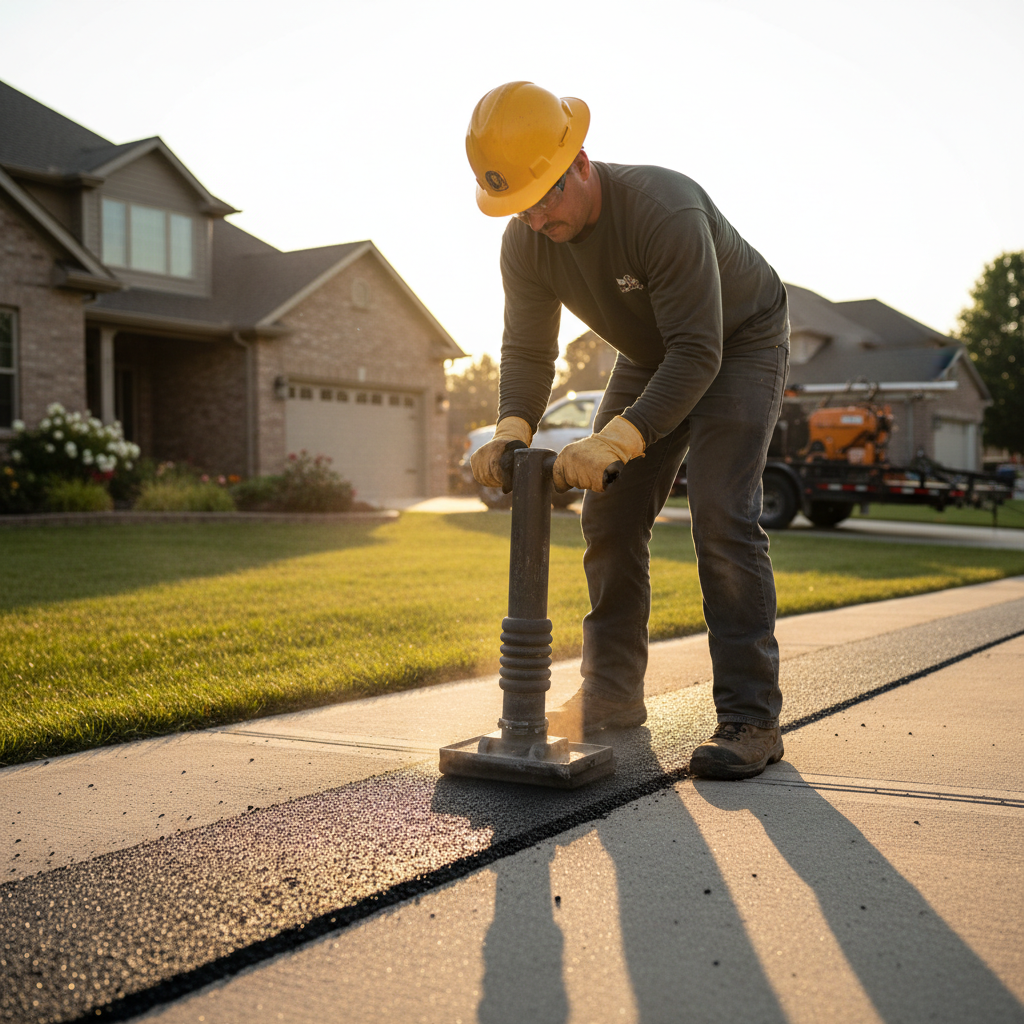
Driveway paving options and costs in Perth
Driveway paving in Perth, Ontario typically comes down to three questions: what you’re replacing, how thick and well-drained your base is, and how much winter maintenance you want to manage. Perth has a housing profile where single-detached homes make up about 50.6% of dwellings (Statistics Canada, 2021 Census), so most private driveways in town start from a similar place—driveways serving detached homes with grades, clay-prone pockets, or older subgrades built up over decades. Homeownership is also common, with about 55.8% of households owning (Statistics Canada, 2021 Census), which means homeowners often plan for multi-year life span and want a clear trade-off between upfront cost and long-term performance.
In the Kingston–Pembroke economic region, pricing is shaped heavily by freeze–thaw cycles and frost depth—often around 4 feet (≈1.2 m) in Southern and Eastern Ontario. That means contractors can’t “thin out” the granular base. To prevent heaving, cracking, and surface raveling, crews excavate deeper, compact more aggregate, and build drainage solutions (ditching, swales, and sometimes French drains). The practical result for Perth is that the paving window is shorter—hot-mix asphalt generally requires air temperatures above 10°C—so scheduling tightens and costs can rise when demand peaks.
In Perth, paving and interlock installs are especially in demand along residential pockets like downtown and the surrounding residential streets near the Fairgrounds, where access is often tighter and residents want a neat, durable surface that handles spring shoulder-season moisture.
Use the table below to compare common driveway material options and realistic local cost ranges in Perth; your final quote depends on square footage, base depth, and site access.
| Material |
Lifespan |
Maintenance |
Best For |
Price per sq ft |
Price Range |
| Asphalt (new installation, proper base) |
15–25 years |
Seal every 3–5 years |
Best balance of cost and performance |
$6.00–$11.00 |
$4,500–$9,000 |
| Asphalt (overlay on existing gravel base) |
12–20 years |
Seal every 3–5 years |
When you can’t fully rebuild base but need a smooth driving surface |
$5.50–$10.50 |
$4,200–$8,500 |
| Interlocking concrete pavers |
25–40 years |
Replace single units as needed; occasional joint re-sand |
Curb appeal and easier spot repairs |
$10.00–$18.00 |
$6,500–$14,000 |
| Poured concrete (broom finish) |
25–35 years |
Keep joints sealed; periodic sealing as needed |
Long straight runs with fewer visual joints |
$11.00–$20.00 |
$7,000–$15,000 |
| Exposed aggregate concrete |
25–35 years |
Reseal periodically; clean for salt/grit |
Slip resistance and premium look |
$12.50–$22.00 |
$8,000–$15,500 |
| Gravel / crushed stone (budget option) |
3–8 years (varies with grading) |
Re-grade and top up annually/seasonally |
Lower upfront cost and temporary solution |
$3.00–$6.50 |
$1,800–$5,000 |
Prices are estimates only and vary by project scope, site access and material selection.
What affects the price of paving in Perth
In Perth and across the Kingston–Pembroke economic region, even “the same” driveway can come in 30–50% apart because contractors price the risks of frost and water differently—especially when clay soils, poor drainage, or an undersized base is uncovered during excavation. In Ontario, the frost line depth combined with freeze–thaw cycles is a decisive cost factor: deeper frost typically requires a thicker compacted granular base. While coastal climates can get by with thinner aggregate layers, in much of Southern and Eastern Ontario you should expect the excavation to be driven by the need to resist heaving and cracking through roughly 4 feet (≈1.2 m) of frost influence. That’s why two quotes can differ sharply: one contractor may rebuild base and drainage to spec, while another tries to fit the job into a thinner cross-section.
The paving season also compresses timelines. Hot-mix asphalt is generally placed when air temperatures are above 10°C, and spring shoulder seasons are wet in Perth—so contractors schedule around weather windows. When crews are booked, labour costs and equipment availability tighten, which can push asphalt projects toward the upper end of the local band, such as $4,500–$9,000 for asphalt driveway paving. Concrete and interlock projects can also price up because grading, forms, and hauling/import of granular materials are labour-heavy and time-sensitive during peak periods.
Concrete examples: (1) older homes built before 1981—about 65.4% of dwellings (Statistics Canada, 2021 Census)—often have buried drainage issues that only show up after tear-out, adding expense; (2) poor subgrade under a concrete slab can force deeper granular replacement to protect joints. If your site is flat and drainage is already working, poured concrete may land closer to the lower end of $7,000–$15,000; if you need regrading plus added drainage, it trends higher.
| Price Factor |
Why It Matters |
Cost Impact |
| Driveway area in sq ft — the primary cost driver |
Material and labour scale directly with total square footage |
High (often the biggest line-item difference) |
| Base depth required — frost line determines granular thickness |
Deeper frost influence requires thicker compacted aggregate layers |
High (can change totals materially) |
| Grading and drainage work — slope or drainage corrections add cost |
Good drainage reduces freeze–thaw damage and surface failures |
Medium to High |
| Tear-out of existing surface — breaking and hauling concrete or old asphalt |
Disposal, labour, and rework time increase with debris and thickness |
Medium to High |
| Edge restraints and curbing — needed to prevent paver spread |
Edges stabilize pavers and reduce washboarding and movement |
Medium |
| Sealing requirement — asphalt must be sealed after 6–12 months |
Seal coating protects binder from UV and winter wear |
Low to Medium (often an additional scheduled cost) |
| Site access — narrow or tight lots slow equipment movement |
More time for positioning, smaller drops, and manual handling |
Medium |
| Asphalt mix specifications — freeze-thaw-rated mix costs more |
Proper mix design improves performance in freeze–thaw cycles |
Low to Medium (can be meaningful on small jobs) |
Permits & regulations in Ontario
In Ontario, paving a private driveway within your own property typically does not require a building permit. For most Perth homeowners, the work that’s commonly done—excavation, base installation, asphalt/pavers/concrete placement, and finishing—falls under private-property improvements. However, permits and approvals may be required when you affect the municipal right-of-way. In practice, that means work like new curb cuts, modifications to a boulevard, changes to storm drainage, or altering how water is directed across the roadside often need municipal approval.
Some municipalities also enforce lot-grading or drainage-related bylaws that restrict how close a hard surface can be to property lines and how runoff must be managed. Because water management protects both your driveway and neighbours, confirm local lot-grading rules before you dig.
Regardless of permits, start with utility locates. In Ontario, use Ontario One Call before excavation so crews can mark buried services. Next, verify your contractor before signing anything:
- Licensing: confirm the correct Ontario paving/trades registration if applicable for the work type, and ask for proof.
- Liability insurance: request a current Certificate of Insurance naming you/your property as required by the quote.
- WSIB coverage: confirm whether the company and its workers are registered/covered where required.
- Clearance letter/coverage confirmation: ask for the most recent confirmation available.
This simple sequence helps Perth homeowners avoid delays and protects you if anything goes wrong during excavation or concrete/asphalt placement.
Asphalt vs pavers vs concrete for Perth driveways
For Perth driveways in the Kingston–Pembroke freeze–thaw environment, asphalt, interlocking pavers, and concrete all work—but they behave differently once winters arrive. Asphalt usually has the lowest upfront cost, and it performs well when the base is built to resist frost movement and when you seal regularly. In our climate, sealing every 3–5 years is what helps slow down oxidation and winter wear. If you want the simplest path, asphalt commonly lands in the local band of $4,500–$9,000, assuming a proper base and reasonable access.
Interlocking concrete pavers typically cost more up front, commonly within $6,500–$14,000, but they shine where you need durability plus repair flexibility. If a utility is ever trenched in the future, a paver contractor can often remove and reset sections without tearing up the entire driveway. With Ontario freeze–thaw, paver performance depends on good subgrade compaction and restrained edges to prevent lateral movement.
Poured concrete sits mid-range (often $7,000–$15,000) and can last decades if it’s air-entrained and jointed correctly. Without proper air entrainment and joint detailing, freeze–thaw and de-icing salts can contribute to surface scaling and cracking—especially on older lots where drainage wasn’t originally designed for modern winter salt use and ploughing.
Base depth and drainage are the equalizer. Where your driveway needs regrading or added drainage due to wet clay subgrade, any material can price up—often because excavation and imported granular are the biggest cost drivers. In a straightforward Perth install with good drainage already in place, the price gap can be justified: for example, choosing pavers for curb appeal can cost roughly $2,000–$6,000 more than asphalt, but the ability to replace a small section can be a major long-term win if you get localized settlement or future repairs.
| Material |
Frost Resistance |
Curb Appeal |
Repair Method |
Lifespan |
Price Band |
| Asphalt (sealed regularly) |
Good with proper base and drainage |
Moderate (clean, uniform finish) |
Patch/rout-and-repave localized areas |
15–25 years |
$4,500–$9,000 |
| Interlocking concrete pavers |
Excellent when edges and bedding are right |
High (style and colour options) |
Remove and replace affected pavers |
25–40 years |
$6,500–$14,000 |
| Poured concrete (air-entrained) |
Good with joints and correct air entrainment |
Moderate to high (finish options) |
Patch and recoat; major repairs may require sections |
25–35 years |
$7,000–$15,000 |
| Exposed aggregate concrete |
Good with strong base and resealing |
High (textured premium look) |
Limited patching; often reseal/partial replacement |
25–35 years |
$8,000–$15,500 |
| Permeable pavers (drainage grid) |
Excellent for wet soils when designed properly |
High (modern look) |
Spot replacement; system clean-out may be needed |
20–35 years |
$8,000–$16,000 |
| Chip seal / tar-and-chip |
Moderate; depends on binder and stone embedment |
Low to moderate |
Re-chip or surface recoat |
5–12 years |
$3,500–$7,500 |
How to choose a paving contractor in Perth
Choosing a paving contractor in Perth is less about flashy photos and more about proving three things: the contractor is insured, the job scope is detailed, and the workmanship is backed by a real warranty. Start with Ontario coverage basics. Ask for a current liability insurance certificate (and confirm it’s active for the job dates). For workers, verify WSIB (or the appropriate coverage confirmation for the company). Most credible contractors can provide a clearance letter or direct evidence of coverage without hesitation.
Next, get 2–3 itemised written quotes. Not just “$X total,” but a breakdown showing labour and materials for excavation, base rock/crushed stone, compaction, asphalt/concrete/pavers, removal/disposal, and—where needed—drainage features like ditching or a French drain. For asphalt, make sure the quote references when sealing is required (typically after 6–12 months). For interlock, check whether polymeric sand, edging, and joint details are included.
Read scope inclusions and exclusions line-by-line: is permit/approval work included if the job touches the right-of-way? Is disposal included for old asphalt/concrete? Who corrects low spots caused by old drainage? Ask about cleanup standards and whether topsoil restoration is part of the work.
Warranty matters. Request a workmanship warranty length (often 1 year for typical installs, longer for specific systems), confirm any product/manufacturer warranty details, and ask whether it’s transferable to future owners. Payment schedule should be conservative: never pay more than 10–15% upfront, and hold back a portion until the job is complete and deficiencies are corrected. Finally, require a start date and completion estimate in writing so spring weather doesn’t turn into open-ended delays.
- Confirm insurance and WSIB coverage before work starts; get certificates in writing.
- Use a contract/quote that lists start date, completion date, and site conditions.
- Ensure the quote is itemised (excavation, base, paving material, finishing, disposal).
- Check base depth and compaction requirements—don’t accept vague wording.
- Ask how drainage will be handled (swales/ditching/French drain if needed).
- Verify edges/restraints are included (especially for pavers).
- For asphalt, confirm seal-coat timing and whether sealant is included.
- Confirm concrete air-entrainment and joint/seal details if poured concrete is proposed.
- Ask what happens if weather disrupts the paving window.
- Confirm who supplies traffic control and how surfaces are protected during curing.
- Read the warranty terms: what’s covered, exclusions, and claim process.
- Confirm payment schedule: 10–15% max deposit; holdback until completion.
Red flags to watch in Perth include: quotes that don’t specify base depth/compaction, “best price” bids that omit drainage corrections, contractors who won’t provide insurance/coverage documents, vague scopes that exclude disposal or tear-out, and contracts that ask for large upfront payments with no defined completion plan.
Frequently asked questions — paving in Perth
Can asphalt be laid in cold weather in Perth?
In Perth and across Ontario, cold weather is a real limitation for asphalt placement. Asphalt generally needs favourable conditions—most crews target air temperatures above 10°C because the mix needs proper workability and compaction. If it’s too cold, the asphalt can cool before compaction is complete, which increases the risk of early raveling and weak lift bonding. In the Kingston–Pembroke region, the paving window also gets squeezed by wet spring shoulder seasons, so contractors often schedule around forecasted warm spells rather than “pushing through” freezing conditions. If you’re seeing heat-retention issues or a contractor proposes paving in near-freezing temperatures without a plan, ask what mix adjustments and containment/thermal measures they use and whether they can show past project performance in local weather.
What is a driveway apron and do I need one in Perth?
A driveway apron is the transition section where your driveway meets the municipal road (or the area immediately adjacent to it). Its job is to create a smooth, durable connection and to manage water and load transfer so the apron doesn’t break up where plows turn. In Perth, whether you need an apron depends on what you’re changing: if you’re reworking the roadside area, adjusting grades near the boulevard, or modifying drainage, you may need municipal approval and the apron becomes part of the solution. For private-property work only, it may not be required, but a good contractor will still evaluate how snowplows and runoff behave at your approach. If your current connection is failing or ponding, budgeting for an apron can prevent recurring damage and may be the difference between staying on your asphalt band (for example, $4,500–$9,000) versus repeated repairs.
How do I maintain my driveway through Perth winters?
Winter maintenance in Ontario is mostly about limiting water infiltration and abrasion. Start with basics: keep the surface clean so sand and debris don’t trap moisture. Use salt in moderation—salt helps, but it also accelerates surface wear and can worsen scaling on concrete if air entrainment and curing weren’t done correctly. For asphalt, avoid heavy scraping from plows at the edges; keep snow removal consistent rather than letting ice build up. For pavers, ensure edges and joints are intact so freeze–thaw water doesn’t find gaps. In Perth, spring shoulder-season is often wet, so watch for soft spots or drainage issues after thaw—those are early signs the base/drainage needs attention. Regular brushing and prompt crack patching are usually cheaper than full resurfacing.
Is it worth sealing a new driveway right away in Perth?
Usually, sealing is worth it in Perth—but not immediately. Asphalt needs time to cure and stabilize before seal coating. Contractors commonly recommend sealing after 6–12 months, depending on weather and the specific product used, so the asphalt binder isn’t trapped under a seal too early. If you seal right away, you risk trapping moisture and reducing bond performance, which can lead to premature wear and patchy areas. The practical approach is: get the asphalt installed with a proper base for frost resistance, wait the recommended curing period, then seal on schedule (often every 3–5 years) based on winter wear. If your quote is targeting the local asphalt range (again, commonly $4,500–$9,000 for driveway paving), confirm whether the contractor includes the seal coat or expects you to schedule it separately.
What is a chip seal driveway and is it suited to Perth?
Chip seal (tar-and-chip) is a surface treatment where asphalt binder is sprayed and topped with aggregate, then compacted. It can be suited for some rural or lower-traffic driveway applications where you want a quicker, more budget-friendly surface and can live with a shorter service interval than full asphalt. In Perth, it can perform, but it’s generally less forgiving than a properly built hot-mix asphalt driveway because it relies on good embedment and consistent maintenance. Freeze–thaw cycles and ploughing can dislodge stones over time if drainage isn’t managed and if the binder selection isn’t appropriate for local conditions. If you’re choosing chip seal, make sure the contractor explains the intended lifespan, how often re-chipping is expected, and how drainage will be handled so water doesn’t undermine the surface.
How much does driveway crack repair cost in Perth?
Crack repair pricing in Perth varies mainly by crack type (hairline vs. active settling), driveway material, and whether the repair is just sealing or includes saw-cut removal and patching. As a rule of thumb within the local sealing and repair band, many homeowners see repair/sealing work in the neighbourhood of $400–$1,800, with larger areas or deeper failures coming in higher. For asphalt, a contractor may route and fill, then seal the surrounding area; for concrete, patching and joint work can be needed to prevent water entry during freeze–thaw cycles. If the crack is accompanied by a soft spot, ponding, or edge movement, repair alone may not solve the root issue—drainage or base correction may be necessary. A good approach is to treat it early, before water has time to enlarge the damage.