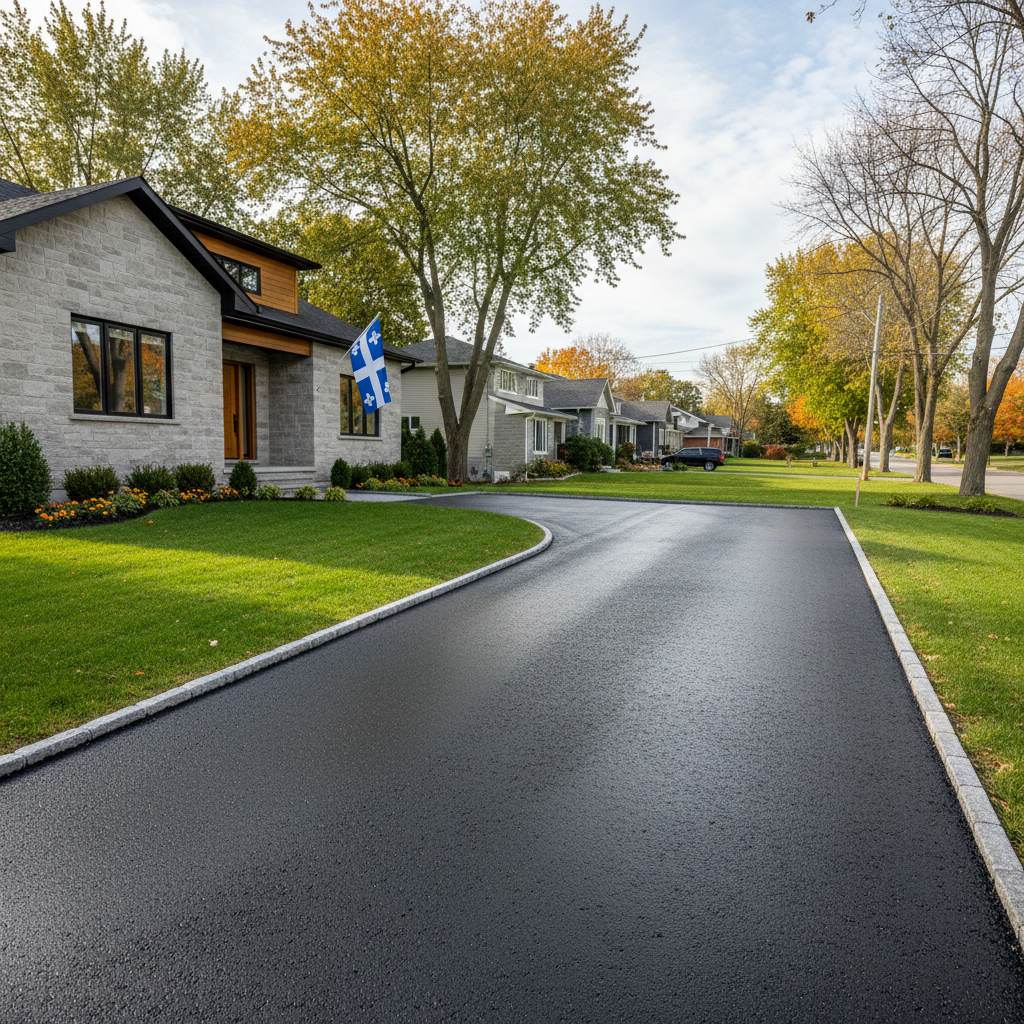
Driveway paving options and costs in Malvern
In Malvern, Ontario, driveway paving is usually a trade-off between upfront cost, how well the surface survives Toronto’s winter, and how much maintenance you’re comfortable doing. With a population of 43,794 (Statistics Canada, 2021 Census), the area has steady demand for new driveways and replacements—especially on older streets where the original gravel base has been working through multiple freeze–thaw seasons. In practice, many Malvern driveways serve detached and semi-detached homes, so homeowners tend to prioritize dependable winter traction, clean plow compatibility, and a driveway that won’t “pump” water out of the base.
Toronto-area pricing is strongly influenced by frost depth and freeze–thaw cycles. Ground freezing to roughly 3–4 feet means we typically need a properly compacted granular base and drainage so water can’t sit under the pavement. When water is trapped, it expands in winter and can lead to heaving and cracking come spring. The paving season is also effectively compressed into late spring through early fall, so prime dates can cost more—particularly for asphalt and paver crews when scheduling is tight around high-demand neighbourhoods. In Malvern, demand is often especially active around the more built-up residential stretches near local community hubs and main access corridors where driveways see frequent plowing and garage access.
Below are typical cost ranges you’ll see from contractors in the Toronto economic region, followed by what each material is best for. Use this as a pricing baseline before you compare your site measurements, base thickness, and access conditions.
| Material |
Lifespan |
Maintenance |
Best For |
Price per sq ft |
| Asphalt (new installation, proper base) |
15–25 years |
Seal every 3–5 years; patch as needed |
Most cost-conscious driveways with good base engineering |
$6 – $12/sq ft |
| Asphalt (overlay on existing gravel base) |
10–18 years |
Seal regularly; address weak spots early |
When the existing base is firm and well-drained |
$4.50 – $9/sq ft |
| Interlocking concrete pavers |
25–40 years |
Re-sand joints; replace individual stones if needed |
Highest curb appeal and easier spot repairs |
$12 – $22/sq ft |
| Poured concrete (broom finish) |
20–30 years |
Seal every 3–7 years; clean and manage de-icing |
Straightforward, durable slabs with proper control joints |
$9 – $16/sq ft |
| Exposed aggregate concrete |
20–30 years |
Seal periodically; clean regularly |
Slip-resistant look while keeping a solid surface |
$11 – $18/sq ft |
| Gravel / crushed stone (budget option) |
3–8 years |
Re-grade and top up every 1–3 years |
Lowest initial cost and quick seasonal access |
$2.50 – $5/sq ft |
Prices are estimates only and vary by project scope, site access and material selection.
What affects the price of paving in Malvern
Even when you’re quoted for the “same” driveway, price can swing by 30–50% across Toronto and other Ontario areas because the real scope is never identical. The two big drivers are how much work the site needs before any asphalt or concrete goes down (base, drainage, and tear-out) and how tight schedules are during the late-spring to early-fall paving window. In the Toronto market, crews often book prime dates early, so rushing a start date can increase labour costs or force substitutions in materials.
For Malvern, frost depth and freeze–thaw cycles are decisive cost factors. With ground freezing roughly 3–4 feet deep, we typically need a thicker, well-compacted granular base to prevent heaving and cracking. That usually means additional excavation and material in colder, interior Toronto conditions. If your driveway has low spots where water collects, grading corrections and drainage (like better slope away from the garage and proper sub-base drainage) add cost, but they also protect your pavement investment. Hot-mix asphalt placement also depends on weather; asphalt typically requires air temperatures above about 10°C, so the shorter workable season concentrates demand and can push total pricing toward the higher end of the asphalt range—especially if you need asphalt and sealing scheduled during peak weeks. Concrete, while mid-range, also requires proper mix design and control joints to manage freeze–thaw movement, and salt + plowing patterns can accelerate surface wear if drainage is off.
Two concrete examples from Malvern: (1) a 600 sq ft driveway with poor drainage can cost noticeably more because drainage corrections and thicker base are added before paving; compared to a straightforward pour, that’s where you may see asphalt move closer to the higher end of the $3,500–$8,000 band for the finished driveway. (2) If you’re replacing an older concrete pad with weak subgrade, tear-out and haul-away can push total project pricing upward—often narrowing the “budget” gap between asphalt and pavers once you factor in base and edging.
| Price Factor |
Why It Matters |
Cost Impact |
| Driveway area in sq ft |
Most materials, base, and paving labour scale with square footage |
Usually the biggest driver; expect a direct proportional change |
| Base depth required |
Frost line determines granular thickness to reduce heaving and cracking |
More excavation and aggregate pushes costs up significantly |
| Grading and drainage work |
Proper slope and drainage stop water from undermining the surface |
Can add meaningful labour and material, especially on low-spot sites |
| Tear-out of existing surface |
Breaking, removal and hauling of old asphalt or concrete |
Often adds a substantial one-time cost |
| Edge restraints and curbing |
Prevents paver spread and keeps asphalt from migrating |
Moderate cost, but protects long-term performance |
| Sealing requirement |
Asphalt needs sealing after installation to limit moisture and oxidation |
Adds cost in the first year and at renewal intervals |
| Site access |
Narrow gates and tight turns slow equipment movement and increase labour time |
Can increase labour and minimum charges |
| Asphalt mix specifications |
Freeze–thaw-rated mix costs more than basic mixes |
Increases material cost but can reduce early cracking |
Permits & regulations in Ontario
In Ontario, paving a private driveway within your own property typically does not require a building permit. In most Malvern driveway replacements, homeowners are working on the surface of their own lot—removing the old asphalt or concrete, excavating for base, and repaving within the boundaries—so a permit usually isn’t triggered by the work itself.
Where approvals often do come into play is when you affect the municipal right-of-way or municipal infrastructure. Examples of work that generally requires municipal approval include adding or changing a curb cut, altering boulevard areas, and making changes to storm drainage flow paths (for example, adjusting catch basins or drainage connections). If your plan involves changing how water moves from the street to your property or modifying ditching, it’s smart to confirm requirements before excavation.
Step-by-step verification for Malvern homeowners: (1) call Ontario One Call before any digging to identify underground utilities; (2) confirm lot-grading or hard-surface restrictions with your local municipality if you’re changing elevation near property lines; (3) request proof of the contractor’s Ontario licence (where applicable for the work type) and confirm they carry liability insurance; (4) ask for WSIB (or equivalent coverage for their workforce) and ensure the certificate is current; and (5) keep a written scope that states what’s included (site protection, disposal, grading/drainage, and any municipal coordination if required).
Asphalt vs pavers vs concrete for Malvern driveways
For Malvern driveways, the “right” material comes down to your tolerance for maintenance, how you want the driveway to look, and how you’ll manage winter stresses from plowing, salt, and freeze–thaw movement. Asphalt is usually the lowest upfront option, but it performs best when paired with a properly compacted granular base and drainage. In Toronto’s climate, asphalt also needs sealing every 3–5 years to slow moisture intrusion and oxidation—otherwise you can see surface raveling and faster wear. Interlocking concrete pavers cost more initially, but they’re very forgiving under freeze–thaw because damaged units can be lifted and reset without replacing the whole driveway. They also look sharp and handle plow contact well when they’re installed on the correct base with appropriate edging restraints.
Poured concrete sits in the middle on cost and can last a long time when it’s air-entrained, placed with correct slump, and finished with broom texture for traction. However, concrete can crack if control joints aren’t right for the slab size or if drainage is poor and water repeatedly freezes beneath the slab. Exposed aggregate adds texture and slip resistance but still depends on joints and proper curing. In most Malvern cases, the best performance comes from designing for water control first—then picking the surface.
Base preparation matters because Toronto’s frost conditions (roughly a 3–4 foot freezing depth) require adequate granular thickness and compaction. If your subgrade is soft or water pools at the garage edge, all three materials can fail prematurely—but pavers and asphalt generally give you more repair flexibility. A practical dollar example: on a typical 600 sq ft driveway, asphalt may land around the mid range of the $3,500–$8,000 band, while pavers can jump toward the higher end of $9,000–$20,000. That difference is often justified if you want easier partial repairs and maximum curb appeal—especially if you anticipate future landscaping changes or want the option to replace only the affected section after settling.
| Material |
Frost Resistance |
Curb Appeal |
Repair Method |
Lifespan |
Price Band |
| Asphalt (sealed regularly) |
Good with proper base + freeze–thaw-rated mix |
Moderate (clean, smooth finish) |
Patch and re-surface sections |
15–25 years |
$3,500 – $8,000 |
| Interlocking concrete pavers |
Very good when edged and bedded correctly |
High (variety of colours/patterns) |
Remove and replace individual pavers |
25–40 years |
$9,000 – $20,000 |
| Poured concrete (air-entrained) |
Good with joints + drainage; may crack if mismanaged |
Moderate to high (clean slab look) |
Patch (crack repair) or full replacement if extensive |
20–30 years |
$6,000 – $15,000 |
| Exposed aggregate concrete |
Good with correct curing and drainage planning |
High (textured, premium look) |
Limited patching; often targeted repairs |
20–30 years |
$6,500 – $16,000 |
| Permeable pavers (drainage grid) |
Very good where designed for sub-drainage |
High (modern look) |
Spot repair of blocks/grids |
20–35 years |
$10,000 – $22,000 |
| Chip seal / tar-and-chip |
Moderate; needs strong base to avoid early failure |
Low to moderate (utility finish) |
Re-treat surface; patching as needed |
6–12 years |
$2,500 – $6,500 |
How to choose a paving contractor in Malvern
Choosing the right paving contractor in Malvern is mostly about verification and paperwork—not just the lowest number on a quote. First, confirm licensing and coverage: ask for proof of Ontario registration/licence for the work type, then review their liability insurance certificate to ensure it covers the driveway scope and that the dates are current. Next, request their WSIB clearance or proof of coverage for their workers; if they sub-contract, ask that you’re receiving the same proof for the subcontractor team. A reputable crew won’t hesitate to provide documents, and they should match the company name on the contract.
Second, get 2–3 itemised written quotes. You want a breakdown that separates excavation/base, drainage/grading, asphalt or concrete supply, labour, traffic control, and disposal. Avoid “lump sum only” quotes because the base and drainage scope is where Toronto freeze–thaw problems are either solved or created. Ask what’s excluded: permit pulls, utility locates, excavation depth decisions, hauling limits, and whether old material removal is included. Clarify whether edging and restraints are included and if asphalt will be sealed after curing (and when).
Third, check warranty terms. Look for a workmanship warranty length (often covering settlement and workmanship issues), and confirm any manufacturer warranty for materials. Ask whether warranties are transferable to future owners. Fourth, payment schedule: never pay more than 10–15% upfront; hold back a portion until the job is complete and cleaned up. Finally, get the start date and estimated completion time in writing.
- Ask for their Ontario licence details and confirm the business name matches the contract.
- Request WSIB coverage/clearance documentation before work begins.
- Review liability insurance and ensure it matches the job site risk (driveway excavation).
- Get 2–3 itemised quotes (labour + materials) instead of one lump-sum.
- Confirm excavation and base thickness targets (especially for frost protection).
- Require drainage/grading plan details (slope, water flow direction, low-spot fixes).
- Ask whether utility locate coordination and excavation permits/approvals (if triggered) are included.
- Clarify tear-out scope: break, haul, and disposal of concrete/asphalt.
- Verify edge restraints/curbing inclusion to stop paver or asphalt migration.
- For asphalt, confirm sealing timing and who pays for the first seal coat.
- Check warranty coverage: workmanship duration, what triggers it, and exclusions.
- Use a payment schedule with a 10–15% deposit max and holdback until completion.
In Malvern, watch for red flags like: quotes that skip granular base thickness details, no mention of drainage/slope targets, refusal to provide WSIB/insurance documents, “too-good-to-be-true” prices that omit tear-out or disposal, and vague warranties that only cover materials—not workmanship.
Frequently asked questions — paving in Malvern
When is the best time of year to pave in Malvern?
For Malvern and the wider Toronto region, the best paving window is late spring through early fall when soil temperatures and air temperatures support proper base preparation and asphalt placement. Hot-mix asphalt generally needs air temperatures around 10°C or warmer for reliable paving and compaction. In practice, crews book quickly in May through July because demand spikes in those months across Markham, Mississauga and nearby areas. If you’re planning a replacement, aim for early summer scheduling to avoid rushed spring starts and schedule pressure. Weather delays happen, so ask your contractor to provide a written start date range and a completion estimate, along with what happens if temperatures drop mid-project.
How deep should the base be for Malvern's frost?
Because Toronto-area ground freezing is roughly 3–4 feet, the base needs to be built to prevent water-laden subgrade from heaving. There isn’t one universal number for every driveway because soil type, drainage, and driveway thickness all change the required build-up, but the key is a properly compacted granular base with correct drainage and grading. In colder inland Ontario conditions, that typically means deeper excavation and more aggregate than in milder markets—often involving several inches of properly compacted layers plus the right thickness to support the surface long-term. The best approach is to request the contractor’s base design for your specific site and drainage situation.
How often should I seal my asphalt driveway?
Asphalt in Malvern generally needs sealing after it cures, then about every 3–5 years depending on traffic, sun exposure, and how aggressively salt and sand are used during winter maintenance. If your driveway is heavily plowed and sees frequent turning of vehicles, sealing should be planned on the shorter end of that range. Sealing helps reduce moisture penetration and oxidation, which is important in Toronto’s frequent freeze–thaw cycles. If you’re budgeting, remember that asphalt installation might fall around the $3,500–$8,000 driveway band in many Malvern cases, while sealing is an added maintenance step that protects that initial investment.
Why does my driveway crack and heave in winter?
The most common cause in Malvern is water under or within the pavement system. During freeze–thaw cycles, trapped water expands when it freezes and can lift sections (“heave”) and create cracking as the pavement flexes. Other contributors include inadequate base thickness for frost protection, poor compaction, and drainage that doesn’t direct water away from the garage or toward a proper outlet. In some older driveways, repeated freeze–thaw finally exposes weak spots, leading to edge failures and patchy breakdown. If you’re seeing recurring issues, it usually isn’t just a surface fix—your quote should address base engineering and drainage, not only patching cracks.
Do I need a permit to pave my driveway in Ontario?
In most cases, paving a private driveway within your own property in Malvern does not require a building permit. However, permits or municipal approvals are commonly triggered when work affects the municipal right-of-way—such as changing a curb cut, modifying boulevard area, or altering storm drainage flow. Also, some municipalities have lot-grading rules that restrict how close hard surfaces and elevations can be to property lines. Before excavation, your key step is to call for utility locates through Ontario One Call to prevent strikes. If drainage or curb/boulevard changes are involved, confirm approval requirements with the municipality first to avoid rework.
How long before I can drive on new asphalt?
After asphalt paving, contractors typically allow you to drive on it once it’s cooled enough for safe rolling and compaction. In many residential driveway installs, this is often within the same day for passenger traffic conditions, but crews may restrict heavy vehicles until it fully sets. The timeline can also depend on weather conditions, thickness of lift(s), and whether the surface has been sealed later. If your asphalt project is being followed by sealing, remember the sealing is usually done after the asphalt has cured—often months later depending on product and temperature. Ask your contractor for their exact “drive/vehicle restriction” hours and written curing/sealing schedule for your site.