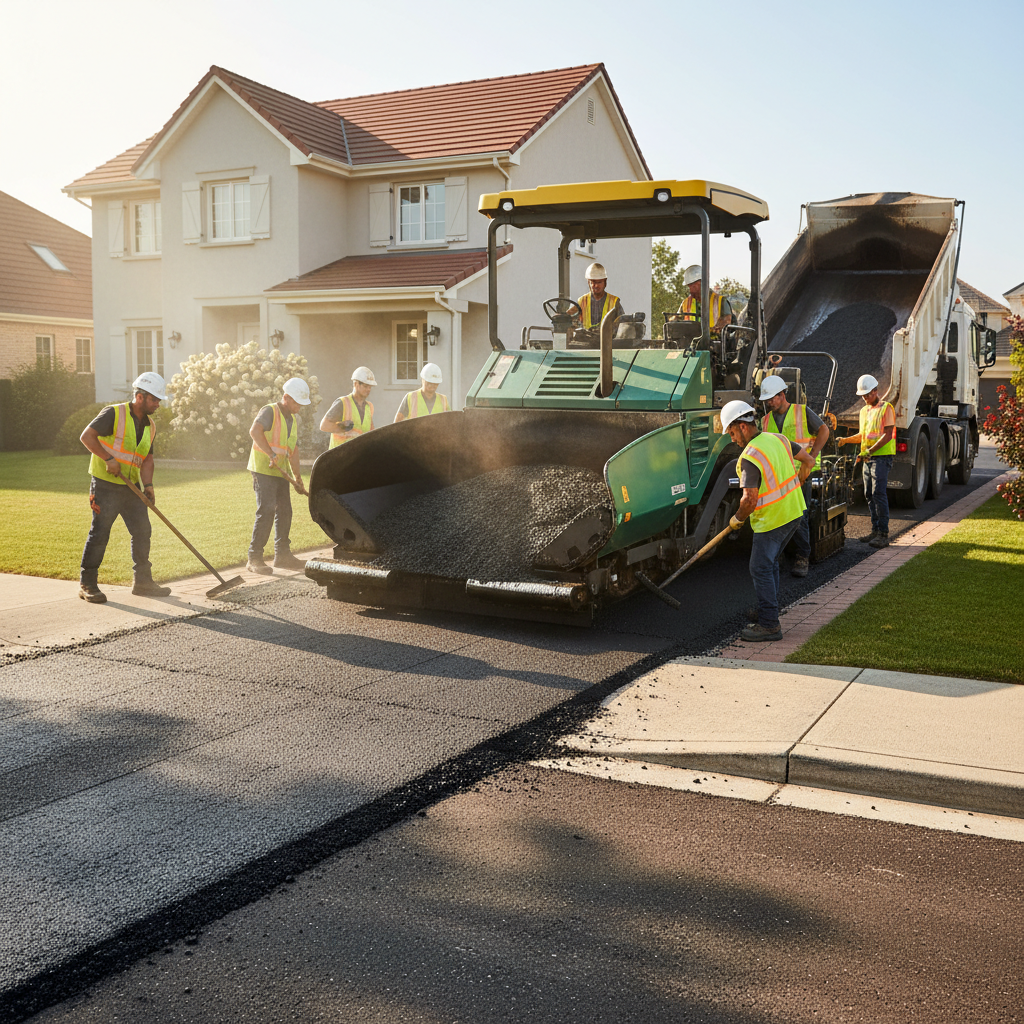
Driveway paving options and costs in Amherstburg
In Amherstburg, choosing the right driveway paving system is as much about frost and drainage as it is about the surface. With a housing mix where single-detached homes make up 83.0% of dwellings—and about 85.4% of households are homeowners—most driveways are privately maintained and upgraded by residents rather than managed by larger property owners (Statistics Canada, 2021 Census). That means you’ll see a steady mix of new installs and “fix it before it gets worse” repairs across neighbourhoods like River Canard and the Tecumseh Street area, especially when spring inspection photos start showing hairline cracks.
In the Windsor–Sarnia region, costs are shaped by frost still working its way through the ground, even in one of Ontario’s milder southern markets. Freeze-thaw cycles can lift weak bases, open up cracks, and force early patching if the excavation, granular base, and water management aren’t designed for Amherstburg’s wet winters and roadside water conditions. Crews also have to work inside a shorter paving season—hot-mix asphalt typically requires warm air—so scheduling pressure in late spring and early fall can move pricing away from midsummer “best day” rates.
For budgeting, most homeowners can think in terms of the option you choose plus how much material and labour the site needs (removed base, drainage corrections, and haul-off). Use the table below as a realistic comparison starting point, then we’ll narrow it based on your current driveway build-up and access.
| Material |
Lifespan |
Maintenance |
Best For |
Price per sq ft |
| Asphalt (new installation, proper base) |
15–25 years |
Sealcoat every 3–5 years |
Cost-effective, smooth surface for frequent use |
$8 – $14 |
| Asphalt (overlay on existing gravel base) |
10–18 years |
Sealcoat every 3–6 years; patching as needed |
Moderate budget when base is stable |
$7 – $12 |
| Interlocking concrete pavers |
25–40 years |
Occasional re-laying of pavers; joint sand top-ups |
Curb appeal and repairs without full replacement |
$18 – $32 |
| Poured concrete (broom finish) |
25–35 years |
Limited maintenance; sealant may be applied |
Clean, uniform look with strong edges |
$12 – $20 |
| Exposed aggregate concrete |
25–35 years |
Seal periodically; spot repairs if needed |
Slip resistance and decorative finish |
$14 – $24 |
| Gravel / crushed stone (budget option) |
3–7 years |
Re-grade and top up 1–3 times per year |
Temporary solution or low-traffic access |
$3 – $7 |
Prices are estimates only and vary by project scope, site access and material selection.
What affects the price of paving in Amherstburg
It’s common to see quotes for the “same size” driveway vary by 30–50% across Windsor–Sarnia and Ontario, and it usually comes down to what’s happening below the surface. Two driveways can both measure 600 sq ft, yet one might need deep excavation, new drainage, and hauling because the subgrade is soft or clay-heavy, while the other is built on competent base and simply needs resurfacing. The visible material is only part of the budget.
Frost line depth and freeze-thaw cycles are decisive cost factors in this region. When moisture can freeze under weak pavement, the pavement system can heave and crack. That risk pushes contractors to build a thicker compacted granular base in frost-prone areas—often more like 6–12 inches of well-graded granular layers (depending on soil and design details) rather than the slimmer builds you might see in milder coastal markets. At the same time, asphalt must use freeze-thaw-rated hot-mix design; that mix and the placement process matter. Asphalt also becomes a seasonally scheduled product: hot-mix placement typically requires air temperatures above 10°C, so spring starts and late-fall windows can carry higher crew/equipment costs than midsummer.
Concrete pricing can be sensitive too. For Amherstburg homes built before 1981—about 50.5% of dwellings (Statistics Canada, 2021 Census)—you often see older drainage patterns, settled drive approaches, or weaker base layers, which increases tear-out and base replacement. If your driveway is sloped incorrectly or water ponds at the curb cut, adding grading and a proper drainage swale can raise costs. Conversely, a site with good existing drainage and easy access can keep asphalt work nearer the lower end of the local asphalt range (for example, $8–$14 per sq ft), whereas heavy tear-out and drainage corrections can push you toward the mid-to-upper pricing for whichever surface you choose.
| Price Factor |
Why It Matters |
Cost Impact |
| Driveway area in sq ft |
Most line items scale with square footage (excavation, base, surface) |
Highest driver; direct proportional change |
| Base depth required |
Frost protection depends on granular thickness and compaction |
Adding inches of base increases stone, labour, and equipment time |
| Grading and drainage work |
Slope, ditching, and drainage corrections reduce water trapped under pavement |
Can add substantial labour and materials; often a “make-or-break” item |
| Tear-out of existing surface |
Breaking and hauling concrete or old asphalt adds disposal and crew time |
Typically significant; can be a major reason quotes differ |
| Edge restraints and curbing |
Prevents paver spread and asphalt edge failure under plowing |
Moderate increase for materials and more precise forming |
| Sealing requirement |
Asphalt needs sealcoat after installation to protect binder from aging |
Ongoing cost every 3–5 years |
| Site access |
Narrow driveways slow equipment and limit haul-off efficiency |
Higher mobilization and labour; can add hours |
| Asphalt mix specifications |
Freeze-thaw-rated mix design costs more and performs better locally |
Generally adds cost but reduces early cracking risk |
Permits & regulations in Ontario
In Ontario, paving a private driveway within your own property usually does not require a building permit. However, the moment the work touches municipal assets or changes how water flows to/near the street, you typically need municipal approval. For example, curb cut creation or widening, altering boulevard areas, changing storm drainage patterns, or any work in the municipal right-of-way generally requires the municipality’s authorization before excavation.
Some municipalities also have lot-grading bylaws that restrict how close to property lines a hard surface can be and how drainage must be handled (especially to prevent runoff from being directed onto neighbouring properties). Even if a permit isn’t required, the drainage and grading rules still apply and are often enforced after the fact when issues show up in spring melt.
Before the first bucket hits the ground, call utility locates through Ontario One Call. This is essential for driveway excavation because water, gas, hydro, and telecom lines may run where you plan to cut, grade, or set forms.
To verify your contractor in Amherstburg, follow a simple checklist: (1) Licensing: confirm they are properly licensed for the work they’re doing and operating in Ontario (where applicable) by checking their business information online; (2) Liability insurance: request a current certificate of insurance showing adequate coverage for the project; (3) WSIB/WCB coverage: ask for a clearance letter or proof of account/coverage; (4) Keep copies: ensure the certificate and clearance are valid for your project start date. If a contractor can’t provide these documents promptly, that’s a red flag.
Asphalt vs pavers vs concrete for Amherstburg driveways
For Amherstburg’s freeze-thaw winters, the “best” driveway material is the one that survives moisture movement beneath the pavement system. Asphalt is usually the lowest upfront option—great when you have a well-built base and you’re willing to seal on schedule. In southern Ontario, the binder in asphalt ages faster once water gets into tiny surface voids, which is why sealcoat every 3–5 years is so important. If plowing and salt exposure are heavy, the surface sees more wear, but asphalt can still be cost-effective because maintenance is straightforward.
Interlocking concrete pavers cost more at the start, but they’re repairable section-by-section without tearing out the entire driveway. That matters when frost heave or drainage issues create localized settlement—pavers let you lift, correct the base, and reset. Concrete sits in the middle to upper range. Poured concrete can perform well when it’s properly air-entrained and reinforced/formed to handle freeze-thaw stress, yet it can crack if the foundation isn’t stable or if water is allowed to pond. Exposed aggregate improves traction and looks, while permeable/“drainage grid” systems can help manage water, but they still require correct base and detailing to function as intended.
In Windsor–Sarnia, base preparation and drainage dominate your long-term outcome regardless of the surface. A typical decision point is affordability versus flexibility: moving from asphalt at roughly $8–$14 per sq ft to pavers around $18–$32 per sq ft is often justified if you want maximum curb appeal and easier repairs in the future. If your site needs significant excavation anyway, investing in restraints, proper slope, and a frost-protected base can reduce the chance you’ll pay for repeated patching.
| Material |
Frost Resistance |
Curb Appeal |
Repair Method |
Lifespan |
Price Band |
| Asphalt (sealed regularly) |
Good with proper base and drainage; sealcoating helps |
Moderate (clean black surface) |
Patch/re-surface localized areas |
15–25 years |
$8 – $14 |
| Interlocking concrete pavers |
Excellent; tolerates minor movement better than monolithic surfaces |
High (wide colour/pattern choices) |
Lift, re-grade, reset pavers (section repairs) |
25–40 years |
$18 – $32 |
| Poured concrete (air-entrained) |
Good when air-entrained and properly supported |
Moderate to high (clean lines) |
Cracks may require patching; sections may need repair |
25–35 years |
$12 – $20 |
| Exposed aggregate concrete |
Good with correct mix and foundation |
High (textured, premium look) |
Spot patching; full replacement if widespread failure |
25–35 years |
$14 – $24 |
| Permeable pavers (drainage grid) |
Potentially strong if drainage design is engineered correctly |
High (designed look + water management) |
Lift/reset or clean/replace affected units |
20–35 years |
$20 – $36 |
| Chip seal / tar-and-chip |
Moderate; best for lower-traffic areas or select applications |
Low to moderate |
Re-seal/re-chips; localized patching |
5–12 years |
$5 – $10 |
How to choose a paving contractor in Amherstburg
Choosing a paving contractor in Amherstburg comes down to proof and process, not just the lowest number. Start by verifying Ontario coverage and compliance: request the contractor’s liability insurance certificate (it should name the right insured parties and list adequate project coverage) and confirm they’re carrying the required WSIB/WCB coverage. You can usually verify coverage by asking for a clearance letter or proof of account directly from the contractor, then cross-checking any provided identifiers if you have access to the issuer’s verification tools. Don’t accept “we’re covered” without documentation.
Next, get 2–3 itemised written quotes. Avoid lump-sum only. Ask for a breakdown that shows labour and materials separately (excavation depth, base stone type and thickness, geotextile if used, compaction, asphalt or concrete thickness, edge restraints, and disposal/haul-off). Clarify what’s excluded: permit pulls, locates, concrete cutting, removal and disposal, regrading of topsoil, or additional drainage corrections. A reliable contractor will note assumptions clearly.
Warranty matters too. Ask for the workmanship warranty length and whether it covers base/cure issues or only surface defects. Product/manufacturer warranties should be specified, and you should ask if any warranty is transferable to future owners. For payment, keep it practical: never pay more than 10–15% upfront and use progress milestones. Hold back the final payment until the driveway is complete, edges are cleaned, and you’ve confirmed line, slope, and compaction.
Finally, get the start date and a completion estimate in writing, including weather contingencies for Amherstburg’s spring thaw and late-season cold snaps.
- Ask for Ontario proof of insurance (certificate) before work starts.
- Request WSIB/WCB clearance or proof of coverage.
- Get an itemised quote with excavation and base thickness stated.
- Confirm whether utility locates are included (Ontario One Call).
- Ensure tear-out and disposal/haul-off is specified.
- Check if grading and drainage corrections are included or extra.
- Verify edge restraints/curbing are included for pavers and asphalt.
- For asphalt, confirm sealcoat timing (often after 6–12 months depending on conditions).
- Ask what asphalt/concrete mix specs meet local freeze-thaw needs.
- Confirm concrete air-entrainment and curing methods (if pouring).
- Review warranty terms in writing (workmanship vs product coverage).
- Use a payment schedule with a holdback until final inspection.
In Amherstburg, red flags to watch for include contractors who won’t provide certificates of insurance or WSIB/WCB proof, quotes that don’t mention base depth and drainage (only a square-foot price), vague “we’ll figure it out later” excavation notes, no written scope for disposal/haul-off, and schedules that ignore curing and seasonal temperature limits.
Frequently asked questions — paving in Amherstburg
Why does my driveway crack and heave in winter?
Cracking and heaving in Amherstburg are usually warning signs of moisture and frost working against the driveway build-up. If the base was too thin, poorly compacted, or the site drainage traps water, freeze-thaw cycles can lift the pavement slightly and open cracks as the ice expands and releases. Older driveways (many in Amherstburg are in the pre-1981 housing stock, at 50.5%) were often built with different drainage assumptions and may have weaker granular layers underneath (Statistics Canada, 2021 Census). Another common cause is a small ponding area near the curb cut—water freezes under the surface first, then damage shows up in spring. Fixing only the top surface without correcting base/drainage often leads to repeat repairs within a few seasons.
Do I need a permit to pave my driveway in Ontario?
In Ontario, paving a private driveway within your own property typically doesn’t require a building permit. Where permits or municipal approval come in is when the work affects the municipal right-of-way—for example, creating or changing a curb cut, altering the boulevard area, or modifying storm drainage near the street. Amherstburg homeowners should also confirm any lot-grading rules that govern how drainage must be handled so runoff doesn’t get directed onto neighbouring properties. Regardless of permits, always arrange utility locates before digging (Ontario One Call). If you’re unsure whether your curb cut or drainage ties into municipal infrastructure, ask your contractor to describe exactly what is being done and whether municipal approval is required for your specific scope.
How long before I can drive on new asphalt?
Most new asphalt driveways are ready for light traffic relatively soon, but the exact timing depends on weather, lift thickness, and how the crew compacted the mat. In southern Ontario conditions, homeowners often wait at least 24–48 hours before driving on it, with heavier vehicles generally requiring more time. Asphalt also needs time to cool and set; the smoother and more uniform the compaction, the faster it becomes stable. This is one reason spring scheduling matters in Amherstburg: if temperatures are cool or there’s rain risk, crews may need extra time for curing. Budget-wise, new asphalt typically falls around $8–$14 per sq ft when the base is done properly, but rushing the traffic window can shorten performance and accelerate surface wear, which can lead to earlier patching and more frequent maintenance.
What causes potholes and how are they repaired?
Potholes usually start from water. When water infiltrates through cracks or surface defects, it undermines the base and softens the supporting layers. Freeze-thaw cycles then expand the damaged area; plowing and tire impacts worsen it until the surface fails. In Amherstburg’s winter conditions, even small drainage issues can turn into potholes during thaw periods. Repair typically involves cutting back the damaged area to sound material, removing the failed asphalt and any compromised base, and then rebuilding with proper granular base and asphalt lifts. A quality repair won’t just “fill and go” over weak base—otherwise the pothole returns nearby. Some driveways also need a better slope or drainage correction to prevent recurring damage.
How do I prepare for a paving project?
Preparation helps your project go smoother and keeps costs predictable. Start by clearing the driveway area of vehicles, grills, planters, and any items near the edges (pavers and concrete need clean access). Mark any irrigation heads, low-voltage lighting, or antennas so they aren’t disturbed. Talk with your contractor about utility locates through Ontario One Call before excavation. Confirm whether tear-out and disposal are included and whether they’ll remove topsoil or adjust grading near landscaping. For asphalt, ask about dust control and sealing timing; sealcoat is commonly done after installation—often 6–12 months—depending on conditions, and it’s part of long-term performance. Also, if you have a pre-existing curb cut or drainage area, be ready to discuss how water currently flows after rain so drainage isn’t overlooked.
How do I compare paving quotes fairly?
To compare quotes fairly in Amherstburg, put the same “below the surface” details side-by-side. Ask each contractor to specify excavation depth, base thickness, base material type, compaction requirements, and whether geotextile is used. Confirm what’s included in tear-out and haul-off, and whether drainage/grading corrections are part of the scope or an add-on. Make sure asphalt quotes reference the mix spec appropriate for freeze-thaw and that concrete quotes mention air-entrainment and curing methods. Then compare pricing in context: asphalt often prices in the $8–$14 per sq ft band when done with the proper base, while interlocking pavers usually land higher (commonly $18–$32 per sq ft). If one quote is far cheaper, look for exclusions—thin base, no drainage work, or missing disposal—because those omissions are what lead to early cracking and heaving.