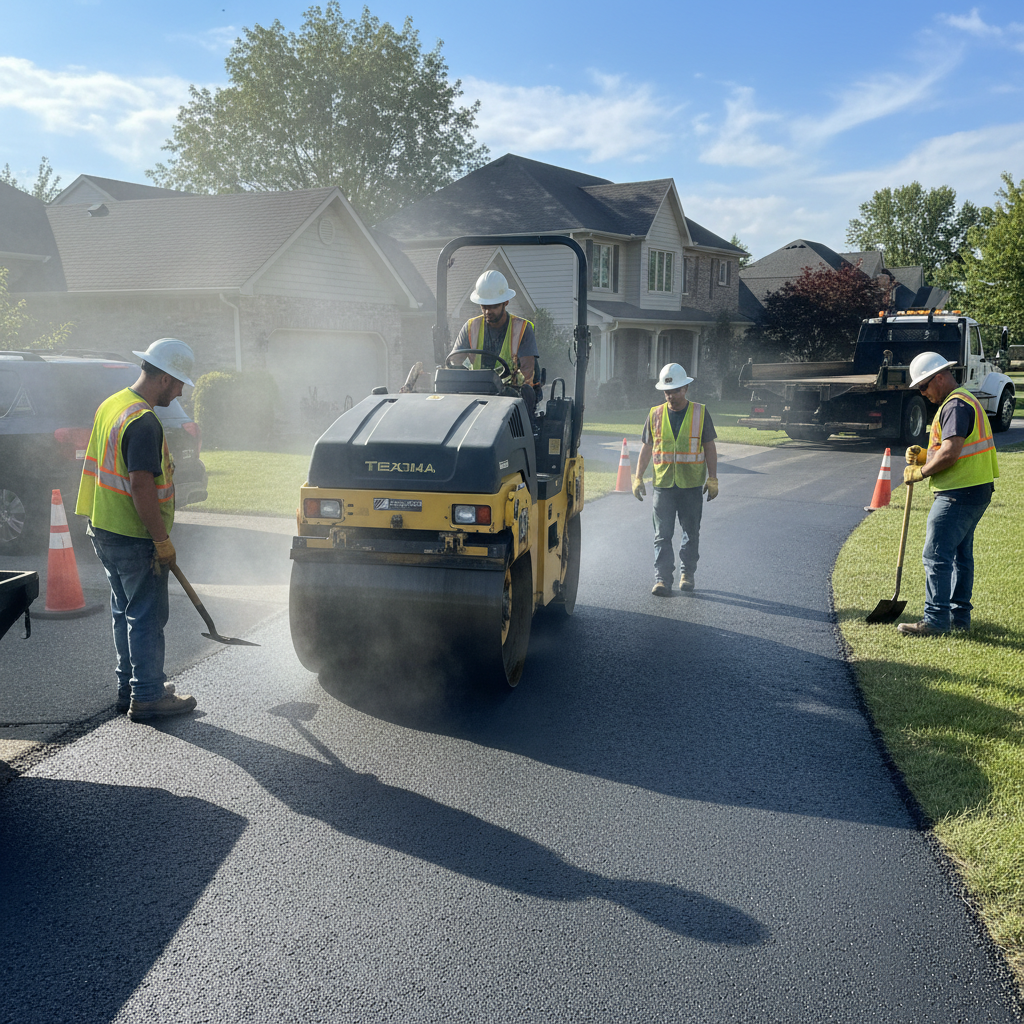
Driveway paving options and costs in Lawrence Park South
Lawrence Park South is a beautiful, older residential pocket of Toronto (population 15,179 as of the 2021 Census) where homeowners expect driveways to look crisp and stay tight through winter. In this neighbourhood, most private driveways serve single-family homes, and that matters because the cost of excavation, base build-up, and edging is largely tied to driveway geometry and drainage. In the Toronto economic region, frost depth and frequent freeze–thaw cycles are primary cost drivers, so contractors commonly price for a deeper, well-compacted granular base and reliable water management before any asphalt or concrete goes down. The workable paving season is also effectively late spring through early fall, which concentrates demand and can affect scheduling and unit pricing for prime dates.
If you’re comparing materials, the goal is to match your budget and aesthetics to how each surface performs under Toronto’s winter routine (plowing, sand, and de-icing salt) and how easily it can be repaired later. Asphalt is typically the lowest upfront option, while interlocking pavers cost more initially but are often easier to spot-repair. Concrete is a durable choice when engineered correctly, but drainage and crack-control details matter.
Demand is especially steady around the Lawrence Park South core and the main east–west residential streets where vehicle access is tight and homeowners want minimal disruption. Use the table below to compare typical installed ranges, then we can dial the numbers in with your driveway size, base condition, and access constraints.
| Material |
Lifespan |
Maintenance |
Best For |
Price per sq ft |
| Asphalt (new installation, proper base) |
15–25 years |
Seal every 3–5 years; patch minor cracks as needed |
Good value, smooth ride, faster install |
$7 – $14 |
| Asphalt (overlay on existing gravel base) |
10–18 years |
Seal 3–5 years after paving; watch for base settlement |
When you can’t do full tear-out but base quality is acceptable |
$6 – $11 |
| Interlocking concrete pavers |
25–35 years |
Rinse/clean; re-level occasional stones; seal polymer optional |
Maximum curb appeal and easy localized repairs |
$12 – $22 |
| Poured concrete (broom finish) |
20–30 years |
Crack control joints; occasional sealing depending on finish |
Low-maintenance look with clean straight lines |
$10 – $19 |
| Exposed aggregate concrete |
20–30 years |
Sealer as recommended by finish type; spot patch if required |
Decorative texture that hides wear and improves slip resistance |
$12 – $23 |
| Gravel / crushed stone (budget option) |
5–10 years |
Re-grade and top up annually; edging maintenance |
Short-term budget, low ceremony, easy access for vehicles |
$4 – $7 |
Prices are estimates only and vary by project scope, site access and material selection.
What affects the price of paving in Lawrence Park South
In Lawrence Park South—and across the Toronto economic region—two quotes for what looks like the same driveway can swing by 30–50% because the “real” work is mostly below the surface: excavation depth, granular base compaction, drainage corrections, and how much of the existing surface must be broken out and hauled away. On top of that, freeze–thaw conditions require the installer to design for movement. In Toronto, ground freezing is roughly 3–4 feet, which usually means a thicker compacted granular base and dependable drainage so water doesn’t sit under the pavement. When water freezes, it can lift the surface (heaving) and eventually turn into cracking and edge failures, especially if the subgrade isn’t uniform.
Toronto’s paving season is also compressed into late spring through early fall, so contractors book a limited number of prime dates. That concentration of demand can push prices toward the upper end of the typical bands, especially if you want start dates quickly. For asphalt, the mix design also has to meet freeze–thaw performance expectations; specialized mix and proper thickness aren’t optional in Ontario winters.
Concrete costs can rise when we need regrading or sub-drain work to protect against winter moisture cycling. For example, a driveway that pitches toward the house or ties into older downspout drainage often needs corrective grading—adding labour and stone—before pouring. Conversely, a driveway that already has clean slopes and solid base material may land closer to the lower band for asphalt, where typical driveway paving ranges are often around $3,500–$8,000 depending on scope.
| Price Factor |
Why It Matters |
Cost Impact |
| Driveway area in sq ft |
Most materials and paving labour scale with surface area |
High (primary driver) |
| Base depth required |
Toronto’s frost depth calls for adequate granular thickness to reduce heave |
High (often substantial) |
| Grading and drainage work |
Correct slope and water routing prevents freeze–thaw damage |
Medium to high |
| Tear-out of existing surface |
Breaking and hauling concrete/asphalt adds disposal and labour |
Medium to high |
| Edge restraints and curbing |
Pavers need tight containment to prevent lateral spreading |
Medium |
| Sealing requirement |
Asphalt needs sealing after cure (often 6–12 months, then regularly) |
Low to medium (recurring) |
| Site access |
Narrow lots slow equipment movement and increase labour time |
Medium |
| Asphalt mix specifications |
Freeze–thaw rated mixes can cost more but reduce premature failure |
Medium |
Permits & regulations in Ontario
For most homeowners in Ontario, paving a private driveway within your own property usually does not require a building permit. The typical “no permit” scenario is replacing or installing a driveway surface on your lot footprint (asphalt, pavers, or concrete), provided you’re not changing how stormwater drains away from your property or altering protected services. That said, work in the municipal right-of-way often needs approval. If you’re planning a new curb cut, changing boulevard/sidewalk access, or modifying municipal storm drainage connections, you should expect municipal permitting or approvals.
Many areas also have lot-grading expectations through by-laws that limit how close hard surfaces can be placed to property lines and how water must be directed. In other words: the surface materials matter, but water management is what municipalities care about most. Always start with utility locates via Ontario One Call before any excavation.
To verify your contractor before signing in Lawrence Park South, follow a simple checklist. Step 1: ask for their Ontario licence documentation (if applicable to the work they’re performing) and confirm they’re in good standing. Step 2: request a current certificate of insurance showing liability coverage for the project. Step 3: confirm they have WSIB coverage (clearance letter or account status) so you’re not exposed if someone is injured on site. Step 4: verify subcontractors are covered, and get those details in writing as part of the contract.
Asphalt vs pavers vs concrete for Lawrence Park South driveways
Choosing between asphalt, interlocking pavers, and concrete in Lawrence Park South comes down to balancing upfront cost, winter resilience, and how you want the driveway to look 5–10 years from now. Toronto’s freeze–thaw cycles (and the fact that ground can freeze roughly 3–4 feet) mean all three materials rely on the same foundation: proper subgrade compaction, a properly drained granular base, and correct thickness. Where the options differ is performance and repair strategy.
Asphalt is usually the lowest upfront driveway choice and is popular where homeowners want a smooth, uniform finish quickly. It needs sealing after the initial cure (often after 6–12 months) and then typically every 3–5 years to protect against moisture and salt wear. Interlocking concrete pavers typically cost more up front (often the highest band), but they’re repairable in sections—so if a stone area settles or a small spot fails, we can lift and re-lay without replacing the entire surface. Poured concrete sits mid-to-upper range and can look excellent, but it must be air-entrained and set with a deliberate crack-control plan (joints and drainage). Without that, freeze–thaw and de-icing salts can contribute to cracking and surface deterioration.
A concrete example: if an asphalt driveway lands around the $3,500–$8,000 band for your size, it may cost several thousand more to move to interlocking pavers in the $9,000–$20,000 band. That extra budget is often justified when curb appeal is a priority, access is tight, or you value localized repairs over full-surface replacements after any settlement.
| Material |
Frost Resistance |
Curb Appeal |
Repair Method |
Lifespan |
Price Band |
| Asphalt (sealed regularly) |
Good when base is engineered and drainage is correct |
Clean and modern, less decorative variety |
Patch and re-compact; seal to blend |
15–25 years |
$3,500 – $8,000 |
| Interlocking concrete pavers |
Very good with solid edging and proper bedding |
Excellent; high street appeal |
Lift/re-lay affected units; reset base if needed |
25–35 years |
$9,000 – $20,000 |
| Poured concrete (air-entrained) |
Good with air entrainment, joints, and drainage |
Good; can be stamped or finished cleanly |
Spot repair is possible but may not blend perfectly |
20–30 years |
$6,000 – $15,000 |
| Exposed aggregate concrete |
Good when sealed and joints are properly done |
Very high; decorative and slip-resistant |
Patch with matching finish (more complex) |
20–30 years |
$7,500 – $17,000 |
| Permeable pavers (drainage grid) |
Very good if the base and outlet drainage are designed |
High; modern look |
Localized repairs by section |
20–30 years |
$10,000 – $22,000 |
| Chip seal / tar-and-chip |
Fair to good; sensitive to base and salt |
Lower; more utilitarian appearance |
Re-spray/re-chip localized areas |
8–15 years |
$3,000 – $6,500 |
How to choose a paving contractor in Lawrence Park South
Choosing the right contractor in Lawrence Park South is mostly about reducing the risk that the driveway fails early due to base shortcuts or missing documentation. Start by verifying Ontario requirements: ask for proof of Ontario licensing/registration if applicable to their trade, and confirm their liability insurance is current for the project. Then check WSIB coverage (or provide a WSIB clearance letter/account status) so you’re protected if a worker is injured. If they use subcontractors, require that their subcontractors are covered as well—don’t accept verbal assurances.
Next, get 2–3 written, itemised quotes—not just a lump sum. Ask for a breakdown that includes excavation, granular base depth, compaction (and how it will be verified), drainage/grading, formwork/edge restraints, surface material, labour, line items for disposal, and any reinstatement. Clarify what’s excluded: permit costs (if any), cutting existing asphalt or concrete, replacing damaged curbs/edges, and whether traffic control or temporary access is included. Make sure disposal of old material is included—hauling costs can be a hidden swing factor.
Warranty should be specific: workmanship warranty length, what product/manufacturer warranty covers (if any), and whether it’s transferable to you as the homeowner. Payment schedule matters too—never pay more than 10–15% upfront. Use a holdback until the job is complete and deficiencies are corrected. Finally, require a timeline: proposed start date, curing/settlement expectations (especially for concrete), and a completion estimate in writing.
- Confirm WSIB clearance/coverage and request the WSIB reference on the quote package.
- Ask for a current certificate of insurance (liability) naming you/your property as needed.
- Verify licensing/registration details in Ontario (and check expiry dates).
- Require itemised pricing for excavation, base, drainage work, and disposal.
- Get base thickness and materials listed (e.g., granular types) and confirm compaction method.
- Ask how they will verify slope and drainage before paving/pouring.
- Insist on proper edge restraints for pavers and proper joint/control plan for concrete.
- Clarify sealing schedule for asphalt (and whether sealing is included or excluded).
- Confirm the warranty is in writing and states what “workmanship” covers.
- Use a staged payment schedule with 10–15% upfront maximum.
- Request start and completion dates (and what happens if weather delays the pour).
- Ask about cleanup and protection of landscaping during construction.
Concrete red flags in Lawrence Park South: (1) no written itemisation of base depth and drainage steps, (2) vague talk about “we’ll just patch it” instead of addressing the cause, (3) payment requests above 10–15% upfront without a signed schedule, (4) missing or outdated insurance/WSIB documentation, and (5) refusal to provide a written warranty and completion timeline.
Frequently asked questions — paving in Lawrence Park South
Is it worth sealing a new driveway right away in Lawrence Park South?
In Lawrence Park South and across Ontario, sealing is usually worth it—but “right away” depends on cure time. For asphalt, sealing too early can trap moisture and weaken the surface, so most installers wait for proper curing (commonly after 6–12 months, depending on weather and mix). Once sealed, asphalt typically needs re-sealing every 3–5 years to slow down moisture penetration from freeze–thaw cycles and to reduce salt wear during winter. If your driveway is in the $3,500–$8,000 asphalt band, budgeting for sealing can protect that investment and help avoid premature cracking that starts at edges and low spots. Ask your contractor to schedule sealing based on surface readiness, not just calendar dates.
What is a chip seal driveway and is it suited to Lawrence Park South?
Chip seal (often called tar-and-chip) is a surface treatment where a binder is spread and stone chips are embedded to form a textured protective layer. It can work in Ontario when the base is engineered correctly and the surface is maintained, but it’s less “set-and-forget” than asphalt or pavers because chips can loosen or wear unevenly with heavy plowing and ongoing salt exposure. In Lawrence Park South, it’s sometimes used for utility-style lanes or as a budget option where curb appeal is less critical. If you’re considering it, the quote should clearly state base preparation and binder type. Chip seal often lands near the lower end of paving budgets (for example, around $3,000–$6,500), but think of it as maintenance-friendly rather than a long life, low effort system.
How much does driveway crack repair cost in Lawrence Park South?
Crack repair pricing varies widely based on crack width, length, whether water is likely to be getting underneath, and whether the driveway needs a localized patch or a full-section rehab. Small, hairline cracks are often treated with cleaning and crack sealing, while wider cracks may require saw-cutting, patching, and compaction to restore a stable surface. In Lawrence Park South, a realistic expectation is that minor sealing/patch work can be relatively modest compared with full resurfacing, while structural issues after repeated freeze–thaw cycles can move you closer to overlay-level pricing. For homeowners trying to stay budget-conscious, it’s usually cheaper to seal and patch early than to wait until water undermines the base and the driveway needs an asphalt overlay, which typically sits higher within the $3,500–$8,000 asphalt band depending on driveway size.
What base thickness do I need for pavers in Lawrence Park South?
For pavers in Lawrence Park South, base thickness is driven by frost depth and drainage—Toronto can freeze roughly 3–4 feet, which is why we design for water control and frost resistance. In practice, that typically means a properly compacted granular base (often in the range of several inches up to more, depending on subgrade condition) plus a bedding layer designed for the paver system. The exact numbers should come from your site evaluation because a soft or uneven subgrade may require additional excavation and replacement, and drainage corrections can change how thick the base must be. If you’re comparing quotes for interlocking, prices generally fall in the $9,000–$20,000 band, and the difference between a great and mediocre install is usually how thoroughly the base is engineered and compacted—not just the paver colour.
How do I get the most accurate paving quote in Lawrence Park South?
To get the most accurate quote in Ontario (including Lawrence Park South), schedule an on-site assessment rather than relying on measurements from a phone photo. A contractor should confirm driveway size, slope, drainage direction, and what’s under the existing surface (especially if you have older asphalt or a gravel base). Ask for an itemised quote that lists excavation, granular base depth, compaction steps, drainage/grading work, edge restraints, disposal, and—if asphalt—whether sealing is included and when it will be done. Also ask what’s excluded (for example, permit-related items in the right-of-way, or landscaping restoration). Finally, request a written start date and completion estimate. The best quotes are priced for your site realities, not just for a generic “driveway special.”
How much does it cost to pave a driveway in Lawrence Park South?
Typical driveway paving costs in Lawrence Park South depend on material choice, driveway size, and how much base and drainage work is required for Toronto’s freeze–thaw cycles. As a broad guide, asphalt driveways often fall within the $3,500–$8,000 range for installed projects when the base is properly built. Interlocking pavers typically cost more, often landing in the $9,000–$20,000 range because of materials, bedding, and edge restraint requirements. Concrete commonly falls in the $6,000–$15,000 range, with exposed finishes usually higher. Your final number can move up if tear-out and disposal are heavy, access is tight, or drainage/grading corrections are needed to keep water from freezing under the surface. A good quote should explain those variables rather than just stating a total price.