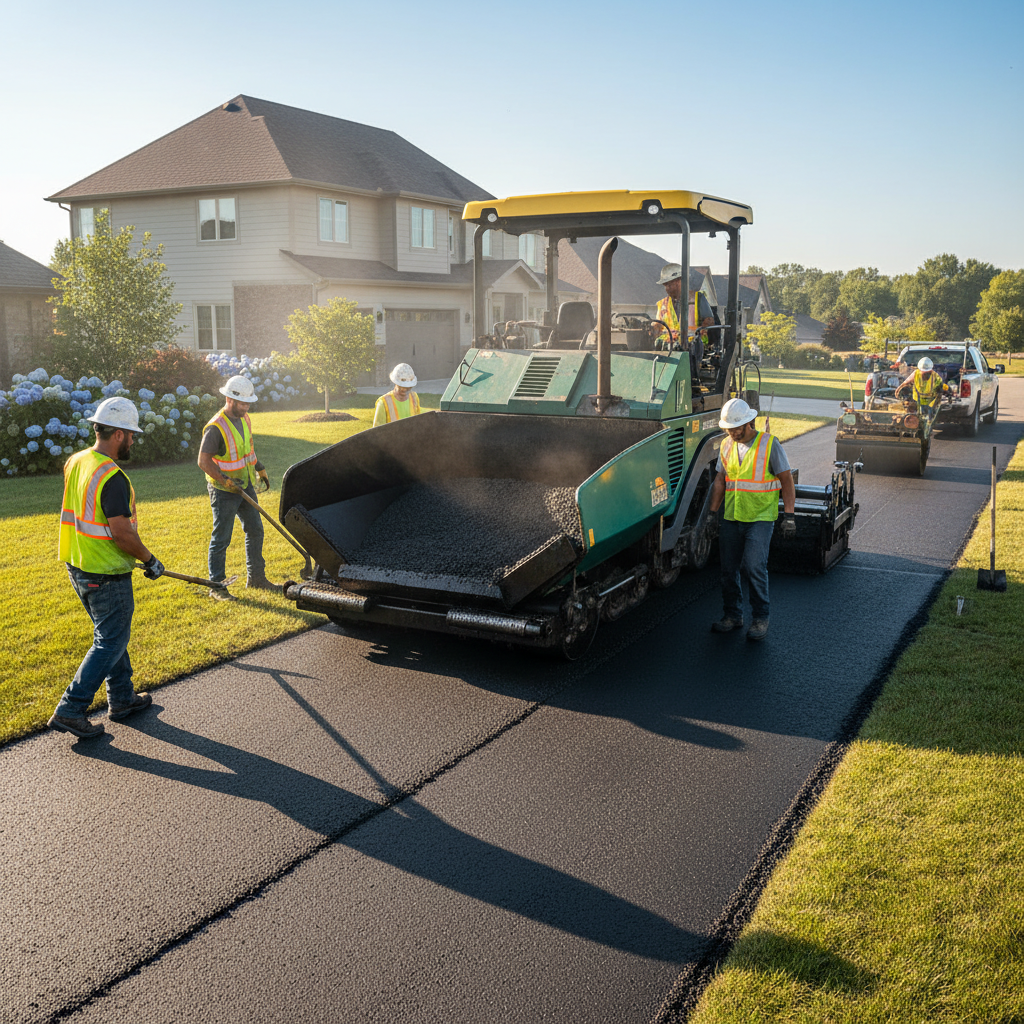
Driveway paving options and costs in West Hill
Driveway paving options in West Hill, Ontario depend mostly on your budget, how your driveway sheds water, and how your home experiences Toronto’s freeze–thaw cycles. West Hill has a large base of single-family housing; with a population of 27,392 (Statistics Canada, 2021 Census), private driveways are a steady, year-round demand for paving crews. Most homeowners here are looking to upgrade an older gravel or failing asphalt surface, or to improve curb appeal along busier corridors near Kingston Road where driveways see frequent ploughing and salt. In the Toronto economic region, frost depths can reach roughly 3–4 feet, so your total installed cost often rises with excavation and a properly compacted granular base—especially if drainage is poor or the subgrade is clay-heavy. The paving season is also effectively compressed into late spring through early fall, meaning prime dates in spring can be booked quickly and can push pricing toward the higher end of the bands. If your driveway also needs significant tear-out, new edge restraints, or drainage correction, that’s where quotes can swing.
Below is a practical cost comparison for common materials in West Hill, based on typical contractor installs (not “backyard patching”), and assuming a correct base and proper drainage detailing to handle freeze–thaw.
| Material |
Lifespan |
Maintenance |
Best For |
Price per sq ft |
Price Range |
| Asphalt (new installation, proper base) |
15–25 years |
Sealcoat after 6–12 months, then every 3–5 years |
Lowest upfront cost with strong performance when base is engineered for frost |
$6–$12 |
$3,500–$8,000 |
| Asphalt (overlay on existing gravel base) |
10–18 years |
Sealcoat schedule similar to new asphalt; may need localized fixes sooner |
When you have a firm, well-drained gravel base and minimal grading correction |
$5–$10 |
$3,500–$8,000 |
| Interlocking concrete pavers |
25–40 years |
Re-screed and replace individual stones as needed |
Best curb appeal and “repair without replacing everything” for busy drive lanes |
$12–$20 |
$9,000–$20,000 |
| Poured concrete (broom finish) |
20–35 years |
Crack management; sealing sometimes used but depends on finish and salt exposure |
Durability and a clean, low-maintenance surface if joints and drainage are right |
$10–$18 |
$6,000–$15,000 |
| Exposed aggregate concrete |
20–35 years |
Reseal periodically to maintain appearance and reduce staining |
Enhanced slip resistance and premium look |
$12–$22 |
$6,000–$15,000 |
| Gravel / crushed stone (budget option) |
3–8 years |
Rake/grade and top up; control washouts and weed growth |
Short-term solution or where you need the lowest initial cost while addressing drainage |
$3–$6 |
$3,500–$8,000 |
Prices are estimates only and vary by project scope, site access and material selection.
What affects the price of paving in West Hill
In West Hill and across the Toronto area, the same driveway size can come in 30–50% apart because the “invisible” work changes—excavation depth, disposal fees, base material quantities, drainage corrections, and how much patching is needed to reach a stable subgrade. In practice, one contractor may price asphalt simply as “surface replacement,” while another prices the full frost-proof build-up required in Ontario. In Toronto’s climate, freeze–thaw is decisive: with ground freezing to about 3–4 feet, a deeper, well-compacted granular base and dependable drainage are what protect against heaving and cracking. While coastal BC projects sometimes need less granular thickness, Ontario typically needs a thicker engineered base build (often 6–12 inches of compacted granular layers depending on existing conditions) to stabilize the system.
The paving season is also compressed; hot-mix asphalt generally requires air temperatures above about 10°C, so crews concentrate work into late spring through early fall. That scheduling pressure can increase labour rates for prime dates and make rush jobs land closer to the upper end of the asphalt band ($3,500–$8,000). Concrete and paver jobs also face timing constraints, but the bigger swing is site prep—grading, sub-drain work, and the amount of tear-out. For example, if your current driveway is sinking because of clay saturation, the cost can rise quickly once excavation is extended to remove soft subgrade and re-establish slope. Conversely, if you already have solid base and clean drainage, an overlay or a simpler poured section can keep you nearer the lower mid-range of $6,000–$15,000 for concrete. With pavers, costs can drop when base conditions are already stable—yet they rise when edging, geotextile, and restraint detailing are required to stop stone movement under plough impacts.
| Price Factor |
Why It Matters |
Cost Impact |
| Driveway area in sq ft |
Most materials and paving labour scale directly with square footage |
High |
| Base depth required |
Frost line determines granular thickness to prevent heaving and cracking |
High |
| Grading and drainage work |
Fixing slope and directing runoff prevents trapped water under pavement |
Medium–High |
| Tear-out of existing surface |
Breaking, hauling, and disposal add labour and equipment time |
Medium–High |
| Edge restraints and curbing |
Restraints stop paver spread and keep asphalt edges from breaking down |
Medium |
| Sealing requirement |
Asphalt needs sealing after cure (often 6–12 months) to protect against salt and moisture |
Low–Medium |
| Site access |
Narrow lots slow truck unloading and equipment movement |
Medium |
| Asphalt mix specifications |
Freeze–thaw-rated mixes and proper compaction planning can cost more but last longer |
Low–Medium |
Permits & regulations in Ontario
In Ontario, paving a private driveway within your own property typically does not require a building permit. However, permit and approval requirements often come into play when you touch municipal infrastructure or storm drainage in the municipal right-of-way (the area between your property line and the roadway). That includes work such as creating or changing a curb cut, modifying the boulevard, altering swales/drainage connections that tie into municipal systems, or any change that affects how water leaves your lot toward the road. Some municipalities also regulate lot grading and how close hard surfaces can be to property lines or how stormwater must be directed—so it’s smart to confirm the lot-grading rules with your municipality before work starts.
Before excavation, call for utility locates using Ontario One Call (1-Call). Even if your driveway looks “clear,” equipment operators need marked locations for hydro, telecom, gas, and water. To verify your contractor’s credentials in West Hill, ask for (1) their Ontario licence/registration information (as applicable for their business), (2) proof of general liability insurance, and (3) proof of WSIB coverage if they employ workers. A professional contractor should provide certificate of insurance and a clearance letter upon request. Don’t rely on verbal confirmation—request copies and ensure the coverage is current for the dates of your project.
Asphalt vs pavers vs concrete for West Hill driveways
In West Hill’s freeze–thaw climate, the “best” driveway material is usually the one whose build-up and drainage are designed for Ontario frost, not just the surface finish. Asphalt typically wins on upfront cost and speed of installation; with correct base work and proper compaction, it can perform very well, but it needs regular sealcoating—often every 3–5 years after the initial cure (commonly after about 6–12 months). Interlocking concrete pavers cost more at the start (often the $9,000–$20,000 band), but they shine under heavy winter maintenance because they are easier to repair: you can remove and replace sections without tearing out the entire driveway. Poured concrete is mid-range (commonly $6,000–$15,000) and can last decades if it’s air-entrained, properly jointed, and sloped so water doesn’t sit beneath or behind edges. Concrete can crack in freeze–thaw if joints, base prep, or drainage are overlooked—especially where de-icing salt and plough impacts repeat each winter.
For Toronto-grade frost conditions, all three options rely on a properly engineered granular base and drainage plan to prevent trapped water. Where asphalt can fail fastest is when water infiltrates a weak base and the freeze–thaw cycle heaves the mat. Pavers can tolerate movement better due to modularity, but they still require edging restraints and correct base compaction to avoid settling. Concrete performs best when joints are cut and sealed appropriately and the driveway sheds water away from the foundation line. As a real example: if asphalt is quoted at roughly $4,800–$6,500 but pavers come in at $12,000+, the difference is justified when you want long-term aesthetics and easier localized repairs after winter damage, or when utility access in the future makes modular systems appealing. If your main goal is cost control and you’re willing to plan sealing, asphalt usually gives the best value for West Hill homeowners.
| Material |
Frost Resistance |
Curb Appeal |
Repair Method |
Lifespan |
Price Band |
| Asphalt (sealed regularly) |
Good with engineered base and drainage; relies on maintenance |
Average |
Mill/patch localized areas |
15–25 years |
$3,500–$8,000 |
| Interlocking concrete pavers |
Very good; modular system tolerates minor movement |
High |
Remove and replace individual pavers/sections |
25–40 years |
$9,000–$20,000 |
| Poured concrete (air-entrained) |
Good when properly air-entrained, jointed, and drained |
Medium |
Crack sealing/patching; full replacement only if extensive |
20–35 years |
$6,000–$15,000 |
| Exposed aggregate concrete |
Good; similar base and joint requirements as concrete |
High |
Patch and match surface treatment where feasible |
20–35 years |
$6,000–$15,000 |
| Permeable pavers (drainage grid) |
Very good drainage performance when designed correctly |
High (modern look) |
Replace affected units; maintain drainage layer |
20–35 years |
$9,000–$20,000 |
| Chip seal / tar-and-chip |
Moderate; needs good base and can wear with heavy ploughing |
Low–Medium |
Spot re-chip/overlays |
8–15 years |
$3,500–$8,000 |
How to choose a paving contractor in West Hill
Choosing the right paving contractor in West Hill starts with verification. Ask for their Ontario business registration details and confirm they carry general liability insurance; request a certificate of insurance showing your property address (or at least project coverage) and current effective dates. If they use workers, make sure they provide WSIB coverage information and can show a current clearance letter. A reputable crew will also carry equipment-related coverage through proper business policies; if they resist providing documents, treat that as a red flag.
Next, get 2–3 written, itemised quotes. You want a breakdown of labour and materials (excavation depth, granular base thickness, asphalt/concrete thickness, bedding/screed for pavers, edging restraints, and disposal). Avoid lump sums that don’t explain what’s included—ask if permit pulls (if needed for right-of-way changes) are included, whether disposal is included, and what happens if the contractor finds soft subgrade or unstable soil once excavation begins. Warranty matters: require a workmanship warranty length, understand whether product/manufacturer coverage applies, and ask whether warranties are transferable if you sell the home.
For payment, don’t pay more than 10–15% upfront. Use a staged schedule and hold back until the job is complete and final grading/drainage is inspected. Finally, require a written start date and an estimated completion date, since Toronto’s shorter paving window can shift schedules during cold snaps and wet spring weeks.
- Confirm Ontario registration/licensing details in writing.
- Request certificate of insurance with current dates and project coverage.
- Verify WSIB clearance (if workers are employed).
- Get 2–3 itemised quotes: labour + materials + disposal.
- Ensure excavation and base thickness are stated in inches.
- Ask who does utility locates and how they protect existing services.
- Confirm drainage plan (slope and where runoff goes).
- Check whether edge restraints/curbing are included.
- For asphalt, require tack coat and compaction specs.
- Ask about asphalt sealing timing and cost (often after 6–12 months).
- Get warranty in writing: workmanship duration and exclusions.
- Set payment milestones: limit upfront to 10–15% and hold back for completion.
In West Hill, some common red flags include quotes with no base thickness specified, promises of “no tear-out” over unstable soil, refusing to provide insurance/WSIB documentation, vague warranties (no workmanship term), and schedules that can’t commit to a start/completion window in writing.
Frequently asked questions — paving in West Hill
How long before I can drive on new asphalt?
In West Hill, Ontario, most new asphalt driveways can be driven on fairly quickly, but the exact timing depends on temperature, mix type, and weather conditions during placement. As a rule of thumb, crews often open to light vehicle traffic within about 24–48 hours, with heavier loads after the asphalt has cooled and the lift is fully compacted and stabilized. If the job is sealed, the sealcoat timing is different: many contractors apply sealcoat after the asphalt cures (often 6–12 months) and may recommend keeping vehicles off the surface for at least 24 hours after sealing. If you’re comparing quotes, ask whether the contractor includes a proper cure time plan and whether they’re using a freeze–thaw-rated mix for Toronto conditions—this influences how quickly and how safely you can use the driveway.
What causes potholes and how are they repaired?
Potholes usually start where water collects and penetrates the asphalt, then the freeze–thaw cycle expands that damage under plough and winter traffic. In West Hill, the most common cause is a weak or poorly drained base—if the granular layers aren’t compacted to the required depth, or if the driveway doesn’t have the right slope, water can sit under the surface. Another cause is incomplete compaction of asphalt lifts, which creates voids that later break down. Repairs typically start with saw-cutting back to sound asphalt, removing failed material, rebuilding with compacted base as needed, then placing and compacting hot-mix asphalt. When you compare pricing, look for whether the quote includes saw-cut patching and base correction, not just a quick surface patch. If you’re staying in the asphalt budget band (often $3,500–$8,000 depending on size), proper base repair is what prevents a “repeat pothole” the next spring.
How do I prepare for a paving project?
Preparation is mostly about clearing access and reducing surprises. Before the crew arrives, remove cars, outdoor furniture, planters, and anything that could be damaged by equipment or dust. Trim back low branches if needed for machine access. If you have gates, confirm they can be opened wide enough for trucks and rollers; narrow access often drives cost up. If you have existing drainage issues—ponding at the end of the driveway or water flowing toward the house—tell your contractor so they can design grading and drainage corrections correctly for Ontario freeze–thaw. Also, confirm you understand whether utility locates are being handled: utilities should be located before excavation. Finally, review the contract scope: is disposal included, is tear-out required, and is sealing included later? This is important because asphalt typically needs sealing after curing, and skipping that step can shorten lifespan even if the initial install cost falls in the $3,500–$8,000 band.
How do I compare paving quotes fairly?
To compare paving quotes fairly in West Hill, you need apples-to-apples scope. Ask every contractor for an itemised breakdown: excavation depth, granular base thickness, number of asphalt lifts (or concrete thickness), compaction expectations, edging restraints/curbing, and disposal of removed material. Confirm whether drainage grading is included—Toronto-area freeze–thaw makes drainage design a major cost driver. Also compare how they handle difficult conditions: soft subgrade, poor existing base, or limited site access should change the scope, not be “absorbed” silently. Check warranty terms and payment schedule details (ideally limited upfront). If you’re comparing asphalt to concrete, remember the bands differ: asphalt driveway paving commonly lands around $3,500–$8,000, while poured concrete is often $6,000–$15,000 and pavers can run $9,000–$20,000. A “cheaper” quote may still be fair if it includes less excavation or fewer base layers—but only if those choices are explicitly stated.
Can asphalt be laid in cold weather in West Hill?
Asphalt placement in cold weather is possible only within limits, and it usually isn’t worth risking an early freeze. In Ontario, hot-mix asphalt generally requires air temperatures above about 10°C for best results, and crews also consider ground temperature. In West Hill, late fall and early spring can dip below that threshold, and Toronto’s freeze–thaw cycle can quickly expose weak compaction or poor mat cooling. If a contractor suggests paving during consistently cold conditions, ask what temperature targets they’ll meet, how they’ll protect the surface, and how they’re addressing cure and compaction timing. A responsible contractor will often schedule around weather to protect long-term performance. If you do need work scheduled outside ideal conditions, clarify whether the quote includes any weather-dependent changes—because a low price that ignores cold-weather constraints can lead to premature raveling and patching, which undermines the value you expected from the $3,500–$8,000 asphalt band.
What is a driveway apron and do I need one in West Hill?
A driveway apron is the transition section at the bottom of your driveway where it meets the street-side edge—often where vehicle wheels cross from street/sidewalk area onto your driveway. In West Hill, it matters because it affects how ploughs and tires impact the driveway edge, and because poor transitions can concentrate stress and accelerate cracking or settlement. Whether you need an apron depends on your driveway geometry, how your curb line is built, and whether there’s any municipal interface at the right-of-way. If your work involves changes that affect the curb cut, boulevard, or storm drainage connection, you may require municipal approval before construction—so ask your contractor to confirm what’s included in the scope. Many installs include improved edging and a properly built transition to reduce edge breakdown even when you aren’t doing a full right-of-way modification. A good contractor will explain the apron requirement during site assessment so you’re not surprised by extra work later.