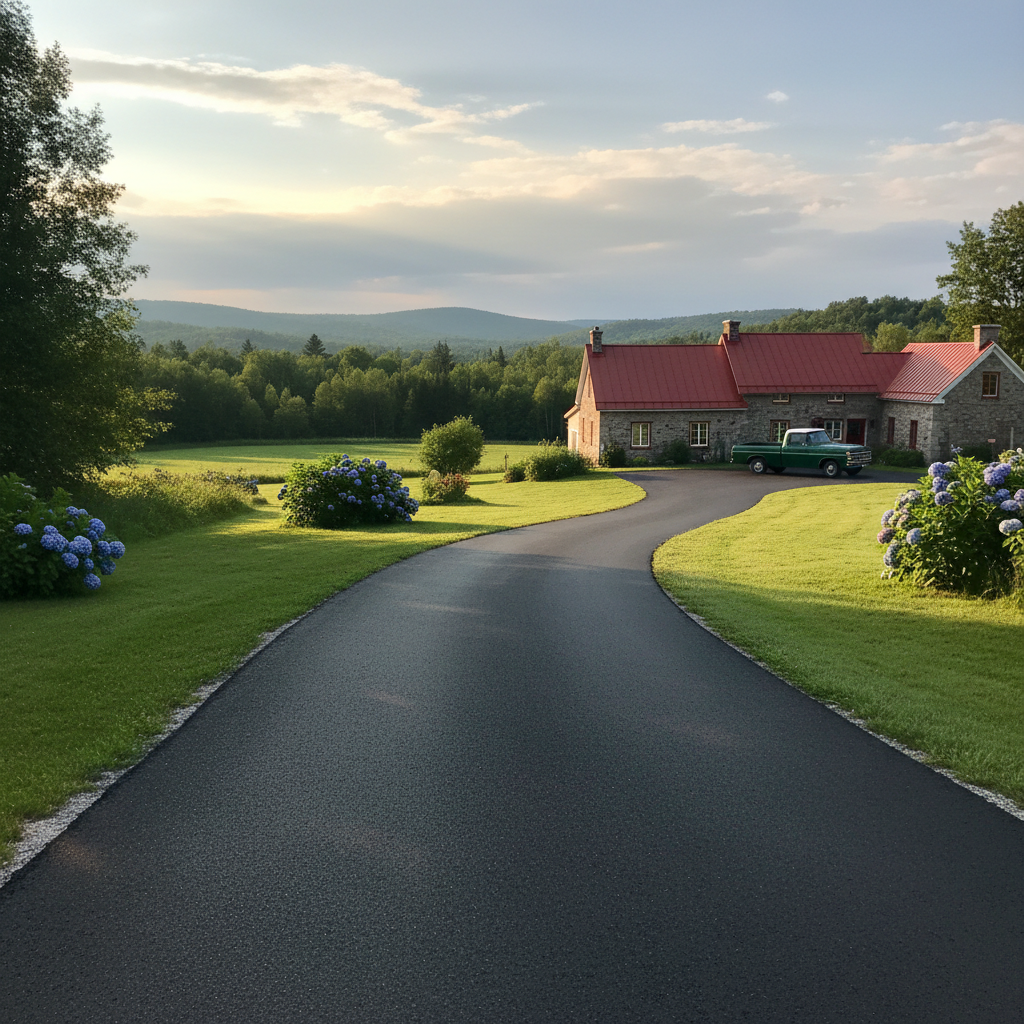
Driveway paving options and costs in Forest Hill South
In Forest Hill South, Ontario, homeowners typically choose a driveway surface that can handle serious winter strain: freeze–thaw cycles, plough traffic, and salty slush along curb lines. With a population of 10,732 (Statistics Canada, 2021 Census), this is a stable, established neighbourhood where many driveways serve older, detached home lots and consistent vehicle access. In practice, most driveway paving demand is tied to these private lots rather than public streets, so contractor availability is often strongest in the late spring-to-early fall window.
Toronto’s climate is a direct cost driver because ground freezing can reach roughly 3–4 feet. That means even when you’re “just paving the top,” contractors must excavate to build a properly compacted granular base and install reliable drainage so water can’t sit beneath the pavement. During the few peak paving months, schedules tighten and pricing can shift—especially for larger lots, tight access lanes, and jobs requiring concrete tear-out.
In Forest Hill South, demand is especially steady around the busy residential pockets near major corridors and shopping areas where homeowners often refresh curb appeal. If you’re comparing options, the table below gives realistic Ontario price ranges for common driveway materials, assuming proper base prep (the part that protects you during Toronto’s winter).
| Material |
Lifespan |
Maintenance |
Best For |
Price per sq ft |
Price Range |
| Asphalt (new installation, proper base) |
15–25 years |
Sealcoat every 3–5 years |
Lowest upfront cost with good ride |
$8.00–$14.00 |
$3,500–$8,000 |
| Asphalt (overlay on existing gravel base) |
10–20 years |
Sealcoat as needed; patching sooner |
When excavation is limited |
$7.50–$13.00 |
$3,000–$7,500 |
| Interlocking concrete pavers |
25–40 years |
Joint sand top-ups; lift-and-relay repairs |
Premium curb appeal and flexible repairs |
$17.00–$28.00 |
$9,000–$20,000 |
| Poured concrete (broom finish) |
20–30 years |
Crack monitoring; possible seal once |
Clean look; easy snow maintenance |
$13.00–$20.00 |
$6,000–$15,000 |
| Exposed aggregate concrete |
20–35 years |
Sealcoat every few years; stain control |
Slip resistance and upscale appearance |
$15.00–$24.00 |
$7,500–$18,000 |
| Gravel / crushed stone (budget option) |
3–7 years (varies widely) |
Re-grade and top up annually |
Temporary solution or overflow parking |
$4.00–$7.00 |
$2,000–$5,000 |
Prices are estimates only and vary by project scope, site access and material selection.
What affects the price of paving in Forest Hill South
In Forest Hill South and the wider Toronto economic region, two quotes for the “same size” driveway can differ by 30–50% because the hidden work changes: how deep you must excavate for frost protection, how much subgrade correction is needed, whether you’re tearing out old concrete/asphalt, and how complicated the drainage plan is. Labour demand also swings during the late spring through early fall paving window, since hot-mix asphalt placement depends on weather and base conditions.
The biggest determinant is frost depth and freeze–thaw cycling. With ground freezing to roughly 3–4 feet in Toronto, a deeper, properly compacted granular base is required to prevent heaving and cracking. In practice, that often means thicker base build-ups than you’d see in coastal areas; the extra excavation, base material, and compaction time add to installed cost. On top of that, asphalt mix design needs to be rated for local freeze–thaw performance—mix that meets these requirements can cost more than basic mixes, but it’s part of why your driveway holds up through winters.
Concrete pricing can move based on reinforcement choices, air-entrainment quality, and jointing strategy. For example, a broom-finished pour on a well-draining base may land closer to mid-range concrete budgets, while a driveway requiring regrading to fix ponding can push costs toward the higher end. Asphalt can also vary: a well-prepped site may fit comfortably in the asphalt band (often $3,500–$8,000), while adding tear-out, haul-away, and drainage corrections can move the final total upward even if the surface material stays asphalt.
| Price Factor |
Why It Matters |
Cost Impact |
| Driveway area in sq ft |
Surface area plus base thickness drives most quantities. |
High (typically 50–70% of variance) |
| Base depth required |
Toronto frost conditions require a thicker compacted granular base. |
High (can add thousands) |
| Grading and drainage work |
Slope correction and drainage prevents water under pavement. |
Medium to high |
| Tear-out of existing surface |
Breaking, hauling, and disposing concrete/asphalt adds labour and equipment time. |
Medium to high |
| Edge restraints and curbing |
Interlocking and asphalt edges need restraint to stop spreading. |
Medium |
| Sealing requirement |
Asphalt should be sealed after initial cure (often within 6–12 months) to slow oxidation. |
Low to medium (short term budget item) |
| Site access |
Narrow lots and long wheelbarrow/equipment moves increase labour. |
Low to medium |
| Asphalt mix specifications |
Freeze–thaw rated mixes can increase material cost but improve durability. |
Medium |
Permits & regulations in Ontario
In Ontario, paving a private driveway within your own property usually does not require a building permit. Where permits and municipal approvals come into play is when you affect municipal infrastructure or storm servicing—particularly work in the municipal right-of-way. Common examples of work that typically does require municipal approval include new curb cuts, changes to the boulevard, altered drainage that ties into municipal systems, or any modifications near catch basins and municipally maintained areas.
There are also lot-grading bylaws in many Ontario municipalities that restrict how close to property lines you can place a hard surface and how you manage runoff (to avoid directing water onto a neighbour’s property). Even if a permit isn’t required, you should confirm grading rules with your local municipality before the crew starts excavation.
Step-by-step, here’s how homeowners in Forest Hill South can protect themselves:
- Request utility locates before any digging and ensure the contractor submits for them through the proper Ontario call system (Ontario One Call).
- Verify the contractor’s Ontario licence (when applicable) and confirm they can lawfully do the type of work quoted.
- Ask for liability insurance and review the certificate of insurance: confirm coverage limits and job site address.
- Confirm WSIB/WCB coverage so you’re not exposed if a worker is injured on site.
- Get the contractor’s clearance letter or proof of coverage documentation in writing.
- Do not start excavation until locates are complete and any approvals for right-of-way work are confirmed.
Asphalt vs pavers vs concrete for Forest Hill South driveways
For Forest Hill South driveways, the choice usually comes down to upfront cost, how you want repairs handled after winter, and how well each material manages Toronto’s freeze–thaw movement. Asphalt is typically the most affordable to install and provides a smooth ride, but it relies on a properly built granular base and needs regular sealing—often every 3–5 years—to resist oxidation and surface wear. Interlocking concrete pavers cost more upfront, yet they’re the most homeowner-friendly for freeze–thaw seasons because you can lift and replace individual stones if settlement or edge movement occurs. Poured concrete sits in the middle on initial price and can last a long time, but it is more sensitive to cracking if jointing, air-entrainment, and drainage aren’t engineered for Ontario winters and de-icing practices.
Because Toronto’s frost reach is roughly 3–4 feet, base preparation is non-negotiable across all three options. If water can’t drain away and the base isn’t compacted, you’ll see heaving, pumping, or premature failure—regardless of the surface you choose. For winter maintenance, pavers and well-designed asphalt generally tolerate ploughing better than poorly detailed concrete edges. Concrete also benefits from air-entrained mix design and careful control joints to manage expansion and contraction.
A practical example: if you’re deciding between asphalt and pavers on a driveway that commonly falls into the asphalt installed band of $3,500–$8,000, pavers may land in the $9,000–$20,000 range. That premium can be justified if you value curb appeal and want a repairable surface—particularly if you anticipate future utility work or you’re dealing with drainage corrections near the curb line.
| Material |
Frost Resistance |
Curb Appeal |
Repair Method |
Lifespan |
Price Band |
| Asphalt (sealed regularly) |
Good with thick, compacted base and freeze–thaw-rated mix |
Moderate |
Patch and overlay; spot repairs |
15–25 years |
$3,500–$8,000 |
| Interlocking concrete pavers |
Very good; flexible joints and lift-and-relay capability |
High |
Remove/rebuild affected area |
25–40 years |
$9,000–$20,000 |
| Poured concrete (air-entrained) |
Good if properly air-entrained and jointed with drainage |
Moderate to high |
Crack repair/seal; sometimes full replacement if severe |
20–30 years |
$6,000–$15,000 |
| Exposed aggregate concrete |
Good with correct base, air-entrainment, and curing |
Very high |
Patch and blend; may be limited aesthetically |
20–35 years |
$7,500–$18,000 |
| Permeable pavers (drainage grid) |
Excellent where designed to manage runoff without saturation |
High (modern layouts) |
Replace individual grid/pavers |
20–35 years |
$10,000–$22,000 |
| Chip seal / tar-and-chip |
Variable; best for certain low-traffic patterns |
Lower to moderate |
Re-seal/spot patch |
8–15 years |
$2,500–$6,500 |
How to choose a paving contractor in Forest Hill South
Choosing the right contractor in Forest Hill South is less about the lowest number and more about whether they can build for Toronto’s frost and freeze–thaw movement. Start by verifying Ontario credentials and insurance. For licensing, ask what licence applies to the work they’re doing and confirm it matches the scope. For liability insurance, request the certificate of insurance and ensure the policy is current and lists the correct job location. For workers, confirm WSIB coverage (or WCB where applicable) and ask for proof/clearance documentation—don’t accept “we’re covered” without paperwork.
Next, get 2–3 itemised written quotes instead of a lump sum. You want a breakdown showing labour, excavation, disposal/haul-away, base materials, compaction, drainage/grading, geotextile (if specified), the surface course, and any edging/curbing. Make sure the quote clearly states what is included and what is excluded (for example, permit pull, concrete/asphalt tear-out, topsoil reinstatement, sod replacement, or patching after initial lift). In Ontario, confirming what the contractor is responsible for is crucial when right-of-way approvals are required for curb cuts or boulevard changes.
Finally, review the warranty: ask for the workmanship warranty length and whether product/manufacturer coverage applies to the material installed. Check if any warranty is transferable if you sell your home. For payment, don’t hand over more than 10–15% upfront, and use a holdback until the job is complete and cleaned up. Get a written start date and an estimated completion window tied to weather conditions.
- Ask who will be on site daily and confirm supervisor name.
- Require itemised quantities (sq ft, tons/cubic yards of base, drainage components).
- Confirm compaction method and how they test/verify base density.
- Ask what drainage plan they’ll install if water ponds near the driveway edge.
- Confirm edge restraint type (steel edging, concrete curb, or interlock restraints).
- Verify disposal/haul-away is included if tear-out is required.
- Ask whether geotextile is used and in which layers (if needed).
- Request asphalt mix specifications meeting local freeze–thaw needs.
- For concrete, confirm air-entrainment and jointing/control plan.
- Check insurance COI dates and liability limits before signing.
- Confirm WSIB/WCB coverage and obtain clearance documentation.
- Ensure warranty terms are in writing (workmanship vs materials, duration and exclusions).
Common red flags in Forest Hill South: contractors who won’t provide a written, itemised scope; quotes that ignore drainage and base depth; no proof of WSIB/WCB clearance or liability insurance; vague warranty language (no workmanship term or no exclusions stated); and schedules that rely on paving “whenever” without acknowledging Ontario’s temperature window and cure times.
Frequently asked questions — paving in Forest Hill South
How do I get the most accurate paving quote in Forest Hill South?
To get an accurate quote in Forest Hill South (and avoid “surprise” add-ons), ask for a site visit and measurements of your driveway area, including any slope changes and the height at the curb/boulevard. The quote should spell out base depth, excavation limits, and drainage work—because Toronto’s freeze–thaw cycles mean water control and compacted granular base are where costs often change. Request an itemised breakdown: tear-out, haul-away, subgrade prep, granular layers, geotextile (if needed), compaction method, surface course, and edging restraints. Also confirm materials: asphalt mix design for freeze–thaw performance, or concrete air-entrainment and jointing plan. Finally, ask about the contractor’s weather and scheduling approach for Ontario’s late spring through early fall paving window.
How much does it cost to pave a driveway in Forest Hill South?
Pricing depends mostly on square footage, how much excavation is needed, and whether drainage corrections or tear-out are included. For many typical residential driveways, asphalt new installation often lands in the $3,500–$8,000 range when the base is properly built and access is straightforward. If you’re comparing premium curb appeal and repairability, interlocking concrete pavers commonly run $9,000–$20,000, depending on layout complexity and edging. Poured concrete is frequently in between, often $6,000–$15,000, with higher costs where grading and joint strategy require more work. If you’re replacing an existing surface, disposal and hauling can push the final number up—so make sure your quote includes what’s being removed.
Asphalt vs interlocking pavers vs concrete — which is best in Forest Hill South?
In Forest Hill South’s Toronto freeze–thaw climate, none is “best” in every situation—each has trade-offs. Asphalt usually wins on lowest upfront cost and a fast, smooth driveway, but it needs sealing regularly (often every 3–5 years) and a properly compacted base to prevent heaving and cracking during winter. Interlocking concrete pavers cost more upfront (often $9,000–$20,000), yet they’re excellent for repairability: if a section settles, stones can be lifted and reset without replacing the whole driveway. Poured concrete (often $6,000–$15,000) can be very durable when air-entrained, well-jointed, and properly drained; however, poor base preparation or inadequate joints can lead to cracking. For most homeowners, the “best” pick aligns with how you value curb appeal and long-term maintenance.
How long does a paved driveway last in Forest Hill South?
Longevity in Forest Hill South depends on base engineering, drainage, and winter exposure. With correct granular base build-up and a freeze–thaw-rated approach, asphalt driveways commonly last 15–25 years, but sealing maintenance is important to protect the surface layer and reduce wear. Properly installed interlocking pavers often last 25–40 years because the system is flexible and repairs are targeted. Poured concrete typically ranges from 20–30 years if it’s air-entrained, joints are done correctly, and runoff is managed—concrete failures often show up as cracking when water sits under the slab. The bigger enemy is trapped moisture: Toronto’s repeated freeze–thaw cycles can magnify small base issues, so drainage and compaction are what determine whether a driveway “beats the clock.”
When is the best time of year to pave in Forest Hill South?
The best time to pave in Forest Hill South is generally late spring through early fall—when soil and air temperatures support proper base drying and hot-mix asphalt placement. Contractors typically need air temperatures above roughly 10°C for asphalt production and placement, and they also need time for curing. If you pave too late, you can lose workability time, and in early shoulder seasons you risk cold nights that affect compaction and surface performance. For concrete, timing matters too: finishing and curing need suitable weather to achieve strength and reduce surface issues. Because Toronto’s paving season is compressed compared to milder regions, prime dates can fill quickly—so it’s smart to book early and schedule around your site access and drainage prep timeline.
How deep should the base be for Forest Hill South's frost?
For Forest Hill South, base depth isn’t one “magic number” because it varies with subgrade condition, drainage, and whether the existing soils are stable. That said, Toronto’s frost can reach roughly 3–4 feet, which is why driveway base build-ups often require meaningful granular thickness and excellent compaction to prevent heaving and cracking. Your contractor should assess the subgrade and then specify a base design that can withstand freeze–thaw movement and eliminate standing water under the driveway. In practical terms, deeper frost protection almost always means more excavation and more granular material than you’d expect in warmer or coastal markets. A trustworthy quote will state the planned base layers and thicknesses and explain how drainage will be handled so water doesn’t saturate the base in wet seasons.