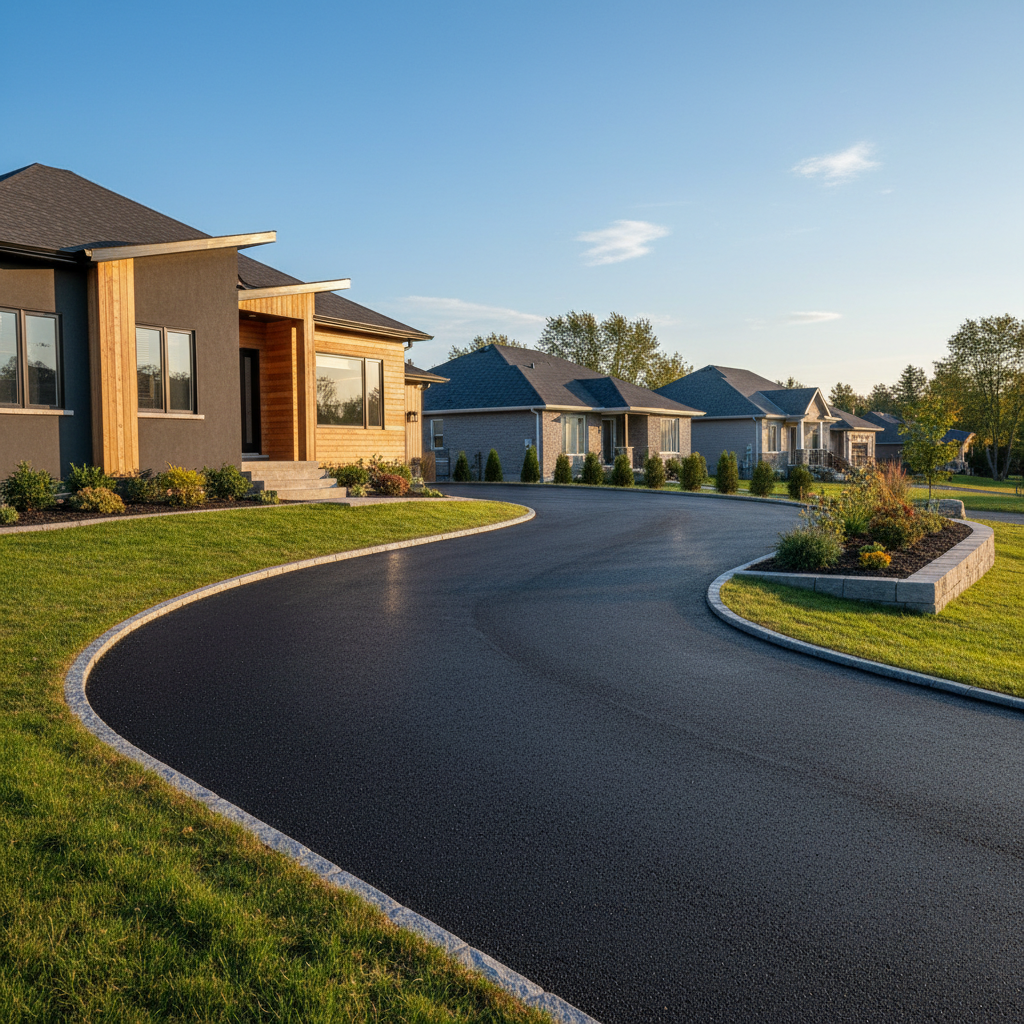
Driveway paving options and costs in Highland Creek
In Highland Creek, Ontario, choosing the right driveway surfacing is all about matching your budget with Toronto’s freeze–thaw reality. With a 2021 population of 12,494 in the area (Statistics Canada, 2021 Census), the neighbourhood demand is steady, and private driveway work is especially common where detached homes dominate the streetscape—because most single-family properties have a dedicated paved apron and parking pad. That housing pattern matters when you’re comparing contractor availability and scheduling, since driveways are typically sized and accessed for walk-behind or compact equipment, not large commercial paving trains.
In the Toronto economic region, frost depth and repeated winter spring cycles are primary cost drivers. Even when your surface choice is “just asphalt or concrete,” the installed price is heavily influenced by how the subgrade and granular base are engineered so water can’t sit under the pavement and then expand in freeze events. In practice, that means more excavation, thicker compacted base, and reliable drainage in Highland Creek than in milder climates. Also, Ontario’s paving season is effectively late spring through early fall; hot-mix asphalt placement requires suitable air/ground temperatures, and that compressed season can push demand into fewer peak weeks.
Because of that, homeowners often start with an asphalt budget, then upgrade edging, drainage, or thickness once they see what’s required for a long-lasting build-up. Use the comparison below to frame options before you review an itemised quote.
| Material |
Lifespan |
Maintenance |
Best For |
Price per sq ft |
Price Range |
| Asphalt (new installation, proper base) |
15–25 years |
Seal every 3–5 years |
Balanced upfront cost + good performance when drainage is right |
$4.50–$9.50 |
$3,500–$8,000 |
| Asphalt (overlay on existing gravel base) |
10–18 years |
Seal every 3–5 years; monitor edges |
When you’re upgrading a gravel lot with stable drainage |
$3.50–$7.50 |
$3,500–$8,000 |
| Interlocking concrete pavers |
20–30+ years |
Spot repairs; periodic joint sand top-up |
Curb appeal and easy repair without full resurfacing |
$10.00–$17.50 |
$9,000–$20,000 |
| Poured concrete (broom finish) |
25–30 years |
Crack control + occasional sealing |
Low daily maintenance with a long surface life |
$7.00–$13.50 |
$6,000–$15,000 |
| Exposed aggregate concrete |
25–30 years |
Seal periodically; manage surface staining |
Texture + slip resistance with premium curb appeal |
$9.00–$16.00 |
$6,000–$15,000 |
| Gravel / crushed stone (budget option) |
2–7 years |
Regrade + add stone annually |
Temporary solution or where drainage is the main goal |
$2.50–$4.50 |
$300–$1,500 |
Prices are estimates only and vary by project scope, site access and material selection.
What affects the price of paving in Highland Creek
In the Toronto economic region, two homeowners can receive quotes that differ by 30–50% for what sounds like the same driveway—because the “real” scope is usually buried in the prep work. Asphalt or concrete pricing is only part of the story; the big variables are frost protection, drainage corrections, how much must be removed, and how difficult access is for hauling and compacting equipment. When your driveway needs deeper excavation to build a frost-resistant base, the crew’s time increases and so does the amount of granular material (and disposal) required—especially during the late-spring to early-fall rush when crews are booked.
Frost depth and freeze–thaw cycles are decisive cost factors across Ontario. In Toronto, ground freezing to roughly 3–4 feet means the granular thickness and compaction matter. In Ontario, deeper frost protection commonly requires a thicker compacted granular base—often in the 6–12 inch range—so water doesn’t sit under the pavement and then expand in winter, causing heaving and cracking. Asphalt mix design is also a cost driver; freeze–thaw-rated hot-mix is engineered for Ontario conditions, and it typically costs more than “basic” mixes.
Concrete costs can rise or fall depending on detailing. For example, a driveway poured without adequate control-joint planning can crack sooner, while properly placed joints and air-entrainment help manage Toronto’s salt exposure and freeze cycling. Another example: if you’re adding an interlocking edge restraint to direct runoff, you may spend more initially, but you reduce settlement that can show up as uneven pavers over winter. If your current surface needs major tear-out, your budget can move from a driveway asphalt range toward higher interlock or concrete tiers (Statistics Canada, 2021 Census), especially once labour and disposal are included.
| Price Factor |
Why It Matters |
Cost Impact |
| Driveway area in sq ft |
Material and base quantities scale directly with area |
Highest driver of total cost |
| Base depth required |
Frost line determines granular thickness to prevent heaving |
More excavation/material = higher cost |
| Grading and drainage work |
Slope and drainage corrections keep water from pooling |
Can add significant labour + granular |
| Tear-out of existing surface |
Breaking, hauling and disposal of old asphalt/concrete |
Frequently adds thousands on top |
| Edge restraints and curbing |
Prevents paver spread and asphalt edge blowouts |
Moderate cost, big performance benefit |
| Sealing requirement |
Asphalt needs sealing after curing (commonly 6–12 months) |
Small per-year cost to protect lifespan |
| Site access |
Narrow/tight lots slow compactors and hauling equipment |
More time = higher labour cost |
| Asphalt mix specifications |
Freeze-thaw-rated mix improves Ontario durability |
Better mix may raise initial cost but reduce failures |
Permits & regulations in Ontario
For private driveways in Ontario, most work done entirely within your property typically does not require a building permit. That usually includes new paving, replacing asphalt, pouring a slab within your lot line, and interlock installation where you’re not changing municipal assets. However, permit and approval requirements can apply when the work touches the municipal right-of-way—particularly the area around the curb and where water drainage is affected.
What generally DOES require municipal approval in Ontario includes: creating or modifying a driveway entrance/curb cut, changes to the boulevard and curb lines, and any alteration that impacts storm drainage (for example, re-routing downspout discharge or modifying catch basins near the curb). Some municipalities also have lot-grading rules that restrict how close hard surfaces can be to property lines and how runoff must be managed.
Step-by-step verification for a Highland Creek homeowner:
- Confirm the contractor is properly licensed/registered through the Ontario business credentials they provide and their trade documentation (ask for the exact business number and licence details they rely on).
- Request a current Certificate of Insurance and verify it lists you as an additional insured if their standard contract requires it.
- Ask for proof of WSIB coverage (or the applicable WCB clearance letter status) and ensure the coverage is active for the people working on-site.
- Use the certificate dates—don’t accept expired documents.
- Call for utility locates before any excavation (Ontario One Call is the standard for locating buried services).
Finally, confirm lot-grading requirements with the municipality before excavation so your driveway slope and drainage plan remain compliant.
Asphalt vs pavers vs concrete for Highland Creek driveways
For Highland Creek driveways, the material choice comes down to balancing freeze–thaw performance, salt/plow exposure, and how much disruption you can tolerate. Asphalt usually has the lowest upfront cost, but it depends on correct installation and ongoing protection. With asphalt, properly engineered base drainage is critical; in Toronto freeze–thaw conditions, asphalt performs best when sealed regularly (often every 3–5 years). If you get an asphalt quote near the driveway asphalt range, you’re typically paying for hot-mix and base prep that can handle Toronto’s deep frost—so sealing becomes part of the long-term budget.
Interlocking concrete pavers cost more upfront (often in the higher tier), but they’re repair-friendly. In a city where plows and winter salt can stress edges, pavers let crews lift and replace individual sections rather than re-paving the entire driveway. That’s a real advantage when a localized frost heave or drainage issue shows up near the apron or a low corner.
Poured concrete sits mid-range, but Toronto’s climate punishes poor jointing. If concrete isn’t air-entrained and detailed with the right control-joint layout and curing practices, freeze–thaw cracking and scaling risk increases—especially with routine de-icing. Exposed aggregate is similar structurally but adds slip texture; it also tends to look better longer, though it may require more careful staining management.
Where the price difference is justified: if your asphalt quote is around $3,500–$8,000 but your site has weak drainage, a well-built interlock base and proper edge restraints can prevent the “edge failure” that often turns a modest job into a costly rework. In that scenario, the move toward pavers in the $9,000–$20,000 range can be cheaper over time because repairs are targeted.
| Material |
Frost Resistance |
Curb Appeal |
Repair Method |
Lifespan |
Price Band |
| Asphalt (sealed regularly) |
Good when base/drainage are engineered for freeze–thaw |
Medium |
Patch or mill-and-overlay |
15–25 years |
$3,500–$8,000 |
| Interlocking concrete pavers |
Excellent with proper bedding and edge restraints |
High |
Lift/replace individual pavers or small sections |
20–30+ years |
$9,000–$20,000 |
| Poured concrete (air-entrained) |
Good with air entrainment + control joints |
Medium–High |
Crack repair patching; slab replacement only if severe |
25–30 years |
$6,000–$15,000 |
| Exposed aggregate concrete |
Good with correct mix design and joints |
Very High |
Targeted patching; replacement if widespread |
25–30 years |
$6,000–$15,000 |
| Permeable pavers (drainage grid) |
Very good where drainage capacity is designed correctly |
Medium–High |
Replace modules/pavers; maintain infill if needed |
20+ years |
$9,000–$20,000 |
| Chip seal / tar-and-chip |
Fair to good; best as part of a managed drainage plan |
Low–Medium |
Re-seal or spot re-chipping |
5–10 years |
$300–$1,500 |
How to choose a paving contractor in Highland Creek
When you’re hiring a paving contractor in Highland Creek, don’t guess—verify. First, ask for proof of Ontario business registration/licensing documentation that matches the work scope, then confirm liability insurance and WSIB coverage before any excavation begins. You want current, active coverage for the specific crew working on your site. Next, get 2–3 itemised written quotes that break down labour and materials (base prep, granular type and depth, asphalt or concrete thickness, edging, compaction, and disposal). A lump-sum quote without a scope is where surprises happen in Toronto’s freeze–thaw environment.
Read the scope carefully for exclusions and inclusions: is the tear-out included, is topsoil removal and base supply included, and is disposal hauling included? If your driveway ties into the curb area, clarify whether any municipal approval steps are part of the contractor’s responsibility (or whether you must handle them). Confirm warranty terms: workmanship warranty length, product/manufacturer warranty on materials, and whether any warranty transfers to you as the owner.
Payment schedule matters. Never pay more than about 10–15% upfront—hold back a portion until the job is complete, cleaned, and accepted. Finally, insist on a written timeline: start date, expected duration, and completion date range. In Ontario, delays can occur if crews can’t meet asphalt temperature and weather constraints, so a clear schedule protects you.
- Ask for a detailed written scope, not just a price.
- Verify current Certificate of Insurance and confirm coverage limits.
- Request WSIB coverage confirmation or a WCB clearance letter (as applicable).
- Confirm the contractor provides utility locate compliance (Ontario One Call).
- Ensure base depth and drainage plan are explicitly stated in the quote.
- Confirm edging/restraints (steel edging/interlock restraints/asphalt edge details).
- Require disposal and hauling to be listed (especially for tear-out).
- Check asphalt mix specs or concrete air-entrainment is specified.
- Ask when the first seal coat is recommended for asphalt (commonly 6–12 months).
- Clarify warranty: workmanship term, what it covers, and exclusions.
- Get a start date and completion estimate in writing, including weather contingencies.
- Confirm the payment schedule aligns with industry-safe practice (10–15% max upfront).
Red flags I watch for in Highland Creek: (1) quotes that ignore drainage and base depth, (2) no mention of frost-protection specs despite Toronto’s freeze line, (3) pressure for large upfront payments, (4) vague warranties that don’t define workmanship coverage, and (5) no proof of insurance/WSIB/clearance documents.
Frequently asked questions — paving in Highland Creek
Can asphalt be laid in cold weather in Highland Creek?
In Highland Creek and across Ontario, asphalt paving is generally limited to periods when air and ground temperatures are suitable for hot-mix placement. Even if your driveway “looks dry,” cold weather can reduce compaction quality and delay proper curing, which increases the risk of early failures during Ontario’s freeze–thaw cycles. Most crews won’t lay asphalt when temperatures are too low because the mix can’t be compacted to density targets, and that density is what resists winter heaving. In practice, planning around late spring through early fall is key, and rush work in peak weeks can affect pricing. If you’re aiming for the asphalt tier (commonly around $3,500–$8,000), build in schedule flexibility for temperature windows.
What is a driveway apron and do I need one in Highland Creek?
A driveway apron is the paved portion at the street/curb transition—often the area that connects your driveway surface to the curb line or catch-basin zone. In many lots around Highland Creek, it’s needed because it improves drainage continuity and provides a durable transition that handles plow impacts and vehicle turning forces. Whether you need changes to the apron can depend on your current curb cut condition, slope, and whether runoff directs properly away from your driveway. If the work requires municipal changes—like modifying the curb cut or impacting storm drainage in the right-of-way—you may need municipal approval. A good paving plan should address grading so water doesn’t migrate under the surface and freeze. That’s also why detailed base preparation matters when quotes sit anywhere in the asphalt range (like $3,500–$8,000) versus higher curb-appeal upgrades.
How do I maintain my driveway through Highland Creek winters?
Maintenance in Ontario is mostly about protecting the edges and keeping water from pooling so freeze–thaw doesn’t amplify weak spots. Use shovels (not metal blades) to avoid gouging asphalt, and keep plow contact controlled—especially near the apron where edges are stressed. For de-icing, sand is often gentler than aggressive salt over time, and you should avoid over-applying chemicals that can accelerate surface deterioration. After storms, check for low spots that trap meltwater, because standing water can undermine base drainage. For asphalt, plan for a seal coat after the appropriate curing period (often within 6–12 months) and then re-seal every 3–5 years depending on wear. For interlock, monitor joint sand levels and spot-lift settlement before it spreads.
Is it worth sealing a new driveway right away in Highland Creek?
“Right away” depends on curing. In Highland Creek, sealing asphalt typically shouldn’t be done immediately after installation because the asphalt needs time to properly cure and for surface moisture to dissipate. Many contractors recommend waiting until the asphalt is ready—commonly in the 6–12 month range—so the sealer can bond effectively and you get the intended protection against winter damage. If you seal too early, you can trap moisture and reduce performance, which becomes more noticeable after Ontario’s freeze–thaw cycles. Whether it’s “worth it” usually comes down to lifespan economics: a driveway installed in the typical asphalt band (like $3,500–$8,000) can often stay looking better longer when sealing is scheduled, since sealcoating slows oxidation and helps resist water infiltration. Ask your contractor for the exact curing timeline they follow for your mix and season.
What is a chip seal driveway and is it suited to Highland Creek?
Chip seal (tar-and-chip) is a layered surface: binder (emulsion or asphalt-based) plus crushed stone chips, compacted to lock the chips in place. It can be a cost-effective option where you want a simpler surface, but it’s not the same durability as properly built asphalt or interlock in Toronto-area freeze–thaw conditions. In Highland Creek, winter plowing and salt can accelerate stone loss or surface degradation if the base and drainage weren’t engineered for frost protection. If you’re considering a chip seal approach, it’s best treated as a maintenance-managed system rather than a “set it and forget it” driveway. It can be suited in some cases, especially for temporary or budget-focused installs, generally aligned with the lowest price band (around $300–$1,500 for basic surface work), but many homeowners ultimately switch to asphalt or interlock for long-term performance.
How much does driveway crack repair cost in Highland Creek?
Crack repair pricing varies by the crack width, length, whether it’s “active” from freeze–thaw movement, and how much prep is needed (routing/cleaning before sealing, for example). In Highland Creek and across Ontario, repairs are often worth doing early because small cracks can let water in, and water is what turns freeze cycles into expansion and widening. For minor crack sealing, some homeowners see work in the lower end of the sealing & repair band, typically around $300–$1,500 depending on driveway size and access. If cracks are widespread or the base has failed, crack repair alone may not be enough and you may need patching or an overlay. The best next step is to have a contractor assess whether the failure is surface-only or structural—this determines whether sealing is a quick fix or a prelude to resurfacing.