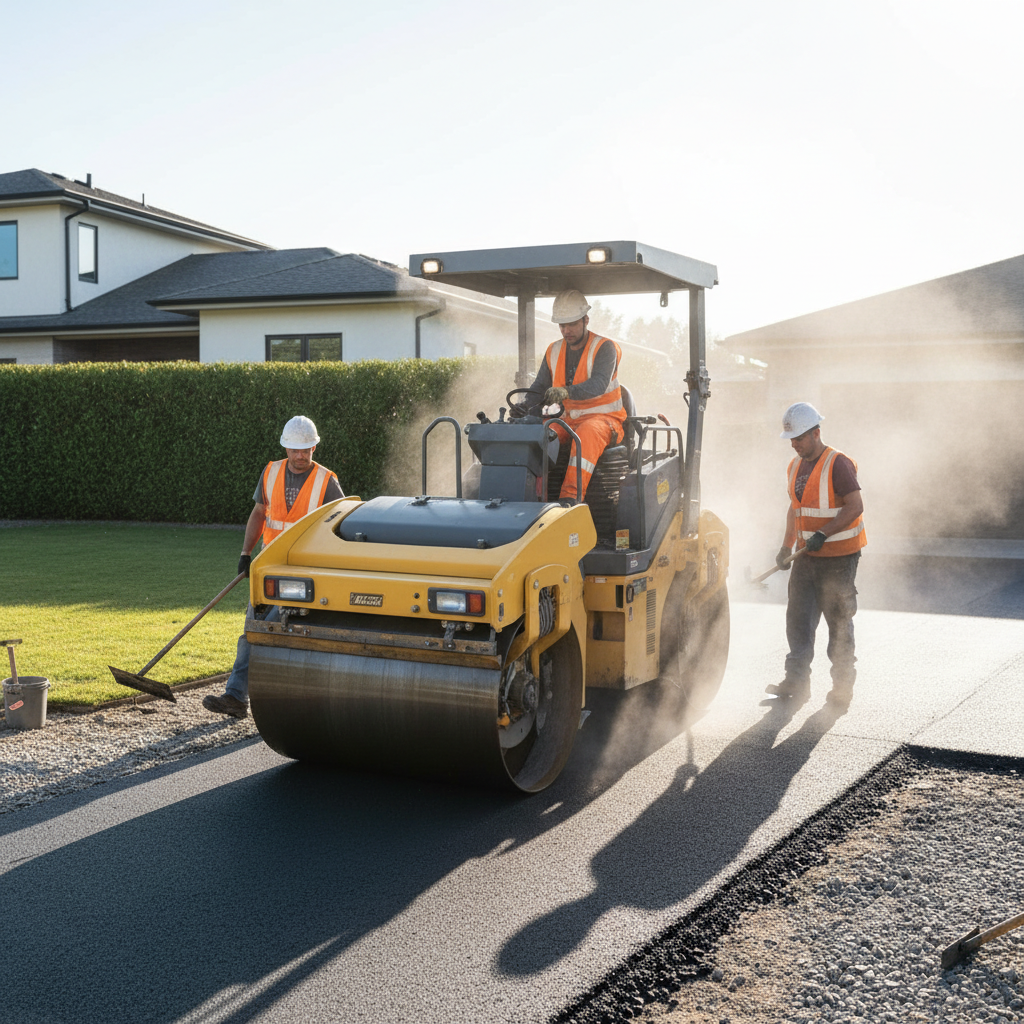
Driveway paving options and costs in Toronto
Toronto homeowners have a lot of paving choices, but your final driveway cost usually comes down to material selection, site conditions, and how the freeze–thaw cycle is managed. With 602,925 homeowner households in the Toronto area (Statistics Canada, 2021 Census), and single-detached homes making up 23.3% of dwellings, a large share of driveways in the city are tied to detached properties where contractors can plan for consistent excavation and base construction. You’re also working in a market where most homes are older—58.1% were built before 1981 (Statistics Canada, 2021 Census). That matters because older lots often have settled subgrade, older drainage patterns, or buried utilities that can add excavation and restore work.
In Toronto, frost depth and frequent freeze–thaw cycles are the decisive cost drivers. Ground freezing to roughly 3–4 feet means the job needs a deeper, well-compacted granular base and reliable drainage so water can’t sit under the pavement and cause heaving and cracking. On top of that, the paving season is effectively late spring through early fall because crews need suitable soil and air temperatures for asphalt placement; prime scheduling in places like North York and the Don Mills–Eglinton corridor often tightens availability and can move pricing up.
Below is a practical comparison of common driveway options so you can benchmark quotes before you talk to contractors.
| Material |
Lifespan |
Maintenance |
Best For |
Price per sq ft |
Price Range |
| Asphalt (new installation, proper base) |
15–25 years |
Seal every 3–5 years |
Good value, smooth ride, fast install |
$6–$12 |
$3,500–$8,000 |
| Asphalt (overlay on existing gravel base) |
10–20 years (depends on subgrade) |
Seal every 3–5 years; monitor settlement |
When excavation is limited and base quality is proven |
$5–$10 |
$3,300–$7,500 |
| Interlocking concrete pavers |
25–40 years |
Spot repairs; re-sand/rehabilitation as needed |
Curb appeal and easier section repairs |
$20–$35 |
$9,000–$20,000 |
| Poured concrete (broom finish) |
20–30 years |
Crack monitoring; sealing optional |
Straight edges, clean look, winter durability |
$14–$25 |
$6,000–$15,000 |
| Exposed aggregate concrete |
20–30 years |
Sealing as recommended; manage staining |
High-end look and slip resistance |
$16–$28 |
$7,000–$16,500 |
| Gravel / crushed stone (budget option) |
3–8 years (varies widely) |
Top up and re-grade yearly to every few years |
Short-term or low-budget access |
$2–$6 |
$1,500–$5,000 |
Prices are estimates only and vary by project scope, site access and material selection.
What affects the price of paving in Toronto
Even when two neighbours choose the same driveway material, Toronto quotes can differ by 30–50% because the real cost drivers are mostly “below the surface”: excavation depth, granular base design, drainage corrections, and how much tear-out is required. In the Toronto economic region, frost line depth and freeze–thaw cycles are decisive cost factors. Roughly 3–4 feet of ground freezing in Toronto means you typically need a thicker compacted granular base (often 6–12 inches total after excavation) and tight compaction so water doesn’t migrate and freeze under the pavement. That’s why a “cheap” asphalt bid can become expensive if the contractor doesn’t build a base that can handle movement. Asphalt also needs a freeze–thaw-rated mix design, and the paving season is compressed into late spring through early fall—hot-mix asphalt placement generally targets conditions well above 10°C—so demand concentrates into peak months and prime dates can cost more.
Concrete pricing can also swing based on local conditions. For example, if your driveway ties into an older sidewalk ramp or the grade is off by a few inches, contractors may need regrading and formwork adjustments, which increases labour. Similarly, an exposed aggregate finish costs more than broom finish because of the added finishing step and material handling, but it can be worth it if you want better curb visibility on busy streets where you get more foot traffic. On the asphalt side, a properly engineered new installation is commonly closer to the upper end of the $3,500–$8,000 band, while a limited-scope overlay might land nearer the lower end if—but only if—the subgrade is sound. Interlocking pavers often fall into the $9,000–$20,000 range because edging, base layers, and paver restraint are labour-heavy, even though later repairs can be localized.
| Price Factor |
Why It Matters |
Cost Impact |
| Driveway area in sq ft |
Most costs scale directly with surface area |
$300–$1,000+ difference per 100 sq ft depending on material |
| Base depth required |
Frost line determines granular thickness and compaction needs |
Can add $1,000–$4,000 for deeper excavation and base build-up |
| Grading and drainage work |
Proper slope and drainage prevents standing water and pumping |
Typically $800–$3,500 depending on catch basin/downspout tie-in |
| Tear-out of existing surface |
Breaking, disposal, and hauling add labour and tipping fees |
Often $600–$4,000 depending on asphalt vs concrete depth |
| Edge restraints and curbing |
Prevents paver spread and asphalt edge raveling |
$500–$2,500 based on length and restraint type |
| Sealing requirement |
Asphalt must be protected from oxidation and moisture |
Roughly $300–$1,500 over time for sealing (job-dependent) |
| Site access |
Narrow lots slow equipment movement and can require smaller placements |
Can add 5–20% labour depending on constraints |
| Asphalt mix specifications |
Freeze–thaw-rated mix costs more and needs careful production |
Often adds $0.50–$2.00 per sq ft vs basic mixes |
Permits & regulations in Ontario
In Ontario, most private driveway paving done within your own property typically does not require a building permit. In practice, homeowners are usually replacing or paving an area inside their property lines (for example, asphalt paving over an existing driveway footprint, or reinstalling pavers on private land) with no changes to public infrastructure.
However, work does require municipal approval when it affects the public right-of-way or municipal infrastructure. Examples include new or modified curb cuts, changes to boulevard areas, any alteration to storm drainage
Before excavation, always complete utility locates via Ontario One Call. Then, to verify a Toronto contractor, ask for three documents and check them yourself:
- Ontario licence/registration (where applicable): confirm the contractor is legitimately registered for the type of work they advertise.
- Certificate of insurance: request liability coverage and ensure the certificate lists your property or at least names the insured properly; confirm it’s active.
- WSIB coverage (or applicable clearance/coverage confirmation): ask for proof of coverage or an official clearance letter where relevant.
Step-by-step: request documents before work starts, compare the insured name to the contract, and keep copies for your records—especially if there’s any excavation, drainage correction, or tear-out.
Asphalt vs pavers vs concrete for Toronto driveways
For Toronto driveways, the best material depends on how you want to balance upfront cost, winter performance, and long-term maintenance. Asphalt is typically the lowest upfront option and gives a smooth ride, but it must be sealed regularly—generally every 3–5 years—to protect against oxidation and moisture. In freeze–thaw conditions, the bigger issue isn’t the asphalt surface; it’s whether the granular base and drainage prevent water from sitting under the driveway and expanding when it freezes. Interlocking concrete pavers cost more upfront, but they’re engineered for movement and can be repaired in sections without replacing the entire driveway—an advantage when Toronto winters and de-icing practices cause localized heaving. Poured concrete lands in the mid-range and can last a long time if it’s air-entrained and properly designed with joints and drainage. Without proper air entrainment, Toronto’s repeated freeze–thaw plus salt and sand can accelerate surface scaling and cracking.
Base preparation in Toronto should be built around the frost depth (roughly 3–4 feet of freezing conditions), with careful compaction and a drainage plan so water can’t migrate under the slab or asphalt. In terms of winter maintenance, all options handle plowing well when edges are properly restrained and drainage is correct; pavers and asphalt benefit from good edging, while concrete needs disciplined joint spacing and good surface runoff away from the driveway.
Here’s a practical dollar example: if your driveway estimate for asphalt is around $3,500–$8,000, interlocking pavers might be closer to $9,000–$20,000. The difference is justified when you want the highest curb appeal and the ability to lift and reset a section after future utility work or localized settlement—something that happens fairly often in older Toronto neighbourhoods with 1950s–1970s servicing.
| Material |
Frost Resistance |
Curb Appeal |
Repair Method |
Lifespan |
Price Band |
| Asphalt (sealed regularly) |
Good when base/drainage is engineered for frost |
Moderate (clean, smooth look) |
Patch and re-compact; overlay when needed |
15–25 years |
$3,500–$8,000 |
| Interlocking concrete pavers |
Very good; designed to tolerate minor movement |
High (variety of patterns and colours) |
Lift/replace individual blocks or small sections |
25–40 years |
$9,000–$20,000 |
| Poured concrete (air-entrained) |
Good with proper mix, air entrainment, and joints |
Moderate to high (depending on finish) |
Section replacement is possible but more disruptive |
20–30 years |
$6,000–$15,000 |
| Exposed aggregate concrete |
Good when properly finished and drained |
Very high (textured, premium look) |
Cracked sections typically require replacement |
20–30 years |
$7,000–$16,500 |
| Permeable pavers (drainage grid) |
Excellent drainage handling; reduces water under surface |
High (clean lines and engineered appearance) |
Spot repair with paver resets |
25–40 years (system-dependent) |
$10,000–$22,000 |
| Chip seal / tar-and-chip |
Limited for heavy drive traffic; best for low-speed areas |
Low to moderate |
Re-surface/rehabilitate when worn |
5–12 years |
$2,500–$6,500 |
How to choose a paving contractor in Toronto
Choosing the right Toronto contractor protects you against the two biggest driveway failures: poor base construction and poor workmanship during placement. Start by verifying Ontario business credentials and coverage. Ask for a current certificate of liability insurance—and confirm the policy is active and the contractor listed is the same party signing your contract. For worker protection, request WSIB coverage information (or a clearance letter where applicable) and keep a copy. If the contractor uses subcontractors, ask who holds the coverage for those crews.
Next, get 2–3 itemised written quotes rather than a single lump sum. A good quote breaks costs into labour and materials: excavation and haul-away, granular base depth and type, compaction method, asphalt or concrete supply, forms/finishing, edging restraints, and any drainage corrections. Also read the exclusions: is permit work (if needed) included, is disposal/tipping included, are utility locates included, and what happens if they find undermining subgrade or soft spots?
Warranty matters. Look for a workmanship warranty in writing (length and what it covers). Separate product/manufacturer warranty where applicable, and ask whether coverage is transferable if you sell your home. For payment, avoid large upfront deposits; a typical safe approach is no more than 10–15% upfront, with a holdback until the job is complete and you’ve accepted the final surface. Finally, require a start date and a completion estimate in writing—Toronto’s compressed paving season means scheduling changes are common, but they should be documented.
- Confirm the contractor’s insurance certificate and WSIB coverage/clearance before any work starts.
- Ask for 2–3 recent driveway references in Toronto (not only commercial lots).
- Require an itemised quote: base materials, compaction, and drainage line items.
- Insist on a written scope: what’s included in tear-out and disposal.
- Check edge restraint plan (pavers need restraints; asphalt edges need containment).
- Ask who is responsible for utility locates and confirming them on-site.
- Clarify whether the contractor will correct grade/drainage or only pave the existing footprint.
- Confirm asphalt mix specification is freeze–thaw rated and appropriate for driveway load.
- Verify concrete mix is air-entrained if you’re considering poured concrete.
- Get the workmanship warranty length in writing and what triggers warranty service.
- Review the payment schedule; keep a holdback until final completion.
- Get start/completion dates in writing, including weather-related contingencies.
Red flags in Toronto include contractors who won’t show proof of insurance or WSIB/clearance, quotes that omit base depth and compaction, promises of “cheap paving” with no tear-out/disposal plan, vague warranties that don’t define workmanship coverage, and crews that start without utility locates or clear drainage expectations.
Frequently asked questions — paving in Toronto
How much does it cost to pave a driveway in Toronto?
Driveway paving in Toronto typically lands in material-based bands because frost depth, base build-up, and site access drive most of the cost. For asphalt, many Toronto homeowners see totals around $3,500–$8,000, but deeper excavation and drainage correction can push you toward the higher end. Interlocking pavers often run $9,000–$20,000 due to labour-intensive base, restraints, and edging. Concrete commonly sits around $6,000–$15,000, depending on finish and whether regrading is needed. In older neighbourhoods where subgrade may have settled—Toronto has a large share of homes built before 1981 (Statistics Canada, 2021 Census)—quotes can vary more because contractors may need additional base and stabilization work.
Asphalt vs interlocking pavers vs concrete — which is best in Toronto?
There isn’t one “best” for every driveway; the Toronto winter is harsh on any surface, so base and drainage engineering come first. Asphalt is usually best for homeowners who want the lowest upfront cost and can commit to sealing every 3–5 years; when properly based, it performs well through Ontario freeze–thaw cycles. Interlocking pavers are best if curb appeal and future repairability matter—you can lift and reset sections without replacing the whole driveway, which is valuable if you ever need localized utility access. Poured concrete can be excellent if the mix is air-entrained and joints/drainage are planned, but it’s more sensitive to poor jointing and water management. If you’re comparing budgets, asphalt near $3,500–$8,000 costs less upfront than pavers at $9,000–$20,000, but pavers can save money long-term when repairs are localized.
How long does a paved driveway last in Toronto?
With correct installation and a properly engineered granular base and drainage, many Toronto driveways can last 15–25 years for asphalt, 20–30 years for air-entrained concrete, and 25–40 years for interlocking pavers. The city’s freeze–thaw cycles and winter maintenance (salt, sand, plowing) increase wear compared with milder climates, so the “lifespan” depends heavily on what’s under the surface. A common failure pattern in Toronto is water infiltration under the driveway that freezes and expands, causing heaving and cracking—so base depth, compaction, and slope control are critical. If you want maximum service life, plan for asphalt sealing on schedule (usually every 3–5 years) and ensure edging is restrained so water doesn’t migrate at the perimeter.
When is the best time of year to pave in Toronto?
For Toronto homeowners, late spring through early fall is the realistic paving window. Asphalt placement generally needs suitable soil and air temperatures—often meaning crews prefer conditions well above 10°C—so working too early in spring or too late in fall increases the risk of poor compaction and premature surface distress. Winter work can also be limited by excavation conditions and curing requirements. Because Toronto has a compressed season, prime dates in summer can be in high demand, especially in busy areas like North York, Mississauga, Brampton, Markham, and Vaughan. If you want smoother scheduling, aim for early summer slots; if you’re flexible, fall projects can sometimes book sooner, but reputable contractors will still stop when temperatures drop below workable thresholds.
How deep should the base be for Toronto's frost?
Toronto’s frost conditions are one reason quotes vary: ground freezing can reach roughly 3–4 feet, which means you need a base that resists heaving by preventing water from accumulating under the surface. In practice, contractors typically excavate and build a thicker compacted granular base than you’d see in milder climates—often in the range of 6–12 inches of total granular thickness after excavation (exact design depends on subgrade condition, drainage, and driveway thickness). The critical part is not just depth; it’s the compaction and drainage. If the contractor can’t clearly explain the base layers, compaction approach, and how water will be managed (slope and outlet), that’s a sign the driveway may not perform well through freeze–thaw cycles.
How often should I seal my asphalt driveway?
After asphalt is installed, sealing is usually recommended after it has aged and cured properly—often within the first year—then repeated on a regular cycle to protect the surface. In Toronto, a common practice is sealing every 3–5 years depending on traffic, sun exposure, and how aggressively salt and sand are used during winter. If you wait too long, asphalt can oxidize and lose flexibility, which makes it more vulnerable to cracking when freezing returns. Staying on schedule helps stretch the service life that Toronto homeowners expect from asphalt (often 15–25 years when properly installed). If your quote for asphalt sits in the $3,500–$8,000 band, ask the contractor whether your maintenance plan includes recommended sealing timing and which product they use.