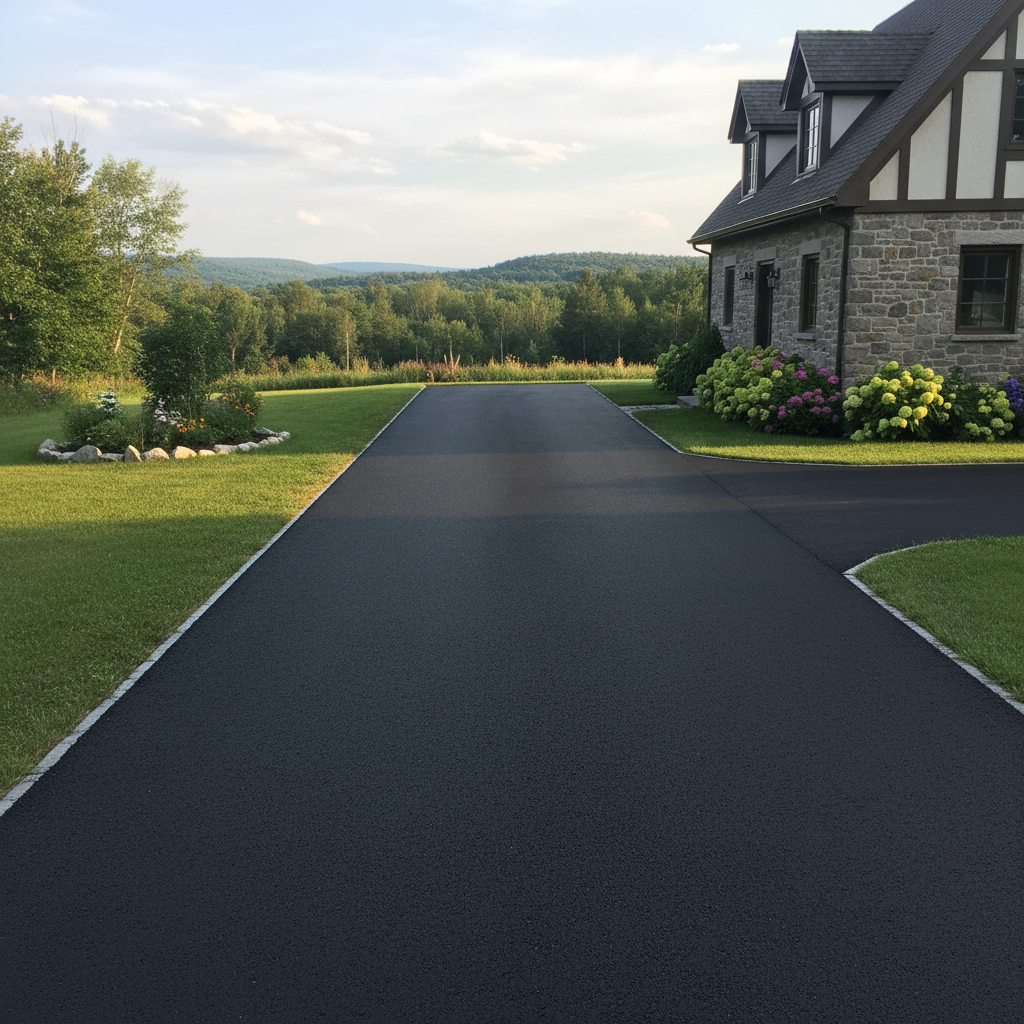
Driveway paving options and costs in Eringate-Centennial-West Deane
In Eringate-Centennial-West Deane, choosing a driveway surface is as much about managing winter as it is about curb appeal. With a population of 18,588 (Statistics Canada, 2021 Census), our local streets are busy and contractor demand can spike when the weather finally cooperates. Most residential driveways here serve single-family homes, so homeowners typically need a durable surface that can handle frequent freeze–thaw cycles, plus reliable traction for winter ploughing and salt.
In the Toronto economic region, frost depth and freeze–thaw cycles are primary cost drivers. Ground can freeze to roughly 3–4 feet, which means paving isn’t just “pour and pave”—it requires excavation, properly compacted granular base, and drainage corrections so water can’t sit under the surface. That leads to higher installed costs than in milder climates, and it also compresses the paving season into late spring through early fall. When crews are booked, “prime date” scheduling can add pressure to pricing.
In neighbourhood pockets such as around The West Mall area and the broader Centennial Village corridor, driveway work is especially active because lots tend to be older and already show signs of settlement, edge breakdown, or water ponding. Once you’re comparing materials, the differences in lifespan and upkeep are often as important as the upfront price. Use the table below as a starting point for what you’ll typically budget before your contractor measures your driveway and confirms your base and drainage plan.
| Material |
Lifespan |
Maintenance |
Best For |
Price per sq ft |
| Asphalt (new installation, proper base) |
15–25 years |
Seal 6–12 months after install, then every 3–5 years |
Most cost-effective, smooth ride, good traction |
$8 – $15 |
| Asphalt (overlay on existing gravel base) |
10–20 years (depends on base condition) |
Seal and monitor edges; plan for partial base repairs if needed |
When you have a stable, well-draining base already |
$6 – $12 |
| Interlocking concrete pavers |
25–40 years |
Weed control, occasional sand re-leveling, replace individual stones if damaged |
Max curb appeal and easy localized repairs |
$18 – $30 |
| Poured concrete (broom finish) |
20–30 years |
Seal if desired; watch for joint-related cracking and spalling |
Low maintenance look, solid surface for plough access |
$14 – $25 |
| Exposed aggregate concrete |
25–35 years |
Seal periodically; clean without aggressive chemicals |
Textured slip resistance and premium look |
$18 – $32 |
| Gravel / crushed stone (budget option) |
3–10 years |
Re-grade and top up annually; weed control |
Temporary driveway, low budget, fast install |
$4 – $9 |
Prices are estimates only and vary by project scope, site access and material selection.
What affects the price of paving in Eringate-Centennial-West Deane
In Eringate-Centennial-West Deane, two quotes for the “same” driveway can legitimately differ by 30–50% because paving cost is driven less by the surface material and more by the amount of earthwork, base engineering, and removal work required. In the Toronto market, frost depth and freeze–thaw cycles are decisive cost factors. With ground freezing to roughly 3–4 feet, you typically need a thicker, properly compacted granular base and dependable drainage so water can’t sit under the pavement. As a rule of thumb for Ontario, base and compaction requirements often land in the 6–12 inch granular range (project-specific), not the thinner builds some homeowners remember from older installations. That means more excavation, more trucking, and more labour.
Toronto’s seasonality also matters. Hot-mix asphalt needs air temperatures above about 10°C, so short workable windows concentrate demand into late spring through early fall. When schedules get tight, crews charge more for prime dates and rush work—especially in busy corridors around central Mississauga and west Toronto. Mix design must also be freeze–thaw-rated for local performance; a higher-spec asphalt can cost more up front, but it helps reduce early raveling and cracking.
Concrete costs can rise here in two common ways: (1) if the subgrade is soft or has water issues, contractors may need deeper base and more granular stabilization; (2) if control joints and finishing aren’t planned for freeze–thaw movement, you can see cracking sooner. On the flip side, if your existing driveway is already well-built and properly drained, an asphalt overlay can keep you toward the lower end of the $3,500 – $8,000 asphalt driveway paving band rather than moving to full replacement.
| Price Factor |
Why It Matters |
Cost Impact |
| Driveway area in sq ft |
The surface, base, and asphalt tonnage scale directly with square footage. |
Major cost driver (often 50–70% of total) |
| Base depth required |
Frost line depth determines granular thickness and compaction. |
Moderate to major increase in excavation and material |
| Grading and drainage work |
Correct slopes and eliminate water ponding under the surface. |
Can add significant labour and trucking |
| Tear-out of existing surface |
Breaking and hauling old concrete or old asphalt adds disposal and time. |
Often a major swing factor (+15–40% depending on condition) |
| Edge restraints and curbing |
Prevents paver spread and asphalt edge failure during freeze movement. |
Small-to-moderate increase for better long-term performance |
| Sealing requirement |
Asphalt typically needs sealing after the curing window, then regular re-seal. |
Adds a later maintenance budget (plan 3–5 year intervals) |
| Site access |
Narrow driveways or tight lots slow equipment movement and increase labour time. |
Moderate increase for extra handling |
| Asphalt mix specifications |
Freeze–thaw-rated mixes help reduce cracking and raveling. |
Moderate increase compared with standard mix |
Permits & regulations in Ontario
In Ontario, paving a private driveway within your own property usually does not require a building permit. In most typical Eringate-Centennial-West Deane scenarios, contractors are working on your driveway area and the work is treated as private site improvement—meaning no municipal permit is automatically triggered. Where permits and approvals come in is when the job affects the municipal right-of-way or storm servicing. If you’re planning a new curb cut, changing an existing entrance, altering the boulevard, or modifying storm drainage or grading that impacts municipal infrastructure, you should expect municipal approval.
Some municipalities also enforce lot-grading or surface material rules that affect how close hard surfaces can be to property lines or how drainage must be managed. Before excavation, require that utility locates be completed through Ontario One Call (it’s also smart to coordinate on-site marking with the contractor). This protects buried services and prevents avoidable delays.
To verify a contractor for your driveway in Eringate-Centennial-West Deane, follow a simple checklist: (1) Licensing: confirm the company operates in good standing and provides the Ontario information they’re required to carry for their trade category; many contractors also list relevant credentials online. (2) Liability insurance: request a current Certificate of Insurance that names you as an additional insured where offered, and verify coverage amounts. (3) WSIB: ask for proof of coverage (or clearance letter) for the workers who will be on site. (4) Keep copies: store the documents with your quote, contract, and change-order records.
Asphalt vs pavers vs concrete for Eringate-Centennial-West Deane driveways
For Eringate-Centennial-West Deane homeowners dealing with Toronto’s freeze–thaw climate, asphalt, interlocking pavers, and concrete all can work—but each has different strengths. Asphalt typically offers the lowest upfront cost, especially when your contractor builds a proper granular base and drains water away from the pavement. Its trade-off is maintenance: sealing is essential after curing (often within the first year) and then every few years to protect against surface oxidation from winter grit and salt. With the right mix design and base, asphalt tends to perform well under plough traffic, but it’s still more “flexible” than concrete.
Interlocking concrete pavers cost the most upfront, but they shine in repairability. If a section settles or a joint fails, pavers can be lifted, reset, and re-compacted without removing the entire driveway. That matters in an area where deeper frost depth can magnify small drainage issues. Pavers also deliver strong curb appeal, which is why many homeowners choose them when upgrading the whole front yard presentation.
Poured concrete sits mid-range and can be excellent with the right air-entrainment, joint layout, and finishing. However, concrete is more susceptible to cracking when freeze–thaw movement isn’t properly controlled. For Toronto driveways, drainage and engineered base preparation are critical—otherwise salt and water movement can accelerate surface deterioration.
Where the price difference is justified: if you’re pricing a full asphalt replacement within the $3,500 – $8,000 band but you’re also planning a long-term curb appeal upgrade, moving into interlock within the $9,000 – $20,000 band can be worth it—especially if you want easier localized fixes and a surface that tolerates minor base movement without looking “all cracked” at the surface.
| Material |
Frost Resistance |
Curb Appeal |
Repair Method |
Lifespan |
Price Band |
| Asphalt (sealed regularly) |
Good when base is deep/compacted and drainage is correct |
Medium (clean, modern look) |
Patch and re-tack seal the affected area |
15–25 years |
$3,500 – $8,000 |
| Interlocking concrete pavers |
Very good; tolerates minor movement with jointed construction |
High (premium appearance) |
Lift/replace individual stones and re-sand |
25–40 years |
$9,000 – $20,000 |
| Poured concrete (air-entrained) |
Good with air entrainment and controlled joints |
Medium to high (can be finished textured) |
Spot repairs; larger sections may require re-pour |
20–30 years |
$6,000 – $15,000 |
| Exposed aggregate concrete |
Good; texture helps surface traction after freeze events |
High (decorative texture) |
Limited patching; often needs resurfacing for large areas |
25–35 years |
$8,000 – $18,000 |
| Permeable pavers (drainage grid) |
Good when designed with proper underdrain and base structure |
Medium to high (modern look) |
Localized lift/replace of affected sections |
20–30 years |
$10,000 – $22,000 |
| Chip seal / tar-and-chip |
Moderate; relies heavily on surface stability and base |
Low to medium (not as “finished” as pavers) |
Resurface with re-chip; spot patch is limited |
7–12 years |
$2,500 – $6,500 |
How to choose a paving contractor in Eringate-Centennial-West Deane
Choosing the right contractor in Eringate-Centennial-West Deane starts with proof, not promises. First, verify Ontario licensing where applicable to their trade category and ensure the company can provide documentation on request. Next, check liability insurance: ask for a current Certificate of Insurance and confirm coverage is active for the project date. For worker coverage, request WSIB documentation (or a clearance letter if exempt) so you’re not exposed if an injury happens on site. Don’t accept expired documents—ask for the latest certificates.
Then get 2–3 itemised written quotes. You want labour and materials broken out: excavation and hauling, granular base depth, compaction, asphalt type/mix, paving thickness, tack coat, and (for asphalt) sealing timing and product. Avoid “lump sum” quotes that don’t specify thicknesses and base build. Read the scope for exclusions such as permit pull responsibility (if required), disposal fees, snow/ice management for the work window, and any additional saw cutting or curb work.
Warranty matters locally because freeze–thaw stress can reveal base problems after installation. Ask for a workmanship warranty length, whether it’s tied to specific defects (e.g., premature cracking) and whether it’s transferred if you sell your home. For payment, never pay more than 10–15% upfront; a common approach is progress payments aligned with measurable milestones, with a holdback until final cleanup and punch list completion.
Lastly, timeline: get an estimated start date and completion estimate in writing, including weather contingency—Toronto scheduling changes when crews are booked or temperatures drop.
- Ask for WSIB clearance letter or active WSIB account proof before work begins.
- Request a liability insurance Certificate of Insurance and confirm coverage amount.
- Verify licensing/registration details that apply to their trade category in Ontario.
- Get at least 2–3 quotes that list base depth, materials, and paving thickness.
- Confirm drainage plan: slope direction, catch basins or weeping routes if needed.
- Ensure tear-out scope is explicit (what’s removed, how deep, disposal included?).
- Check whether utility locates are arranged and who confirms locate marks on site.
- For asphalt, confirm tack coat, asphalt mix spec (freeze–thaw rated), and compaction methods.
- For pavers, confirm edge restraints, bedding sand thickness, and jointing sand specification.
- For concrete, confirm air-entrainment, jointing/control plan, and finishing method.
- Ask about cleanup and protection (hosing residue, barrier setup, traffic management).
- Keep holdback until final grading, compaction checks, and punch-list items are done.
Concrete red flags we see in Eringate-Centennial-West Deane include contractors who (1) won’t discuss base depth or compaction testing, (2) avoid written specs and only quote “square feet” with no thicknesses, (3) request large upfront payments beyond 10–15%, (4) cannot provide current insurance/WSIB documentation, and (5) promise work “anytime” without acknowledging Ontario temperature limits and freeze–thaw seasonality.
Frequently asked questions — paving in Eringate-Centennial-West Deane
How do I compare paving quotes fairly?
To compare quotes fairly in Eringate-Centennial-West Deane, insist on itemised scopes that specify base depth, excavation/haulage, and the final surface build. For asphalt, ask for hot-mix asphalt thickness, tack coat, and the mix spec (freeze–thaw rated). For pavers, confirm edge restraints, bedding sand thickness, and jointing sand type. For concrete, ask whether it’s air-entrained and what the joint/control plan is. Compare disposal included vs extra, and whether drainage corrections are part of the scope. If one quote lands in the $3,500 – $8,000 asphalt range and another doesn’t, it may be because base work is cut short—those savings often show up as early cracking during winter freeze–thaw cycles.
Can asphalt be laid in cold weather in Eringate-Centennial-West Deane?
Ontario generally requires asphalt to be placed when conditions support proper compaction and bonding. Hot-mix asphalt is best installed when air temperatures are above about 10°C, and cold snaps can prevent full compaction, leading to weak spots. In Eringate-Centennial-West Deane, late fall and early spring work can be delayed for this reason, and contractors may schedule around temperatures to avoid early failures. If you’re offered “cold weather paving” in winter, ask what method they use and how they’ll protect placement and compaction. Even with additives, poor temperature conditions increase risk—particularly with Toronto’s freeze–thaw cycles that can expose base drainage issues over time.
What is a driveway apron and do I need one in Eringate-Centennial-West Deane?
A driveway apron is the paved transition area at the edge of your driveway where it meets the street or walkway/sidewalk area—sometimes called the entrance pavement segment. Whether you “need” it depends on how your driveway connects to the boulevard and whether you’re addressing curb/grade transitions. In many Toronto-area situations, a properly constructed apron helps manage water runoff and reduces edge breakdown caused by winter freeze–thaw movement. If you’re doing a new curb cut or boulevard work, that can fall under municipal approvals. The safest approach in Ontario is to ask your contractor to clarify what portion is included in the quote: is it just the driveway pad, or does it include the apron and any required slope/drainage correction at the connection?
How do I maintain my driveway through Eringate-Centennial-West Deane winters?
Maintenance in Eringate-Centennial-West Deane is mainly about limiting water problems and protecting the surface from abrasion. In winter, plough carefully to avoid gouging edges and corners—most damage begins at the restraint lines and driveway edges during repeated passes. Use de-icing practices that reduce excessive salt exposure, especially on concrete and exposed aggregate; salt and moisture together can accelerate surface wear. After freeze periods, watch for puddling or soft spots—those are usually signs of drainage or base settlement. For asphalt, keep to a sealing schedule: if your driveway is new, sealing is typically done after curing, then again every 3–5 years to slow oxidation. If you see raveling, patch early to stop water infiltration.
Is it worth sealing a new driveway right away in Eringate-Centennial-West Deane?
It’s usually worth sealing asphalt, but timing matters. Sealing immediately can trap moisture if the pavement hasn’t cured enough, so reputable contractors wait for the recommended cure period. In Ontario, a typical approach is to seal after the pavement has had time to cure—often within the first 6–12 months depending on weather and product used. The reason sealing is important in Eringate-Centennial-West Deane is Toronto’s freeze–thaw cycles and winter grit/salt: sealing helps protect the asphalt binder from oxidation and helps reduce surface raveling. If you’re budgeting, plan sealing as part of long-term cost rather than a one-time “extra.” Asphalt quotes in the $3,500 – $8,000 band often assume the base work is right; sealing helps you protect that investment.
What is a chip seal driveway and is it suited to Eringate-Centennial-West Deane?
Chip seal (tar-and-chip) is a surface treatment where a binder is sprayed and stone is rolled into place. It’s often used on lower-cost projects or where a full paving rebuild isn’t desired. In Eringate-Centennial-West Deane, chip seal can be suited if the underlying base is stable and well-drained, because Ontario’s freeze–thaw cycles can loosen stone or expose weak spots if the base wasn’t engineered correctly. The finish is more utilitarian than pavers and may require re-treatment sooner than asphalt or concrete. If you’re considering chip seal, ask how they’ll confirm base compaction, provide edge restraints, and manage drainage at the driveway ends. Budget-wise, chip seal can be cheaper than paving—often below the standard asphalt range—so it’s best when you’re comfortable with shorter lifespan expectations.