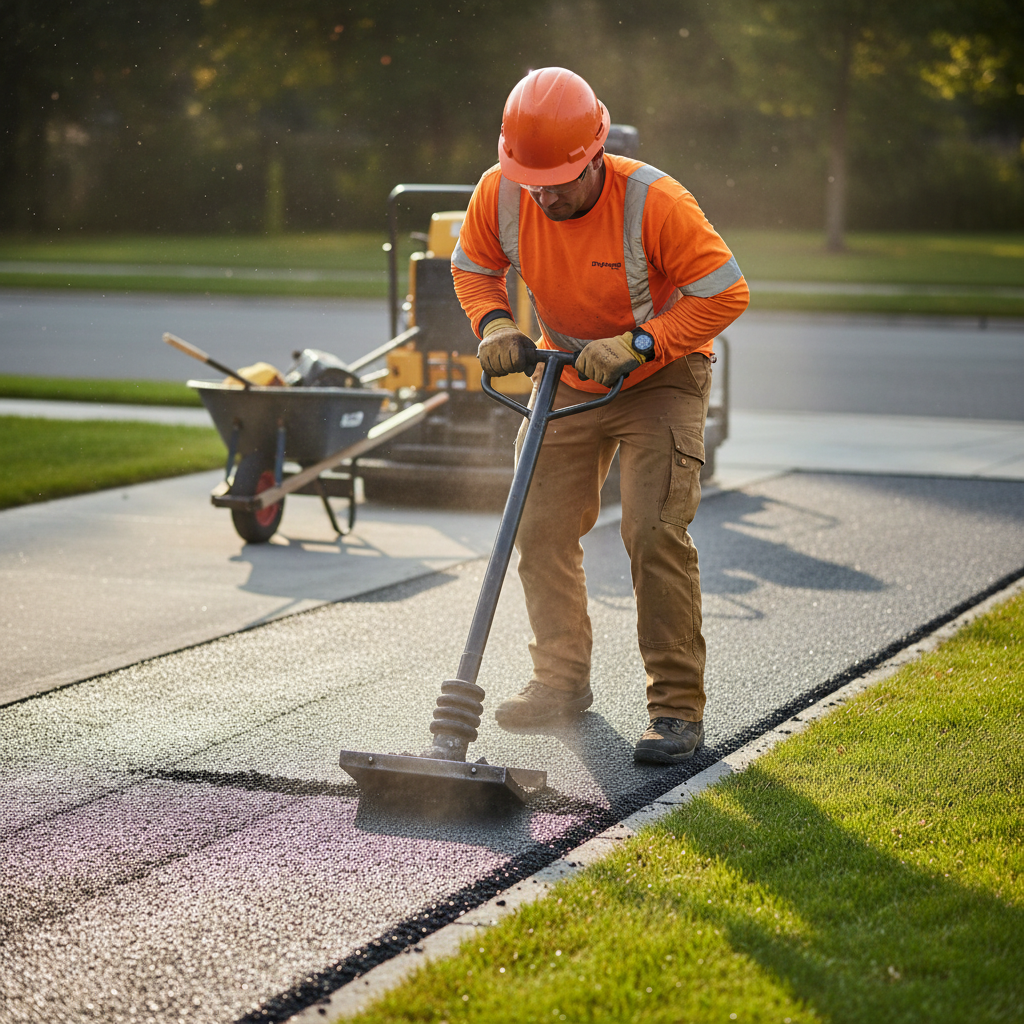
Driveway paving options and costs in Arnprior
Arnprior homeowners typically have three driveway materials to compare: asphalt, interlocking pavers, and concrete. In Arnprior, about 63.4% of households are owner-occupied, and the housing stock is strongly dominated by single-detached homes (51.7% of dwellings), so private driveway work is a large part of the local paving market. Just over half of homes in the area were built before 1981, which often means older driveways sit on variable fill, shallow base, or drainage that doesn’t handle spring melt well anymore. That’s where your quote can change quickly—sometimes more than the material choice itself.
In the Kingston–Pembroke economic region, pricing is driven first by frost and soil conditions. Frost penetration is commonly around 4 feet (≈1.2 m) in much of Southern and Eastern Ontario, and freeze–thaw cycling puts real strain on both asphalt and concrete. Contractors price for this by building a deeper, well-compacted granular base, improving ditching/swales (or adding French drains where needed), and using a freeze-thaw-rated asphalt mix. The paving window is also shorter because hot-mix asphalt generally requires air temperatures above 10°C, which concentrates demand into spring and early summer and can tighten schedules.
In Arnprior, we often see especially strong demand in the newer-growth edges and in established pockets like Highway 17 / Madawaska Boulevard, where driveways get widened and rebuilt to handle heavier vehicle traffic. Use the comparison table below to align material choice with realistic local ranges.
| Material |
Lifespan |
Maintenance |
Best For |
Price per sq ft |
Price Range |
| Asphalt (new installation, proper base) |
15–25 years |
Seal every 3–5 years; spot repairs as needed |
Best value where drainage and base are built correctly |
$6.50–$9.50 |
$4,500–$9,000 |
| Asphalt (overlay on existing gravel base) |
10–18 years |
Seal every 3–5 years; monitor for edge failure |
When old driveway base is stable and thickness can be improved locally |
$5.75–$8.75 |
$4,000–$8,200 |
| Interlocking concrete pavers |
25–35 years |
Replace individual stones; joint sand top-ups |
Curb appeal and repairability (sections can be lifted) |
$10.00–$16.50 |
$6,500–$14,000 |
| Poured concrete (broom finish) |
20–30 years |
Seal if desired; crack control joints and patching |
Straightforward, durable surface with good base preparation |
$9.00–$14.00 |
$7,000–$15,000 |
| Exposed aggregate concrete |
20–30 years |
Seal/maintain appearance; patching similar to concrete |
Texture and slip resistance with higher-end appearance |
$10.50–$16.50 |
$8,000–$16,500 |
| Gravel / crushed stone (budget option) |
3–8 years (varies widely) |
Regrade and top up 1–2x/year; weed control |
Short-term solution where drainage is corrected |
$2.00–$4.50 |
$1,500–$4,000 |
Prices are estimates only and vary by project scope, site access and material selection.
What affects the price of paving in Arnprior
If you’re comparing quotes in Arnprior, it’s common to see the same “new driveway” idea land 30–50% apart across contractors in the Kingston–Pembroke region. The biggest reasons aren’t always the surface—often it’s the buried work: excavation depth, base type and compaction, drainage corrections, and how much material has to be hauled in/out. In a market with older housing stock (with about 50.2% of homes built before 1981), we frequently encounter driveways sitting on mixed fill or clay pockets that soften during spring melt, which forces deeper rebuilds and more subgrade stabilization.
Frost penetration and freeze–thaw cycles are decisive cost factors. In much of Southern and Eastern Ontario, frost is commonly around 4 feet (≈1.2 m). That means you typically need a thicker, well-compacted granular base and robust drainage to limit heaving and surface cracking. Asphalt mix design also matters: contractors will use freeze–thaw-rated asphalt and account for how long the material can be placed and compacted during Ontario’s shorter paving window—hot-mix asphalt generally requires air temperatures above 10°C. When spring demand peaks, scheduling pressure can also push prices toward the high end of the asphalt band (often around $4,500–$9,000).
Concrete costs can rise for similar reasons but also swing based on finishing and jointing. For example, a driveway that needs major grading to pitch water away from the garage can add work regardless of whether you choose poured concrete or pavers. Conversely, if your existing base is already strong and edges are accessible, you may keep costs nearer the lower end (sometimes around the mid-range of the concrete band such as $7,000–$15,000). In Arnprior, salt use from winter road maintenance and plowing patterns can further expose weak edges, so the cost of edge restraints and proper base thickness is often money well spent.
| Price Factor |
Why It Matters |
Cost Impact |
| Driveway area in sq ft |
Surface area drives material, base quantities, and labour time |
Largest swing; often 40–70% of the total |
| Base depth required |
Frost protection relies on granular thickness and compaction |
Can add significant hauling/excavation cost (major driver in frost-prone soils) |
| Grading and drainage work |
Correct slope and manage water to prevent freeze damage |
Added excavation, ditching, or French drain increases total |
| Tear-out of existing surface |
Breaking concrete or milling old asphalt affects disposal and labour |
Typically increases cost; more concrete = more weight to haul |
| Edge restraints and curbing |
Pavers/spreadable asphalt need rigid edges to prevent lateral movement |
Moderate add, but helps prevent premature failures |
| Sealing requirement |
Asphalt needs sealing after the initial curing period |
Ongoing cost; generally budget for every 3–5 years |
| Site access |
Narrow gates or long pushes slow equipment and increase labour |
Can add travel time and require smaller machinery |
| Asphalt mix specifications |
Freeze–thaw-rated mix and proper binder content cost more |
Often small per-sq-ft premium, but important for longevity |
Permits & regulations in Ontario
In Ontario, paving a private driveway within your own property usually does not require a building permit. However, any work that affects the municipal right-of-way—think changes near the road such as new curb cuts, alterations to boulevard surfaces, or adjustments to storm drainage—typically needs municipal approval. Some municipalities also enforce lot-grading expectations (even if they’re implemented via bylaw or drainage policies), which can restrict how close a hard surface can be to property lines or how water must be directed. In Arnprior, that often matters when a driveway rebuild changes how meltwater runs off toward the street or toward a low spot beside the garage.
Here’s the practical approach for homeowners:
- Before excavation: call utility locates through Ontario One Call so all buried services are marked.
- Ask about right-of-way work: if your contractor touches the boulevard, apron, ditch, or storm inlet/catch basin area, confirm the required municipal permission in writing.
- Check lot-grading rules: ask the municipality whether any grading/hard-surface conditions apply to your street frontage.
To verify a contractor, don’t rely on word-of-mouth. Ask for:
- Ontario licence/registration: check the relevant public registry or licence information listed in their website/administrative documents.
- Liability insurance: request a current certificate of insurance naming you (or confirming coverage) and matching the project address.
- WSIB coverage: ask for proof of clearance/coverage; this is especially important for excavating and cutting.
Asphalt vs pavers vs concrete for Arnprior driveways
For Arnprior’s freeze–thaw climate, the decision between asphalt, interlocking pavers, and concrete comes down to upfront cost, drainage/base quality, and how you want repairs handled after winter cycles. Asphalt is usually the lowest upfront option, but it relies on consistent sealing—typically every 3–5 years—to protect binder from oxidizing and from winter salt and sand. Interlocking pavers cost more to install, yet they’re the easiest to repair locally: if a section settles, stones can be lifted, re-levelled, and re-installed without tearing up the entire driveway. Poured concrete sits in the middle on price and can be very durable, but it’s also susceptible to cracking if the base isn’t truly frost-protected or if joints and air-entrainment are handled correctly.
Because frost penetration is commonly around 4 feet in Southern/Eastern Ontario, you’ll want a deeper, well-compacted granular base and proper drainage regardless of material. In practice, when drainage is poor—ponding at the garage apron, clay pockets, or a flat slope—each material responds differently. Asphalt can show raveling at weak edges; concrete can develop cracking patterns near disturbed areas; and pavers may heave if the base underneath isn’t uniformly compacted. For winter maintenance, Arnprior driveways often see plowing and periodic salt application; with asphalt and concrete, the edges and surface protection matter most. Pavers generally tolerate freeze–thaw well when installed on the right layers, because small localized repairs don’t require full replacement.
Dollar example: for a typical driveway where asphalt and pavers both require a full base rebuild, asphalt might land near $4,500–$9,000, while interlocking pavers commonly run about $6,500–$14,000. That extra cost is usually justified if you want easy section repairs, higher curb appeal, and fewer “patch-and-repatch” seasons after spring soft spots—especially in older neighbourhoods where subgrade can vary.
| Material |
Frost Resistance |
Curb Appeal |
Repair Method |
Lifespan |
Price Band |
| Asphalt (sealed regularly) |
Good when base and drainage are correct; best with freeze–thaw-rated mix |
Moderate (clean, uniform finish) |
Patch cut-and-repair; seal to blend |
15–25 years |
$4,500–$9,000 |
| Interlocking concrete pavers |
Very good with engineered base layers and proper compaction |
High (pattern, colour, clean edges) |
Lift-and-repair section; replace stones/joints |
25–35 years |
$6,500–$14,000 |
| Poured concrete (air-entrained) |
Good when air-entrained and jointed; sensitive to poor base/drainage |
Moderate to high (finish options) |
Patch or re-surface; crack repairs for isolated issues |
20–30 years |
$7,000–$15,000 |
| Exposed aggregate concrete |
Good with air-entrainment and proper base |
Very high (textured, premium look) |
Limited; often patch-matching or partial replacement |
20–30 years |
$8,000–$16,500 |
| Permeable pavers (drainage grid) |
Very good with subbase designed to drain; reduces water pooling |
High (modern look; still repairable) |
Lift-and-repair sections; clean/refresh drainage areas |
25+ years (when maintained) |
$7,500–$16,000 |
| Chip seal / tar-and-chip |
Moderate; depends heavily on base and local maintenance |
Low to moderate (functional surface) |
Spot repairs; periodic re-surfacing |
6–12 years |
$3,500–$7,000 |
How to choose a paving contractor in Arnprior
Choosing the right paving contractor in Arnprior is mostly about verifying coverage, demanding clear scope details, and making sure the crew can deliver on frost-ready base work. Start with Ontario licensing/registration—ask them directly which licence/registration applies to your work and check it through the relevant public registry or their posted business credentials. Next, confirm liability insurance: request a current certificate of insurance and ensure the coverage is active for the project’s timing. For worker protection, ask for proof of WSIB coverage (and clearance/coverage status) since excavating and operating paving equipment are high-risk tasks.
Then get 2–3 itemised written quotes that break out labour and materials (excavation, base stone, asphalt/concrete/pavers, disposal, compaction, edge restraints, and any drainage work). Be wary of “lump sum” quotes with vague notes—frost repairs live or die by what’s included. Read the scope for exclusions: is debris removal included? Is permit pulling included (if required for boulevard/right-of-way work)? Is the disposal of old asphalt or concrete included in the price? Also ask whether there’s a joint seal/curing plan for concrete and how asphalt sealing is scheduled after installation.
Warranty matters. Ask for the workmanship warranty length, whether product warranties apply (and what they cover), and if the warranty is transferable if you sell the home. For payment, never pay more than 10–15% upfront, and request a holdback until you’ve confirmed the final grading, compaction, and cleanup.
- Check licence/registration and business details match the quote.
- Request a certificate of liability insurance for the project period.
- Confirm WSIB clearance/coverage in writing (not just a verbal claim).
- Get itemised quotes (base depth, stone types, asphalt/concrete thickness).
- Verify drainage scope: ditching/swale/French drain included or excluded.
- Confirm tear-out/disposal included if you have existing concrete/asphalt.
- Ask whether compacted base testing/compaction proof is available (where applicable).
- Confirm edge restraints: curbs, steel edging, or concrete borders as needed.
- For asphalt, ask when sealing will occur and whether it’s included in Year 1.
- Ask about asphalt mix design freeze–thaw specifications.
- Clarify timeline: proposed start date and completion estimate in writing.
- Confirm warranty details: workmanship, product coverage, and transferability.
Local red flags in Arnprior: crews that jump straight to paving without discussing base depth and drainage; quotes that don’t specify material thickness (or only give a total square footage price); pressure to pay a large deposit upfront; unclear disposal/hauling terms for old asphalt or concrete; and warranties that are only “verbal” or don’t explain what’s covered after freeze–thaw seasons.
Frequently asked questions — paving in Arnprior
What is a driveway apron and do I need one in Arnprior?
An apron is the paved section between your driveway and the curb/roadway where traffic transitions—often including any curb cut/boulevard portion. In Arnprior and across Ontario municipalities, whether you need an apron usually depends on your frontage and whether the work touches the municipal right-of-way. If a contractor is changing the boulevard area, creating or widening a curb cut, or altering how water drains toward the street, you’ll typically need municipal approval and sometimes specific drainage expectations. If your existing apron is cracked or uneven, rebuilding it can also protect your new driveway from edge failure during freeze–thaw cycles. Always ask your contractor to identify exactly what areas are municipal versus private property before they schedule excavation.
How do I maintain my driveway through Arnprior winters?
In Arnprior’s winters, maintenance is mostly about protecting edges and limiting water intrusion. Start with plowing technique: keep blade height set so you don’t gouge the surface, especially where asphalt meets grass or where paver edges sit against topsoil. During/after freeze–thaw periods, watch for small “soft” spots at the driveway throat and near the garage—ponding water can cause heaving even if the surface looks fine. For asphalt and concrete, use salt thoughtfully; excessive de-icing can accelerate surface deterioration and scaling. For pavers, re-sand joints if you see washouts and keep drainage paths clear. If you have a sealing program for asphalt, plan it as part of your spring routine—many homeowners budget for sealing maintenance rather than letting oxidation run its course.
Is it worth sealing a new driveway right away in Arnprior?
Usually, sealing “right away” is not the right approach—proper timing matters. Asphalt needs time to cure so you don’t trap moisture beneath the seal coat. In Arnprior, most crews recommend sealing after the asphalt has cured and reached suitable conditions, commonly within about 6–12 months depending on weather and product used, then re-sealing every 3–5 years. If you’re budgeting, think of sealing as part of lifecycle cost: a typical sealing & repair line item in this region often falls around $400–$1,800 depending on driveway size and condition. If your driveway is poured or in interlock, sealing isn’t comparable the same way; instead, pavers focus on joint sand and keeping drainage functioning.
What is a chip seal driveway and is it suited to Arnprior?
A chip seal (tar-and-chip) is an asphalt binder applied with stone chips broadcast over top. It’s sometimes used for cost-conscious rural driveways or for surfaces where you want a functional, lower-upfront option. In Arnprior, it can work, but it’s more maintenance-sensitive than new asphalt pavement because performance depends heavily on base prep, stone retention, and how the surface is treated during plowing. If plows scrape aggressively, chips can dislodge faster, and you may see more texture loss over a few winters. It’s typically best where drainage is corrected and traffic loads are moderate. If you want longer service intervals and a smoother look, new asphalt or pavers usually fit better—chip seal tends to land at a lower price band than the typical asphalt install ranges, but longevity and appearance are more variable.
How much does driveway crack repair cost in Arnprior?
Crack repair costs in Arnprior depend on crack width, whether it’s structural (base movement) versus surface cracking, and whether the repair includes cleaning, sealing, and patching. For smaller, stabilized cracks, sealing and patching is usually the most cost-effective route. For more serious settlement or edge failure, the repair may expand into localized base work. As a planning range, driveway sealing and repair work is commonly around $400–$1,800, with the higher end more typical for larger sections or when additional prep is needed. The key is diagnosing the cause: if water is pooling due to grading/drainage issues, sealing cracks without fixing the drainage often leads to recurrence after Ontario’s freeze–thaw cycles.
What base thickness do I need for pavers in Arnprior?
For pavers in Arnprior, base thickness is designed around frost protection and consistent compaction. Because the region’s frost penetration is commonly around 4 feet (≈1.2 m), contractors build a thicker, well-compacted granular base than you’d use in mild coastal climates. While exact thickness depends on soil type and driveway loading, a frost-ready design generally includes: a prepared subgrade, a compacted granular base layer (often several inches to account for frost influence), plus bedding sand suited for leveling and jointing. The most important part is not just “the number”—it’s that the base is uniform, well drained, and compacted. If your driveway has clay pockets or poor slope causing winter water retention, the required granular base and drainage corrections usually increase, which is why itemised quotes matter.