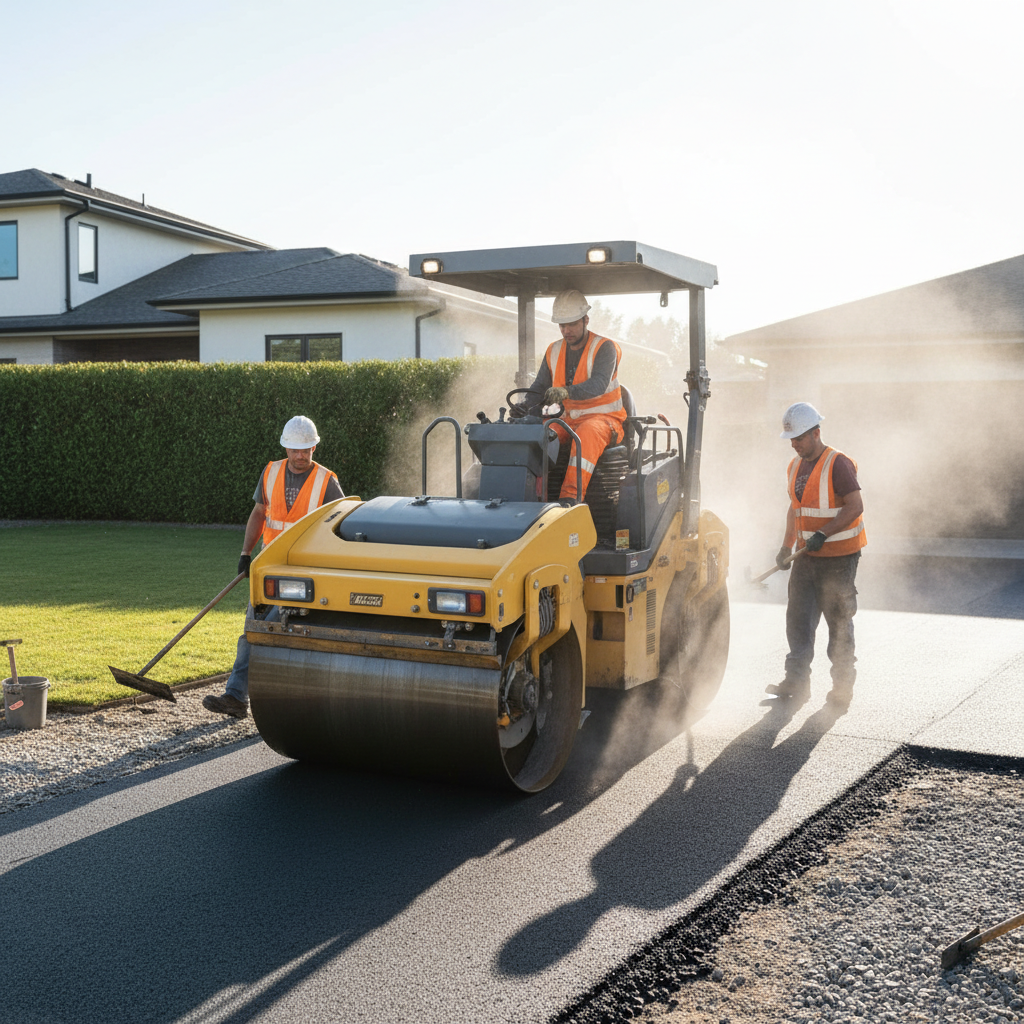
Driveway paving options and costs in Paris
In Paris, Ontario, choosing the right driveway surface usually starts with your tolerance for maintenance and how much winter performance you expect. Paris is a small city with a population of 12,310 (Statistics Canada, 2021 Census), and most private driveways here serve detached homes on larger lots—so the driveway is often treated like a long-term feature, not a temporary pad. On top of that, the Toronto economic region’s freeze–thaw cycles are a primary cost driver: crews need reliable drainage and a properly compacted granular base to prevent heaving and cracking when the ground freezes to roughly 3–4 feet in the region. That deeper base work, along with excavation and hauling, is why identical driveway jobs can land in different price bands even within the same general area.
Demand is especially steady around residential pockets close to the downtown and the St. Anne’s/Paris core area, where homeowners tend to refresh curb appeal before selling or after a garage expansion. In peak season—late spring through early fall—contractor scheduling can tighten and pricing can move higher for prime dates. If you’re comparing surfaces, this matters: asphalt can be the most cost-effective upfront, while interlocking and concrete typically cost more initially because of base prep, edging, and (for pavers) restraint systems that keep units tight during winter movement.
Use the table below as a practical starting point for material choice and typical installed ranges in Paris, then we’ll break down what moves quotes up and down.
| Material |
Lifespan |
Maintenance |
Best For |
Price per sq ft |
Price Range |
| Asphalt (new installation, proper base) |
15–25 years |
Seal every 3–5 years |
Best value, smooth driving surface |
$6.50–$12.50 |
$3,500–$8,000 |
| Asphalt (overlay on existing gravel base) |
10–18 years |
Seal every 3–5 years; monitor settlement |
Smaller budgets when base is still sound |
$5.50–$10.50 |
$2,800–$6,800 |
| Interlocking concrete pavers |
25–40 years |
Occasional re-leveling of joints/sand |
Curb appeal and easier spot repairs |
$15.00–$28.00 |
$9,000–$20,000 |
| Poured concrete (broom finish) |
20–30 years |
Clean/patch; sealing optional but helpful |
Low fuss appearance |
$10.00–$18.00 |
$6,000–$15,000 |
| Exposed aggregate concrete |
25–35 years |
Sealing and routine cleaning |
Textured look and improved skid resistance |
$14.00–$22.00 |
$8,500–$18,000 |
| Gravel / crushed stone (budget option) |
5–10 years |
Re-grade and top up every 1–3 years |
Temporary or low-cost access |
$3.00–$6.00 |
$1,800–$4,500 |
Prices are estimates only and vary by project scope, site access and material selection.
What affects the price of paving in Paris
In Paris and across the Toronto economic region, it’s common to see the same driveway scope come back 30–50% apart—usually not because the contractor “charges more,” but because the quote reflects different engineering decisions and site realities. The big variables are how much excavation is needed, the thickness and quality of base (especially for frost protection), drainage corrections, and how much of the existing surface must be removed. Even within a short drive in the region, soil moisture, the driveway’s slope, and how water currently sheds toward the street can change the amount of base and grading work required.
Frost depth and freeze–thaw cycles are decisive cost factors here. Ground freezing to roughly 3–4 feet in the broader Toronto area means deeper granular base and dependable drainage. Practically, that pushes many Ontario driveway builds toward thicker compacted base and careful subgrade prep to prevent heaving and cracking. Asphalt placement also depends on timing: hot-mix asphalt typically needs air temperatures above 10°C, so the shorter, late spring-to-early fall paving window concentrates demand and can raise pricing for prime dates.
For concrete, local winter conditions affect mix and detailing. For example, a broom-finished pour that isn’t properly air-entrained (or isn’t tied to a drainage plan) is more prone to surface scaling and cracking. Conversely, a well-drained asphalt job in the $3,500–$8,000 band can perform very well when the base is engineered and sealing is scheduled. On the other hand, interlocking pavers in the $9,000–$20,000 band can be a smart choice if you expect vehicle turns, need spot repairs, or want curb appeal that stays sharp as the driveway moves slightly over winter.
| Price Factor |
Why It Matters |
Cost Impact |
| Driveway area in sq ft |
Most costs scale directly with surface area and excavation volume |
High (often the biggest driver) |
| Base depth required |
Frost line determines granular thickness to resist heave |
High (more inches = more materials and compaction time) |
| Grading and drainage work |
Slope and drainage corrections keep water from sitting under pavement |
Medium to High (ditching/pipe/extra gravel) |
| Tear-out of existing surface |
Breaking and hauling concrete or old asphalt increases labour and dump fees |
Medium to High |
| Edge restraints and curbing |
Prevents paver spread and keeps asphalt thickness stable near edges |
Medium |
| Sealing requirement |
Asphalt needs sealing after installation to manage oxidation and surface wear |
Low to Medium (planned recurring cost) |
| Site access |
Narrow lots or long driveway runs slow equipment and increase labour |
Low to Medium |
| Asphalt mix specifications |
Freeze–thaw-rated mix costs more and can improve winter durability |
Medium (often worth it) |
Permits & regulations in Ontario
In Ontario, paving a private driveway within your own property usually does not require a building permit, especially when you’re simply replacing the surface and keeping drainage reasonably consistent. What changes the rule is when work touches areas governed by municipal infrastructure. In Paris, that typically includes the municipal right-of-way—such as creating or altering a curb cut, changing the boulevard profile, or making storm drainage changes that affect how water leaves the property. If you’re modifying storm connections, adjusting catch basins, or altering the ditch/culvert relationship, you should expect municipal approval before excavation.
Step-by-step, here’s how a homeowner should verify a contractor for Ontario driveway work. First, ask for proof of liability insurance; the certificate of insurance should list the correct business name and coverage amounts, and it should cover the type of work being performed (excavation/hauling, paving, concrete, etc.). Second, confirm workplace coverage (WSIB/WCB). Contractors should provide documentation showing they have active coverage where required. Third, verify they’re properly licensed for the work they’re advertising through the appropriate Ontario business/credential checks (your contractor should be able to share their licensing/registration details during the quote process).
Before any digging, insist on utility locates (Ontario One Call) so your excavator can confirm where services run. Finally, confirm any lot-grading bylaw rules with the municipality—some municipalities restrict how close hard surfaces can be to property lines and how grading ties into drainage.
Asphalt vs pavers vs concrete for Paris driveways
For Paris homeowners, asphalt, interlocking pavers, and concrete all can work in winter—but they do it differently under Toronto-area freeze–thaw movement. Asphalt is the lowest upfront cost and, when installed on a properly compacted base, it provides a smooth driving surface that’s comfortable for vehicles and snowplow blades. The trade-off is maintenance: sealing every 3–5 years is a key part of staying on budget over time, especially with salt and moisture.
Interlocking concrete pavers cost the most up front (often in the $9,000–$20,000 range), but they’re also the most flexible system for minor winter movement. If a localized area settles, pavers can be lifted, base can be corrected, and the surface can be rebuilt without tearing out the entire driveway—one reason pavers are popular in neighbourhoods where curb appeal matters. Poured concrete typically lands in the $6,000–$15,000 range and can be very durable when it’s air-entrained, properly jointed, and built over the right base with good drainage.
Where Paris conditions typically shift the decision is winter maintenance. Asphalt and pavers usually tolerate plowing well when edges are restrained and drainage is right. Concrete is more sensitive to cracking if the base/subgrade prep isn’t robust or if joints and drainage aren’t designed for freeze–thaw. As a simple example: if you’re choosing between asphalt and pavers for a similar driveway footprint, spending the paver premium can be justified if you value the ability to repair small sections and want a “finished” look that stays crisp over decades. If your priority is lowest upfront cost and you’re willing to seal on schedule, asphalt in the $3,500–$8,000 band often makes the most sense.
| Material |
Frost Resistance |
Curb Appeal |
Repair Method |
Lifespan |
Price Band |
| Asphalt (sealed regularly) |
Good with engineered base and drainage |
Medium (clean and dark when maintained) |
Mill and repave/patch as needed |
15–25 years |
$3,500–$8,000 |
| Interlocking concrete pavers |
Very good due to modular flexibility |
High (wide colour/pattern choices) |
Lift, re-level base, reset units |
25–40 years |
$9,000–$20,000 |
| Poured concrete (air-entrained) |
Good when air-entrained and properly jointed |
Medium to High (broom finish or textures) |
Patch/reseal; crack repairs as needed |
20–30 years |
$6,000–$15,000 |
| Exposed aggregate concrete |
Good with correct mix and curing |
High (premium textured look) |
Limited patching; often colour-match repairs |
25–35 years |
$8,500–$18,000 |
| Permeable pavers (drainage grid) |
Excellent water management when designed correctly |
High (designed drainage + look) |
Same as interlock; localized base fixes |
25–35 years |
$10,500–$22,000 |
| Chip seal / tar-and-chip |
Moderate; performance depends on surface prep |
Low to Medium |
Re-chipseal when worn |
6–12 years |
$2,000–$5,000 |
How to choose a paving contractor in Paris
Choosing the right contractor matters as much as choosing the material. In Ontario, start by verifying liability insurance—ask for a certificate of insurance and confirm the coverage matches paving/concrete/excavation work. Next, confirm WSIB/WCB coverage (or applicable workplace coverage documentation) before the project starts; a reputable contractor won’t hesitate to provide it. If you’re comparing quotes, insist they’re quoting the same scope, because coverage and site prep decisions can shift the real cost.
Then get 2–3 itemised written quotes, not a single lump-sum number. You want a breakdown showing excavation, granular base thickness, compaction, drainage/grading work, disposal/tipping fees, and the paving/concrete or paver labour. Ask whether permits are required and whether permit pull (if applicable) is included—especially if the job affects municipal right-of-way, curb cuts, or storm drainage connections. Confirm what’s excluded: for example, sod restoration, additional base if soils are weaker than expected, or decorative steps/handrails.
Warranty is where contractors separate themselves. Ask for the workmanship warranty term and what it covers (settlement? cracks? edge failure?) and whether it’s transferable if you sell your home. Payment should be staged—never pay more than 10–15% upfront—and use a holdback until completion and cleanup are verified. Finally, get a written timeline: proposed start date, weather contingency plan, and completion estimate. Asphalt typically can’t be placed when conditions are too cold, so your schedule should reflect Ontario’s late spring to early fall working window.
- Request itemised quotes with base, drainage, compaction, and disposal line items—not just totals.
- Confirm liability insurance and WSIB/WCB coverage before signing.
- Ask what base depth they design for freeze–thaw conditions and why.
- Verify edge restraint design (curbs or proper paver edging where needed).
- Confirm compaction method and how they document compaction (where applicable).
- Ask about drainage: slope correction, ditch tie-ins, or pipe work if required.
- Clarify tear-out scope and how they handle old asphalt or concrete (hauling/disposal included?).
- Check whether sealing for asphalt is included or scheduled (and when it should be done).
- Ensure the warranty is in writing and includes workmanship, not just materials.
- Confirm manufacturer warranty details for concrete/asphalt products (if applicable) and whether it transfers.
- Use a staged payment schedule with a holdback until final grade and cleanup are accepted.
- Get the start date and completion estimate in writing, including weather contingencies.
Red flags in Paris include: contractors who won’t discuss base thickness and drainage design; quotes that don’t include disposal or assume “existing material is fine” without a site assessment; pressure to pay large deposits upfront; vague warranty wording (no workmanship term or coverage limits); and no proof of insurance/coverage when you ask.
Frequently asked questions — paving in Paris
Asphalt vs interlocking pavers vs concrete — which is best in Paris?
For most Paris, Ontario driveways, asphalt is the best value if your priority is cost and a smooth, plow-friendly surface—especially when it’s installed on a properly engineered granular base with good drainage. You’ll typically budget within the $3,500–$8,000 range and plan to seal every 3–5 years. Interlocking pavers are usually the best choice for maximum curb appeal and easier repairs after winter movement; they often fall in the $9,000–$20,000 range. Poured concrete (often in the $6,000–$15,000 band) can be durable in freeze–thaw, but it needs the right air-entrained mix, proper joints, and water management. If you want low maintenance with strong winter resilience, asphalt or pavers tend to be the practical standouts here.
How long does a paved driveway last in Paris?
Longevity in Paris is less about “material name” and more about base prep, drainage, and how you maintain the surface through Ontario winters. With a well-built asphalt driveway (engineered base, correct slope, and routine sealing), many homeowners see 15–25 years of service. Interlocking pavers typically last 25–40 years because they can accommodate small movements and allow localized repairs without fully replacing the system. Concrete often lands around 20–30 years when it’s air-entrained, properly jointed, and built over the correct frost-protected base. If water is allowed to sit under the driveway due to grading issues, any surface can fail early—commonly through heaving, cracking, or edge deterioration.
When is the best time of year to pave in Paris?
In Paris, the workable paving season is effectively late spring through early fall. Asphalt placement generally requires warm conditions (hot-mix asphalt is typically placed when air temperatures are above about 10°C), so crews avoid cold snaps in winter and early spring. For best results, plan for late May through September when the ground is workable and crews can achieve consistent compaction. If you schedule in rush season, you may pay more for prime dates due to contractor demand across the Toronto economic region. For concrete, timing matters too: it should be placed and protected so curing happens properly. Your contractor should provide a written schedule that includes weather contingency, especially if you’re targeting a specific start window.
How deep should the base be for Paris's frost?
Because the Toronto economic region can freeze roughly 3–4 feet down, driveway base design in Ontario must protect the subgrade from freeze–thaw moisture and expansion. The “right” base depth depends on your soil conditions and drainage, but it usually means a thicker, well-compacted granular base than you’d use in milder climates. As a practical expectation, many Ontario installations target 6–12 inches of properly compacted granular base (with the exact number determined after a site assessment). The goal is simple: keep water from sitting under the pavement and prevent heaving when freezing occurs. Ask your contractor to explain the engineered base thickness and how they’re managing water (slope, ditches, and any drainage fixes).
How often should I seal my asphalt driveway?
For an asphalt driveway in Paris, sealing is usually part of the maintenance plan rather than an optional extra. Most homeowners should plan to seal asphalt after it cures (often after the first season), then reseal on a roughly 3–5 year cycle depending on traffic, sun exposure, and how aggressively the surface is sanded or salted over winter. If the driveway gets heavy vehicle use or you notice fading, fine surface raveling, or increased water penetration, you may be closer to the shorter end of that range. Sealing doesn’t replace proper base and drainage—those are what prevent heaving and structural cracking—but it helps protect the binder from oxidation and extends usable life, which is why quotes that include sealing steps are often more realistic than “pave and forget.”
Why does my driveway crack and heave in winter?
In Paris and across Ontario’s freeze–thaw belt, cracking and heaving usually point to water and frost management problems, not just “normal aging.” Common causes include an inadequate or poorly compacted base, insufficient granular thickness for frost protection, and drainage issues that let water collect under the driveway. When temperatures drop, that trapped moisture freezes and expands; repeated cycles then push pavement upward (heaving) and open cracks. Another frequent contributor is edge failure—without proper restraints, water can creep into the perimeter and undermine the structure. Finally, asphalt that wasn’t sealed (or concrete without the correct mix and jointing) can deteriorate faster when subjected to salt, plowing, and moisture. If you share photos, it’s usually possible to diagnose whether the issue is base/subgrade drainage versus surface wear.