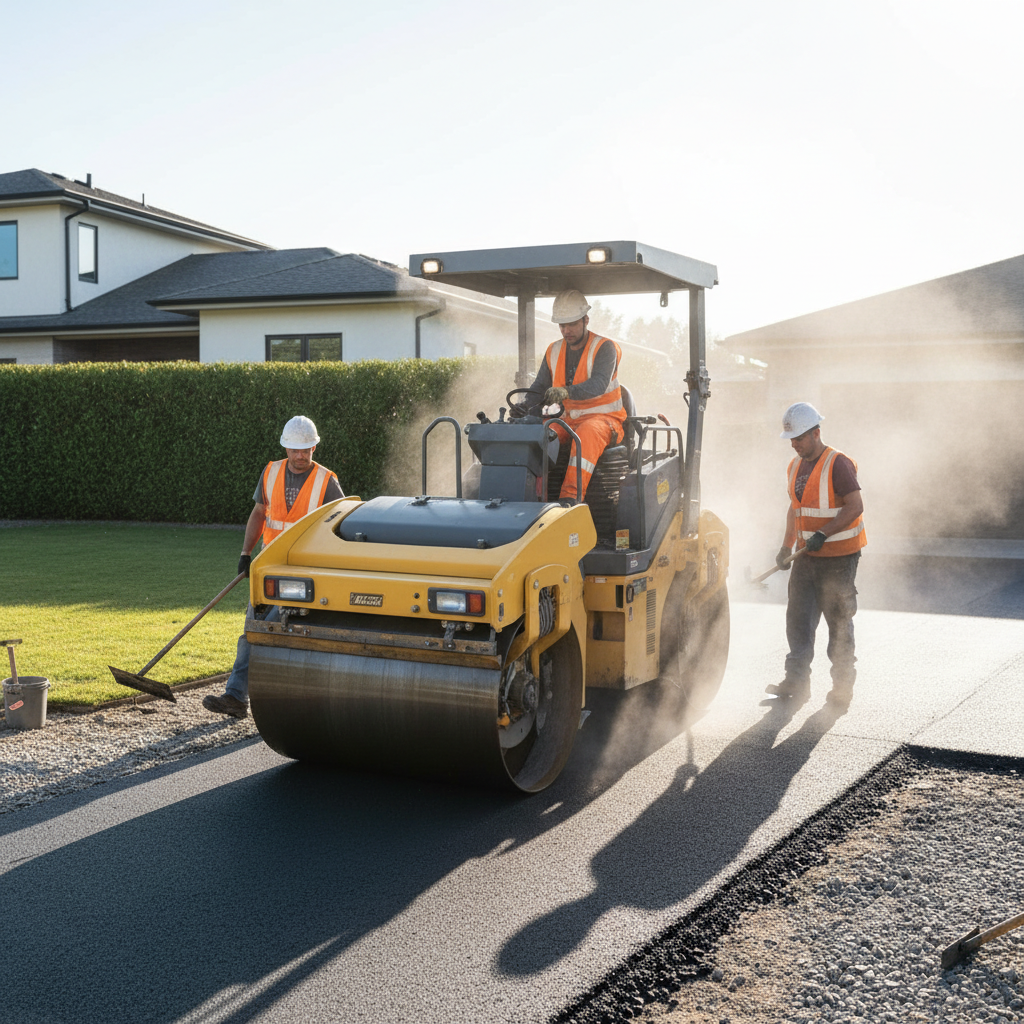
Driveway paving options and costs in Carleton Place
Carleton Place homeowners have a few common driveway paths, and the right choice usually comes down to climate durability, appearance, and how long you want to go before a full refresh. With 12,517 residents and 3,655 homeowner households (70.2% of households own, Statistics Canada, 2021 Census), a lot of driveways here serve single-detached homes—53.3% of dwellings—which makes paving demand steady across the town.
In Kingston–Pembroke, the biggest cost driver is the freeze–thaw cycle. Frost penetration is commonly around 4 feet (≈1.2 m), and springs are often wet. That means contractors must remove topsoil, build a thicker, well-compacted granular base, and plan robust drainage (ditching, swales, and sometimes French drains) to limit heaving, cracking, and raveling. The paving window is also tighter: hot-mix asphalt typically needs air temperatures above 10°C, so spring and early summer scheduling pressure can push pricing when multiple jobs stack up. Site conditions matter too—rural-style lots, clay pockets, and longer aggregate haul distances into/around neighbourhoods such as Downtown / Beckwith Street area and along County Road 7 corridors can affect excavation time and truck access.
Below are realistic starting points for Carleton Place so you can compare apples to apples before a contractor measures your exact driveway footprint and base conditions.
| Material |
Lifespan |
Maintenance |
Best For |
Price per sq ft |
Price Range |
| Asphalt (new installation, proper base) |
15–25 years |
Seal every 3–5 years |
Best value for most homeowners |
$6.50–$10.50 |
$4,500–$9,000 |
| Asphalt (overlay on existing gravel base) |
10–20 years |
Seal regularly; watch for base settlement |
When you’re building up from gravel |
$6.00–$11.00 |
$4,500–$8,500 |
| Interlocking concrete pavers |
25–40 years (with proper base) |
Replace individual stones as needed |
Curb appeal and easy localized repairs |
$13.00–$22.00 |
$6,500–$14,000 |
| Poured concrete (broom finish) |
20–30 years |
Minimal; crack control with good base |
Low-maintenance, straight edges |
$10.00–$18.00 |
$7,000–$15,000 |
| Exposed aggregate concrete |
20–30 years |
Low; may need periodic sealing |
Improved texture and look |
$12.00–$20.00 |
$8,000–$16,500 |
| Gravel / crushed stone (budget option) |
5–10 years (depends on drainage) |
Top up and re-grade as needed |
Fast, affordable driveway surface |
$3.00–$6.00 |
$3,000–$6,500 |
Prices are estimates only and vary by project scope, site access and material selection.
What affects the price of paving in Carleton Place
In Carleton Place and across the Kingston–Pembroke economic region, the same “average driveway” can land in very different quote ranges—often 30–50%—because contractors can’t control two things: how much excavation your soil needs and how the frost line will be managed. In practice, one quote may assume firm subgrade and a straightforward base, while another may include extra granular thickness, hauling, and drainage corrections for clay pockets or poor shedding at the edges.
Freeze depth and freeze–thaw cycles are decisive here. With frost penetration commonly around 4 feet, the goal is to prevent water from sitting in the wrong layers. That usually means thicker compacted granular base than you’d see in coastal climates (Ontario jobs often follow the “deeper frost” approach). In cold regions, deeper frost typically calls for about 6–12 inches of granular base thickness depending on existing conditions, plus tight compaction and proper cross-slope. Asphalt mix design also matters: freeze-thaw-rated hot-mix asphalt is a real spec, and it costs more than a basic blend.
The paving window concentrates work. Since asphalt generally requires air temperatures above 10°C, spring shoulder seasons are wet and schedule slots tighten. That can push labour availability and equipment demand. Concrete can look similar in a quote but still differ based on reinforcement, air-entrainment, and jointing—small design choices that protect against cracking.
Concrete examples: if your driveway sits low and water pools near the garage, drainage corrections can add meaningful labour and materials. If you’re replacing a driveway built before 1981 (41.0% of homes were built before 1981, Statistics Canada, 2021 Census), you may also uncover undersized base or deteriorated clay subgrade—both raise costs. For many homeowners, the final number then swings between typical asphalt starting points near $4,500–$9,000 and higher-intervention options like interlock in the $6,500–$14,000 band.
| Price Factor |
Why It Matters |
Cost Impact |
| Driveway area in sq ft — the primary cost driver |
More surface means more asphalt/pavers/concrete and more base prep. |
High: commonly drives 40–70% of total cost |
| Base depth required — frost line determines granular thickness |
Deeper frost + wetter subgrade needs thicker, better-compacted granular layers. |
Medium to High: can add major excavation/import costs |
| Grading and drainage work — slope or drainage corrections add cost |
Proper cross-slope/ditch connection reduces heaving and surface failure. |
Medium: often a “hidden” line item |
| Tear-out of existing surface — breaking and hauling concrete or old asphalt |
Disposal and hauling vary by thickness and site access. |
Medium: can add days of crew/equipment time |
| Edge restraints and curbing — needed to prevent paver spread |
Pavers need restraint; asphalt and concrete benefit from solid edging too. |
Medium: especially on curved or sloped driveways |
| Sealing requirement — asphalt must be sealed after 6–12 months |
Sealing is part of long-term performance against freeze–thaw damage. |
Low to Medium: adds cost later but protects lifespan |
| Site access — narrow or tight lots slow equipment movement |
Short access can mean smaller machines, more manual handling, and extra trips. |
Medium: can increase labour and production rates |
| Asphalt mix specifications — freeze-thaw-rated mix costs more |
Specs affect durability under Ontario’s winter cycles and spring thaw. |
Low to Medium: often worth paying for in long-life systems |
Permits & regulations in Ontario
For most homeowners in Ontario, paving work on a private driveway within your own property typically does not require a building permit. That generally includes removing an existing driveway surface, building up the base, and installing asphalt, interlocking pavers, or concrete where the work stays on your lot. However, you will usually need municipal approval if you’re working in the municipal right-of-way—for example, a new or widened curb cut, changes to the boulevard, or any alteration that affects municipal storm drainage or ditch flow.
Some townships/municipalities also have lot-grading rules that limit how close a hard surface can be to property lines and require that runoff is directed properly so it doesn’t flood neighbouring lots. Before any excavation, call for utility locates through Ontario One Call (this is mandatory good practice—don’t guess). If your project involves drainage changes (swales, French drains, outlet connections), confirm the drainage expectations with the municipality before you dig.
To verify a contractor in Carleton Place, do it step-by-step:
- Ontario licence/clearance: check the contractor’s Ontario construction-related registration status through the appropriate online registry or licensing listing provided in their paperwork.
- Liability insurance: ask for a certificate of insurance showing current dates and adequate coverage limits.
- WSIB/WCB coverage: request evidence of clearance or coverage status; a legitimate company will provide it readily.
- Workmanship warranty: get it in writing (and confirm whether it’s project-specific).
- Clear scope details: ensure the quote reflects approved drainage and disposal responsibilities.
Asphalt vs pavers vs concrete for Carleton Place driveways
In Carleton Place’s freeze–thaw climate, asphalt is usually the lowest upfront option. A properly built asphalt driveway with a robust granular base can perform well, but it relies on regular maintenance—seal coats typically every 3–5 years—to slow water infiltration that accelerates raveling and cracking. Interlocking concrete pavers cost more at the start, but they’re repair-friendly: if a section settles due to drainage or a localized subgrade issue, pavers can often be lifted, re-based, and reset without replacing the whole driveway. That’s a big advantage in Kingston–Pembroke where clay pockets and wet spring conditions can reveal weak spots over time.
Poured concrete sits in the middle cost-wise. With Ontario winters and de-icing habits, concrete durability depends on correct design: air-entrainment, proper joints, and a well-drained base are crucial to manage freeze-thaw. Without those elements, fine cracking and surface spalling can show up sooner. For all three materials, base preparation is the make-or-break step aligned with the region’s frost conditions—meaning excavation to competent material, compacted granular thickness, and drainage that sheds water away from the foundation lines.
In terms of winter maintenance, all driveways will see salt and plough contact. Asphalt typically handles light sand/snow clearing well, but aggressive scraping and unsealed surfaces shorten life. Pavers and concrete can take ploughing better, yet improper edging can still allow movement. A good example of justified price difference: upgrading from asphalt in the $4,500–$9,000 band to interlock in the $6,500–$14,000 band is often worth it if you want long-term appearance, easy sectional repairs, and a driveway that better masks minor settlement without total replacement.
| Material |
Frost Resistance |
Curb Appeal |
Repair Method |
Lifespan |
Price Band |
| Asphalt (sealed regularly) |
Good with deep, compacted base and proper sealing |
Moderate (smooth, clean finish) |
Patch/overlay localized areas |
15–25 years |
$4,500–$9,000 |
| Interlocking concrete pavers |
Excellent when bed/base and restraints are built correctly |
High (many colours/patterns) |
Lift stones, re-bed, reset without full replacement |
25–40 years |
$6,500–$14,000 |
| Poured concrete (air-entrained) |
Good with air-entrainment, joints, and drainage |
Medium to high (varies by finish) |
Crack repair/patching; full replacement only for major failure |
20–30 years |
$7,000–$15,000 |
| Exposed aggregate concrete |
Good with correct mix/design and proper curing |
High (texture and stone reveal) |
Limited patching; usually targeted section repairs |
20–30 years |
$8,000–$16,500 |
| Permeable pavers (drainage grid) |
Excellent for water management where soils allow infiltration |
High (modern look) |
Section replace/reset; relies on subdrain system design |
25–35 years |
$7,500–$16,000 |
| Chip seal / tar-and-chip |
Moderate; sensitive to poor base and heavy freeze-thaw |
Lower to moderate |
Top up/reshaping; patching available |
6–12 years |
$4,000–$7,500 |
How to choose a paving contractor in Carleton Place
Choosing a contractor in Carleton Place is mostly about proof: proof they’re legally set up to do the work, proof their quote matches your site conditions, and proof they’ll stand behind the installation. Start with Ontario coverage checks. Ask for a current certificate of liability insurance (ensure the dates are valid and coverage is appropriate for driveway-scale paving). For staffing and jobsite safety, confirm WSIB/WCB status by requesting evidence of clearance/coverage. A responsible paving company should provide documentation without hesitation.
Next, request 2–3 itemised written quotes, not just lump sums. Look for line items for excavation, granular base (and thickness), geotextile (if used), disposal, asphalt/paver/concrete supply, compaction, edging/curbing, and cleanup. If disposal is missing, you may be surprised by hauling charges. Also ask whether a permit is required for your specific scope (right-of-way drainage/curb cut changes) and whether the quote includes that process, if applicable.
Warranty matters in Kingston–Pembroke. Confirm workmanship warranty length and what it covers (settlement, cracking, surface raveling). Distinguish workmanship warranty from any product/manufacturer warranty, and ask if it’s transferable to future owners. Payment matters too: never pay more than 10–15% upfront; hold back the remainder until the final inspection/walk-through is complete.
Finally, lock the schedule in writing: start date, paving window constraints (especially for asphalt air temperature needs), and a realistic completion estimate.
- Verify Ontario licensing/registration status before signing.
- Request current liability insurance certificate (valid dates, correct insured name).
- Confirm WSIB/WCB coverage with proof of clearance.
- Get 2–3 itemised quotes with base depth and drainage scope spelled out.
- Ask how they handle wet spring soil and whether they’ll delay if compaction can’t be achieved.
- Confirm disposal/hauling is included for tear-out materials.
- Check whether geotextile is included for separation (especially over soft subgrade).
- For pavers, ensure edging/curbing and proper polymeric jointing are specified.
- For asphalt, confirm a sealing plan (typically after 6–12 months).
- For concrete, verify air-entrainment, jointing plan, and finish type.
- Review warranty terms in writing (workmanship vs materials; settlement exclusions).
- Keep payment within 10–15% upfront and agree on a holdback for completion.
Local red flags I’ve seen around Carleton Place: contractors who (1) won’t state a granular base thickness, (2) skip documented utility locates, (3) offer “cheap” pricing that excludes tear-out, drainage corrections, or disposal, (4) pressure you into paying the full amount up front, or (5) provide a warranty only verbally with no written scope.
Frequently asked questions — paving in Carleton Place
How do I prepare for a paving project?
Start by clearing the driveway area and planning for access during the work window. In Carleton Place, spring conditions can be wet, so discuss with your contractor how they’ll handle soft ground and when they’ll delay for compaction. If you have vehicles, boat trailers, or equipment stored in the driveway footprint, move them before the first day of excavation. If you’re replacing an old asphalt or concrete surface, expect tear-out and haul-away—confirm disposal is included. Also mark any underground lines and ensure Ontario One Call locates are completed before digging. Finally, decide on snow-clearing expectations after install (salt and aggressive scraping can shorten life), especially if you’re choosing asphalt, which typically needs sealing after 6–12 months.
How do I compare paving quotes fairly?
To compare quotes fairly in Ontario, make sure each proposal covers the same scope: base thickness, drainage/grading, tear-out, disposal, and whether edging/curbing is included. Ask for itemised pricing rather than a lump sum—especially because the freeze–thaw environment around Kingston–Pembroke can require deeper granular base than you’d expect on paper. Compare materials and specs too: for asphalt, ask what mix design they use for freeze–thaw durability and whether sealing is planned. For pavers, confirm the restraints and jointing method. Use your driveway area (sq ft) as the anchor so you can spot outliers. If one quote comes in at the low end (for example, asphalt often ranges around $4,500–$9,000), verify it didn’t cut out drainage or base work.
Can asphalt be laid in cold weather in Carleton Place?
In Carleton Place, asphalt placement is strongly temperature-dependent. Hot-mix asphalt generally needs air temperatures above about 10°C for reliable production and compaction. Even if the surface looks dry, overnight lows and spring shoulder wetness can prevent proper density, which leads to early raveling or cracking during freeze–thaw cycles. A good contractor will track weather closely and won’t rush compaction when conditions don’t support it. If you’re paving late in the season, plan for schedule adjustments rather than “paving no matter what.” That’s one reason pricing can tighten in colder regions—contractors have a shorter paving window, so demand rises and scheduling becomes more competitive.
What is a driveway apron and do I need one in Carleton Place?
A driveway apron is the transition area between the driveway surface and the road/boulevard or curb cut area (where applicable). In Carleton Place, you may need an apron when your driveway connects to a municipal curb cut or boulevard section, because it helps guide drainage and reduce edge break-down from plowing and vehicle loads. If your scope stays entirely within your property lines, you might not need a formal “apron” term, but you still need proper edging and a smooth, stable transition at the property edge. If your driveway ties into the municipal right-of-way, this is where approvals can come into play—especially if drainage patterns or a curb cut changes. Ask your contractor whether your plan affects the boulevard and confirm with the municipality if approvals are required.
How do I maintain my driveway through Carleton Place winters?
Winter maintenance is mostly about preventing water damage and reducing surface wear. For asphalt, avoid scraping too aggressively with the plow and minimize salt-caked residue sitting on the surface; consistent light application and prompt snow removal is better than heavy, delayed clearing. If you chose asphalt, plan for a seal coat typically after 6–12 months and then every 3–5 years so water can’t penetrate and expand during freeze–thaw cycles. For pavers and concrete, maintain the edges so stones don’t shift and jointing doesn’t wash out. Keep an eye on drainage: if water ponds near the garage or along the sides in spring thaw, address that drainage issue early—often the pavement only fails where the base stays wet. Proper drainage work during construction is the long-term fix.
Is it worth sealing a new driveway right away in Carleton Place?
Usually, yes—but not immediately. For new asphalt in Ontario, seal coats are typically applied after the asphalt has cured, commonly after 6–12 months, depending on weather and product recommendations. Sealing too early can trap moisture and reduce adhesion, while waiting too long leaves the surface exposed during early freeze–thaw seasons when water infiltration becomes a problem. In Carleton Place’s Kingston–Pembroke climate, the value of sealing is in durability: it helps reduce raveling, oxidation, and water penetration that lead to cracks. If you’re budgeting, remember asphalt pricing often sits in a broad range like $4,500–$9,000, and sealing is part of protecting that investment. Your contractor should include a sealing recommendation and timeline in the maintenance plan.