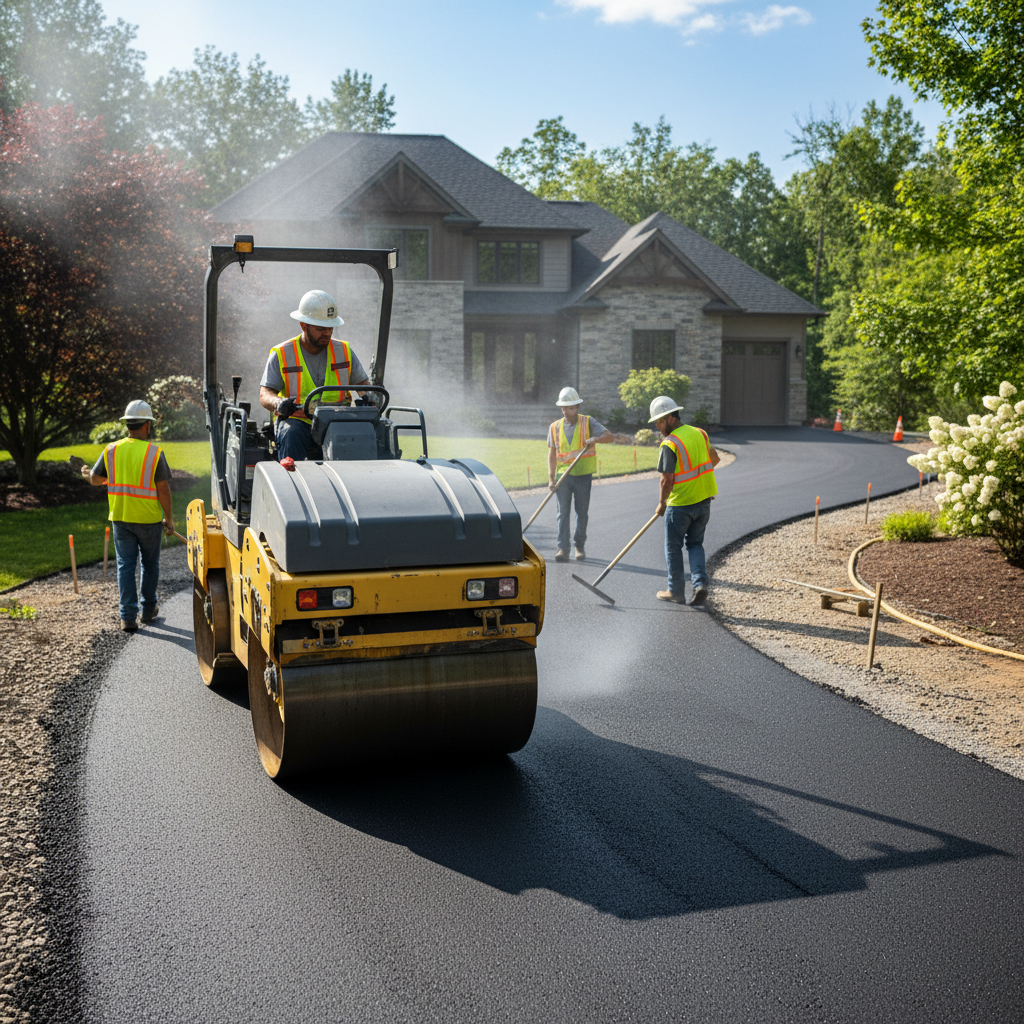
Driveway paving options and costs in Maple Ridge
Maple Ridge is a great place for a well-built driveway, but the options and pricing depend heavily on how your site handles water and drainage. With about 90,990 residents in 2021 and 26,205 homeowner households (79.1% of households own) (Statistics Canada, 2021 Census), there’s steady demand across the city for repairs and new installations. Most private driveways also serve single-detached homes—single-detached houses account for 52.6% of dwellings—so the typical residential driveway size and access constraints are consistent across neighbourhoods.
In the Lower Mainland–Southwest, intense rainfall and localized clay-heavy soils in parts of the Fraser Valley make proper granular base and drainage a bigger cost driver than deep, interior-style frost. Frost penetration is relatively shallow compared with Interior or Northern BC, yet the regional practice still assumes a freeze line (about 18" for exposed-sensitive infrastructure), so bases and footings generally need to sit below that freeze depth for long-term performance. That’s why many quotes land in the asphalt range of $12,000 – $20,000 depending on excavation, base depth, and how much tear-out is required.
In Maple Ridge—especially around Hammond, Albion, and north-side areas with older housing stock (28.6% of homes built before 1981) (Statistics Canada, 2021 Census)—contractors often see saturated spots and soft subgrades, which can increase excavation and base gravel quantities. The good news: when base and drainage are done right, asphalt and pavers both hold up well against our wet winters and spring shoulder-season storms.
Use the comparison below to ballpark your project before you request an itemised quote.
| Material |
Lifespan |
Maintenance |
Best For |
Price per sq ft |
Price Range |
| Asphalt (new installation, proper base) |
10–15 years |
Seal coat every 3–5 years |
Good value with strong water management |
$6.50–$10.00 |
$12,000–$20,000 |
| Asphalt (overlay on existing gravel base) |
8–12 years |
Seal coat every 3–5 years; monitor soft areas |
When base is already sound and drainage is OK |
$7.00–$11.50 |
$10,500–$18,000 |
| Interlocking concrete pavers |
20–30 years |
Re-level or replace individual pavers as needed |
Curb appeal + easier repairs |
$10.00–$16.50 |
$18,000–$35,000 |
| Poured concrete (broom finish) |
20–30 years |
Crack monitoring; reseal if desired |
Straight edges, low maintenance |
$9.00–$14.00 |
$20,000–$35,000 |
| Exposed aggregate concrete |
20–30 years |
Keep drainage working; occasional patching |
Slip resistance + upgraded appearance |
$12.00–$18.00 |
$25,000–$45,000 |
| Gravel / crushed stone (budget option) |
5–10 years |
Re-grade and top up annually; weed control |
Temporary or lowest upfront cost |
$4.00–$7.00 |
$5,000–$12,000 |
Prices are estimates only and vary by project scope, site access and material selection.
What affects the price of paving in Maple Ridge
In the Lower Mainland–Southwest, it’s common to see driveway paving quotes for the “same” size job vary by 30–50%. That’s usually not because contractors are padding—rather, each quote reflects different assumptions about soil condition, drainage corrections, and how much tear-out/excavation is truly required. Even if your driveway measurements look identical on paper, Maple Ridge lots can behave differently once you uncover the existing base and see whether the subgrade is wet, clay-rich, or already failing.
Two decisive cost factors in this region are frost-line considerations and drainage under intense rainfall. Although we don’t get the deep frost you’d see in Ontario or Alberta, regional practice still expects sensitive exposed infrastructure to be built for a freeze depth on the order of 18". That means a properly compacted granular base is often required (commonly around 6" of compacted base for a typical asphalt driveway, and deeper excavation when soils are weak or saturated). In colder provinces with longer freeze seasons, you’ll often see thicker bases—roughly 6–12 inches—because freeze–thaw impacts are more severe. In coastal BC, the numbers can be leaner where subgrade is stable, but in Maple Ridge the rain-and-drainage problem often forces contractors to “pay for base” anyway.
Concrete examples: if an older driveway (common where 28.6% of homes were built before 1981) (Statistics Canada, 2021 Census) needs full removal, hauling and disposal can push the project into the higher end of the concrete band (often $18,000 – $35,000). If your slope needs regrading and you add a catch basin/edge drain, that can raise costs even for asphalt—especially when the drainage fix extends beyond the driveway footprint.
Finally, asphalt mix design matters: a freeze–thaw-rated hot mix asphalt can cost more than basic mixes. Work windows also tighten due to heavy winter rain and shoulder-season storms, which can compress scheduling and affect labour rates.
| Price Factor |
Why It Matters |
Cost Impact |
| Driveway area in sq ft |
Most labour and material scale directly with surface area |
High (primary driver) |
| Base depth required |
Frost line/seasonal freeze expectations affect granular thickness and stability |
High (often the biggest swing factor) |
| Grading and drainage work |
Slope corrections, swales, and drainage improvements protect the subgrade |
Medium to high |
| Tear-out of existing surface |
Breaking, excavation, and disposal of asphalt/concrete |
Medium to high |
| Edge restraints and curbing |
Prevents paver spread and asphalt edge raveling |
Medium |
| Sealing requirement |
Asphalt needs sealing after initial curing (commonly 6–12 months), then periodically |
Low to medium (over time) |
| Site access |
Narrow lots/steep driveways slow equipment movement and increase labour time |
Medium |
| Asphalt mix specifications |
Freeze–thaw-rated mixes resist local climate stresses |
Medium |
Permits & regulations in British Columbia
In British Columbia, paving a private driveway within your own property typically doesn’t require a building permit. Most homeowner driveway work—like removing an old asphalt surface, compacting a new granular base, and installing asphalt or pavers on your lot—falls under normal private property improvements. However, work in the municipal right-of-way does often require municipal approval. That includes things like a new curb cut, changes to the boulevard, modifications to storm drainage, or alterations that affect water flow from the street to the ditch/system.
Because bylaws can vary by municipality, Maple Ridge homeowners should also check whether there are lot-grading or surface restrictions that limit how close a hard surface can be to property lines or how drainage must be handled to avoid directing water onto a neighbour’s property. The practical rule of thumb: if your driveway work changes how water leaves your lot or affects the city’s drainage infrastructure, ask the municipality before excavation.
Step-by-step verification: (1) Confirm BC 1 Call/utility locate is booked before any digging. (2) Ask the contractor for a copy of their certificate of insurance (liability) and the coverage period. (3) Verify their clearance letter/status for workplace coverage through the appropriate provincial clearance process used in BC, and confirm the workers are covered. (4) Check contractor licensing/registration using the relevant BC business/licensing registry information they provide. Keep the documents for your records, and ensure the quote references who is responsible for permits (if any) and who is handling utility locate arrangements.
Asphalt vs pavers vs concrete for Maple Ridge driveways
For Maple Ridge homeowners, asphalt, interlocking pavers, and poured (or exposed) concrete all can work—but they match different priorities in our Lower Mainland–Southwest climate. We get wet winters and frequent shoulder-season storms, so drainage and base prep matter more than chasing “extreme frost” specs. Asphalt is usually the lowest upfront option, but it needs sealing every 3–5 years to maintain durability and reduce water penetration. Interlocking concrete pavers cost more up front, yet they’re the most repair-friendly when one section fails—pavers can be lifted, re-compacted, and reinstalled without breaking the entire driveway. Poured concrete sits in the middle on cost and looks clean, but it’s more susceptible to cracking if it’s not properly designed (including air entrainment, proper base, and correct joints) for our freeze–thaw and moisture conditions.
Base preparation for all three options should follow the same core principle: build below the freeze line where the regional frost expectation applies and prevent water from sitting in the subgrade. In typical residential work, that often means around 6" of compacted granular base for asphalt, and similar or greater base thickness for pavers, with extra excavation where soils are weak, saturated, or clay-heavy. Drainage should also be designed—so water can’t pond at the garage apron or along edges.
How it holds up to winter maintenance: ploughing and sand are reality in British Columbia, so restraint details and surface integrity matter. Asphalt is generally forgiving, but without periodic sealing, water can migrate and weaken the base. Concrete can survive ploughing well, but visible cracking can show up where drainage is off or where de-icing practices are harsh on unsealed/poorly detailed slabs.
Dollar example: On a typical driveway, homeowners might choose asphalt at roughly the asphalt band of $12,000 – $20,000. Pavers may land closer to $20,000 – $40,000, and that additional investment is often justified when you want maximum curb appeal or expect to need localized repairs later—especially in older Maple Ridge neighbourhood pockets where driveway bases may vary lot to lot.
| Material |
Frost Resistance |
Curb Appeal |
Repair Method |
Lifespan |
Price Band |
| Asphalt (sealed regularly) |
Good with proper base and drainage |
Medium (clean, dark finish) |
Patch/overlay localized areas |
10–15 years |
$12,000 – $20,000 |
| Interlocking concrete pavers |
Excellent with a well-compacted base |
High (patterns and colour options) |
Lift-and-replace individual pavers |
20–30 years |
$20,000 – $40,000 |
| Poured concrete (air-entrained) |
Good if properly designed and jointed |
Medium to high (clean lines) |
Patch cracks; may need section repair |
20–30 years |
$18,000 – $35,000 |
| Exposed aggregate concrete |
Good with correct mix and finishing |
Very high (textured, premium look) |
Localized patching and re-spotting |
20–30 years |
$25,000 – $45,000 |
| Permeable pavers (drainage grid) |
Very good where drainage design supports infiltration |
High (modern look) |
Re-level/replace grid sections |
15–25 years |
$22,000 – $45,000 |
| Chip seal / tar-and-chip |
Moderate (best on well-prepared bases) |
Low to medium |
Re-treat surface as needed |
5–10 years |
$10,000 – $18,000 |
How to choose a paving contractor in Maple Ridge
Choosing the right paving contractor in Maple Ridge is mostly about proving the basics are covered before you sign anything. In British Columbia, verify licensing/registration for the type of work they advertise (ask them for their current information). For insurance, request a certificate of liability insurance with your address noted (or at least the project referenced) and ensure the coverage is active through the entire construction period. Also confirm workplace coverage status and that their workers are properly covered under the provincial workplace coverage system used in BC—don’t rely on verbal assurances.
Get 2–3 itemised written quotes. You want a breakdown that separates excavation, base supply and compaction, asphalt/pavers/concrete supply, saw cutting/joints (for concrete), disposal, and taxes. Avoid “all-in” numbers that don’t state what’s included: ask whether permit applications (if any right-of-way or drainage changes trigger them) are included, whether utility locates are handled by the homeowner or contractor, and whether tear-out includes load-up/hauling. A strong quote will also list edge restraints, thicknesses used, and the compaction standards or at least the method of base compaction.
Warranty matters: ask for the workmanship warranty term (and what triggers it), plus the product/manufacturer warranty for materials like asphalt products or paver systems if applicable. Confirm whether warranties are transferable to subsequent homeowners.
Payment schedule: never pay more than 10–15% upfront. A holdback until completion is normal—use it to protect yourself if grading, compaction, or finishing isn’t done to spec. Finally, request a start date and realistic completion estimate in writing, especially around Maple Ridge’s rainy windows.
- Confirm their BC licensing/registration details are current for the scope of driveway paving.
- Request a certificate of liability insurance and verify active coverage dates.
- Ask for confirmation of workplace coverage status and keep the clearance information for your records.
- Get quotes that list thicknesses (base and surface) and include drainage/grade notes.
- Ensure disposal/hauling is explicitly included for tear-out and excess soil.
- Confirm utility locates are booked before digging.
- Ask who supplies and compacts the granular base, and whether compaction is documented.
- Check for edge restraints/curbing details for pavers and asphalt edges.
- For asphalt, ask when sealing is recommended (often after 6–12 months).
- For concrete, ask about air entrainment, joints, and curing practices.
- Verify warranty length for workmanship and what repairs are covered.
- Limit upfront payment to 10–15% and use a holdback until final acceptance.
Red flags in Maple Ridge include: quoting “one price” without stating base thickness; refusing to provide insurance or workplace coverage proof; starting before utility locates are confirmed; promising sealing within the first few weeks for asphalt; and skipping drainage/grading corrections after removing failing sections of an older driveway.
Frequently asked questions — paving in Maple Ridge
How do I compare paving quotes fairly?
To compare paving quotes fairly in Maple Ridge, start by lining up the scope line-by-line. Ask each contractor for an itemised breakdown: excavation depth, granular base quantity, compaction approach, and the final asphalt/paver/concrete thickness. Make sure tear-out and disposal are included—an “all-in” number can hide major differences if one quote assumes reusing existing base and another must remove saturated material. Also compare drainage and grading notes: because Lower Mainland–Southwest rainfall is intense, contractors who correct slopes and add proper subdrainage often have higher upfront costs but fewer failures later. As a quick anchor, a typical asphalt driveway often lands in the $12,000 – $20,000 range depending on base prep, while more premium paver jobs commonly start higher. (Statistics Canada, 2021 Census) helps frame demand, but your best comparison is still the technical scope in writing.
Can asphalt be laid in cold weather in Maple Ridge?
Asphalt installation in Maple Ridge is generally limited by air temperature and the ability to properly place and compact hot mix asphalt. In practice, hot-mix asphalt needs air temperatures above roughly 10°C to achieve reliable compaction and bond during installation. During colder spells or rainy mornings, contractors may delay work because a poor compaction result can lead to early raveling, softness, and faster wear when freeze–thaw cycles start stressing the surface and edges. That’s why scheduling can feel tighter in winter and early spring in British Columbia. If a contractor insists on paving in cold conditions without proper adjustments (or won’t show their plan for temperature control), that’s a risk. Choose a contractor who respects temperature requirements and protects the base if the site gets saturated between lifts.
What is a driveway apron and do I need one in Maple Ridge?
A driveway apron is the transition area where your driveway meets the road curb/sidewalk/boulevard—basically the part that improves the connection and protects edges from washout and vehicle impacts. In Maple Ridge, whether you “need” an apron depends on how your driveway currently interfaces with drainage and the driveway cut. If you’re changing the curb cut, adjusting the boulevard, or altering storm drainage routing, municipal approvals and right-of-way rules may apply. Even when permits aren’t triggered, a proper apron design helps reduce edge deterioration and ponding, especially during heavy rain. For a typical residential job, the driveway apron may be included as part of grading, curb line finishing, and edge restraint details. Your contractor should describe whether they’re matching existing grades, creating a smooth transition, and protecting the edges from runoff.
How do I maintain my driveway through Maple Ridge winters?
Maple Ridge winters are wet-then-cold in cycles, so the goal is to keep water from infiltrating the base and to avoid aggressive surface damage. For asphalt, plan on sealing in the season window recommended by your contractor—often 6–12 months after installation—then typically every 3–5 years depending on wear. In winter, limit de-icing chemicals when possible; use sand for traction instead of harsh salts that can accelerate surface wear. After snowmelt and heavy storms, remove debris that blocks drainage pathways at edges and near the garage area. If you have pavers, periodically check for lifted or settled areas after freeze–thaw events—spot fixes are much cheaper than waiting for widespread failure. Regardless of material, keep an eye on low spots where water ponds; those are the first places where bases start to degrade.
Is it worth sealing a new driveway right away in Maple Ridge?
For asphalt, “right away” usually isn’t the right approach. Sealing is typically done after the asphalt has cured sufficiently—commonly after 6–12 months—so moisture and volatiles can escape and the surface can be opened to traffic safely without trapping issues beneath the sealcoat. Sealing too early can reduce adhesion or cause premature breakdown when our weather swings from wet to cold and back again. That said, once the recommended curing window is reached, sealing helps reduce water penetration and can extend the service life, particularly in Maple Ridge’s rainfall-heavy season. If your quote includes sealing, ask whether it’s staged (initial cure first, then seal) and whether the contractor provides documentation of the product used. If sealing isn’t included, ask your contractor to budget it—sealing and repairs in the broader local market often fall around $2 – $6 per sq ft equivalent, depending on scope.
What is a chip seal driveway and is it suited to Maple Ridge?
Chip seal (tar-and-chip) is a surface treatment where a binder is sprayed and aggregate is broadcast and rolled. It can be a cost-effective way to improve traction and protect a base, but it’s not the same “finish” level as asphalt or pavers. In Maple Ridge, chip seal can be suited to driveways when the base is properly built and drainage is correct, because our wet winters can undermine weak subgrades quickly. The typical lifespan is shorter than asphalt—often around 5–10 years—so many homeowners choose it when they want a budget option or are deferring a full rebuild. If your existing base is already stable and well-drained, chip seal can make sense. If you suspect soft, saturated soils or poor drainage, you’ll generally get better long-term results by addressing the base and using asphalt (often $12,000 – $20,000 for typical residential scope) or pavers depending on your priorities.