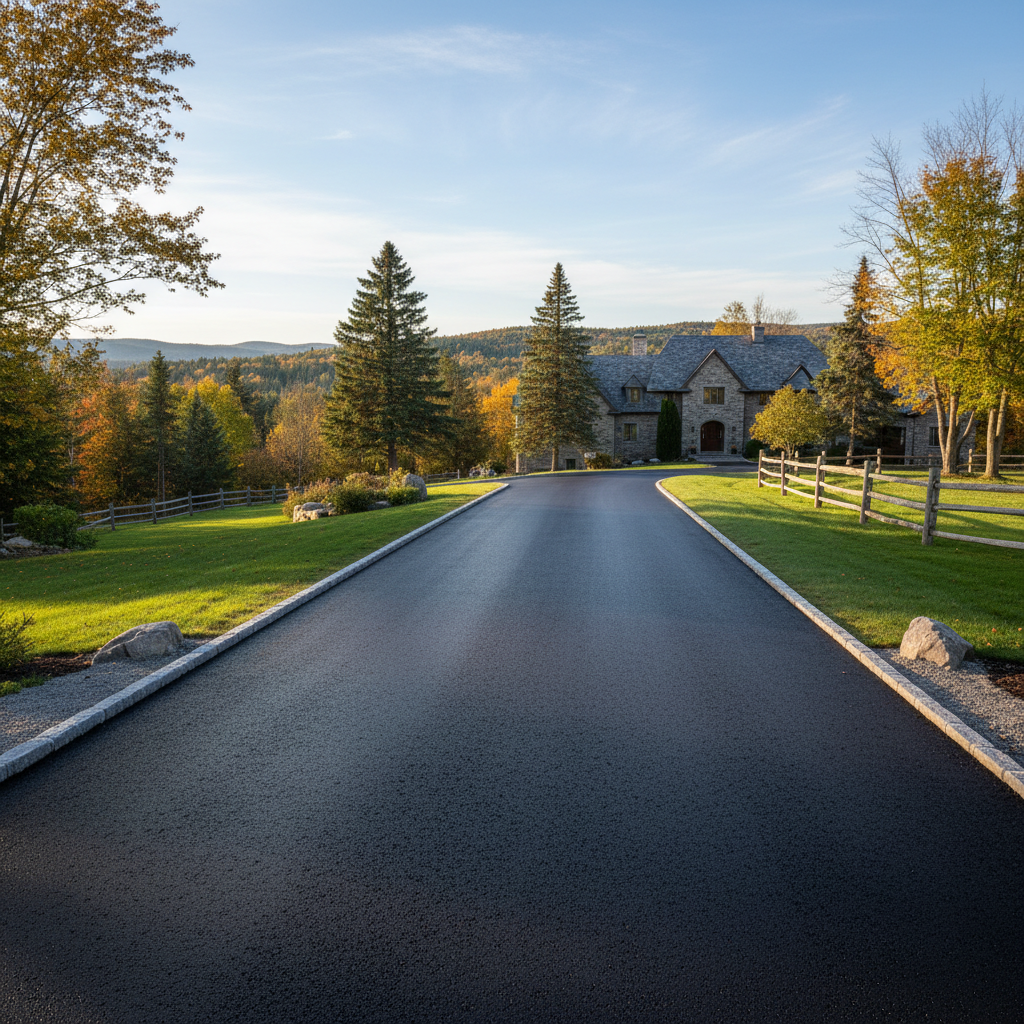
Driveway paving options and costs in Tsleil-Waututh
Tsleil-Waututh is a small community on the North Shore, with a 2021 population of 1,410 (Statistics Canada, 2021 Census). In practice, that means many paving projects are tied to private homes and existing lanes/driveways where access and drainage matter as much as the surface finish. Most homeowners are working with detached-home style lots, and paving crews in the Lower Mainland–Southwest are busiest when rain is steady but not pouring—because excavation and base compaction quality directly affect long-term performance.
In the Lower Mainland–Southwest, pricing is shaped less by deep interior frost and more by intense rainfall and drainage control. Frost penetration is generally shallow compared with Interior BC, yet regional design practice still assumes a freeze line on the order of 18 inches for exposed foundations and sensitive pavement edges. That’s why quality quotes focus on granular base thickness, proper slopes, and subdrainage where soils run wet. Scheduling also plays a role: the paving season lasts longer than Northern BC, but heavy winter rains and shoulder-season storms still compress workable windows and can tighten contractor availability.
If you’re located around Capilano Road and the surrounding North Shore areas, we typically see the most demand from homeowners replacing failing asphalt patches and correcting water run-off toward the street/yard. Below is a practical comparison of common driveway materials and what they usually cost per square foot in your tier, so you can line up apples-to-apples when you request quotes.
| Material |
Lifespan |
Maintenance |
Best For |
Price per sq ft |
Price Range |
| Asphalt (new installation, proper base) |
15–25 years |
Seal every 3–5 years |
Clean look, lower upfront cost |
$12–$20 |
$12,000–$28,000 |
| Asphalt (overlay on existing gravel base) |
10–18 years |
Seal every 3–6 years; spot repair if base shifts |
Quicker refresh with limited excavation |
$10–$18 |
$10,500–$24,500 |
| Interlocking concrete pavers |
25+ years |
Replace individual stones as needed |
Curb appeal, easy repairs, water-managed edges |
$20–$40 |
$22,000–$45,000 |
| Poured concrete (broom finish) |
20–30 years |
Clean/patch as needed; reseal optional |
Heavy-duty use, straight runs |
$18–$35 |
$20,000–$40,000 |
| Exposed aggregate concrete |
20–30 years |
Reseal or clean as needed (surface protection) |
Slip resistance and premium finish |
$22–$40 |
$24,000–$48,000 |
| Gravel / crushed stone (budget option) |
3–7 years (varies with drainage and traffic) |
Top up annually; re-grade as needed |
Low-cost, temporary or parking overflow |
$6–$14 |
$7,000–$18,000 |
Prices are estimates only and vary by project scope, site access and material selection.
What affects the price of paving in Tsleil-Waututh
In Tsleil-Waututh and across the Lower Mainland–Southwest, two quotes for the “same driveway size” can differ by 30–50% because the real cost drivers aren’t just the surface—they’re what’s happening under it: excavation volume, base build-up, drainage correction, and the amount of disposal/hauling. Labour rates and equipment time also swing when a site is tight, sloped, or needs additional protection around landscaping and utilities. Where you can see this most is when comparing asphalt options at roughly the $12,000–$28,000 kind of installed ranges to paver projects that often land higher because of thicker base, restraints, and labour-intensive placement.
Frost line depth and freeze–thaw cycles are decisive in the Lower Mainland–Southwest—not in the “deep Interior frost” sense, but because the working assumption for exposed pavement edges still targets a frost line on the order of 18 inches for sensitive applications. That means granular base thickness and compaction control matter. If base depth is reduced to “save money,” you can end up with heaving, rutting, and cracking around wheel paths. Asphalt mix design also needs to be rated for local freeze–thaw performance; that can add cost versus generic mixes.
Local examples that can raise costs: a clay-heavy or poorly draining patch that needs additional base and subgrade stabilization, or a driveway profile that must be re-sloped to stop water migrating toward the garage/street. Costs can be lower when your existing base is well-drained and the job allows a simple overlay rather than full tear-out—though even then, we typically recommend addressing weak gravel and correcting drainage first. On many North Shore driveways, older surfaces paired with wet subgrade can add several thousand dollars once you account for tear-out and haul-away.
| Price Factor |
Why It Matters |
Cost Impact |
| Driveway area in sq ft |
Most materials and labour scale directly with square footage |
High (often the biggest difference) |
| Base depth required |
Frost line assumptions drive granular thickness and compaction requirements |
High (reduced base can cause failures) |
| Grading and drainage work |
Slope corrections and drainage improvements prevent standing water and subgrade saturation |
Medium to high |
| Tear-out of existing surface |
Breaking, removal and hauling old asphalt/concrete adds labour and disposal costs |
Medium to high |
| Edge restraints and curbing |
Pavers need restraints; asphalt benefits from clean edges to avoid lateral movement |
Medium |
| Sealing requirement |
Asphalt performance depends on sealing 6–12 months after install, then re-sealing regularly |
Low to medium over time |
| Site access |
Narrow driveways and limited crane/mini-excavator access slow equipment movement |
Medium |
| Asphalt mix specifications |
Freeze-thaw-rated mixes cost more but reduce early-age cracking and raveling |
Low to medium |
Permits & regulations in British Columbia
In British Columbia, paving a private driveway within your own property typically does not need a building permit. Most homeowners can proceed without a permit when the work is limited to replacing or resurfacing the driveway surface on the lot and does not alter municipal servicing. However, work that touches municipal infrastructure or affects drainage often requires municipal approval.
Usually requires municipal approval/permit: any new or changed curb cut, alterations to the boulevard, changes to how stormwater drains to the municipal system, and any work that modifies or impacts drainage on the right-of-way. In addition, some areas have lot-grading bylaws that restrict how close hard surfaces can be to property lines and how water must be managed to avoid impacts on neighbours.
Typically does NOT require a permit: removing and replacing asphalt or pavers on your private driveway footprint, adding normal base/sub-base beneath that same footprint, and installing standard edging—so long as you’re not changing boulevard drainage or servicing.
For Tsleil-Waututh homeowners, the key verification steps are straightforward: (1) request the contractor’s British Columbia licence information (and confirm it using the contractor records available online), (2) ask for a certificate of insurance showing liability coverage and confirm the policy is current, and (3) confirm WSIB/WCB coverage—in BC, that’s handled through the provincial workers’ compensation system—so you’re not left responsible if a worker is injured. Do this before excavation begins, and get these documents saved with your signed quote.
Asphalt vs pavers vs concrete for Tsleil-Waututh driveways
For Tsleil-Waututh driveways, the best material is usually the one that matches your drainage situation and your tolerance for maintenance. Asphalt is typically the lowest upfront option and offers a smooth, clean finish, but it depends on proper sealing after installation and regular upkeep—usually every 3–5 years. Interlocking concrete pavers cost more to install, yet they’re highly forgiving in a freeze–thaw climate because individual units can be lifted and reset if the base ever needs correction. Poured concrete sits mid-range; when it’s air-entrained and properly detailed, it performs well, but unreinforced or poorly drained slabs can still develop cracking from freeze–thaw movement and de-icing salt exposure.
Lower Mainland–Southwest base preparation usually centres on drainage and compaction rather than extreme frost thickness. In most residential applications, we see driveway builds around 6 inches of compacted granular base plus about 2.5–3 inches of asphalt for a solid asphalt driveway. If the site is wet or clay-prone, excavation and base may need to go deeper and include stabilization so water doesn’t undermine the pavement. For pavers, base and edge restraint are even more critical to prevent lateral movement; for concrete, the key is curing, air entrainment, and controlling joints.
Where the price difference is justified: a paver job can run roughly $22,000–$45,000 installed versus an asphalt driveway around $12,000–$28,000. You “earn back” that difference if you want higher curb appeal, a repairable surface (without full replacement), and the ability to address localized drainage issues over time.
| Material |
Frost Resistance |
Curb Appeal |
Repair Method |
Lifespan |
Price Band |
| Asphalt (sealed regularly) |
Good with proper base, drainage, and freeze–thaw-rated mix |
Medium (clean, dark finish) |
Patch and re-seal; localized milling if needed |
15–25 years |
$12–$20 / sq ft |
| Interlocking concrete pavers |
Very good; movement is easier to manage when base is right |
High (styles, colours, borders) |
Lift/reset individual stones, recompact base locally |
25+ years |
$20–$40 / sq ft |
| Poured concrete (air-entrained) |
Good when air-entrained and joints are properly detailed |
Medium to High (finish options) |
Patch cracks; rework sections if spalling occurs |
20–30 years |
$18–$35 / sq ft |
| Exposed aggregate concrete |
Good slip resistance; still needs drainage and correct mix |
Very High (textured, premium look) |
Localized patching; matching texture can be limited |
20–30 years |
$22–$40 / sq ft |
| Permeable pavers (drainage grid) |
Excellent for wet sites when designed to drain properly |
Medium to High (modern look) |
Replace individual pavers; maintain stone reservoir |
20–30 years (design dependent) |
$25–$45 / sq ft |
| Chip seal / tar-and-chip |
Moderate; surface wears faster under heavy traffic |
Low to Medium (functional) |
Re-chip or spot gravel/aggregate corrections |
5–12 years |
$10–$18 / sq ft |
How to choose a paving contractor in Tsleil-Waututh
Choosing a contractor in British Columbia is mostly about proof: licensing clarity, insurance, and coverage. Ask for the company’s BC licence/registration information (and verify it using the available online registry tools), then request a current certificate of insurance with liability limits that match the scope (especially if they’re working near fences, retaining walls, or boulevards). For workers’ protection, confirm WSIB/WCB coverage—have them show the relevant documentation, not just “we’re covered.” If a contractor can’t provide these items promptly, it’s a red flag, particularly when excavation starts.
Next, get 2–3 itemised written quotes. You want line items for excavation, hauling/disposal, granular base, compaction, drainage/grading corrections, asphalt or paver materials, edging/restraints, and—if asphalt—sealing. Avoid quotes that are lump sums without scope details.
Read the scope carefully: what’s excluded (tree removal, rock breaking, utility marking, permit pulls, after-hours traffic control)? Is disposal included? Who restores any disturbed lawn or landscaping?
Warranty should be in writing and separated into two parts: workmanship (how long they stand behind grading/base/installation) and product/manufacturer (what the material guarantees cover). Some warranties aren’t transferable if you sell—confirm that. Payment scheduling should be conservative: never more than 10–15% upfront, then use progress payments with a holdback until the job is complete and defects are corrected. Finally, get a start date and completion estimate in writing so weather impacts don’t become an excuse for endless delays.
- Confirm BC licence/registration details and request proof in writing.
- Verify current liability insurance (certificate date and policy limits).
- Confirm workers’ compensation coverage and ask for documentation.
- Get 2–3 itemised quotes (no “all-in” pricing without breakdown).
- Ask how they handle utility locates before digging.
- Require base thickness, compaction method, and drainage plan in the quote.
- Clarify disposal/hauling: what volume is included and where it’s going.
- Check whether edge restraints/curbs are included (critical for pavers/asphalt edges).
- For asphalt, ensure sealing timeline is specified (typically after curing, often 6–12 months).
- Ask for warranty length, what defects are covered, and exclusions.
- Confirm payment schedule with a holdback until punch list completion.
- Require a written start date and weather contingency plan for rain/shoulder-season storms.
In Tsleil-Waututh, red flags we see include: vague scopes that don’t state base depth or compaction; quotes that skip drainage corrections even when the driveway ponds in rain; “cash only” or refusal to provide insurance/coverage documents; unusually fast start dates without a site walk (often missing excavation realities); and warranties that only cover materials, not workmanship.
Frequently asked questions — paving in Tsleil-Waututh
How much does it cost to pave a driveway in Tsleil-Waututh?
In Tsleil-Waututh and the broader Lower Mainland–Southwest, driveway costs mainly depend on square footage plus how much excavation and drainage correction your site needs. As a realistic guide, asphalt new installation with a proper base often lands around $12,000–$28,000 for a typical residential driveway, while interlocking pavers commonly run higher—often roughly $22,000–$45,000—because of thicker base, restraints, and labour. Concrete is frequently between these ranges depending on finish and reinforcement. If your driveway is failing due to wet subgrade or poor slope, that can push the price upward because base depth and grading are where quality is won or lost. (Statistics Canada, 2021 Census)
Asphalt vs interlocking pavers vs concrete — which is best in Tsleil-Waututh?
For Tsleil-Waututh, asphalt is the best “lowest upfront cost” choice when your drainage is corrected and the contractor installs a proper granular base; it’s also the fastest to install. Interlocking concrete pavers are best if you want strong curb appeal and the ability to repair localized issues without replacing the whole surface—useful when winter rain and vehicle loads expose weak spots in the base over time. Poured concrete (especially air-entrained mixes with well-planned joints) is a solid mid-range option, but it needs good subgrade preparation to avoid freeze–thaw cracking. If you’re deciding based on budget alone, asphalt usually wins; if you’re deciding on long-term flexibility and appearance, pavers often justify their higher upfront cost in this region’s wet-and-freeze cycle environment. (Statistics Canada, 2021 Census)
How long does a paved driveway last in Tsleil-Waututh?
With correct base preparation and drainage, asphalt driveways in British Columbia often last around 15–25 years, and pavers commonly reach 25+ years because individual units can be reset if settling happens. Poured concrete is typically in the 20–30 year range when it’s air-entrained and properly detailed with joints. The big limiter in Tsleil-Waututh is usually not “deep frost,” but water management: if rain can’t drain and the subgrade stays saturated, you’ll see early failures—ruts in asphalt or rocking stones in pavers. Also, sealing matters: asphalt that isn’t sealed after curing (often within the 6–12 month window) tends to age faster, especially through winter rain and shoulder-season storms.
When is the best time of year to pave in Tsleil-Waututh?
The best paving window in the Lower Mainland–Southwest is usually late spring through summer, when rainfall is less disruptive and air temperatures support proper curing of asphalt and concrete. Asphalt generally requires warm, stable conditions because hot-mix asphalt placement performs best when air temperatures are above about 10°C. That said, scheduling is often tighter in the summer because many contractors are booked for similar weather conditions. If you’re planning in British Columbia, don’t assume “any dry day” works—wet subgrade can still be saturated under topsoil. A good contractor will confirm soil moisture, sequencing, and compaction timing so your base isn’t compromised by rain between excavation and paving.
How deep should the base be for Tsleil-Waututh's frost?
Tsleil-Waututh doesn’t typically need Interior-level “deep frost” builds, but you still plan around a frost line assumption of roughly 18 inches for exposed pavement edges in sensitive applications. For most residential asphalt driveways in the Lower Mainland–Southwest, we commonly see about 6 inches of compacted granular base plus 2.5–3 inches of asphalt, with deeper excavation where soils are weak, clay-prone, or saturated. For pavers, the base and bedding are similarly important, and edge restraints must be installed to prevent movement. The right depth isn’t a guess—your contractor should evaluate soil condition after excavation and adjust base thickness based on drainage and how the subgrade behaves under compaction.
How often should I seal my asphalt driveway?
In British Columbia, the typical approach is to seal asphalt after it has cured, often within a 6–12 month window after installation, then re-seal every 3–5 years depending on traffic, sun exposure, and how much winter maintenance you do (plowing, sand use, and de-icing habits). In Tsleil-Waututh, the wet season can accelerate surface aging if water gets into micro-voids, so sealing is a practical way to protect the binder and help slow raveling and minor cracking. If your driveway carries heavy loads or sees frequent vehicle turns, it may need earlier re-sealing. Ask your contractor what seal system they’re using and how it fits your warranty and maintenance plan.