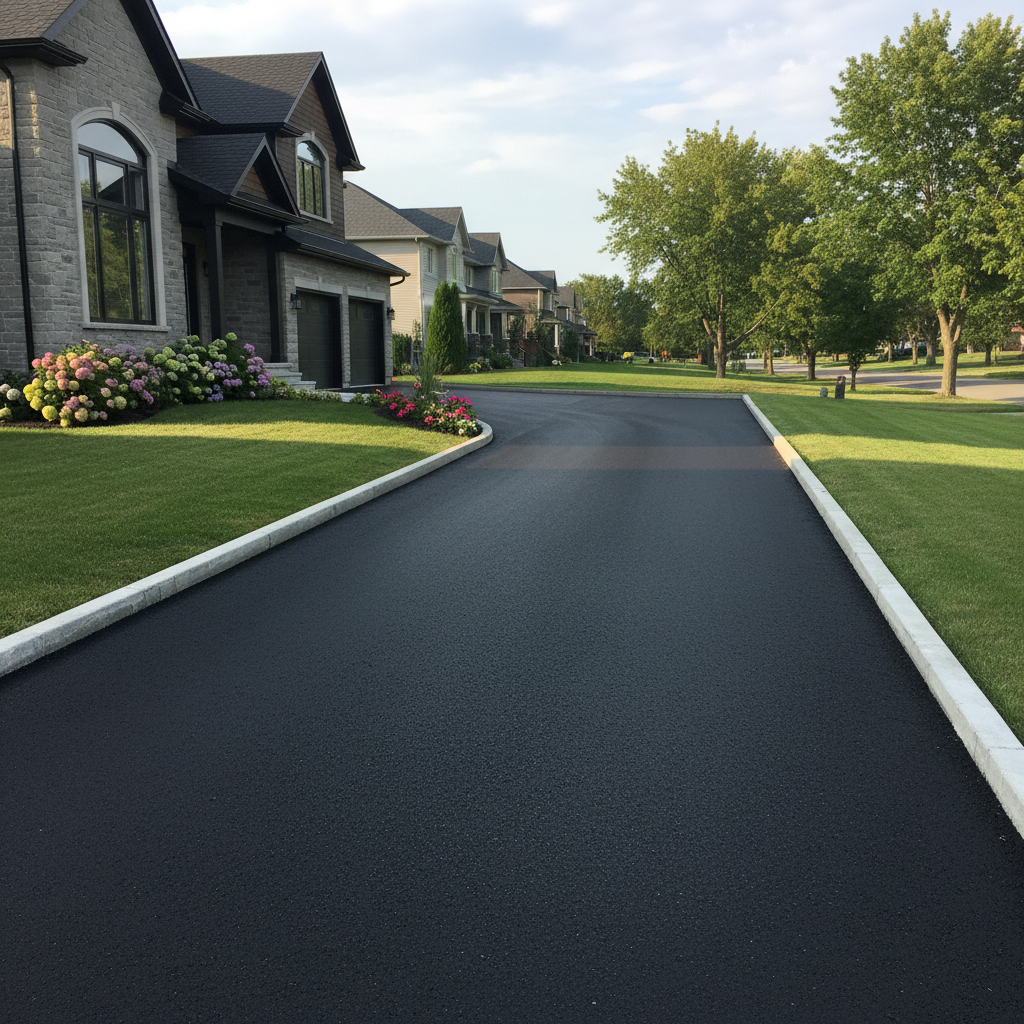
Driveway paving options and costs in Keremeos
Keremeos homeowners usually start with the same question: “What’s the real cost to pave my driveway here?” In Keremeos, the answer is shaped by how most homes are set up—single-detached houses make up 71.6% of dwellings, and there are 635 homeowner households (78.4%), so private driveway work is a big part of the local paving demand. The Thompson–Okanagan climate is the other driver. We get repeated freeze–thaw cycles and moisture movement through the base. That means a durable driveway in Keremeos isn’t built on a “thin and hope for the best” section; contractors typically overbuild the granular base and focus heavily on drainage and edge support. Work is most concentrated in the drier months, so crew scheduling and mobilization factor into pricing, especially when the site prep needs longer excavation days.
In town, driveway installs and overlays are especially in demand around the downtown core and service-area streets, where access can be tighter and existing gravel or older asphalt often needs tear-out. If your driveway was built before 1981 (and 38.3% of homes in the area are that age or older), it’s common to see older base layers and weaker drainage conditions, which influences both prep time and the final material choice. With that in mind, the comparison below will help you map the most common Keremeos options (asphalt, pavers, and concrete) to realistic costs.
| Material |
Lifespan |
Maintenance |
Best For |
Price per sq ft |
Price Range |
| Asphalt (new installation, proper base) |
15–25 years |
Sealcoat every 3–5 years |
Most driveways when you want lower upfront cost |
$4.75–$7.75 |
$4,500–$9,000 |
| Asphalt (overlay on existing gravel base) |
10–18 years |
Sealcoat every 3–5 years; monitor for settlement |
When sub-base is reasonably sound and thickness can be upgraded |
$5.25–$8.25 |
$5,000–$8,800 |
| Interlocking concrete pavers |
25–40 years |
Occasional joint sand top-up; replace individual units if needed |
Homes prioritizing curb appeal and easier spot repairs |
$10.00–$18.00 |
$6,500–$14,000 |
| Poured concrete (broom finish) |
20–35 years |
Keep edges sealed; occasional patching |
Clean look, low visual maintenance |
$9.00–$16.00 |
$7,000–$15,000 |
| Exposed aggregate concrete |
20–35 years |
Reseal as recommended (often every 3–6 years) |
Higher-end look with texture and skid resistance |
$12.00–$20.00 |
$8,500–$16,500 |
| Gravel / crushed stone (budget option) |
3–8 years (depends on base + drainage) |
Re-grade and top-up as needed |
Temporary solution or low budget where drainage is managed |
$2.25–$4.50 |
$2,000–$5,500 |
Prices are estimates only and vary by project scope, site access and material selection.
What affects the price of paving in Keremeos
In and around Keremeos, two homeowners can receive quotes for “the same driveway” that differ by 30–50% because the real scope usually isn’t identical. The biggest reasons are how much sub-grade work is needed, how deep the base must be for freeze–thaw performance, and how difficult access is for hauling and compaction equipment. In the Thompson–Okanagan, contractors also price in weather risk and shorter paving windows—hot-mix asphalt placement generally needs air temperatures above 10°C, so delays can mean rebooking crews and extra mobilization.
Freeze–thaw cycles are decisive. Even though the BC Building Code frost line for structures is about 18" in much of the interior, paved surfaces and slabs experience higher moisture exposure and traffic loading. To reduce heaving and cracking, Keremeos driveways are commonly built with a substantially more robust granular section than the minimum—typically targeting around 8.5–9" total structure for residential asphalt and similar or deeper sections for concrete, with about 6" of compacted base when conditions allow. Poor drainage, clayey pockets, and steeper slopes can push the design toward deeper excavation and upgraded base, which increases labour and material costs.
Concrete examples: if your driveway was built before 1981, it may have weak or unknown drainage, forcing extra base rebuild before any pours. Also, exposed aggregate costs more than broom-finish, and air-entrainment (and proper finishing timing) can affect both price and long-term durability in this climate. If you’re choosing between the local asphalt band of $4,500–$9,000 and pavers at $6,500–$14,000, the cost difference is usually justified by base thickness, edge restraint quality, and how easily damaged sections can be repaired later.
| Price Factor |
Why It Matters |
Cost Impact |
| Driveway area in sq ft |
Most materials and labour scale directly with square footage |
Major (often the largest portion) |
| Base depth required |
Frost line conditions and moisture drive granular thickness and compaction |
Major (more excavation + more aggregate) |
| Grading and drainage work |
Proper slope and keeping water out prevents heaving, rutting, and early cracking |
Moderate to major |
| Tear-out of existing surface |
Breaking, hauling, and disposal add time and equipment costs |
Moderate to major |
| Edge restraints and curbing |
Stops paver spread and asphalt edge breakdown |
Moderate |
| Sealing requirement |
Asphalt needs sealcoat after cure—typically 6–12 months—then every 3–5 years |
Low to moderate (planned maintenance) |
| Site access |
Narrow lots or long drive paths slow equipment and increase labour time |
Moderate |
| Asphalt mix specifications |
Freeze–thaw-rated mix costs more and improves longevity in interior cycles |
Low to moderate |
Permits & regulations in British Columbia
In British Columbia, paving a private driveway within your own property usually does not require a building permit. In most cases, asphalt, pavers, or concrete placed on your driveway area can proceed as private works—provided you follow standard construction practices (compaction, drainage, and proper setbacks). The part that often triggers approval is when the work affects the municipal right-of-way or storm infrastructure.
What typically does require municipal approval in BC: new or changed curb cuts, alterations to a boulevard surface, changes that affect storm drainage (such as tie-ins, culverts, or re-routing flow), or work within the road allowance/right-of-way area. Some municipalities also have lot-grading expectations that restrict how close hard surfaces can be to property lines and how water is managed. For example, if your driveway water currently sheds toward a neighbour’s side or the ditch, adding a new hard surface without addressing grading can put you out of compliance.
Before excavation, always arrange utility locates. In BC you can use BC 1 Call so crews know where buried lines are. Then, verify your contractor: (1) confirm the company’s business licence and any required trade authorization where applicable, (2) request a certificate of insurance showing liability coverage (and ensure it names you as a certificate holder if your contractor offers that), and (3) confirm worker coverage through WSBC (workers’ compensation). Finally, ask for a clearance letter or proof of account status—don’t rely on “we have coverage” without documentation.
Asphalt vs pavers vs concrete for Keremeos driveways
For Keremeos driveways, the “best” material depends on your priorities—budget today, appearance, and how you want to handle maintenance in an interior freeze–thaw climate. Asphalt is usually the lowest upfront option and performs well when it’s built with a strong base and sealed properly. The trade-off is ongoing maintenance: sealcoat is typically planned after the initial cure and then every 3–5 years to protect against moisture penetration and winter abrasion.
Interlocking concrete pavers cost more at the start, but they’re a strong fit for Thompson–Okanagan winters because repairs are localized. If an area settles or a utility trench ever gets reopened, pavers can often be lifted and reset rather than replacing the whole driveway. That repairability matters in communities where many driveways were originally constructed decades ago. For poured concrete, the price is usually mid-range, but freeze–thaw and de-icing materials can create problems if the concrete isn’t air-entrained and finished/ cured correctly. Proper edge drainage and jointing are also crucial.
Typical base expectations in this region: you should assume a compacted granular base depth around the residential 8.5–9" total structure range for asphalt, with similar or deeper preparation for concrete/pavers depending on soil and drainage. If your driveway has slope, clayey spots, or water pooling, costs can rise because drainage corrections may require extra excavation and upgraded aggregate.
Dollar example: if an asphalt driveway quote lands near $4,500–$9,000 and a paver quote comes in at $6,500–$14,000, the added cost is often justified if you want higher curb appeal and easier future repairs. If you’re mainly trying to minimize upfront spend and can commit to sealcoat scheduling, asphalt usually offers the best value for Keremeos homeowners.
| Material |
Frost Resistance |
Curb Appeal |
Repair Method |
Lifespan |
Price Band |
| Asphalt (sealed regularly) |
Good with frost-rated base and sealcoat |
Medium |
Full patch or localized cut-and-repair |
15–25 years |
$4,500–$9,000 |
| Interlocking concrete pavers |
Very good; flexible structure over granular base |
High |
Lift/replace individual pavers, re-sand joints |
25–40 years |
$6,500–$14,000 |
| Poured concrete (air-entrained) |
Good if air-entrained + joints + proper base |
Medium to High |
Patch spalls/cracks; larger issues may need section replacement |
20–35 years |
$7,000–$15,000 |
| Exposed aggregate concrete |
Good when air-entrained and properly cured |
Very High |
Patch-mix matching; may be noticeable if large |
20–35 years |
$8,500–$16,500 |
| Permeable pavers (drainage grid) |
Very good where drainage can infiltrate properly |
High (modern look) |
Replace affected units; clean and maintain infiltration layer |
20–30 years |
$10,000–$18,000 |
| Chip seal / tar-and-chip |
Fair to Good with thick aggregate and correct base |
Low to Medium |
Spot aggregate repairs; periodic reseal/chip maintenance |
8–15 years |
$4,000–$8,000 |
How to choose a paving contractor in Keremeos
Choosing the right contractor in Keremeos starts with proof—not promises. In British Columbia, verify the company’s ability to do the work safely and lawfully: request their certificate of insurance (liability coverage) and confirm they can provide documentation for workers’ compensation coverage through WSBC. If you’re unsure, ask for the WSBC clearance letter or proof of account status. Then confirm licensing/business credentials appropriate for the contractor’s operations and ask who will be on-site and leading the crew.
Next, get 2–3 itemised written quotes (not one lump sum). The quote should break down: excavation/ttear-out (if any), base material type and depth, compaction method, forms/edge restraints, the paving/concrete/paver supply, and finishing/compaction details. Ask whether the quote includes permit pulls (if any municipal approvals are required), utility locates coordination, and disposal/hauling. For fairness, compare apples to apples: same compacted base thickness, same asphalt thickness, same concrete air-entrainment approach, and the same paver restraints.
Warranty matters. Ask for the workmanship warranty length in writing and whether it’s transferable if you sell your home. Payment scheduling should be conservative—never pay more than 10–15% upfront. Use a holdback until the work is completed to spec and any punch-list items are finished. Finally, insist on a start date and a completion estimate in writing so you have protection if weather delays occur.
- Request WSBC proof/clearance and confirm it covers the workers who will be on your site.
- Get a current certificate of insurance showing liability coverage.
- Ask for examples of similar Thompson–Okanagan projects (frost-ready base + drainage work).
- Insist on itemised pricing: excavation, base, paving, finishing, restraints, and disposal.
- Confirm base thickness and material specifications (and that they’re compacted in lifts).
- Verify drainage/grading plan: where water goes after paving.
- Ask whether edges are restrained (especially for pavers and asphalt borders).
- For asphalt, confirm when sealcoat will be applied and whether it’s included in the scope.
- Confirm concrete has air-entrainment and how joints will be handled.
- Check the schedule for cure times (asphalt and concrete traffic-ready timelines).
- Review warranty wording: workmanship vs product/manufacturer coverage, and transferability.
- Use a payment schedule with a holdback until completion and final grading is accepted.
Local red flags to watch for in Keremeos: quotes that ignore base depth and drainage details, “we’ll just pave over it” on questionable gravel/clay without settlement discussion, no written scope for disposal and tear-out, a warranty that’s vague or doesn’t separate workmanship from materials, and contractors asking for full payment before any base prep is complete.
Frequently asked questions — paving in Keremeos
Why does my driveway crack and heave in winter?
Cracking and heaving usually comes down to moisture and movement in the structure. In Keremeos and the wider Thompson–Okanagan, freeze–thaw cycling forces water to expand and can lift weak sections of base or sub-grade. Common causes include poor grading (water pooling), inadequate granular base depth for local conditions, or using the wrong base material on clayey/poor-draining spots. If your driveway was built decades ago, it may also have weak drainage at the edges, so water gets into the system during shoulder seasons. Another issue is delayed or skipped sealing on asphalt—water then penetrates and accelerates damage. A durable rebuild typically includes correct slope, proper edge support, and a frost-resistant base section built and compacted in lifts (Statistics Canada, 2021 Census).
Do I need a permit to pave my driveway in British Columbia?
In British Columbia, paving within your own property for a private driveway usually does not require a building permit. However, municipal approval can be required when the work touches the municipal right-of-way—examples include new or altered curb cuts, changes to the boulevard surface, or any modifications to storm drainage. Keremeos homeowners should also be mindful of lot-grading expectations: if the driveway changes how water flows (or directs it toward neighbouring properties or drainage ditches), you may need to align with local grading rules. A good contractor will ask where your driveway discharges water before construction and will coordinate utility locates through BC 1 Call before excavation. If approval is needed, that can affect the schedule and should be clarified in the written scope.
How long before I can drive on new asphalt?
For new asphalt in British Columbia, you typically can drive on it soon after compaction, but most contractors recommend limiting heavy turning, parking, and sharp manoeuvres right away to avoid surface distortion. Exact timelines depend on weather conditions and mix temperatures at placement. A common practice is to schedule the job so you can use the driveway within about 24–48 hours, but avoid heavy loads and equipment until the surface has cooled and set properly. In Keremeos, late-season moisture and temperature swings can extend cure time, so plan around the contractor’s recommended traffic schedule. Also remember that sealing isn’t immediate—sealcoat is commonly applied after cure (often in the first season, once the asphalt is ready). That maintenance is part of long-term planning; even a modest sealing/repair allowance (often around $500–$4,000) helps protect your investment.
What causes potholes and how are they repaired?
Potholes usually form when water gets underneath or into the pavement structure, softening the base and allowing traffic to break down the surface. In the Keremeos freeze–thaw cycle, water expansion and repeated temperature changes can enlarge small failures into potholes. Common triggers include cracked edges, drainage that directs runoff into the same spot, and freeze-related movement where the base wasn’t properly compacted. Repair typically involves saw-cutting/patching to remove unstable material, re-establishing compacted base where needed, then placing new asphalt (or a compatible surface patch) and compacting it to match grade. A good contractor will also address the underlying drainage/settlement cause; otherwise, the pothole returns. If you’re seeing multiple failures, it may be more cost-effective to consider a broader overlay or base correction rather than repeated spot repairs.
How do I prepare for a paving project?
Preparation is mostly about access, utilities, and protecting landscaping. Before excavation, ensure you’ve scheduled utility locates through BC 1 Call and mark any sprinkler lines, low-voltage lighting, and buried services. Clear vehicles from the work area and plan where you’ll store items during the tear-out and base rebuild. Make sure gates and paths allow equipment movement—tight access can slow production and change the final cost. If you have existing asphalt or concrete, confirm in writing what removal includes (breaking, hauling, and disposal) and whether topsoil/loam is replaced or left for your landscaping. For asphalt, ask how and when sealing will be done; sealing typically comes later than paving. For older driveways (including many pre-1981 home areas), expect some base questions—your contractor may recommend sub-base upgrades once they uncover the existing conditions (Statistics Canada, 2021 Census).
How do I compare paving quotes fairly?
To compare quotes fairly in Keremeos, insist on itemised scopes and consistent design thicknesses. Start by comparing the base depth, compacted granular material type, and any drainage/grading work—those details can swing pricing by 30–50%. Check the material thickness and specs: for asphalt, ask for thickness and freeze–thaw-rated mix approach; for concrete, confirm air-entrainment and jointing plans; for pavers, confirm restraints, edge support, and bedding/sand system. Also compare what’s included: tear-out and disposal, utility coordination, permit/municipal approvals (if needed), and cleanup. Use the local price bands as a reality check: if one asphalt option is near $4,500–$9,000 and another is much lower but skips base rebuild, it’s likely missing scope. Finally, review payment terms and warranty length in writing before you decide.