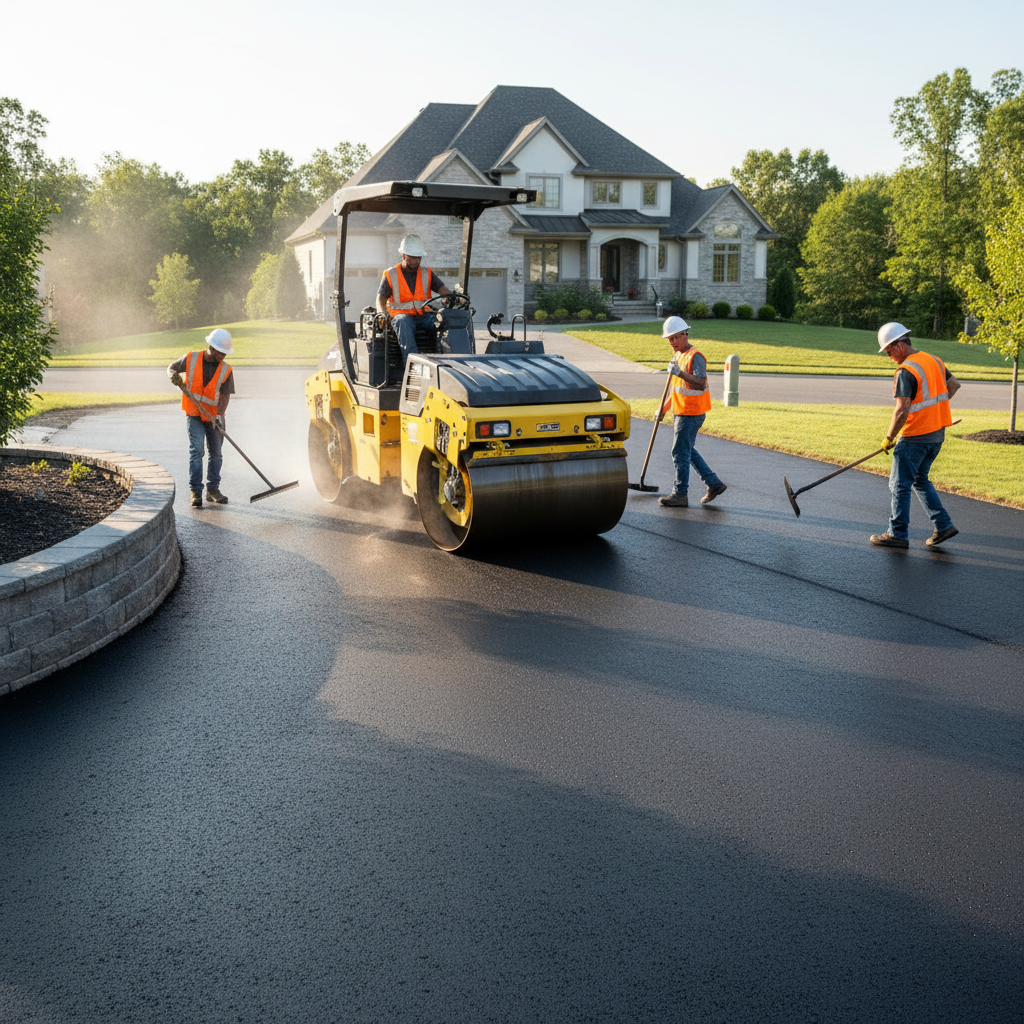
Driveway paving options and costs in Cranbrook
Cranbrook homeowners have several driveway paving options, but the best value usually comes down to base depth, drainage, and how the surface will survive Kootenay freeze–thaw cycles. With 65.2% of dwellings being single-detached homes in the area (Statistics Canada, 2021 Census), most private driveways are tied to houses where we can get good access for excavation, formwork, and compaction. It’s also a market where older housing stock matters—56.3% of homes were built before 1981 (Statistics Canada, 2021 Census), so you’ll often see older drive approaches that need grading corrections or partial tear-out before new asphalt, pavers, or concrete will perform.
In the Kootenay, frost penetration commonly runs deep (often around 45–60 inches depending on elevation and micro-climate), and repeated winter thawing puts stress on anything that’s not built on a deeper, free-draining granular base. That means more excavation and imported road base than you’d budget for milder coastal areas. On top of that, the paving season is shorter in cold interior zones, so contractor schedules tighten from late spring through early fall—pricing can reflect mobilization costs and weather downtime risk.
Where demand is especially strong in Cranbrook is the north end and established residential pockets near the downtown corridor, where driveways are frequently narrow and accessed from busy local streets—setting constraints that affect labour time and material handling. Below is a practical comparison of the most common material choices so you can line up the scope before you compare bids.
| Material |
Lifespan |
Maintenance |
Best For |
Price per sq ft |
Price Range |
| Asphalt (new installation, proper base) |
15–20 years |
Seal every 3–5 years; crack fill as needed |
Cost-conscious driveways with good base and drainage |
$3.75–$5.50 |
$7,000–$13,000 |
| Asphalt (overlay on existing gravel base) |
10–15 years |
Seal earlier if the surface oxidizes; targeted repairs |
When you want less excavation and can improve the base |
$4.25–$6.25 |
$7,500–$14,000 |
| Interlocking concrete pavers |
25–30 years |
Re-leveling and replacing individual blocks; periodic joint sand top-up |
Premium curb appeal and easier spot repairs |
$7.00–$10.50 |
$9,000–$16,000 |
| Poured concrete (broom finish) |
20–30 years |
Seal if recommended; saw-cut crack control; patching |
Families wanting a uniform, low-maintenance surface |
$6.75–$9.50 |
$11,000–$18,000 |
| Exposed aggregate concrete |
25+ years |
Sealer maintenance; patching for spalls |
Better traction and higher-end appearance |
$8.00–$11.75 |
$12,000–$19,500 |
| Gravel / crushed stone (budget option) |
3–8 years (varies widely) |
Regrade, top up fines, manage potholes |
Temporary solutions or very low-budget approaches |
$2.25–$3.25 |
$2,500–$6,500 |
Prices are estimates only and vary by project scope, site access and material selection.
What affects the price of paving in Cranbrook
In Cranbrook, two quotes for the “same” driveway can realistically swing by 30–50% because the price isn’t just the surface—it’s everything underneath, plus risk management for our winter conditions. In colder interior parts of British Columbia, contractors price for deeper frost and more freeze–thaw action. A well-built asphalt driveway can land in the $7,000–$13,000 band when the job is straightforward, but heavier excavation, drainage corrections, and frost-resistant granular base can push you toward the top end (or beyond) quickly.
Here’s the key: frost line depth and repeated thaw cycles are decisive cost factors in the Kootenay. When frost penetrates deeper, you need a thicker compacted granular base to prevent heaving and cracking. In practice, that often means more granular thickness than you’d see in milder climates; that translates into more material delivery, more compaction time in thin lifts, and more quality control on grading. Also, the paving season is shorter locally—hot-mix asphalt typically needs air temperatures above 10°C—so scheduled work windows compress demand. When weather closes in, crews may mobilize and then lose productive hours, and that shows up in pricing.
Concrete costs can go up when the existing driveway needs full tear-out and base rebuild, especially when homes built before 1981 have older subgrade that’s inconsistent or holds water. Concrete can also cost less than expected when your site has easy access and drainage is already effective, because broom finish placement and finishing are efficient. But once we’re dealing with drainage corrections, edge restraint upgrades, or a complicated tie-in to a culvert or apron, costs rise alongside the asphalt and concrete price bands.
| Price Factor |
Why It Matters |
Cost Impact |
| Driveway area in sq ft |
Surface size drives asphalt/concrete/paver quantity and labour time |
Often the biggest driver (commonly ±15–40% variation) |
| Base depth required |
Frost protection depends on compacted granular thickness |
Can add 10–25% or more if deeper base is required |
| Grading and drainage work |
Proper slope and water shedding prevent soft subgrade |
May increase cost by 5–20% depending on corrections |
| Tear-out of existing surface |
Breaking, hauling, and disposing old asphalt/concrete takes time |
Can add 15–30% for full-depth removals |
| Edge restraints and curbing |
Pavers need restraints to prevent spread; asphalt needs clean edges |
Typically adds 3–12% based on layout complexity |
| Sealing requirement |
Asphalt oxidation control protects against winter surface breakdown |
Long-term budgeting; initial and re-seal timing affects value |
| Site access |
Narrow lots slow equipment movement and increase labour |
Can add 5–15% due to extra time and handling |
| Asphalt mix specifications |
Freeze–thaw-rated mixes reduce rutting and cracking risk |
Often modest per sq ft, but can impact total by 5–10% |
Permits & regulations in British Columbia
In British Columbia, paving a private driveway within your own property typically does not require a building permit, as long as you’re working on private land and not altering public infrastructure. However, work in the municipal right-of-way can require municipal approval—this includes new or modified curb cuts, changes to boulevard features, and alterations that affect storm drainage, ditching, or how runoff is directed. If your driveway ties into a culvert or drains toward a city-controlled swale, it’s worth confirming requirements before excavation. Some municipalities also have lot-grading or property-drainage expectations that can restrict how close a hard surface is installed to property lines and how runoff must be managed.
Before any digging in Cranbrook, call for utility locates through BC 1 Call (you’ll need to mark what’s being excavated). That step is critical for safety and to avoid expensive delays. Then, verify the contractor’s coverage before you sign:
1) Licensing: check the contractor’s business registration/credentials through available BC directories or the relevant trade listings the contractor provides. 2) Liability insurance: request a Certificate of Insurance naming you (or noting your property) and confirming the coverage limits. 3) Workers’ compensation: confirm they have valid coverage for their workers (WSBC/WCB coverage) and ask for proof or a clearance letter. A reputable paving crew will provide these documents promptly, before mobilization.
Asphalt vs pavers vs concrete for Cranbrook driveways
For Cranbrook’s freeze–thaw climate, asphalt, interlocking concrete pavers, and concrete can all work well—if the base is built for frost. Asphalt is usually the lowest upfront option, but it needs routine sealing every 3–5 years to slow oxidation and keep water out of the surface and joints. Interlocking pavers cost more initially (often the $9,000–$16,000 range), but they’re repairable: if one area settles, you can lift blocks, correct the subbase, and reinstall without replacing the whole driveway. Poured concrete typically lands in the mid-range (commonly $11,000–$18,000), and when it’s air-entrained and properly saw-cut, it can resist freeze damage—yet it’s still susceptible to cracking if base preparation or drainage is weak.
In the Kootenays, base preparation matters more than the material label. Driveways and pads commonly need 6–10 inches of compacted granular base, adjusted upward on weaker or clayey subgrades to combat frost heave. Drainage design is equally important: water that sits under a driveway is the fastest route to failure. For winter maintenance, most homeowners deal with plowing and the occasional salt/sand mix. Pavers generally tolerate this routine well because individual units can be replaced; asphalt tolerates plowing too, but surface care (seal timing and crack filling) helps it last. Concrete can hold up, but poor finishing, inadequate air-entrainment, or uncontrolled cracking can become more noticeable over a few winters.
A simple cost example: if your driveway is in the neighbourhood of $7,000–$13,000 to pave with asphalt properly, switching to pavers might add several thousand dollars. That premium is justified when you want longevity plus easy targeted repairs (and typically when curb appeal is a top priority), not when your main goal is the lowest first cost.
| Material |
Frost Resistance |
Curb Appeal |
Repair Method |
Lifespan |
Price Band |
| Asphalt (sealed regularly) |
Good with deep granular base and drainage; relies on sealing |
Moderate |
Crack fill, patch, or overlay for larger areas |
15–20 years |
$7,000–$13,000 |
| Interlocking concrete pavers |
Excellent when bed and edge restraint are correct; tolerates freeze movement |
High |
Lift-and-replace blocks; re-level sections as needed |
25–30 years |
$9,000–$16,000 |
| Poured concrete (air-entrained) |
Very good with air-entrainment and controlled crack joints |
Moderate–High (finish dependent) |
Patch and seal; larger issues may require partial replacement |
20–30 years |
$11,000–$18,000 |
| Exposed aggregate concrete |
Very good with proper base and drainage; good surface traction |
High |
Spot patching and sealer touch-ups; limited lifting |
25+ years |
$12,000–$19,500 |
| Permeable pavers (drainage grid) |
Good when design matches subgrade; reduces water pooling |
High (modern look) |
Re-level or replace sections; maintain the drainage layer |
20–30 years |
$10,000–$18,000 |
| Chip seal / tar-and-chip |
Moderate; needs good drainage and top maintenance |
Low–Moderate |
Spot repairs and re-surfacing |
6–12 years |
$5,500–$10,500 |
How to choose a paving contractor in Cranbrook
When you’re choosing a paving contractor in Cranbrook, start by verifying credentials and then focus on how clearly they build the scope. In British Columbia, reputable contractors should be able to show valid business credentials, carry liability insurance, and maintain workers’ compensation coverage (WSBC/WCB). Ask for a current Certificate of Insurance, and confirm the workers’ compensation proof (often provided as a clearance letter or similar documentation). Don’t accept “we’re covered” without seeing proof—get the documents before work begins.
Next, request 2–3 written, itemised quotes rather than lump sums. You want a breakdown that shows labour and materials separately (excavation, hauling, base, compaction, asphalt/concrete/pavers, edge restraints, disposal, and any geotextile/drainage items). Read the scope carefully: what’s excluded, what’s included, and whether disposal and site clean-up are part of the price. For a driveway, ask whether permits or municipal approvals are handled when the work touches the right-of-way or impacts storm drainage.
Warranty matters. Ask for the workmanship warranty length (and what it covers), and note whether any product/manufacturer warranty is included and whether it’s transferable to you as the homeowner. For payment, keep it controlled: never pay more than 10–15% upfront, and hold back the remainder until the job is complete and cleaned. Finally, get a written start date and an estimated completion timeline that recognizes Cranbrook weather windows—late spring through early fall—so you’re not left waiting when temperatures swing.
- Verify liability insurance with a current Certificate of Insurance.
- Confirm workers’ compensation coverage (WSBC/WCB proof) before mobilization.
- Ask for their paving crew and foreman experience with frost-base builds.
- Require itemised quotes (base, excavation, compaction, surface, restraints, disposal).
- Confirm whether grading and drainage corrections are included.
- Ask whether geotextile, separation fabric, or drainage stone is used when needed.
- Check if edge restraints/curbs are included to prevent paver spread and asphalt raveling.
- Clarify tie-ins to existing surfaces (apron area, transitions, and surface height changes).
- Ensure the quote states compaction and lift thickness expectations (thin lifts, roller passes).
- Ask when asphalt sealing will be done (usually after curing, often within the first 6–12 months).
- Confirm the warranty covers workmanship and what triggers a warranty claim.
- Set payment milestones: keep upfront at 10–15%, then hold back until completion.
Concrete red flags in Cranbrook include: “too good to be true” pricing with no base plan, vague scopes that omit tear-out/disposal, refusal to provide insurance/WSBC/WCB proof, no written start/completion dates, and no mention of sealing timing for asphalt or proper joint/saw-cut planning for concrete.
Frequently asked questions — paving in Cranbrook
What is a driveway apron and do I need one in Cranbrook?
An apron is the paved transition area at the street edge where your driveway meets the roadway and manages runoff between the curb/ditch line and your private driveway surface. In Cranbrook, whether you “need one” depends on how your driveway ties into drainage and the municipal right-of-way. If you’re keeping existing grades and the work stays entirely on your property, it may not change. But if you’re altering curb cuts, changing how water drains, or rebuilding the driveway approach in a way that affects municipal drainage patterns, that portion can require municipal approval and may be inspected. Always ask your contractor to clarify what portion is right-of-way versus private property before excavation and confirm utility locates through BC 1 Call.
How do I maintain my driveway through Cranbrook winters?
For Cranbrook winters, maintenance is less about “eliminating cold” and more about protecting the surface from water intrusion and surface break-up. For asphalt, keep crack filling on schedule and plan for sealing after the driveway cures—many crews recommend sealing within the first 6–12 months and then every 3–5 years. During plowing, use proper blade technique so you don’t peel the edge aggregate or damage paver joints; avoid scraping down into the base. For ice control, use sand more often than heavy salt application when possible, because repeated freeze conditions plus de-icing can accelerate surface deterioration, especially on concrete. After storms, remove standing slush and keep an eye on low spots where water could pool and then freeze.
Is it worth sealing a new driveway right away in Cranbrook?
Usually, it’s worth sealing asphalt once the surface is properly cured—not immediately poured on top of fresh asphalt. In Cranbrook’s freeze–thaw environment, sealing is one of the simplest ways to slow oxidation and reduce water penetration into the asphalt structure. Many contractors plan sealing after curing (often within the first 6–12 months, depending on weather and the product used). If you’re comparing quotes, budget to see sealing discussed as part of the work plan; repair and re-seal are often cheaper than premature full-depth repairs. If your paving budget is in the asphalt range of $7,000–$13,000, treat sealing as a protection step that protects your upfront investment.
What is a chip seal driveway and is it suited to Cranbrook?
Chip seal (tar-and-chip) is an asphalt emulsion applied with a layer of aggregate chips rolled into place. It can be a cost-effective way to get a durable surface, but it’s different from a full asphalt paving job: chip seal needs more careful winter management and periodic maintenance because the surface texture and binder can wear differently under plowing. In a frost-prone area like Cranbrook, chip seal can perform well when the base is correctly prepared with proper drainage and compaction. If you’re expecting heavy plow traffic and want the most predictable long-term smoothness, you may find full asphalt paving or pavers are a better fit. Chip seal pricing may sit below typical paving bands (often closer to the mid-range of $5,500–$10,500), but you should expect maintenance to be part of the plan.
How much does driveway crack repair cost in Cranbrook?
Crack repair cost depends on crack length, whether the crack is active (widening), and the driveway material. For asphalt, common crack filling and surface preparation can be relatively affordable compared to resurfacing, especially for isolated cracks. In practice, homeowners often see sealing & repair budgets in the $600–$3,000 range depending on how many sections need attention and how much prep is required. If the driveway has multiple distressed areas, drainage issues, or underlying base movement from freeze–thaw, a simple fill may not last and an overlay or localized patch may be recommended. The fastest way to avoid repeat repairs is to fix the water problem first—ask your contractor to assess drainage and base conditions before committing.
What base thickness do I need for pavers in Cranbrook?
Paver base thickness in Cranbrook should be designed for frost and drainage, not just for appearance. In the Kootenays, we typically build on a deeper compacted granular base—often in the 6–10 inch range for many driveway applications—then add the proper bedding layer and jointing sand to lock pavers in place. If the subgrade is weak or clayey, or if drainage is poor, you’ll need to increase granular thickness and improve free-draining layers to reduce heave and settlement risk during freeze–thaw cycles. This is why detailed excavation and compaction matter: a “thin base” can look fine in year one but shift under spring melt. If you’re budgeting for pavers (commonly $9,000–$16,000), ask the contractor to specify base depth, how they compact in lifts, and whether drainage fabric/stone is included where needed.