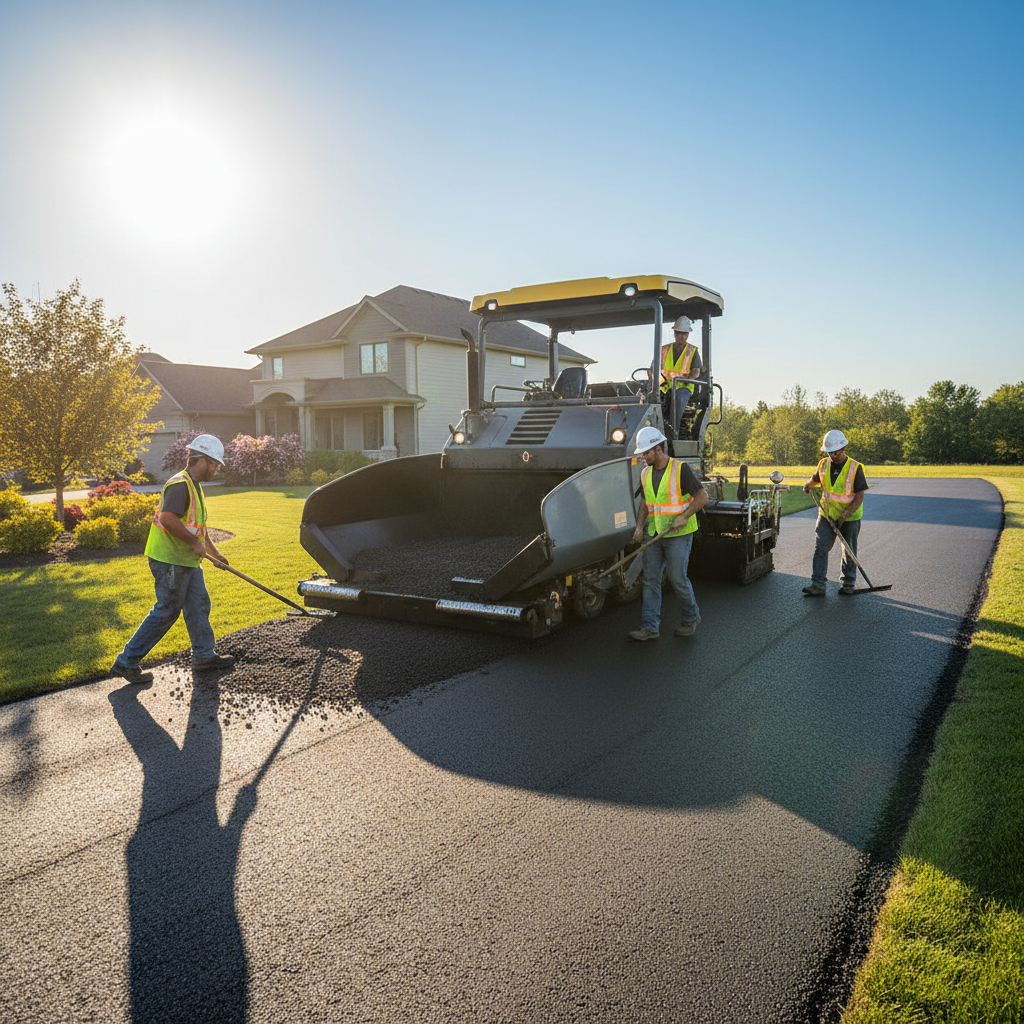
Driveway paving options and costs in Lake Country
In Lake Country, driveway paving decisions usually start with the age and style of the home—most local properties are single-detached (65.6% of dwellings), so private driveways are a major slice of the paving work. With 78.5% of households owning their homes, you’ll also find many homeowners upgrading long-established driveways rather than building from scratch (Statistics Canada, 2021 Census). That matters because Lake Country lots often have older grading, older base that’s been compacted over decades, and freeze–thaw movement that shows up differently each year.
Pricing in the Thompson–Okanagan isn’t just about material choice—it’s about building a frost-resistant section for interior temperature swings. Crews typically focus work in the drier, warmer stretch when asphalt production and placement are consistent, and that seasonal pressure increases scheduling and mobilization costs compared with coastal B.C. Paved surfaces here also experience more moisture cycling around the frost line, so contractors price for proper granular base, reliable drainage, and crack control (not a minimum-depth “cheap” build). In Lake Country, demand is especially steady around the North Okanagan corridor areas and along the busier commercial edges near Gellatly Road and other lake-adjacent access routes, where access logistics and traffic management can affect labour time.
Below is a practical comparison of common options for a typical residential driveway build, including the kind of base and detailing that tends to hold up through interior winters. Use it as a benchmark before you request your site measurements and thickness design.
| Material |
Lifespan |
Maintenance |
Best For |
Price per sq ft |
| Asphalt (new installation, proper base) |
15–25 years |
Seal every 3–5 years |
Balanced cost with good appearance when base is built correctly |
$4 – $8 |
| Asphalt (overlay on existing gravel base) |
10–18 years |
Seal every 3–5 years; spot patch as needed |
Cost-sensitive upgrades when base is stable and well-drained |
$3.75 – $7 |
| Interlocking concrete pavers |
25–35 years |
Minimal; re-level individual units if needed |
High curb appeal and easier localized repairs |
$8 – $15 |
| Poured concrete (broom finish) |
25–35 years |
Limited; keep joints sealed where applicable |
Long-term flatwork when drainage is engineered well |
$9 – $16 |
| Exposed aggregate concrete |
25–35 years |
Occasional cleaning; joint maintenance |
Premium finish with slip resistance |
$12 – $20 |
| Gravel / crushed stone (budget option) |
3–8 years |
Regrade and top up annually |
Temporary surfacing or low-budget lanes |
$2 – $4 |
Prices are estimates only and vary by project scope, site access and material selection.
What affects the price of paving in Lake Country
Two Lake Country homeowners can receive quotes that differ by 30–50% for the “same size” driveway because the hidden work changes: excavation depth, how much old material must be hauled out, how much drainage correction is required, and what thickness design a contractor uses to control frost movement. Across Thompson–Okanagan and the rest of B.C., labour availability and seasonal scheduling also shift pricing—interior paving campaigns are concentrated into the warm months, and hot-mix asphalt placement generally needs air temperatures above 10°C. That creates weather risk costs in spring and fall, and crews protect themselves with mobilization pricing when schedules tighten.
In Lake Country, freeze–thaw cycles are decisive cost factors. If the effective frost protection is undersized, you can see heaving, edge failure, and alligator cracking sooner. Even though structural frost-depth guidance is around 18 inches for many Canadian builds, paved surfaces typically require a more robust granular section because moisture and traffic loading behave differently than a building foundation. That’s why contractors commonly aim for roughly an 8.5–9 inch total asphalt structure range with about 6 inches of compacted base, plus improved sub-grade handling when soils are clayey or water can pond.
Concrete cost swings too. For example: (1) if your sub-base is weak, concrete may require deeper excavation and more granular replacement—raising the job toward the upper end of the concrete driveway price band. (2) If your driveway has poor slope or downspout run-off directed toward the slab, drainage corrections can add labour and material before any paving begins.
To keep expectations grounded: asphalt driveway paving is often in the $4,500–$9,000 range depending on build quality and area, while interlocking pavers frequently land higher—commonly $6,500–$14,000—because of base detailing, edge restraint, and unit-setting labour. In Lake Country, homes built before 1981 make up 28.3% of the housing stock (Statistics Canada, 2021 Census), and older lots often need more grading correction or deeper replacement to perform well through winter.
| Price Factor |
Why It Matters |
Cost Impact |
| Driveway area in sq ft |
Most materials and production time scale directly with surface area |
High (often the biggest line item) |
| Base depth required |
Frost movement control depends on compacted granular thickness and condition |
High; can add substantial excavation and material |
| Grading and drainage work |
Proper slope, ditching, and edge drainage keep water out of the structure |
Medium to high depending on site |
| Tear-out of existing surface |
Old asphalt/concrete removal affects haulage, disposal, and re-compaction |
Medium to high (especially for concrete) |
| Edge restraints and curbing |
Prevents paver spread and asphalt edge raveling under ploughing and traffic |
Medium; required for clean long-term performance |
| Sealing requirement |
Asphalt needs protective sealing after initial cure for best longevity |
Low per year, but important for lifespan |
| Site access |
Narrow driveways or tight turns slow equipment movement and increase labour time |
Medium; can raise crew hours |
| Asphalt mix specifications |
Freeze–thaw-rated mixes and appropriate design improve crack control |
Low to medium; can affect total cost |
Permits & regulations in British Columbia
In British Columbia, paving a private driveway typically falls under your homeowner responsibilities and usually does not require a building permit when the work is on your property and doesn’t change municipal infrastructure. In most Lake Country situations, asphalt or concrete on an existing driveway footprint (with standard base preparation and grading for proper drainage) is generally treated as private property work.
That said, permits and approvals can be required when you work in the municipal right-of-way or alter elements that affect storm drainage and access. Examples that typically do require municipal approval include: creating or changing a curb cut/driveway apron that involves boulevard modifications, altering or connecting to municipal storm drainage, and changing lot drainage patterns that send water into municipal systems. Some municipalities also have lot-grading requirements that restrict how close a hard surface can be to property lines and how runoff must be directed.
Before excavation, always arrange utility locates (BC 1 Call) so your contractor verifies underground services. To verify contractor readiness in Lake Country, ask for (1) British Columbia licence information, (2) liability insurance certificate of insurance with your address listed as appropriate and (3) proof of coverage for workers—commonly through WSIB/WCB coverage documentation depending on the contractor’s setup. For each item, look for current dates on the certificate, matching company name and address, and wording that clearly covers the work. If anything is missing, it’s a sign to pause and request updated documentation before the crew mobilizes.
Asphalt vs pavers vs concrete for Lake Country driveways
Choosing driveway material in Lake Country is largely about freeze–thaw performance, drainage, and how you maintain the surface through winter. Asphalt is usually the lowest upfront option and performs well when the base is properly compacted and water is controlled; the trade-off is that asphalt sealing typically needs to happen every 3–5 years to protect the binder from moisture and UV. Interlocking concrete pavers bring the highest curb appeal and often the easiest repair method in winter-demand areas—if a section settles or a utility is accessed later, individual units can be lifted and reset without replacing the whole driveway. Poured concrete usually lands in the middle for cost, but it’s more sensitive to cracking if it isn’t properly air-entrained and finished for exterior freeze–thaw conditions; de-icing practices also matter, especially when salt sits in low spots.
Across Thompson–Okanagan, the effective base design matters more than marketing. For asphalt and pavers, contractors typically build a thicker, well-drained granular base (often around 6 inches compacted base in total driveway structure builds) to reduce heaving. For concrete, you still need strong sub-grade support and drainage; a slab on poor fill will crack regardless of whether the surface looks “fine” on day one.
Consider this dollar example: if your asphalt quote comes in around the $4,500–$9,000 band but your paver quote is closer to the $6,500–$14,000 band, the extra cost is justified when you value curb appeal, want straightforward spot repairs, or expect future access near the driveway edge. If your site drains poorly and you don’t want repeated patching, the extra base work included in higher-end designs can be the real value—not just the paver units.
| Material |
Frost Resistance |
Curb Appeal |
Repair Method |
Lifespan |
Price Band |
| Asphalt (sealed regularly) |
Good with frost-resistant base and correct drainage |
Medium |
Patch cuts and resurfacing sections as needed |
15–25 years |
$4,500 – $9,000 |
| Interlocking concrete pavers |
Excellent with rigid edge restraints and proper bedding |
High |
Lift and replace individual units or localized panels |
25–35 years |
$6,500 – $14,000 |
| Poured concrete (air-entrained) |
Good when air-entrained and joints/drainage are correct |
Medium to high |
Slab repair with localized patching; full replacement if widespread |
25–35 years |
$7,000 – $15,000 |
| Exposed aggregate concrete |
Good when base is stable and finish/joints are done properly |
Very high |
Localized repairs are harder to match; often partial replacement |
25–35 years |
$8,000 – $16,500 |
| Permeable pavers (drainage grid) |
Good when drainage system is designed correctly for the site |
High |
Replace affected units; maintain filter layers |
20–30 years |
$8,500 – $17,000 |
| Chip seal / tar-and-chip |
Moderate; best as a base course or where traffic is lighter |
Low to medium |
Spot maintenance and re-treatment |
8–15 years |
$3,500 – $7,500 |
How to choose a paving contractor in Lake Country
Start by confirming that your Lake Country contractor is properly set up to do the work safely and legally. Ask for their current British Columbia licence information and a certificate of liability insurance that covers the driveway job. For workers’ coverage, request proof of workers’ compensation coverage (WSIB/WCB) and ensure the certificate is active—no expired forms. If they can’t provide documentation on request, or they provide generic templates without job-specific details, that’s a red flag.
Next, get 2–3 itemised written quotes. You want labour and materials broken out (excavation/haul, base materials, asphalt or concrete supply, compaction, edge restraints, and sealing if asphalt). Avoid lump-sum bids with vague scopes; differences in thickness, disposal, and drainage work are where costs change by 30–50%. Make sure each quote clearly states what’s included: permit handling (if any is required), utility locates timing, traffic control, and whether disposal of removed asphalt/concrete is included.
Warranty is where you protect yourself from interior-winter surprises. Ask for workmanship warranty length and what it covers (typically cracking related to base failures vs surface wear). Also ask whether the product/manufacturer warranty applies and whether it’s transferable to you as the homeowner.
Payment schedule matters. Never pay more than 10–15% upfront; holdback should be kept until the job is complete, cleaned, and meets the agreed grade and finish.
- Verify BC licence information matches the contracting company name on the quote.
- Request a certificate of liability insurance with your address listed if applicable.
- Confirm workers’ compensation (WSIB/WCB) coverage is current and job-covered.
- Get an itemised quote with excavation, base thickness, compaction, and hauling/disposal.
- Ask for the proposed base design (depth and material type) for frost performance.
- Confirm drainage plan: grading, edge drains, and water exit paths.
- Check whether sealing is included (or scheduled) for asphalt driveways.
- Clarify exclusions: “what’s not included” in the scope.
- Ensure permits/approvals are addressed if any work affects boulevard right-of-way.
- Confirm warranty terms in writing: duration, coverage, and exclusions.
- Use a written start date and completion estimate (weather notes included).
- Keep payment staged: small deposit, progress payments, and final holdback.
Common Lake Country red flags include: quotes that ignore base depth and drainage, unusually low pricing that doesn’t include tear-out/disposal, contractors who won’t provide insurance or coverage documentation, vague “materials by contractor choice” language, and requests for large upfront payments without a written contract and schedule.
Frequently asked questions — paving in Lake Country
Asphalt vs interlocking pavers vs concrete — which is best in Lake Country?
In Lake Country (Thompson–Okanagan interior climate), asphalt is often the best “value/performance” choice when your driveway has a solid granular base and proper drainage. If you want the best curb appeal and the easiest localized repairs—especially after settlement or future access—interlocking concrete pavers are a strong fit. Poured concrete (when air-entrained and built on stable sub-grade) can last a long time, but it can crack if joints, sub-base support, or drainage aren’t handled correctly. In practical terms, asphalt typically starts around the $4,500–$9,000 band, while pavers commonly fall into the $6,500–$14,000 range; that extra cost is often paid back in repairability and aesthetics. For any option, moisture control and freeze–thaw resistance are what separate a durable driveway from a short-lived one.
How long does a paved driveway last in Lake Country?
Longevity depends on base preparation, drainage, and whether the surface is maintained for interior winters. Asphalt driveways commonly last 15–25 years when built with a frost-resistant granular section and sealed on schedule. Interlocking pavers often reach 25–35 years because individual units can be re-levelled or replaced if movement occurs. Poured concrete is also frequently in the 25–35 year range when it’s properly air-entrained and constructed with the right sub-base support and joint detailing. Lake Country’s temperature swings and moisture cycling can shorten lifespan if water is allowed to sit near edges or low spots. Homeowner maintenance matters: sealing asphalt every 3–5 years is a cost-effective way to protect the binder from drying and cracking over time.
When is the best time of year to pave in Lake Country?
The best window for permanent paving in Lake Country is the drier, warmer part of the season when crews can place and compact materials reliably. For asphalt, hot-mix placement typically needs air temperatures above about 10°C to achieve correct compaction and smooth finish; that’s why spring and fall can be tougher. In practice, contractors schedule most permanent work in late spring through summer and aim to avoid early freezes that can trap moisture during curing. Concrete timing is similar in terms of avoiding cold nights right after pour, and weather impacts finishing and curing. If you’re planning a driveway project, book early—interior demand tightens when crews are available, and travel/mobilization costs can rise when schedules are stretched.
How deep should the base be for Lake Country's frost?
Base depth isn’t one universal number; it’s a design decision based on soil conditions, moisture risk, drainage, and traffic loads. That said, in the Thompson–Okanagan interior, contractors typically build thicker granular base sections for driveways than what people assume from “foundation frost depth” rules. For many residential asphalt or paver systems, a common durable approach is roughly an 8.5–9 inch total asphalt structure range with around 6 inches of compacted granular base, plus additional excavation or upgraded base if soils are clayey or drainage is poor. If your property has older fill, slope issues, or water that pools, the contractor may need deeper excavation and more granular replacement to reduce heaving and rutting through winter freeze–thaw cycles. The best quote will explain the section design—not just the surface material.
How often should I seal my asphalt driveway?
For asphalt in British Columbia and specifically in Lake Country’s interior climate, sealing is usually recommended every 3–5 years. The timing starts after the driveway has cured properly—commonly after the initial installation season—so the asphalt binder can stabilize. Sealing helps slow oxidation and moisture infiltration, which are key drivers of cracking during freeze–thaw cycles. A driveway that sees heavy ploughing or lots of sand/salt buildup may benefit from more frequent attention, while a sheltered driveway with good drainage can sometimes extend the interval slightly. If you notice loss of dark colour, surface raveling, or early small cracks, sealing sooner can be cheaper than waiting until deterioration requires a full patch or resurfacing. Talk to your contractor about the right product type for the local winter wear patterns.
Why does my driveway crack and heave in winter?
Cracking and heaving are usually symptoms of water and frost movement working their way through a driveway structure. In Lake Country’s Thompson–Okanagan climate, repeated freeze–thaw cycles can expand moisture in sub-grade and granular layers, especially if there’s inadequate drainage, poor slope, or weak base support. Common causes include: water getting trapped near driveway edges, sub-grade that wasn’t fully removed/strengthened, base depth that’s too shallow for the moisture conditions, or restrained edges that weren’t detailed to prevent lateral movement. Also, if asphalt is installed over unsuitable material or without correct freeze–thaw rated mix design, the surface can crack sooner. If your driveway was built decades ago (28.3% of local homes were built before 1981), older grading often contributes to these issues. Fixing the root cause (base and drainage) is what prevents repeat damage.