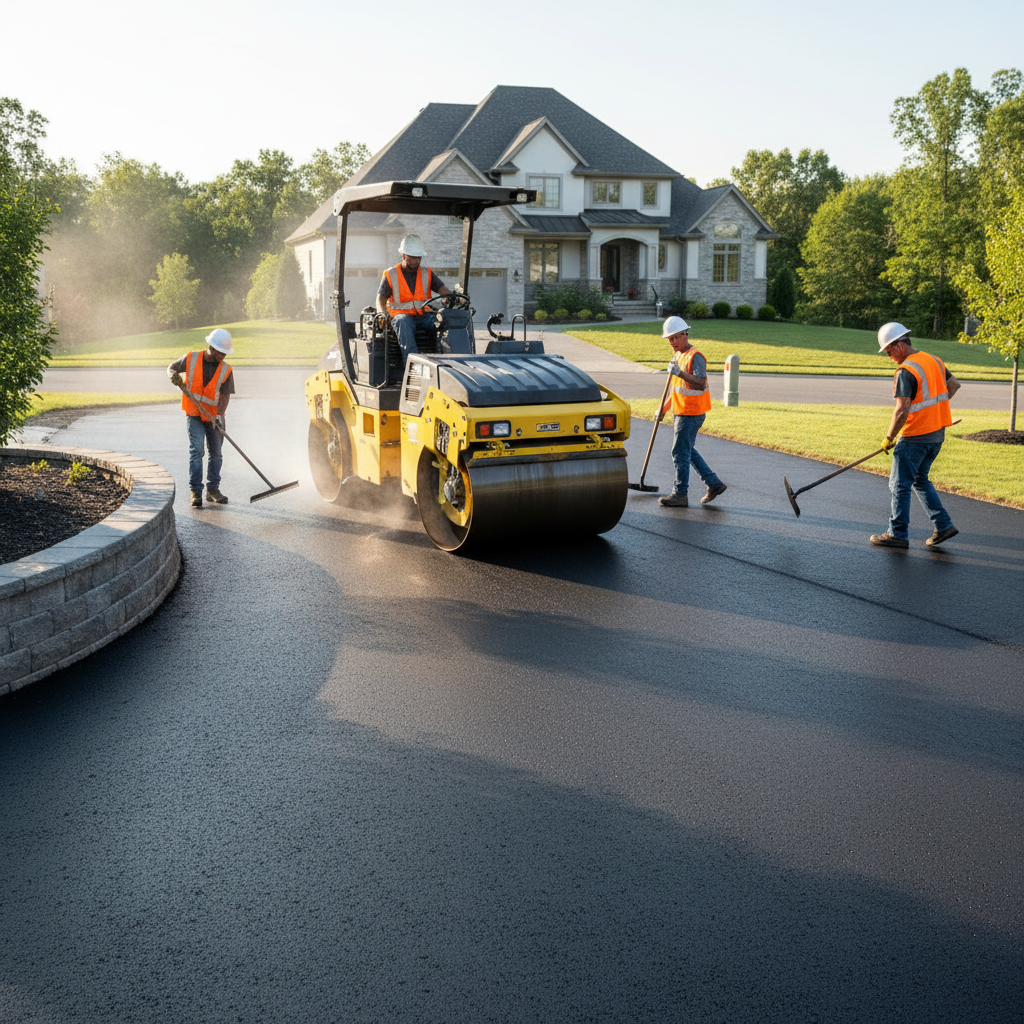
Driveway paving options and costs in Port McNeill
Port McNeill homeowners typically have a few driveway paving choices, but the best fit depends on your base condition, how water moves off your property, and how you want the surface to look. With 69.6% of households owning and 71.9% of dwellings being single-detached homes (Statistics Canada, 2021 Census), most driveway projects here start at a detached-house address with direct driveway access and straightforward grades. That said, Port McNeill sits on Vancouver Island and the Coast, where you get a milder coastal climate—yet frost and repeated freeze-thaw cycles still show up seasonally. The result is that “looks fine today” can turn into heaving, pumping, and cracking if drainage isn’t corrected and the granular base isn’t compacted properly.
Pricing also reflects market realities north on the Island: trucking and shorter paving seasons can tighten scheduling, and crews often prioritise jobs when air temperatures and surface conditions are right for asphalt placement. In and around the central Port McNeill area (near downtown services and the main arterial roads), demand can spike when spring moisture clears, especially for full-depth replacements and drive aprons that tie into existing municipal edges. If your driveway has older surfacing—remember, 62.3% of homes were built before 1981 (Statistics Canada, 2021 Census)—you’re more likely to see settlement or unknown base conditions, which changes excavation scope and total cost.
Use the ranges below as a planning guide, then we can tighten the number once we measure your area, check drainage, and confirm whether we’re paving over a sound base or rebuilding it.
| Material |
Lifespan |
Maintenance |
Best For |
Price per sq ft |
| Asphalt (new installation, proper base) |
15–25 years |
Seal coat every 3–5 years; patch as needed |
Lowest upfront cost with a smooth finish |
$10–$20 |
| Asphalt (overlay on existing gravel base) |
8–15 years |
Seal coat every 3–6 years; monitor base condition |
Budget upgrade when base is still firm and stable |
$9–$16 |
| Interlocking concrete pavers |
25–35 years |
Re-sand joints; replace individual pavers if needed |
Curb appeal and repairability |
$25–$45 |
| Poured concrete (broom finish) |
20–30 years |
Crack repair as needed; reseal occasionally |
Durability and a clean, uniform look |
$18–$35 |
| Exposed aggregate concrete |
20–30 years |
Reseal as recommended; minor repairs early |
Slip resistance and decorative appearance |
$22–$40 |
| Gravel / crushed stone (budget option) |
2–5 years |
Rake/top up; refresh base and edges |
Short-term solution or low-budget entry |
$3–$8 |
Prices are estimates only and vary by project scope, site access and material selection.
What affects the price of paving in Port McNeill
Even when two homeowners describe the same “driveway replacement,” Port McNeill quotes can vary by 30–50% across Vancouver Island and Coast and the rest of British Columbia. The main reason is that paving cost isn’t just the surface—it’s what we have to do underneath. In practice, contractors base the estimate on excavation depth, how much hauling and disposal is needed, how many feet of curb/edge work are required, and whether drainage and grading corrections are included. Material pricing and trucking to Island markets can add another layer, and labour availability during short shoulder-season windows can push schedule-based costs up or down.
Frost line depth and freeze-thaw cycles are decisive cost factors here. Coastal BC rarely sees the deep, consistently frozen conditions you’d plan for in colder regions, but localized freeze-thaw still creates heaving and cracking if the base and drainage aren’t engineered. When frost penetrates deeper than expected, we need a thicker compacted granular base; as a practical planning guide, some colder provinces often budget 6–12 inches of granular thickness, while coastal projects more commonly work with 4–6 inches—provided the drainage and subgrade support are proven. Asphalt also has mix design requirements to handle repeated freezing, and it must be placed when air temperatures are suitable (generally above 10°C) to get proper compaction and density.
Concrete can be either easier or more expensive depending on your site. For example, a driveway apron with tie-ins to existing edges often increases forming and reinforcement labour. Conversely, if you’re replacing an older asphalt surface that’s already failing but the surrounding base is well-drained, an asphalt re-install at around $10–$20 per sq ft may be the most cost-effective route. If your driveway sits on older, settlement-prone soil and requires more base rebuild, that same scope can quickly move toward the upper end of asphalt or prompt a switch to interlocking pavers in the $25–$45 band because repairs are localized rather than surface-wide.
| Price Factor |
Why It Matters |
Cost Impact |
| Driveway area in sq ft |
Most line-items scale directly with surface area and material tonnage |
High |
| Base depth required |
Frost and moisture control depend on granular thickness and compaction |
High |
| Grading and drainage work |
Fixing slope and directing runoff prevents freeze-thaw pumping |
Medium to High |
| Tear-out of existing surface |
Breaking, removal and hauling concrete/asphalt vary by thickness and access |
Medium to High |
| Edge restraints and curbing |
Pavers need restraints to prevent lateral spread; asphalt needs proper edges |
Medium |
| Sealing requirement |
Asphalt typically needs sealing after initial cure to protect binder from moisture |
Low to Medium (recurring) |
| Site access |
Narrow lots or limited turning radius slow equipment and increase labour time |
Medium |
| Asphalt mix specifications |
Freeze-thaw rated mixes can cost more but improve long-term performance |
Medium |
Permits & regulations in British Columbia
In British Columbia, paving a private driveway within your own property usually does not require a building permit, especially when you’re replacing an existing surface and keeping the same general footprint. However, work that touches the municipal right-of-way typically needs municipal approval. In Port McNeill, that can include new or revised curb cuts, changes to the boulevard area, altered storm drainage, or any work that affects how runoff enters the municipal system. Some properties also face lot-grading restrictions through local bylaws, particularly if the proposed surface changes how water sheds toward neighbouring lots or ditches.
Before any excavation, you should always call for utility locates. In BC, use BC 1 Call (and confirm any additional locates required by site specifics). This protects you and the contractor during base removal, tie-ins, and drainage trenching.
When hiring a contractor, it’s also important to verify professional credentials. Ask for their licence details (where applicable for paving/trade scope in your project), and request proof of liability insurance. For work involving employees, confirm they carry the right workplace coverage through the appropriate system for workers in British Columbia (workers’ compensation coverage). Then, check their clearance/registration documents: many contractors can provide a clearance letter or certificate of coverage on request. Finally, confirm they understand whether your scope includes any municipal right-of-way work—if it does, you want permit/approval steps clearly assigned in the written scope before work begins.
Asphalt vs pavers vs concrete for Port McNeill driveways
For Port McNeill driveways, asphalt, interlocking pavers, and concrete all can work well—if the base and drainage are engineered for the local freeze-thaw reality. Asphalt is usually the lowest upfront option, with a smooth finish and straightforward repairs, but it requires sealing every 3–5 years to protect the binder from moisture exposure. In a damp coastal climate, that maintenance matters because water movement under the surface is what accelerates base breakdown and leads to alligator cracking or rutting.
Interlocking concrete pavers cost more initially in the $25–$45 band, but they’re the most forgiving when something shifts. If you later need to repair a section—say a utility issue or a localized drainage correction—you can lift and replace only the affected area rather than replacing the entire driveway. That local repairability is valuable in areas where older homes may have had past settlement or drainage tweaks over time. Poured concrete usually lands mid-range in the $18–$35 band and looks clean, but it’s more sensitive to improper subgrade moisture and insufficient base preparation. In Port McNeill’s freeze-thaw conditions, concrete must be air-entrained and properly formed/jointed to reduce cracking risk, and winter de-icing practices should be careful to avoid aggressive chemical exposure.
Base preparation in the Vancouver Island and Coast market typically focuses on proven drainage and compacted granular layers rather than “extra-thick” bases just for show. If your driveway sees frequent standing water, pavers or a fully rebuilt asphalt base often outperform “cheap overlay” strategies. For a practical price justification: if asphalt is quoted at roughly $10–$20 per sq ft but your base needs significant rebuild, the delta to pavers can be worth it when you expect future access or want easier sectional repairs without the cost of full replacement.
| Material |
Frost Resistance |
Curb Appeal |
Repair Method |
Lifespan |
Price Band |
| Asphalt (sealed regularly) |
Good with engineered drainage and freeze-thaw-rated mix |
Medium |
Cut-and-repair patches |
15–25 years |
$10–$20 |
| Interlocking concrete pavers |
Excellent when installed on proper bedding and compacted base |
High |
Replace individual stones/panels |
25–35 years |
$25–$45 |
| Poured concrete (air-entrained) |
Good with air entrainment, joints and correct base moisture |
Medium to High |
Crack repair and patching; limited re-surfacing |
20–30 years |
$18–$35 |
| Exposed aggregate concrete |
Good with air entrainment and proper curing/joints |
High |
Patch with matching finish where possible |
20–30 years |
$22–$40 |
| Permeable pavers (drainage grid) |
Very good for water management when designed correctly |
High |
Replace blocks; clean and maintain drainage layer |
25+ years |
$30–$55 |
| Chip seal / tar-and-chip |
Fair to good for short/medium-term driveway surfacing |
Low to Medium |
Spot re-chip and recoat |
6–12 years |
$7–$15 |
How to choose a paving contractor in Port McNeill
Start by verifying British Columbia coverage and credentials so you’re not left paying for fixes if something goes wrong. Ask for proof of liability insurance and confirm the policy covers paving and excavation work. If the contractor has employees, request proof of workplace coverage under the appropriate British Columbia system for workers’ compensation, and ask for a clearance letter/certificate of coverage (many can provide it immediately). You can usually verify licensing/registration information through official provincial contractor resources and cross-check the details on their invoice and insurance certificate.
Next, get 2–3 itemised written quotes. You want a breakdown that separates excavation, base, disposal, surfacing, compaction, edge restraints/curbs, and any drainage/grading corrections—rather than one lump sum. Ask whether permit/approval steps are included when municipal right-of-way changes are needed, and confirm what’s excluded (for example, moving landscaping, replacing failing subdrainage, or bringing driveway apron elevations to match the road). Clarify whether disposal is included for removed asphalt/concrete and whether topsoil reinstatement is part of the scope.
Warranty should be in writing: workmanship warranty length, what failures are covered (delamination, base washout, settlement), and whether product/manufacturer warranty is separate. Confirm if warranties are transferable if you sell your home. Keep the payment schedule sensible: never pay more than 10–15% upfront; hold back until the job is complete and any initial curing/settlement period checks are done. Finally, ask for a start date window and completion estimate in writing, because Vancouver Island weather and scheduling can shift.
- Provide a written scope with measurements (sq ft) and included excavation depth.
- Show the proposed base spec and compaction method, not just “we’ll prep the base.”
- Confirm whether drainage corrections (slope, ditches, culverts, swales) are included.
- State whether tear-out and hauling/disposal are included.
- List edge restraints/curbing requirements and materials.
- For asphalt: confirm sealing timing after initial cure (often after 6–12 months).
- For concrete: confirm air-entrainment and joint spacing plan.
- For pavers: confirm bedding sand thickness and joint-sanding approach.
- Ask who supplies and installs any geotextile (if required for separation/soil conditions).
- Verify liability insurance certificate and workplace coverage/clearance letter before signing.
- Request warranty details in writing with exclusions and claim process.
- Use a contract that matches the quote and includes timeline and payment milestones.
Red flags we often see in Port McNeill include: vague quotes that don’t separate excavation/base from surfacing, “we’ll pave over anything” promises without checking subgrade moisture, refusal to provide insurance/coverage documentation, asking for a large deposit (more than 10–15% upfront), and no written warranty terms or schedule clarity.
Frequently asked questions — paving in Port McNeill
How do I prepare for a paving project?
In Port McNeill, preparation is mostly about clearing access and preventing water problems from sabotaging your new surface. Before the crew arrives, park vehicles off-site if possible and move grills, sheds, and planters away from the work zone. If you have hoses or irrigation lines near the driveway edge, tag their location so the contractor can plan around them. If your driveway shows standing water after rain, mention it—freeze-thaw in the Vancouver Island and Coast climate is hard on bases that pump when water sits underneath. Also, plan for gravel, soil, or topsoil reinstatement if it’s not included in the scope. Finally, confirm utility locates have been done for any excavation and that you understand the timeline for sealing (for asphalt) so you’re not tempted to drive on it too soon.
How do I compare paving quotes fairly?
Compare Port McNeill quotes by looking past the total dollar number and matching apples-to-apples items. A fair comparison includes the same driveway area (sq ft), the same base depth plan, and the same drainage/grading scope. Ask each contractor whether disposal and haul-off are included, and whether tear-out is full-depth or partial. For asphalt, confirm mix specifications and whether sealing is included and when it’s scheduled—this matters because asphalt performance depends on it after installation, often after 6–12 months. Use the material bands as a sanity check: asphalt driveways typically land around $10–$20 per sq ft, while pavers are often in the $25–$45 range. If one quote is far below the band, it may be skipping base work or restraints.
Can asphalt be laid in cold weather in Port McNeill?
Asphalt placement in Port McNeill depends on air temperature and surface conditions, not just the calendar date. Asphalt generally requires air temperatures above about 10°C for proper placement and compaction, and the surface needs to be free of moisture and not frozen. In coastal BC, you can have mild daytime temperatures but cool nights and damp winds that slow curing. That’s why good crews adjust scheduling around weather and may delay the pour if rain or mist would affect density. If your driveway is being replaced near a freeze-thaw period, it becomes even more important that the base is properly compacted and drained so the new asphalt isn’t forced to carry problems beneath it. A reliable contractor will discuss weather allowances in their written schedule instead of pushing the work through unsuitable conditions.
What is a driveway apron and do I need one in Port McNeill?
A driveway apron is the transition section where your private driveway meets the municipal edge (or the road surface), often involving curb cut tie-ins and a shaped transition that supports vehicles and sheds water. In Port McNeill, you might need an apron if your current driveway lip is deteriorated, if the grade transition causes pooling, or if the road edge is too abrupt and leads to spalling or washboarding. Whether it triggers approvals depends on whether the work impacts the municipal right-of-way or storm drainage. Practically, even when a permit isn’t required for purely on-lot work, an apron upgrade is often the difference between a driveway that just “survives” and one that performs. Ask the contractor if apron work is included, and confirm what portion is on your property versus in municipal area.
How do I maintain my driveway through Port McNeill winters?
Winter maintenance in Port McNeill is mostly about protecting the surface from water and minimizing stress from ice control. Remove loose debris before freeze periods—leaves and organic material can hold moisture against the surface. Avoid aggressive scraping that can chip asphalt edges or disturb paver lines. If you use de-icing products, use them sparingly and avoid saturating any one spot; excessive chemical exposure can accelerate surface wear, especially on concrete. For asphalt, the biggest maintenance step is staying current on sealing—when you’re outside the 3–5 year window, moisture can enter and start base issues that will show up after freeze-thaw. For concrete, monitor hairline cracking early and repair small issues before they widen. If you notice any pooling after storms, address drainage rather than just patching the surface.
Is it worth sealing a new driveway right away in Port McNeill?
In most cases in British Columbia, it’s not “right away” in the first few weeks—sealing needs the asphalt to cure so the binder can develop enough stability. Many driveways are sealed after the initial cure period, commonly after 6–12 months, depending on your product and weather. Sealing is typically worth it because it reduces moisture infiltration during freeze-thaw cycles and helps maintain the surface binder, which extends lifespan. That said, if your asphalt is still bleeding or you installed only an overlay on uncertain base conditions, sealing alone can’t fix drainage problems. For a homeowner planning costs, treat sealing and minor repairs as part of the lifecycle—not an optional add-on—especially when you’re paying in the typical asphalt band around $10–$20 per sq ft and expect long-term performance. Your contractor should outline the sealing schedule in writing.