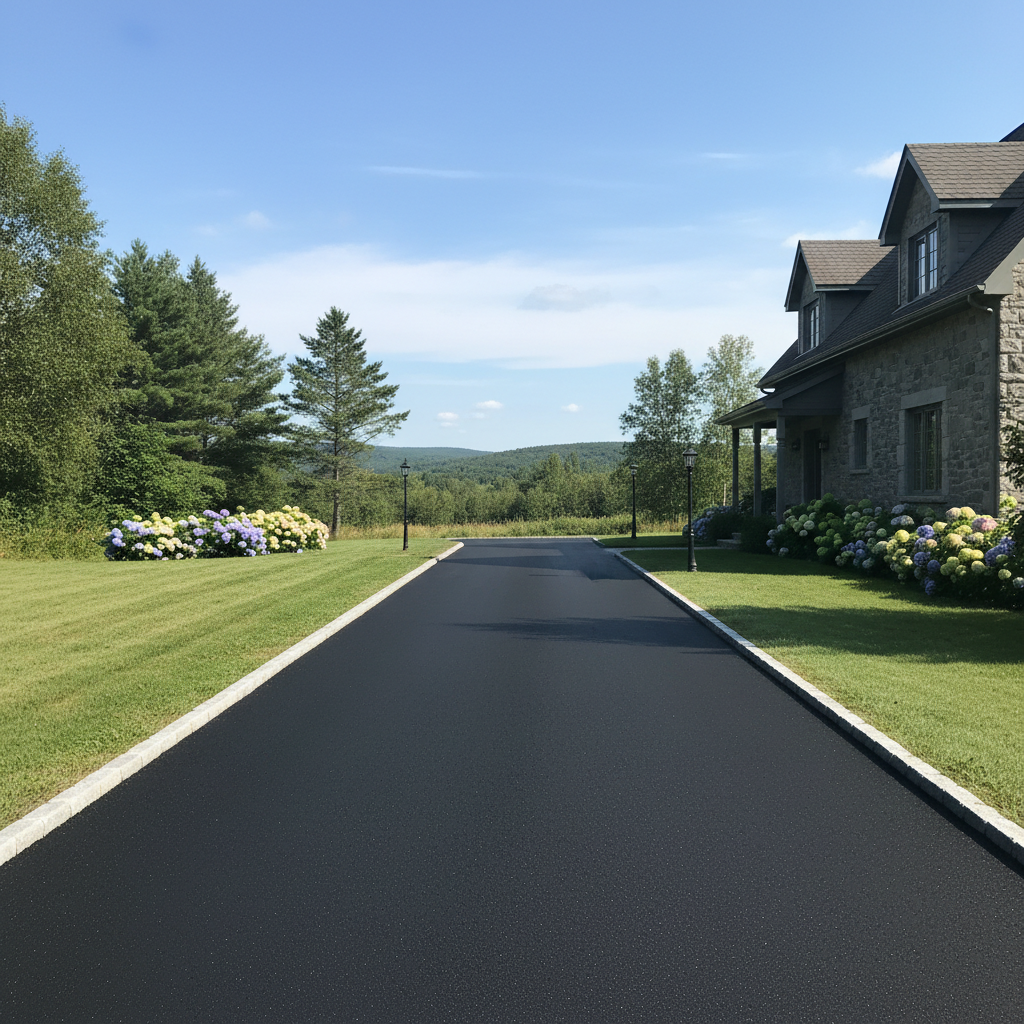
Driveway paving options and costs in Kamloops
In Kamloops, homeowners typically have a few proven driveway choices: new asphalt, asphalt overlays, interlocking pavers, and concrete. With 97,902 people in the city (Statistics Canada, 2021 Census) and about 70.1% of households owning their homes (Statistics Canada, 2021 Census), driveway work is a steady, repeatable market—especially in neighbourhoods with lots of established detached homes and older housing stock. In fact, around 50.3% of dwellings are single-detached, and about 50.8% of homes were built before 1981 (Statistics Canada, 2021 Census). That matters because older driveways often have compacted soils, weaker base layers, or drainage issues that show up only once freeze–thaw starts stressing the surface.
Thompson–Okanagan paving costs are driven by durability rather than just material price. Interior freeze–thaw cycles and moisture movement mean we generally build a thicker, well-compacted granular base than you’d see on the coast. Crews also price in the fact that the paving season is shorter; hot-mix asphalt generally needs warm conditions to place and compact properly, so scheduling pressure in the drier months is real. In Kamloops—particularly in areas like Aberdeen—driveway approaches, slopes, and snow-removal patterns put extra stress on edges and transitions, so base, grading, and proper edge restraint are non-negotiable.
Below is a practical comparison of what different options usually cost per square foot and what kind of maintenance you should plan for in the Kamloops climate. Use this to benchmark your next quote.
| Material |
Lifespan |
Maintenance |
Best For |
Price per sq ft |
| Asphalt (new installation, proper base) |
15–25 years |
Seal every 3–5 years (often 6–12 months after paving) |
Best value for a long-lasting, smooth driveway when the base is engineered correctly |
$5.50 – $9.00 |
| Asphalt (overlay on existing gravel base) |
8–15 years (depends on base condition) |
Seal every 3–5 years; patch early failures |
When the existing base is solid and you want to upgrade faster/cheaper |
$4.75 – $7.75 |
| Interlocking concrete pavers |
20–30+ years |
Weed control, occasional re-leveling; sealed joints as needed |
High curb appeal and easier spot repairs without replacing the whole surface |
$10.50 – $16.50 |
| Poured concrete (broom finish) |
25–35 years |
Limited routine sealing; crack monitoring and patching |
Clean look, good snow-plough compatibility, strong surface for heavier use |
$9.50 – $18.00 |
| Exposed aggregate concrete |
20–30 years |
Reseal periodically (depends on product); crack patching as needed |
Grip under winter conditions and more decorative finish |
$12.00 – $20.00 |
| Gravel / crushed stone (budget option) |
3–8 years (surface movement varies) |
Top up and re-grade regularly; manage drainage |
Temporary solution, minimal prep budget, or areas with lower traffic |
$2.75 – $5.50 |
Prices are estimates only and vary by project scope, site access and material selection.
What affects the price of paving in Kamloops
In the Thompson–Okanagan, two quotes for what looks like the “same driveway” can still vary by 30–50% once you factor in how the contractor builds for interior freeze–thaw, local frost conditions, and drainage. The reason is simple: the surface finish is only part of the system. The thickness and quality of the granular base, the grading plan, and the amount of tear-out and disposal can change dramatically from lot to lot—especially where soils are clay-heavy, slopes are steep, or the driveway approaches the garage with a sharp grade change.
Frost line depth and freeze–thaw cycles are decisive cost factors. For structures, the BC frost line is about 18 inches in much of the interior, but paved surfaces and slabs experience more moisture and traffic loading, so we typically design driveways with substantially more granular base than the minimum. In Kamloops, that’s why contractors often target the practical 8.5–9 inch total structure range for residential asphalt with roughly 6 inches of compacted base. A deeper, properly compacted base section helps reduce heaving, rutting and cracking—particularly when water can’t get out.
Seasonality matters too. Hot-mix asphalt is best placed when air temperatures are warm (commonly above 10°C), which compresses the schedule into the drier months. That concentration of demand increases mobilization and weather-risk pricing. Concrete costs can also move depending on thickness, reinforcement, and whether joints are planned to control cracking.
Finally, your driveway’s age affects dollars. With about 50.8% of homes built before 1981 (Statistics Canada, 2021 Census), many existing driveways weren’t built to today’s frost-aware standards, so you may be looking at full-depth reconstruction rather than an overlay. Depending on what’s required, you can see asphalt driveway paving land in the $4,500–$9,000 band, while interlocking paver projects often push higher in the $6,500–$14,000 range when base and restraints are done properly.
| Price Factor |
Why It Matters |
Cost Impact |
| Driveway area in sq ft |
Most materials and labour scale directly with surface area and structure thickness |
Large swing—often the biggest single driver |
| Base depth required |
Freeze–thaw performance depends on how much granular base is compacted and stabilized |
Adding inches can raise costs materially |
| Grading and drainage work |
Proper slope and sub-drainage keep water out of the pavement structure |
Can add significant labour and material costs |
| Tear-out of existing surface |
Concrete breaking/hauling or old asphalt removal affects disposal and labour time |
Often adds both time and dump fees |
| Edge restraints and curbing |
Restraints prevent paver spread and asphalt edge breakdown under snow-plough stress |
More formwork/materials, but fewer future failures |
| Sealing requirement |
Asphalt needs sealing to protect from moisture and surface oxidation in freeze–thaw climates |
Regular sealing is an added long-term cost |
| Site access |
Narrow gates, steep drive approaches, or overhead constraints slow equipment movement |
Higher labour per hour and extra truck trips |
| Asphalt mix specifications |
Freeze-thaw-rated mix design improves durability in interior conditions |
Better mix can cost more but reduces early failures |
Permits & regulations in British Columbia
In British Columbia, paving a private driveway within your own property usually does not require a building permit. In most Kamloops-area situations, you can replace or pave your driveway surface where it stays on your lot and does not alter municipal infrastructure. However, you do need municipal approval when the work affects the municipal right-of-way or city drainage. Typical permit/approval triggers include: creating or changing a curb cut/driveway access in the boulevard, altering street drainage connections, changing the grading in a way that impacts how runoff leaves your property, or any work that requires changes to municipal infrastructure. Because bylaws and right-of-way processes can vary by municipality and by the exact location of the driveway entrance, it’s smart to confirm with the City of Kamloops (or the applicable authority) before construction begins.
Before any excavation, always have utilities located. In Ontario and Alberta this is commonly done through One Call systems, and in BC it’s typically handled via BC 1 Call (or the applicable BC utility locate process). Then, verify your contractor. Ask for: (1) proof they are properly licensed/eligible for the paving scope in BC, (2) a certificate of liability insurance matching your job value and showing the work site, and (3) clearance/coverage documentation showing workers are covered under the appropriate BC workers’ compensation program. When you’re reviewing paperwork, look for a current policy date range, project-specific certificate details, and that the contractor’s name matches the quote/contract. Finally, if any lot-grading or runoff restrictions apply, get written confirmation that the plan meets local requirements.
Asphalt vs pavers vs concrete for Kamloops driveways
Choosing a driveway material in Kamloops comes down to how each option performs through the interior freeze–thaw cycle and how it fits your winter routine (ploughing, sanding/salting, and moisture management). Asphalt is usually the lowest upfront cost and delivers a smooth, quiet ride, but it relies on good base prep and routine maintenance. In Kamloops, we typically plan on sealing every 3–5 years (and often after an initial curing period, commonly 6–12 months). Without sealing, asphalt oxidizes faster and small failures can widen after repeated wetting and freezing.
Interlocking concrete pavers have the highest upfront material and labour cost, but they shine for homeowners who want flexibility. When something shifts or settles, you can lift and re-bed individual sections instead of tearing out the entire surface. They also handle edge stress well when restraints are installed correctly—important in neighbourhoods where snow storage and plough angles repeatedly hit the same line. Concrete (poured or exposed) offers a hard, consistent surface, but freeze–thaw demands proper air entrainment and careful jointing. If de-icing is used heavily, low-quality mixes or poor curing can accelerate surface wear.
Base and drainage are the deciding factors across all three. In the Thompson–Okanagan, you generally need a thicker, well-compacted granular base than a bare minimum design to reduce heaving and cracking. If your subgrade is clayey or drainage is poor, that’s where costs rise—often bringing asphalt closer to the upper end of the $4,500–$9,000 driveway band or pushing concrete toward $7,000–$15,000. For example, if pavers come in around $10,500–$14,000 but your driveway has a known drainage problem at the edge, the paver system can justify its price by allowing targeted repairs later rather than major surface replacement.
| Material |
Frost Resistance |
Curb Appeal |
Repair Method |
Lifespan |
Price Band |
| Asphalt (sealed regularly) |
Good with engineered base and sealing schedule |
Moderate (clean, dark finish) |
Patch/overlay; small pothole repairs are localized |
15–25 years |
$4,500 – $9,000 |
| Interlocking concrete pavers |
Very good when base and edge restraint are correct |
High (varied colours/patterns) |
Lift and re-set individual pavers or a section |
20–30+ years |
$6,500 – $14,000 |
| Poured concrete (air-entrained) |
Good with air entrainment and proper jointing |
Moderate to high (clean, formal look) |
Crack patching and localized repairs; full replacement if extensive |
25–35 years |
$7,000 – $15,000 |
| Exposed aggregate concrete |
Good with the right mix and curing; surface texture helps traction |
Very high (decorative finish) |
Patch with matched mix; usually limited localized areas |
20–30 years |
$8,000 – $16,500 |
| Permeable pavers (drainage grid) |
Very good for water management when designed correctly |
High and modern look |
Re-set sections; periodic vacuuming/maintenance of voids |
15–25 years+ |
$9,500 – $18,500 |
| Chip seal / tar-and-chip |
Variable; can break down faster if drainage/base is weak |
Lower to moderate |
Spot re-chip/patching |
7–12 years |
$3,800 – $7,000 |
How to choose a paving contractor in Kamloops
When you’re shopping for paving in Kamloops, start with verification. In British Columbia, you want a contractor who can show current proof of appropriate licensing/eligibility for the work scope, and who carries liability insurance with limits that make sense for your project. Ask for a certificate of insurance (COI) listing the insured contractor and the effective dates, and confirm the COI references the work location. For workers’ coverage, request proof of workers’ compensation coverage (the relevant BC WCB clearance/coverage documentation). A reputable paving contractor should provide these documents without resistance—if they won’t, that’s a major warning sign.
Next, compare quotes fairly. Get 2–3 itemised written estimates that break down labour and materials (excavation, base, compaction, asphalt or concrete supply, disposal, edge restraints/curbing). Avoid “lump sum only” pricing—ask what’s included and what’s excluded: permit pull included or not (where needed), disposal of removed asphalt/concrete, and whether base replacement is guaranteed if the subgrade is poor.
On warranty, insist on workmanship details (how many years, what defects are covered, and what the repair looks like). Also ask about manufacturer warranty on materials and whether it’s transferable to you. For payment, never pay more than 10–15% upfront; hold back a portion until the job is complete and defects are addressed. Finally, demand a start date and completion estimate in writing, including weather contingencies in Kamloops’ shorter paving season.
- Confirm licensing/eligibility for the scope in BC (ask directly).
- Request liability insurance COI with correct dates and project address.
- Provide workers’ compensation clearance/coverage documentation.
- Get itemised quotes: base thickness, compaction method, materials, disposal.
- Verify whether tear-out is included (and how much).
- Ask who handles permits/right-of-way approvals if boulevard access is involved.
- Confirm drainage and grading plan (slope, edge profile, water management).
- For asphalt, ask about sealing timing and whether it’s included or optional.
- Require edge restraints/curbing details for pavers/asphalt transitions.
- Check warranty: workmanship length, exclusions, and response time.
- Review payment schedule—limit upfront to 10–15% and hold final payment until punch list.
- Get a written timeline with weather-impact contingencies.
Red flags in Kamloops include: (1) quotes that skip granular base thickness and compaction details, (2) “freehand” drainage with no slope plan, (3) no disposal/dump fee line item despite full-depth tear-out, (4) contractors who won’t provide insurance/coverage documents in writing, and (5) pressure to sign before you see the full scope and warranty terms.
Frequently asked questions — paving in Kamloops
Do I need a permit to pave my driveway in British Columbia?
In British Columbia, most homeowners can pave within their own property without a building permit. For Kamloops driveways, the common triggers for municipal approval are changes in the municipal right-of-way—such as creating/changing a curb cut, modifying the boulevard, or altering storm drainage connections. If your driveway works affect how runoff enters or leaves public drainage, approval is often required before you dig. The safest approach is to confirm whether your work touches the boulevard or right-of-way, and to ask the contractor to identify what approvals they typically handle. Regardless, do utility locates before excavation. If a contractor tells you “no permit ever,” ask them to clarify whether the work impacts the right-of-way.
How long before I can drive on new asphalt?
In Kamloops, new asphalt typically needs time to cool and cure so your wheels don’t mark the surface or displace mix. Many residential driveways can be driven on shortly after rolling and cooling—often the same day—while still requiring lighter use at first. However, true “cure” depends on temperature, wind, and the mix. If you’re having a full-depth new installation, contractors usually schedule placement in the warmer, drier months because cool conditions can slow compaction and set. If you’re planning snow removal right after installation, ask about recommended limits for traffic and parking duration. Also remember that sealing is usually done later (commonly 6–12 months after paving), not immediately.
What causes potholes and how are they repaired?
Potholes almost always start with water. In Kamloops’ freeze–thaw cycle, moisture penetrates a weak spot, expands when it freezes, and progressively breaks up the asphalt. Common causes include failed base compaction, poor drainage at the driveway edge, or surface cracking that lets water in. Sometimes a small patch looks fine until the next winter brings another freeze/thaw cycle. Repair is usually done by cutting out to sound material, removing the underlying compromised base if needed, then rebuilding the granular layer and compacting before placing fresh asphalt. For homeowners, quality matters more than patch size—many “quick fixes” fail within a year if the underlying base or drainage isn’t corrected.
How do I prepare for a paving project?
Preparation is where you protect your investment. Clear the driveway area of vehicles, sheds temporarily if needed, and mark any items that must stay (lawn sprinklers, landscaping boundaries). Arrange for safe access so equipment can reach the job site—narrow gates or steep approaches can extend labour time. If you have existing drainage issues (standing water, muddy ruts), tell your contractor up front; that information affects base depth and grading. For older homes—many in Kamloops were built before 1981 (Statistics Canada, 2021 Census)—expect surprises like buried debris or weak subgrade. Confirm what’s included in the quote for tear-out and disposal so there are no last-minute costs. Finally, ask for the start date, completion estimate, and weather contingencies for the shorter interior paving season.
How do I compare paving quotes fairly?
To compare quotes fairly in Kamloops, insist on itemised scope, not just total price. A lower price can be misleading if it assumes an overlay when full-depth base replacement is actually required. Make sure each quote states base thickness and compaction approach, drainage/grading work, edge restraints, and whether tear-out/disposal is included. For asphalt, clarify whether sealing is included or excluded; for example, many asphalt driveway projects land around the $4,500–$9,000 band, but sealing timing (often after 6–12 months) can affect the true cost of ownership. For pavers, check that base build-up and restraints are comparable—paver projects often fall in the $6,500–$14,000 range. If one contractor won’t explain differences line by line, that’s a red flag.
Can asphalt be laid in cold weather in Kamloops?
Asphalt placement in Kamloops’ cold weather is possible only within a limited window. Hot-mix asphalt generally needs air temperatures that support proper placement and compaction—commonly above 10°C—so crews typically focus on the warmer, drier months to reduce risk. If it’s too cold, the mix can cool before it’s compacted, which can lead to weak spots and premature cracking under freeze–thaw. Beyond air temperature, look at wind, surface temperature, and whether the base is damp or frozen. The Thompson–Okanagan climate and freeze–thaw cycles make early-season paving riskier if contractors aren’t strict with conditions. A reputable company will provide weather-based scheduling and may reschedule rather than compromise compaction.