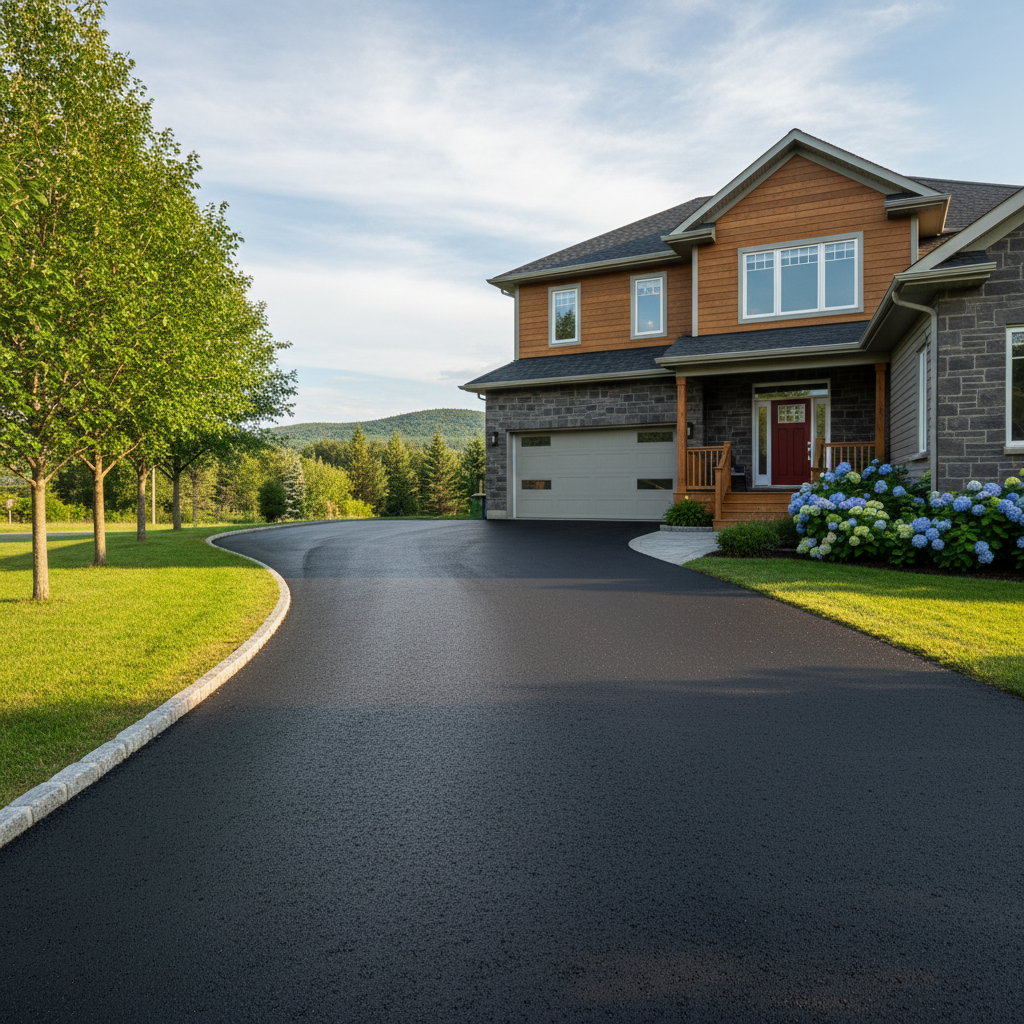
Driveway paving options and costs in Mackenzie
Mackenzie driveway paving is a practical “winter-proofing” upgrade, but the best material choice depends on how your driveway is built and how it drains through the Cariboo freeze–thaw cycles. With 66.7% of dwellings being single-detached homes, most private driveways in Mackenzie are attached to detached properties, so there’s a steady demand for upgrades that can handle heavy ploughing and repeated spring thaw. It’s also worth noting that 77.3% of homes were built before 1981, which often means older lots with mature landscaping, tighter grades, and sometimes frost-susceptible soils that need additional base work.
In the Cariboo, cold winters with deep frost penetration and repeated freeze–thaw cycles are the main cost drivers. Contractors typically build thicker, clean, well-graded granular bases and focus on drainage (ditching, edge drainage, and geotextiles where needed) because saturated soils can amplify heaving, rutting, and cracking. The paving season is shorter than coastal BC, so the workable window shrinks—scheduling tightens, mobilization costs rise, and “late-summer” work can cost more. You’ll also see mix design choices matter: asphalt used in Mackenzie needs to be freeze–thaw rated, and compaction is more challenging during colder shoulder seasons.
In Mackenzie, these projects are especially common around the downtown core and the residential streets where access is tighter and aprons connect directly to the road. Next, compare the typical options and budget ranges below.
| Material |
Lifespan |
Maintenance |
Best For |
Price per sq ft |
| Asphalt (new installation, proper base) |
15–20 years |
Sealcoat at year 3–5, patching as needed |
Best value when base and drainage are engineered correctly |
$12 – $20 |
| Asphalt (overlay on existing gravel base) |
10–15 years |
Sealcoat as above; more frequent crack filling |
When the subgrade is stable and thickness is corrected |
$14 – $23 |
| Interlocking concrete pavers |
25–30 years |
Joint sand/top-up, targeted repairs (replace stones) |
High curb appeal and easy spot repairs for freeze–thaw damage |
$20 – $35 |
| Poured concrete (broom finish) |
20–25 years |
Crack monitoring; occasional patching |
Clean, durable surface if air-entrainment is correct |
$18 – $30 |
| Exposed aggregate concrete |
20–25 years |
Low maintenance; spot repairs only |
Slip-resistant finish and stronger visual curb appeal |
$22 – $38 |
| Gravel / crushed stone (budget option) |
5–10 years |
Re-grade and add rock every 1–3 years |
Temporary or lowest upfront cost when drainage is managed |
$6 – $12 |
Prices are estimates only and vary by project scope, site access and material selection.
What affects the price of paving in Mackenzie
Even for the “same” driveway, quotes in Mackenzie can swing by 30–50% across the Cariboo and wider British Columbia because the real work is in what you don’t see: subgrade stability, base thickness, drainage corrections, and the logistics of getting materials and crews on-site during a short paving window. In coastal BC, contractors often have longer seasons with milder conditions, which reduces weather delays and makes compaction and curing easier. In Mackenzie, cold weather and freeze–thaw cycles are decisive cost factors: deeper frost penetration means you usually need thicker, well-compacted granular base—often more than “thin-lift” builds—so the structure stays below the frost zone and doesn’t heave, rut, or crack.
Asphalt mix design also matters. Hot-mix asphalt generally needs air temperatures above about 10°C for proper placement, and the mix must be freeze–thaw-rated for northern performance. That concentrates demand into fewer workable weeks, which can tighten scheduling and increase mobilization costs. You’ll often see asphalt pricing land in the $12 – $20 band for straightforward new installation with good base preparation, while projects with extra base correction, drainage, or tear-out can drift toward the higher end or beyond.
Concrete can be affected too. For example, poured concrete may cost less if you’re doing a straightforward broom-finish slab on a verified, well-drained base, but it can rise quickly when you need thicker support, extra reinforcement for an apron approach, or additional prep for older lots. Interlocking pavers can be economical when only a portion settles—because individual pavers can be reset—yet the cost increases if the driveway needs extensive grading, edge restraints, and a proper bedding layer to handle freeze–thaw movement. With 77.3% of homes built before 1981, it’s common to encounter mature grades and older drainage patterns that drive additional excavation and base rebuilding—sometimes turning a “surface” project into a full rebuild.
| Price Factor |
Why It Matters |
Cost Impact |
| Driveway area in sq ft |
Larger surface areas require more asphalt/concrete and base material |
High (primary driver); often scales linearly |
| Base depth required |
Frost line determines granular thickness to reduce heaving and cracking |
High; thicker base adds excavation, aggregate, and compaction time |
| Grading and drainage work |
Slope, ditching, and corrected drainage prevent water from saturating the base |
Medium to high; edge drains, geotextile, and regrading add labour |
| Tear-out of existing surface |
Breaking and hauling old asphalt/concrete increases time and disposal fees |
Medium; can add significant cost on reinforced or heavily failed sections |
| Edge restraints and curbing |
Prevents paver spread and controls shape under ploughing |
Medium; materials and extra formwork/inserts |
| Sealing requirement |
Asphalt sealcoat protects binder and slows freeze–thaw deterioration |
Low upfront, medium over lifecycle (typically year 3–5) |
| Site access |
Narrow lots and obstacles slow equipment movement and compaction |
Medium; fewer production hours and additional labour |
| Asphalt mix specifications |
Freeze–thaw-rated mixes cost more and require proper placement conditions |
Medium; increases material cost and may affect scheduling |
Permits & regulations in British Columbia
In British Columbia, paving a private driveway within your own property usually does not require a building permit. Typical examples that often do not require a permit include: repaving an existing driveway surface on your lot, adding asphalt or concrete where no right-of-way work is involved, and reconstructing the driveway entirely on private property (as long as municipal drainage and grading rules are respected).
Permits and approvals are commonly required when work touches the municipal right-of-way, such as creating or changing a curb cut/apron connection, altering boulevard drainage, or modifying stormwater flow paths. If your job includes new ditching, changes to catch basins, or reconfiguring drainage that affects how water leaves the road area, you should expect municipal review. Some areas also enforce lot-grading bylaws that restrict how close hard surfaces and grading can get to property lines or how surface water can be directed.
Before excavation, always confirm utility locates through the proper provincial service (BC 1 Call). Step-by-step, you can also verify your contractor in a homeowner-friendly way: (1) ask for their British Columbia business details and check their legitimacy using any online registry they provide; (2) request a certificate of insurance showing liability coverage suitable for your project (and ensure the policy term is current); (3) ask for proof of coverage/clearance documentation for workplace coverage (WSBC/WCB). Finally, if the work is in or near the road allowance, ask who is pulling the municipal approval and whether it’s included in the quote.
Asphalt vs pavers vs concrete for Mackenzie driveways
For Mackenzie winters, asphalt, interlocking pavers, and concrete all can work well—but they shine in different ways when freeze–thaw cycles and ploughing come into play. Asphalt typically has the lowest upfront cost, but it relies on a protected binder surface, meaning it needs sealcoat maintenance every 3–5 years. In Mackenzie’s deep-frost environment, poor base preparation or weak drainage can make asphalt fail prematurely via rutting and cracking, so the “cheap” option only holds if the granular base and compaction are done properly.
Interlocking concrete pavers usually cost more upfront (commonly in the $20 – $35 band), but they’re highly repairable: if a section heaves, crews can lift and re-level the affected area without replacing the whole driveway. That matters locally because repeated freeze–thaw can create localized movement—especially if older lots have drainage patterns that saturate spots during spring thaw.
Poured concrete sits in the mid-range (often within the $18 – $30 band), and it can be a great-looking, durable driveway when properly air-entrained and built on the right base. However, concrete is more susceptible to cracking if the base is unstable or if drainage lets water linger and freeze under the slab. Salt use from winter maintenance can also accelerate surface deterioration if the mix and finishing aren’t suited for freeze–thaw exposure.
Where the price difference is justified: if your driveway has weak subgrade, you may save money long-term by choosing interlocking pavers for easier section repairs instead of paying for repeated asphalt patching. If drainage is already strong and access is straightforward, asphalt often delivers the best cost-to-performance ratio in Mackenzie—provided you plan for sealing.
| Material |
Frost Resistance |
Curb Appeal |
Repair Method |
Lifespan |
Price Band |
| Asphalt (sealed regularly) |
Good with proper base, drainage, and freeze–thaw mix |
Medium (clean, uniform black finish) |
Crack fill, patch and reseal localized areas |
15–20 years |
$12 – $20 |
| Interlocking concrete pavers |
Excellent; flexible joints tolerate some movement |
High (varied colours, strong curb look) |
Lift/replace affected pavers and re-sand joints |
25–30 years |
$20 – $35 |
| Poured concrete (air-entrained) |
Good when air-entrained and built on stable base |
Medium to high (clean slab, broom finish) |
Patch cracks; full replacement only if widespread failure |
20–25 years |
$18 – $30 |
| Exposed aggregate concrete |
Good; textured surface sheds water better |
Very high (premium visual texture) |
Patch and match finish where feasible |
20–25 years |
$22 – $38 |
| Permeable pavers (drainage grid) |
Excellent where subgrade drainage can accept runoff |
High (modern look) |
Replace units; inspect drainage layer periodically |
20–30 years |
$28 – $45 |
| Chip seal / tar-and-chip |
Fair to good; depends heavily on application quality |
Low to medium (more utilitarian finish) |
Re-chip/maintain surface chips |
6–10 years |
$8 – $16 |
How to choose a paving contractor in Mackenzie
Choosing a driveway contractor in Mackenzie is less about flashy photos and more about proof of capability for cold-weather work. Start with licensing and coverage: ask the contractor for their British Columbia business information and verify it using the online resources they provide. Then request liability insurance documentation (a current certificate of insurance showing your address/job site if available). For workplace coverage, ask for proof of workplace coverage/clearance documentation for WSBC/WCB—contractors should be willing to provide this without delay.
Next, get 2–3 itemised written quotes that break out labour and materials (not just a single lump sum). Make sure the scope is comparable: disposal of removed asphalt/concrete, granular base thickness, compaction requirements, geotextile use, drainage corrections, and whether edge restraints/curbs are included. Confirm if any municipal permit or municipal right-of-way approval effort is included when a curb cut or storm drainage changes are required. Pay attention to exclusions like “weather-dependent delays,” “unknown utilities,” or “additional base if subgrade is unsuitable”—you want these terms clearly stated.
Warranty matters in a place with freeze–thaw movement. Ask for the workmanship warranty length, what it covers (voids, heaving, premature cracking), and whether it’s transferable to future owners. For payment, avoid large upfront deposits—keep it near 10–15% upfront, then use a holdback until the full job is complete and cleaned up. Finally, require a written start date and completion estimate so you can plan around Mackenzie’s shorter season window.
- Request proof of liability insurance (current certificate) before any site work.
- Ask for workplace coverage/clearance documentation for WSBC/WCB.
- Confirm who pulls utilities locates and that excavation won’t begin without locates.
- Get 2–3 quotes with itemised labour/materials (base, drainage, paving, compaction).
- Verify base thickness and whether geotextile is included for wet or frost-susceptible soils.
- Ensure grading and drainage details are written (slope, ditches, edge drains if needed).
- Check whether tear-out and disposal are included if you’re replacing existing surface.
- Confirm whether edge restraints/curbs are included to control paver or asphalt edges.
- Ask when asphalt sealing is recommended (often year 3–5) and whether it’s included or optional.
- Read warranty terms carefully for workmanship and material performance, and ask what triggers denial.
- Agree on payment schedule: no more than 10–15% upfront; holdback until completion and punch-list signoff.
- Require a written timeline with start date, milestones, and weather contingency language.
Concrete red flags I see around Mackenzie: (1) quotes that skip base thickness or drainage details; (2) contractors who won’t show insurance/coverage documents on request; (3) vague “we’ll fix it” warranty language without written terms; (4) no written scope for tear-out/disposal; and (5) pushing for large upfront payments before any subgrade assessment or layout work.
Frequently asked questions — paving in Mackenzie
How do I compare paving quotes fairly?
In Mackenzie, the fairest way to compare quotes is to ensure they cover the same scope, especially base and drainage. Ask every contractor for an itemised breakdown: granular base thickness, compaction steps, whether geotextile is included where soils are frost-susceptible, and how they’ll manage surface water (ditching/edge drainage). Also compare tear-out and disposal: breaking and hauling old asphalt or concrete can change the price a lot. Make sure the asphalt mix is freeze–thaw rated and that concrete is air-entrained if you’re bidding concrete. For budgeting, you’ll usually see asphalt new installs land around $12 – $20, while interlocking pavers often sit higher (commonly $20 – $35). If one quote is much lower, it often means the base or drainage work is missing, not the paving surface.
Can asphalt be laid in cold weather in Mackenzie?
Yes, but it’s limited and depends on temperature and conditions. In Mackenzie and across the Cariboo, hot-mix asphalt generally needs suitable air temperatures for placement—commonly above about 10°C—plus workable weather so the mat can be placed and compacted properly. If crews try to “force” asphalt when it’s too cold, compaction suffers and the binder can’t perform as intended through freeze–thaw cycles. That’s why production windows are tighter in colder BC regions and why scheduling can be more expensive when work is pushed into late fall or early spring. If weather turns, reputable contractors will delay rather than compromise the mat quality. In your quote, ask for the contractor’s cold-weather procedure and whether they’ll adjust mix/placement and curing practices.
What is a driveway apron and do I need one in Mackenzie?
A driveway apron is the paved transition area where your driveway meets the road surface—often at the curb cut location or where the road allowance grading is adjusted. Whether you need one depends on how your driveway connects to the road and whether drainage patterns and slopes meet local standards. If your project includes changing a curb cut, altering boulevard drainage, or modifying stormwater flow near the roadway, that work typically involves municipal approval rather than just private-lot paving. In Mackenzie, many homeowners have older lots and older drainage arrangements; if the existing apron or connection is failing, upgrading it helps prevent water from pooling at the joint, which is a common freeze–thaw failure trigger. Ask your contractor to explain whether your scope includes the apron/connection work and whether it requires municipal approval.
How do I maintain my driveway through Mackenzie winters?
Start with drainage: keep ditches and side swales clear so melting water doesn’t saturate the base. During winter, plough carefully and avoid gouging the surface—especially important for pavers where joint sand can be disturbed and for asphalt where ruts let water infiltrate and freeze. Use sand appropriately instead of aggressive de-icing that may attack surfaces; if you use salt, keep it minimal and spot-targeted. For asphalt, don’t ignore minor cracks—patching early prevents water from getting under the mat and into the base. For pavers, re-level small areas quickly so movement doesn’t grow. Finally, schedule maintenance checks in late winter or early spring thaw when issues are easiest to spot.
Is it worth sealing a new driveway right away in Mackenzie?
Usually, you should not seal immediately “no matter what.” Asphalt sealcoat timing matters: it’s commonly recommended after the pavement has cured—often around year 3–5 depending on product choice, weather, and the specific asphalt. In Mackenzie’s freeze–thaw environment, sealing too early can trap moisture or fail to properly bond, and sealing too late can allow oxidation that shortens service life. The benefit of sealing is real: it helps protect the binder from winter wear, UV aging, and surface deterioration that accelerates in cold climates. In practical terms, many homeowners budget sealing as part of the driveway lifecycle, not the first-day installation. If your quote mentions asphalt in the $12 – $20 band, ask whether sealing is included, or if it’s an add-on later with a clear schedule and product specification.
What is a chip seal driveway and is it suited to Mackenzie?
Chip seal (tar-and-chip) is a surface treatment that spreads binder and then covers it with aggregate chips. It’s typically used where you want a lower upfront cost and can tolerate a shorter lifespan than full asphalt. In Mackenzie’s climate, it can perform acceptably on well-prepared base, but it’s more sensitive to application quality and to how the surface handles freeze–thaw movement and ploughing. If your driveway is likely to see heavy winter traffic or your base drains poorly, chip seal may require more frequent maintenance. For homeowners who want budgeting flexibility, chip seal can be a stepping-stone, but for long-term durability most people choose asphalt in the $12 – $20 range with a properly engineered base, or pavers if they want easy repairs. Ask contractors how they’ll address drainage and compaction before recommending chip seal.