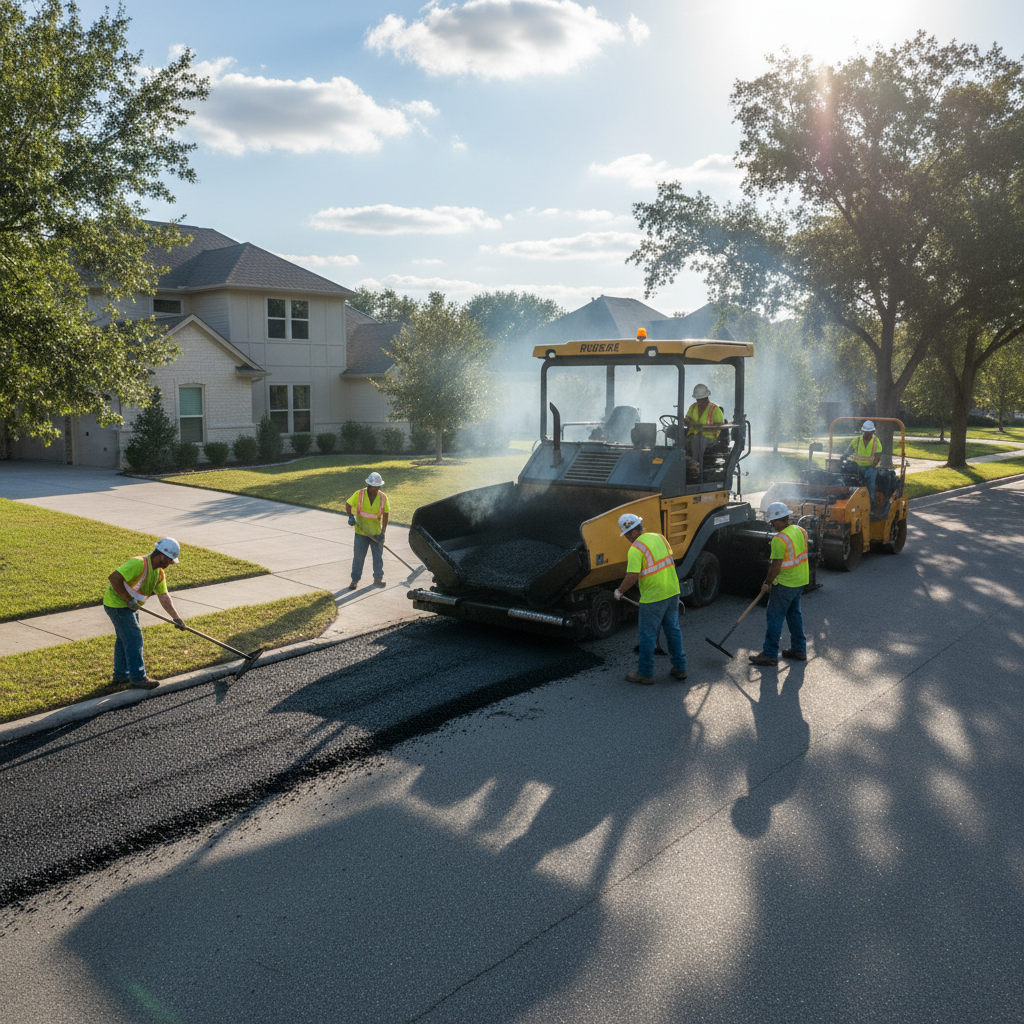
Driveway paving options and costs in Fort St. John
Fort St. John homeowners typically choose from asphalt, interlocking pavers, and concrete because the local winters are demanding and driveways sit right in the freeze–thaw zone. With 49.9% of dwellings being single-detached homes, most driveways are attached to houses where families want a durable, clean-looking surface that can handle ploughing and winter sand. In 2021, there were 21,465 residents in the city area (Statistics Canada, 2021 Census), and that relatively steady base of owner-occupied households helps sustain year-round demand for contractor scheduling—especially in the neighbourhoods with more frequent driveway renewals such as around downtown and the areas toward the highway corridors.
In the Northeast economic region, pricing is shaped less by “material-only” costs and more by what it takes to build a driveway that survives deep frost and repeated temperature swings. Contractors often need extra excavation and thicker, well-compacted granular base plus proper drainage to control frost heave. The effective paving season is also shorter because hot-mix asphalt generally requires warm, dry conditions, so mobilization and scheduling risk are baked into quotes. That’s why you may see the same driveway footprint priced differently—an upgraded base, geotextile, or insulation package can add upfront cost but reduce repairs later.
Below are realistic Fort St. John price ranges you can use to compare options before you request itemised quotes.
| Material |
Lifespan |
Maintenance |
Best For |
Price per sq ft |
Price Range |
| Asphalt (new installation, proper base) |
15–25 years |
Seal every 3–5 years; patching as needed |
Balanced cost and durability for northern weather |
$10–$18 |
$4,500–$8,500 |
| Asphalt (overlay on existing gravel base) |
10–20 years |
Seal every 3–5 years; targeted repairs |
When old base can be improved without full tear-out |
$9–$16 |
$4,500–$7,500 |
| Interlocking concrete pavers |
25–35 years |
Re-levelling and replacing individual stones |
High curb appeal and easier spot repairs |
$18–$28 |
$8,000–$16,000 |
| Poured concrete (broom finish) |
20–30 years (air-entrained) |
Joint maintenance; crack repairs as needed |
Low-profile, durable drive surface |
$16–$26 |
$9,000–$18,000 |
| Exposed aggregate concrete |
25–35 years (proper mix and base) |
Periodic cleaning; seal optional on some finishes |
Non-slip look with upgraded appearance |
$18–$30 |
$10,000–$18,000 |
| Gravel / crushed stone (budget option) |
3–8 years (varies with grading) |
Re-grading and topping up seasonally |
Short-term or low-budget drive solution |
$4–$8 |
$2,500–$5,500 |
Prices are estimates only and vary by project scope, site access and material selection.
What affects the price of paving in Fort St. John
In Fort St. John and the broader Northeast region, the same driveway can come back with quotes that differ by 30–50%. The reason is that most of your total cost is controlled by site preparation and the “build-up” that keeps water and frost under control—not just the asphalt or concrete you see on top. In colder BC interior and northern communities, deeper frost penetration and more intense freeze–thaw cycles mean contractors typically specify a thicker, well-compacted granular base and careful subgrade conditioning. If your subgrade is wet or unstable, the contractor may need additional excavation, imported granular, geotextile separation, or insulation—each one affects price.
The paving season is also shorter. Asphalt production and placement are weather-dependent; crews often need air temperatures above about 10°C for proper hot-mix work, and rain or late-season cold snaps can pause the job. That concentrates demand, increases overtime and mobilization costs, and adds weather-risk pricing compared with milder BC regions.
For concrete, local conditions can raise costs in different ways. First, if your driveway is replacing older pavement, tear-out and disposal can be a bigger line item than you expect. Second, if the existing slope drains poorly or there’s standing water after thaw, drainage corrections add excavation and grading. If your home is in a neighbourhood with more mature housing stock—like areas where homes built before 1981 are more common—your base may have older fill or inconsistent compaction, which can mean additional base thickness and stabilization. With a typical asphalt driveway price band of $4,500–$8,500, upgrading the base and edging can push you toward the upper end; going to pavers can move you into the $8,000–$16,000 range because of restraints, bedding sand, and higher material quantities.
| Price Factor |
Why It Matters |
Cost Impact |
| Driveway area in sq ft |
Most labour and material scale directly with square footage |
Major (often 40–70% of the total) |
| Base depth required |
Freeze demands thicker compacted granular layers to prevent heave and cracking |
Major (can change total cost by thousands) |
| Grading and drainage work |
Slope and drainage corrections control water infiltration and frost movement |
Moderate to major |
| Tear-out of existing surface |
Breaking up old asphalt/concrete and hauling debris adds equipment time |
Moderate to major (site-dependent) |
| Edge restraints and curbing |
Prevents paver movement and asphalt edge breakdown under ploughing |
Moderate |
| Sealing requirement |
Asphalt typically needs sealing after an initial cure to slow oxidation |
Low to moderate (scheduled over time) |
| Site access |
Narrow gates, long walks, or limited staging slows equipment movement |
Moderate (mobilization and labour) |
| Asphalt mix specifications |
Freeze-thaw-rated mix and appropriate thickness improve longevity in northern cycles |
Moderate (higher material cost and QC) |
Permits & regulations in British Columbia
In British Columbia, paving a private driveway on your own property usually does not require a building permit. The typical exception is when the work affects municipal infrastructure or approvals. For example, work in the municipal right-of-way—such as installing or changing a curb cut/apron, altering boulevard drainage, or adjusting storm drainage that ties into municipal systems—typically requires municipal approval. Some communities also enforce lot-grading rules that limit how close hard surfaces can come to property lines or how stormwater must be directed, especially where water could run onto neighbouring lots.
Step-by-step for Fort St. John homeowners: first, book utility locates before excavation (BC 1 Call). Next, ask your contractor to confirm whether the driveway tie-in (especially at the street edge) triggers municipal approval and whether any permit/approval is included in the quote scope. Then, verify the contractor’s British Columbia licensing (the required trade registration is typically shown in the contractor’s public profile), and check liability insurance for coverage appropriate to the project.
Finally, confirm workers’ compensation coverage through the provincial workplace system. Ask the contractor to provide current proof of coverage (clearance/coverage documentation) and an insurance certificate naming you appropriately as required by contract terms. If they can’t provide documentation before pricing or scheduling, that’s a strong sign to pause and request it.
Asphalt vs pavers vs concrete for Fort St. John driveways
For Fort St. John driveways, asphalt is usually the lowest upfront option, pavers give the best curb appeal and the easiest “repair without starting over,” and concrete sits in the middle—provided it’s air-entrained and built on a properly prepared base. The Northeast freeze–thaw cycle is the driver: water movement under a surface can lead to frost heave and surface cracking, especially when drainage is marginal or base compaction isn’t consistent.
Asphalt can perform very well when the contractor builds a thicker granular structure and uses a freeze-thaw-rated approach to thickness and mix selection. The trade-off is maintenance: sealing is typically done every 3–5 years to slow oxidation and help resist moisture intrusion. Interlocking concrete pavers tend to hold up best to winter routines where ploughing and sanding are frequent because the units can be lifted and reset if a section shifts. Poured concrete can be a strong choice, but it needs the right air-entrainment and control joints; without those, freeze–thaw can accelerate cracking. In practice, the best-performing surfaces here usually share the same foundation principles: positive drainage, stable base, and good edge restraints.
Where the price difference is justified: say you’re comparing asphalt around $4,500–$8,500 versus pavers around $8,000–$16,000. If you expect long-term ownership and want minimal disruption for repairs, pavers can be worth it—particularly if you anticipate moving services, doing landscaping changes, or you want the ability to replace a section after a settlement. If your top priority is lowest upfront cost and you’re comfortable with regular sealing, asphalt often makes the most sense.
| Material |
Frost Resistance |
Curb Appeal |
Repair Method |
Lifespan |
Price Band |
| Asphalt (sealed regularly) |
Good with thick base and drainage |
Medium (clean, uniform finish) |
Cut out and patch the damaged area |
15–25 years |
$4,500–$8,500 |
| Interlocking concrete pavers |
Very good with proper bedding and restraints |
High (varied colours/patterns) |
Remove and replace individual pavers |
25–35 years |
$8,000–$16,000 |
| Poured concrete (air-entrained) |
Good when air-entrained and well-jointed |
Medium to high (finish dependent) |
Crack patching and joint repair |
20–30 years |
$9,000–$18,000 |
| Exposed aggregate concrete |
Very good with correct mix and base |
High (textured premium look) |
Section replacement or targeted repairs |
25–35 years |
$10,000–$18,000 |
| Permeable pavers (drainage grid) |
Very good if design drains properly |
High (engineered drainage look) |
Spot repair by removing units |
20–30 years (system-dependent) |
$10,500–$19,000 |
| Chip seal / tar-and-chip |
Fair to good; depends on base quality |
Low to medium |
Re-seal or re-surface over time |
7–15 years |
$4,000–$7,000 |
How to choose a paving contractor in Fort St. John
Choosing the right contractor is where you protect yourself against expensive “surprises” later—especially in Fort St. John, where freeze–thaw performance depends on the foundation details. Start by verifying British Columbia licensing (ask for their trade registration information and confirm it matches the company name on the quote). Then check liability insurance: request a current certificate of insurance and make sure it’s active for the project period. For workers’ compensation, ask for proof of coverage (clearance/coverage documentation). Don’t accept vague statements—documentation should be provided before work begins.
Next, get 2–3 itemised written quotes. “Itemised” matters: you want labour and materials broken down (excavation, base supply/compaction, geotextile if specified, asphalt/concrete supply, edges/restraints, and any disposal). Confirm what’s excluded: permit pulls, traffic control, utility locates, patching of your approach, topsoil reinstatement, and whether the quote includes haul-away of existing material. Warranty should be clear: workmanship warranty length, any exclusions, and whether product/manufacturer warranty transfers to you. Payment schedule matters too—never pay more than 10–15% upfront. Hold back a portion until substantial completion and final grading/drainage checks.
Finally, demand a timeline in writing. Fort St. John projects often hinge on a short warm, dry window, so ask for a start date, estimated completion date, and what happens if weather delays push work outside schedule.
- Ask for BC licence/trade registration details and verify company name matches the quote.
- Request a certificate of liability insurance and confirm coverage limits are appropriate.
- Ask for proof of workers’ compensation coverage (clearance/coverage documentation).
- Get 2–3 itemised quotes with labour and materials broken out—no “lump sum only.”
- Confirm whether utility locates and any utility protection are included.
- Check what excavation haul-away includes (volume limits, disposal site assumptions).
- Verify base specification: material type, lift thickness, compaction targets, and whether geotextile is used.
- Confirm drainage plan: slope requirements and how water is directed at the street edge.
- Make sure edge restraints/curbs are included where needed (especially for pavers).
- Clarify asphalt sealing timing and whether the quote includes the first seal (or schedules it).
- Read the warranty section carefully: workmanship length and what voids it.
- Use a staged payment plan with a holdback until final grading and cleanup are complete.
In Fort St. John, four to five red flags to watch for: a contractor who won’t show insurance/coverage documents; vague scope language like “proper base” without thickness/compaction details; quotes that omit tear-out and disposal assumptions; no written timeline despite weather-dependent scheduling; and warranties that only cover materials (not workmanship) or are buried in fine print.
Frequently asked questions — paving in Fort St. John
What is a driveway apron and do I need one in Fort St. John?
A driveway apron is the transition section at the street edge where the driveway meets the roadway, often including a curb cut and a shaped connection so vehicles don’t “catch” when entering or leaving your property. In Fort St. John, whether an apron is required usually depends on how your existing curb and gutter are built and how your current driveway connects to the municipal surface. If you’re changing the curb cut or altering how stormwater drains at the street line, that typically falls under municipal approval requirements in British Columbia, so you should ask your contractor to confirm permit/approval needs before scheduling excavation. A properly built apron also helps protect your driveway edges from plough contact during winter maintenance.
How do I maintain my driveway through Fort St. John winters?
Winter maintenance in British Columbia’s Northeast is about reducing water and avoiding mechanical stress. For asphalt, keep snow removal consistent—gentle ploughing and avoiding scraping too close to edges helps prevent raveling. Sand is common locally, so promptly sweeping off loose aggregate prevents abrasion. After heavy thaw periods, watch for areas that remain soft or pond water and report them early, because freeze–thaw can amplify small subgrade issues. For concrete, avoid de-icing chemicals that can be harsh on unprotected surfaces; follow the installer’s guidance and keep joints clean to reduce water intrusion. If you have pavers, ensure winter edging stays intact and watch for raised sections after plough passes—spot repairs are usually much cheaper than full replacement.
Is it worth sealing a new driveway right away in Fort St. John?
Usually, sealing is worth it, but timing matters. Asphalt needs time to cure properly before sealers are applied; in Fort St. John, most reputable crews schedule sealing after the asphalt has had a sufficient initial curing window—often after the first warm period—so you don’t trap moisture or compromise the bond. Many homeowners budget for maintenance sealing every 3–5 years to extend service life, especially with Northeast freeze–thaw cycles. If you’re comparing budgets, note that asphalt driveway work typically lands around $4,500–$8,500 depending on base and thickness; sealing is commonly a smaller add-on compared with redoing the surface later. Ask for the planned sealer type, expected cure time, and whether it’s included or will be scheduled as a follow-up.
What is a chip seal driveway and is it suited to Fort St. John?
Chip seal (tar-and-chip) is a thin asphalt binder layer sprayed with aggregate chips, then rolled. It can be suitable for some northern applications, but it’s more dependent on base quality and proper construction than many homeowners expect. In freeze–thaw climates like Fort St. John, a poorly built base can lead to quicker rutting, loose aggregate, or surface break-up—especially under repeated snowplow traffic and sanding. A chip seal option is typically cheaper than full asphalt paving, often referenced in a lower band such as $4,000–$7,000, but it’s generally not the “set and forget” solution. If you want longer-term durability, asphalt with a proper granular base or interlocking pavers usually perform better. The best move is to ask contractors what base build-up they’ll use before choosing chip seal.
How much does driveway crack repair cost in Fort St. John?
Crack repair pricing varies with crack width, length, and whether water has infiltrated under the surface. In Fort St. John, a simple asphalt crack seal or patch for localized damage can be relatively modest, but deeper repairs on edges or sections with base movement can cost more due to saw-cutting, cleaning, and replacement material. As a practical planning reference, many sealing and repair jobs fall into a range like $400–$1,800 for smaller sections, while larger repairs may approach a partial patch size that makes full resurfacing worth considering. Because freeze–thaw cycles can reopen cracks quickly if the underlying drainage or base is off, a contractor should assess whether the crack is “surface only” or tied to frost movement. Request photos, measurements, and a short explanation of root cause before approving work.
What base thickness do I need for pavers in Fort St. John?
For pavers in Fort St. John, base thickness is largely driven by frost depth, soil condition, and drainage—not just the number of cars you park. While exact specs should come from the contractor after site evaluation, the Northeast freeze–thaw environment typically requires a thicker, well-compacted granular structure than what you might see in milder BC coastal areas. If your subgrade is wet or unstable, expect additional excavation and granular replacement, and sometimes separation fabric to reduce pumping. A common reason paver failures happen here is inadequate base build-up, not the pavers themselves. Because that base work is where pricing changes the most, request the build-up section-by-section (layers, thicknesses, and compaction approach) in writing. With pavers, remember the investment usually sits around $8,000–$16,000 in Fort St. John, and a thorough base is what you’re really paying for.