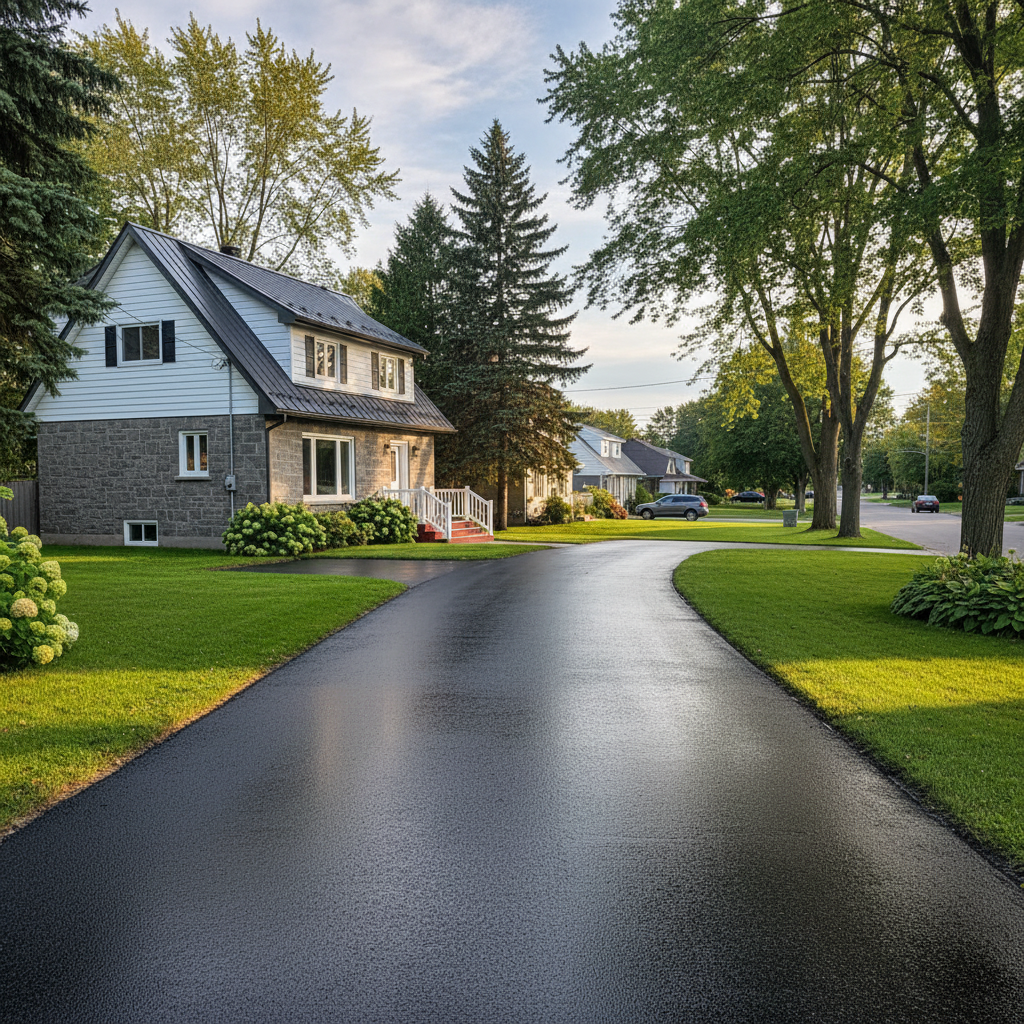
Driveway paving options and costs in Campbell River
Campbell River homeowners have a lot of driveway options, but the right choice usually comes down to how your site drains, how your subgrade was built, and how your property handles winter freeze-thaw. With 11,165 homeowner households (Statistics Canada, 2021 Census) and 60.8% of dwellings being single-detached homes, most private driveway projects are attached to detached houses—so demand is steady in family-oriented neighbourhoods across the city. One reason paving in Campbell River can cost more than people expect is that we’re balancing a mild coastal climate with real winter movement: even when the “frost line” is relatively shallow, repeated freezing and thawing near the surface can heave poorly compacted bases and open up cracks at edges and transitions. Access also matters. On the North Island, shorter paving seasons and island trucking can tighten scheduling and affect material availability, especially when multiple crews are working at once.
On Vancouver Island and the Coast, we typically focus on proper excavation, a well-compacted road base, and controlled water flow—grading your driveway to shed water away from the street and keeping it from ponding at the curb cut. If your home is older (40.0% of homes built before 1981, Statistics Canada, 2021 Census), you’ll often see past repairs, unknown fill depth, or settlement that increases tear-out and base rebuilding.
Below is a practical comparison of the most common driveway builds you’ll see around Campbell River (including areas like Discovery Passage Road and the downtown-adjacent neighbourhoods), leading into the typical price ranges for each material.
| Material |
Lifespan |
Maintenance |
Best For |
Price per sq ft |
| Asphalt (new installation, proper base) |
15–25 years |
Sealcoat after 6–12 months, then every 3–5 years |
Smooth, quiet driveways with best upfront value |
$10 – $20 |
| Asphalt (overlay on existing gravel base) |
10–18 years |
Sealcoat as required; pothole/edge repairs as needed |
When you want to limit excavation but base is stable |
$12 – $22 |
| Interlocking concrete pavers |
25–40 years (unit replacement) |
Joint sand top-ups; occasional spot re-leveling |
High curb appeal and easier repairs without full replacement |
$25 – $45 |
| Poured concrete (broom finish) |
20–30 years |
Crack sealing as needed; surface cleaning |
Low maintenance and solid, uniform surface |
$18 – $35 |
| Exposed aggregate concrete |
20–30 years |
Sealer (where specified) and crack maintenance |
Slip resistance and premium finish |
$22 – $40 |
| Gravel / crushed stone (budget option) |
5–10 years |
Annual grading, topping up, weed control |
Short-term or where drainage needs staged improvement |
$6 – $12 |
Prices are estimates only and vary by project scope, site access and material selection.
What affects the price of paving in Campbell River
In Campbell River (and across Vancouver Island and Coast), two quotes for what looks like the “same” driveway can still land 30–50% apart. The gap usually comes from scope differences: how much excavation is needed, whether the base is rebuilt to handle freeze-thaw movement, how much haul-off/disposal is included, and how tight access is for rollers and dump trucks. Material timing and island logistics can also play a role—when the paving season is busy and temperatures are ideal, scheduling pressure can affect labour availability and crews’ productivity.
Frost and freeze-thaw cycles are decisive cost factors in our coastal region. Even though coastal BC typically needs a thinner compacted granular base than colder provinces (think roughly 4–6 inches of engineered base on many coastal driveway builds, rather than the 6–12 inches you’d often plan for in Ontario/Alberta), the key is whether your base is uniformly compacted and well-drained. If water sits under a driveway, freeze-thaw will work on the weak points and force repairs. Asphalt mix design also matters; asphalt needs to be rated for local freeze-thaw and performance, which can push the material line item higher than the “lowest bidder” mix.
Concrete costs can swing based on site prep and finishing details. For example, if your driveway slopes toward the house, we may need additional grading work and subdrain planning before you pour—adding time and base depth. If you’re tearing out older, mixed rubble-fill under an older property (and 40.0% of homes in Campbell River were built before 1981, Statistics Canada, 2021 Census), disposal and re-compaction can raise the job. On the other hand, a straightforward replacement on solid, stable subgrade might keep you closer to the lower end of asphalt pricing near $10 – $20 per square foot, while pavers commonly land toward the $25 – $45 per square foot band when edging and detail work are included.
| Price Factor |
Why It Matters |
Cost Impact |
| Driveway area in sq ft |
Most costs scale directly with square footage (excavation, base, asphalt/pavers/concrete) |
High (often the #1 driver) |
| Base depth required |
Frost and freeze-thaw performance depends on granular thickness and uniform compaction |
Medium to high |
| Grading and drainage work |
Correct slopes and prevent ponding so water doesn’t freeze under the surface |
Medium |
| Tear-out of existing surface |
Breaking, loading, hauling, and disposal can exceed material costs |
Medium to high |
| Edge restraints and curbing |
Prevents paver spread and asphalt edge failure during winter movement |
Medium |
| Sealing requirement |
Asphalt performance depends on early and periodic sealcoating (especially in coastal conditions) |
Low to medium (but required) |
| Site access |
Tight driveways slow equipment movement and can require smaller crews/equipment |
Low to medium |
| Asphalt mix specifications |
Freeze-thaw-rated mix and proper binder content can cost more but reduces premature failure |
Low to medium |
Permits & regulations in British Columbia
In British Columbia, paving a private driveway within your own property usually does not require a building permit—if you’re simply replacing an existing hard surface and staying on your lot. However, work that affects the municipal portion of the property (the municipal right-of-way) typically requires approval. That includes things like new or modified curb cuts, changes to the boulevard, alterations to storm drainage, or any work that changes how water flows to the street system. Some areas also have lot-grading rules that restrict how close to property lines a hard surface can be, or that require the driveway to shed water in specific directions.
Before excavation in Campbell River, always arrange utility locates—call BC 1 Call—so the contractor can verify where services run. Then, for the paperwork side, confirm your contractor can legally do the job and carry proper coverage. Step-by-step, you can verify:
- BC licence/registration (where applicable): check the appropriate online registry for contractor status and eligibility.
- Liability insurance: ask for a current Certificate of Insurance listing you as an additional insured (when offered) and confirm coverage limits.
- Workers’ compensation: confirm coverage for their workers through WSBC/WCB clearance.
- Proof documents: request the clearance letter and COI expiry dates before work starts.
If any right-of-way work is required (curb cut or drainage changes), ask who is pulling the approvals and whether that’s included in the quote. If it isn’t, factor the time and administrative steps into your schedule.
Asphalt vs pavers vs concrete for Campbell River driveways
For Campbell River driveways, the “best” material depends on your tolerance for maintenance, your desired finish, and how your driveway handles winter water. Asphalt is usually the lowest upfront option; when properly installed with a compacted base and good drainage, it performs well in coastal freeze-thaw conditions. The trade-off is ongoing care: asphalt needs sealing about every 3–5 years after the initial cure window, and neglected edges can crack. Interlocking concrete pavers cost more up front, but they’re very repair-friendly—if a section settles, units can be removed and re-set without tearing up the whole driveway. Poured concrete sits in the middle for cost and can look excellent with the right broom finish or finish work, but it’s more susceptible to cracking if the base and drainage aren’t engineered and if freeze-thaw stress isn’t managed with appropriate mix and practices.
Base preparation is non-negotiable in Vancouver Island and Coast. We typically plan for a road-base rebuild targeted to local conditions (often around 4–6 inches for coastal driveway builds, assuming you have stable subgrade and proper drainage), plus compaction checks. In real Campbell River winters, the biggest failure patterns tend to come from water trapped under the slab or subbase, then repeating freeze-thaw cycles that push movement upward. Salt and sand from routine maintenance can also accelerate surface wear on concrete; air-entrainment and correct finishing help, but drainage still wins.
To make the cost difference concrete (pun intended), a basic asphalt driveway often fits the $10 – $20 per square foot band when excavation and base are straightforward. Pavers commonly land closer to the $25 – $45 range because of edge restraints, bedding sand, and detail work—yet that premium can be justified if you want curb appeal and easier future repairs, especially in older neighbourhoods where subgrade conditions can be uneven.
| Material |
Frost Resistance |
Curb Appeal |
Repair Method |
Lifespan |
Price Band |
| Asphalt (sealed regularly) |
Good when base/drainage is engineered and sealed |
Medium |
Patch and re-seal affected areas |
15–25 years |
$10 – $20 |
| Interlocking concrete pavers |
Very good; movement is accommodated at unit level |
High (custom colours/patterns) |
Remove and re-set individual blocks |
25–40 years |
$25 – $45 |
| Poured concrete (air-entrained) |
Good to very good with proper base and drainage |
Medium to high |
Crack repair/seal; patching for localized failures |
20–30 years |
$18 – $35 |
| Exposed aggregate concrete |
Good; texture helps traction but needs correct base |
High (premium finish) |
Limited patching; often aesthetic repair |
20–30 years |
$22 – $40 |
| Permeable pavers (drainage grid) |
Very good when designed for subdrain conditions |
High (modern look) |
Spot removal and drainage maintenance |
20–30+ years |
$28 – $50 |
| Chip seal / tar-and-chip |
Moderate; relies on ongoing maintenance |
Low to medium |
Re-chip/re-seal for wear zones |
7–15 years |
$8 – $16 |
How to choose a paving contractor in Campbell River
Choosing the right contractor in Campbell River starts with verification—because paving performance is tied directly to workmanship and how they manage base, compaction, drainage, and details. In British Columbia, ask for proof of the contractor’s coverage and status before any work begins. For licensing/registration, check the relevant online contractor registry and confirm the company’s current standing. For liability insurance, request the Certificate of Insurance and confirm it covers paving activities and lists appropriate coverage limits. For workers’ protection, confirm they carry WSBC/WCB coverage and ask for a clearance letter with current dates.
Next, get 2–3 itemised written quotes that break out labour and materials (not just a lump sum). Make sure you see the plan for excavation depth, base type and thickness, compaction method, and what’s included in disposal. Watch scope wording: Is disposal/haul-away included? Is permit pulling included if there’s right-of-way work? Are edge restraints and proper transitions to the street included? For asphalt, confirm the initial seal requirement and whether they schedule it after the driveway has cured.
Warranty should be in writing: ask how long the workmanship warranty lasts and whether the product/manufacturer warranty exists on top of that. If you sell the home, ask whether warranties are transferable. For payment, never agree to more than about 10–15% upfront; hold back a portion until the job is complete and cleaned up. Finally, require a start date and an estimated completion timeline in writing—because on Vancouver Island, weather and delivery schedules can shift.
- Ask for GC/crew names and who supervises the base build.
- Confirm utility locates are arranged (BC 1 Call).
- Require a written scope with base depth and drainage/grading notes.
- Get compaction expectations (and whether they test).
- Check disposal/haul-away is explicitly included.
- Ensure edge restraints/transition details are listed.
- For asphalt, ask about cure time and the first sealcoat timing.
- Verify paver bedding and joint sand specifications (for pavers).
- Confirm concrete mix is air-entrained (where applicable).
- Request photos of similar local installs (Campbell River is best).
- Check insurance COI expiry dates and WSBC/WCB clearance letter dates.
- Use a payment schedule with a final holdback until walkthrough sign-off.
Red flags I see around Campbell River include: contractors quoting a low price without discussing excavation/base and drainage, refusing to provide insurance or WSBC/WCB clearance, “lump-sum only” quotes with vague scope exclusions, pushing full payment upfront, and scheduling sealcoat or warranty work inconsistently (or not at all).
Frequently asked questions — paving in Campbell River
How long does a paved driveway last in Campbell River?
In Campbell River and the broader Vancouver Island and Coast area, a well-built asphalt driveway typically lasts about 15–25 years when the base is properly excavated/compacted and drainage is correct. The difference between “looks fine in year one” and “still solid in year 12” is usually water management and ongoing maintenance—especially sealing after the initial cure window. If you choose interlocking concrete pavers, the driveway can commonly reach 25–40 years because you can remove and re-set problem areas rather than replacing the whole surface. Concrete generally lands around 20–30 years, but freeze-thaw performance depends heavily on base preparation and an air-entrained mix. Your home’s age can matter too: many properties were built before 1981 (Statistics Canada, 2021 Census), and older subgrades often need more base correction to perform long-term.
When is the best time of year to pave in Campbell River?
For asphalt, the best conditions are when daytime temperatures are consistently warm. Hot-mix asphalt needs air temperatures generally above 10°C to place and compact correctly, and coastal evenings can get cool quickly. On Vancouver Island, that usually means planning for late spring through summer, with some flexibility depending on site access and weather windows. Concrete can be poured in cooler weather with proper curing protection, but spring and early fall often run closer to ideal performance targets. If the base is frozen or saturated, crews may have to delay to avoid compaction issues—this is a common reason driveway projects don’t always match the original schedule. If you’re comparing quotes, ask when each contractor can realistically start and whether they build in weather buffers for Campbell River’s shoulder-season rain.
How deep should the base be for Campbell River's frost?
In Campbell River, the frost line is relatively shallow compared with colder interior provinces, so you usually don’t need the deepest granular bases you’d see in Ontario or Alberta. That said, freeze-thaw still happens near the surface, so the base depth and compaction must be engineered correctly. For many coastal driveway builds, a well-designed base often lands around 4–6 inches of compacted granular material, but the total thickness can increase if subgrade is weak, wet, or has settlement history. Your quote should explain the proposed excavation depth, base build-up, and drainage/grading plan. If an estimator proposes minimal excavation “because the weather is mild,” that’s a red flag—on Vancouver Island, water is often the real enemy, not only temperature.
How often should I seal my asphalt driveway?
For asphalt in British Columbia, sealing is typically required to protect the surface from moisture and weathering. A common approach is to seal after the initial driveway has cured—often around 6–12 months after installation—then plan for re-sealing about every 3–5 years depending on traffic, surface condition, and whether ponding occurs. In coastal climates like Campbell River, constant moisture can speed up surface breakdown if the asphalt binder isn’t protected. If you neglect sealing, small cracks can expand from freeze-thaw action, leading to larger repairs and higher costs. When you request a quote, ask whether the contractor includes the initial sealcoat timing and what product they use, and confirm whether repairs (crack fill or patching) are included before sealing.
Why does my driveway crack and heave in winter?
Cracking and heaving in Campbell River’s winters usually come from a combination of water and movement. When water gets under the driveway—through poor drainage, low spots, clogged outlets, or weak transitions to the street—it can freeze. As it freezes and thaws repeatedly, it expands and contracts, which can lift the surface (heaving) or open cracks at the edges and joints. Older sites also contribute: many homes were built before 1981 (Statistics Canada, 2021 Census), and they often have unknown fill depth or past patching that didn’t include full base reconstruction. A properly engineered base with good slope and drainage reduces this risk, and it’s why “cheap overlay” jobs can fail faster than a full base rebuild.
Do I need a permit to pave my driveway in British Columbia?
In most cases in British Columbia, paving a private driveway on your own property does not require a building permit—especially when you’re simply replacing an existing driveway surface and staying within your lot boundaries. However, if the work affects the municipal right-of-way, you may need municipal approval. Examples include creating or modifying a curb cut, changing boulevard areas, or altering storm drainage. Campbell River homeowners should also ensure lot-grading rules are followed if the municipality restricts how close the hard surface can be to property lines or how water must drain. Regardless of permit requirements, arrange utility locates (BC 1 Call) before excavation. Your quote should clearly say whether right-of-way work is included and whether approvals are handled by the contractor.