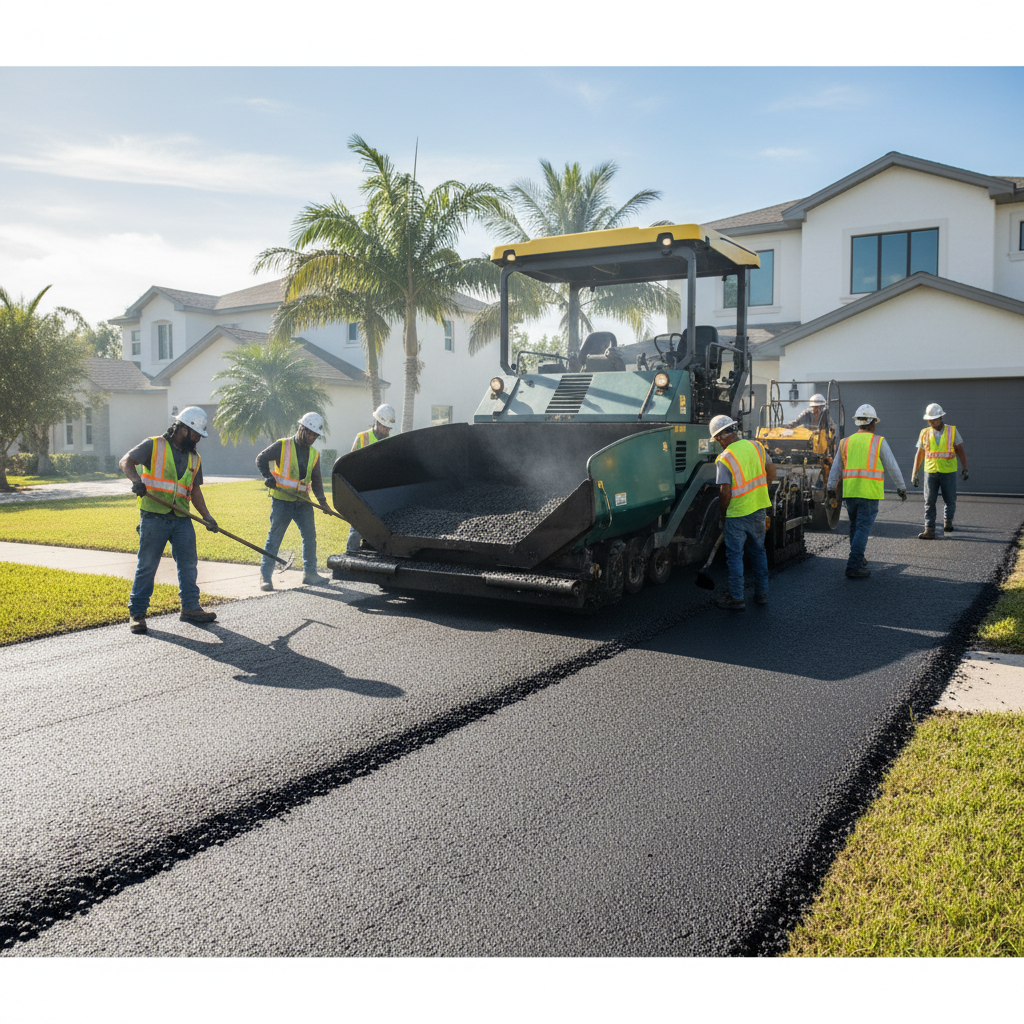
Driveway paving options and costs in Abbotsford
In Abbotsford, driveway paving choices usually come down to asphalt, interlocking pavers, or concrete—each priced differently because of base preparation and drainage details, not just the surface material. With 36,600 homeowner households in the city (Statistics Canada, 2021 Census), and single-detached homes representing 37.1% of dwellings, private driveways are a big part of the local workload and competition. You’ll see more installers focused on residential work in established areas like Abbotsford’s Central Abbotsford and near the Vedder Crossing area, where homes are older and many driveways need either overlays or full base rebuilds.
Lower Mainland–Southwest paving is shaped less by deep freeze and more by intense rainfall, saturated soils, and winter freeze–thaw around a relatively shallow frost line. Even though the frost penetration is not as severe as Interior BC, regional practice still assumes a frost line on the order of 18" for exposed infrastructure—so excavation, compacted granular base, and proper drainage strongly affect your quote. That’s also why “cheap” paving often turns into costly repairs: if the base isn’t built thick enough and crowned/supported for drainage, you can get rutting, settlement, and early cracking.
As a homeowner, you’ll feel these differences in both lifespan and maintenance. Asphalt is typically the lowest upfront surface cost, while pavers cost more initially but allow targeted repairs. Concrete sits in between, with good results when it’s air-entrained and built on a stable granular base.
Use the table below as a quick comparison of realistic budget ranges before you request an itemised quote.
| Material |
Lifespan |
Maintenance |
Best For |
Price per sq ft |
Price Range |
| Asphalt (new installation, proper base) |
15–25 years |
Seal every 3–5 years |
Best value for most residential driveways |
$4.50–$9.50 |
$12,000–$20,000 |
| Asphalt (overlay on existing gravel base) |
10–18 years |
Seal every 3–5 years; monitor weak spots |
When the base is solid and drainage is already good |
$3.75–$8.00 |
$8,500–$15,500 |
| Interlocking concrete pavers |
25–40 years |
Occasional re-leveling; replace individual stones |
Curb appeal and easy spot repairs |
$8.00–$16.00 |
$18,000–$32,000 |
| Poured concrete (broom finish) |
20–35 years |
Limited; seal if desired (often 5–7 years) |
Clean, simple driveway look |
$6.50–$12.50 |
$14,000–$26,000 |
| Exposed aggregate concrete |
25–35 years |
Sealing helps stain resistance and appearance |
Premium finish and slip resistance |
$9.00–$16.50 |
$20,000–$35,000 |
| Gravel / crushed stone (budget option) |
5–10 years |
Re-grade and top up yearly; weed control |
Fast, low-cost upgrade; temporary solution |
$3.00–$6.50 |
$6,000–$12,000 |
Prices are estimates only and vary by project scope, site access and material selection.
What affects the price of paving in Abbotsford
If you’re comparing quotes in Abbotsford (Lower Mainland–Southwest), it’s common to see the same driveway scope range by 30–50% across BC and beyond. The differences usually come from base thickness and compaction quality, drainage correction, and how much excavation and disposal is required—items that aren’t obvious when a quote is presented as “just paving.” Also, workload timing matters: milder temperatures help keep crews busy longer, but heavy shoulder-season rain can stall excavation, tighten scheduling, and raise labour costs.
Frost line depth and freeze–thaw cycles are decisive cost factors here. While frost in coastal BC is less deep than Interior or Ontario/Alberta, regional practice still targets a frost line around 18" for exposed infrastructure. That means the granular base needs to be properly sized and compacted to resist heaving and cracking. Put simply: deeper or poorly drained conditions mean more granular material and more labour, which is why asphalt jobs that land in the $12–$20 per sq ft backbone range often include a full rebuild and drainage fixes. In colder regions, you’d see 6–12 inches of compacted base in exposed applications; in the Lower Mainland, it’s often closer to 4–6 inches where soils are stable, but Abbotsford clay-heavy or saturated spots can push that higher.
Concrete and asphalt mix design also matters. Asphalt laid without a freeze–thaw-rated approach (and correct thickness) tends to fail early. In practice, older homes in Abbotsford—29.0% of homes built before 1981 (Statistics Canada, 2021 Census)—often have settled subgrades, older drainage patterns, or reused base that can increase tear-out and rebuild scope. You’ll feel it in the dollars: a driveway that should be “overlay” pricing can quickly turn into new installation once soft subgrade or inadequate slope is confirmed.
For pavers and concrete, those same conditions can shift projects toward the higher bands (for example, pavers often start near the $20–$40 per sq ft backbone when you account for base depth, bedding sand, and edge restraints).
| Price Factor |
Why It Matters |
Cost Impact |
| Driveway area in sq ft |
Labour, materials, and equipment time scale directly with surface area |
High (often the biggest difference between quotes) |
| Base depth required |
Frost line expectations drive compacted granular thickness and stability |
High (can change the job from overlay to rebuild) |
| Grading and drainage work |
Correct slope and under-drainage prevent saturation and winter movement |
Medium to High (varies with soil and downspout runoff) |
| Tear-out of existing surface |
Concrete breaking, asphalt milling, and hauling add time and disposal cost |
Medium to High |
| Edge restraints and curbing |
Pavers need restraints to stop spreading; asphalt needs clean edges |
Medium (small line item, big impact on longevity) |
| Sealing requirement |
Asphalt needs sealing after installation for moisture/UV protection |
Low to Medium (recurring maintenance budget) |
| Site access |
Narrow lots slow equipment movement and increase labour handling |
Medium |
| Asphalt mix specifications |
Freeze–thaw-rated mixes and appropriate thickness reduce early cracking |
Medium (often worth it for performance) |
Permits & regulations in British Columbia
In British Columbia, paving a private driveway within your own property typically does not require a building permit. However, work that affects the municipal right-of-way usually does need municipal approval. In practical terms for Abbotsford homeowners, that means permits/approvals are commonly required when you’re changing things like a new curb cut, altering the boulevard, modifying storm drainage, or relocating drainage infrastructure that ties into municipal systems.
There are also lot-grading considerations. Some municipalities restrict how close a hard surface can be to property lines or limit how grading is changed to manage water runoff. Even when a building permit isn’t required, these rules can affect your driveway design (slope, drainage outlets, and how water is directed away from foundations).
Step-by-step, here’s the easiest verification process for any contractor you consider in Abbotsford:
- Utility locates: require a locates request before excavation (BC 1 Call).
- BC paving licence: confirm the contractor’s registration information and the correct trade/business details through the appropriate public registry sources listed on their paperwork.
- Liability insurance: ask for a current certificate of insurance naming you (or at least confirming coverage limits and effective dates).
- Worker coverage (WSIB/WCB): request proof of coverage for workers; review the clearance/coverage letter on request.
- Documentation: get the scope and any municipal approval responsibilities in writing before work starts.
If you’re unsure whether your plan touches the right-of-way, ask the contractor to flag it early—approval delays are one of the most common reasons for schedule changes in the Lower Mainland–Southwest.
Asphalt vs pavers vs concrete for Abbotsford driveways
For Abbotsford driveways, the best material depends on how you balance upfront cost, appearance, and how you want your driveway to behave through wet winters. Asphalt usually has the lowest upfront cost and is a common fit in neighbourhoods with older housing stock, but it requires sealing every 3–5 years to protect against moisture damage and wear from winter traffic. Interlocking concrete pavers are typically the highest upfront, yet they’re forgiving: if one section settles or a drainage issue develops, you can lift and re-set stones without replacing the entire surface.
Poured concrete sits in the middle on cost (often landing in the broader concrete band of $18–$35 per sq ft depending on thickness and finish). In Abbotsford’s freeze–thaw conditions—combined with de-icing chemicals, tire traffic, and saturated soils—concrete performance depends heavily on air-entrainment, proper mix, curing, and a stable granular base. If the base isn’t compacted and drained, concrete can crack even when the surface is “done right,” especially along edges where water collects.
Base preparation in Lower Mainland–Southwest is still driven by the regional frost-line assumption (around 18") and the reality of saturated Fraser Valley soils. As a rule of thumb, many residential asphalt projects in the area include about 6" of compacted granular base with 2.5–3" asphalt. If soils are weak or water is pooling, excavation often needs to go deeper—pavers may require a similar or slightly heavier base plus bedding sand for alignment.
Here’s a concrete price example to show where differences are justified: if an asphalt driveway lands around the local $12–$20 backbone range, and pavers quote closer to $20–$40 per sq ft because of deeper base, edging, and more labour, pavers can be “worth it” when you want curb appeal and the ability to repair a localized issue later. If your goal is simply to restore function at the lowest upfront cost and the drainage is corrected, asphalt is often the better value—just plan for sealing.
| Material |
Frost Resistance |
Curb Appeal |
Repair Method |
Lifespan |
Price Band |
| Asphalt (sealed regularly) |
Good when base is properly drained and sealed |
Medium |
Patch small areas; reseal to refresh surface |
15–25 years |
$12–$20 per sq ft |
| Interlocking concrete pavers |
Very good with correct base and bedding |
High |
Lift and replace individual pavers |
25–40 years |
$20–$40 per sq ft |
| Poured concrete (air-entrained) |
Good with air-entrainment and stable base |
Medium |
Crack repairs/patching; often cosmetic fixes |
20–35 years |
$18–$35 per sq ft |
| Exposed aggregate concrete |
Good with proper base and curing |
Very high |
Spot repair is possible but less seamless |
25–35 years |
$22–$38 per sq ft |
| Permeable pavers (drainage grid) |
Excellent where you want storm-water infiltration |
High (design-forward) |
Lift/replace affected sections; serviceable sub-layer |
25–40 years |
$24–$45 per sq ft |
| Chip seal / tar-and-chip |
Fair; best for targeted areas and drainage-corrected bases |
Low to Medium |
Re-coat or localized patching |
6–12 years |
$8–$14 per sq ft |
How to choose a paving contractor in Abbotsford
Choosing the right contractor in Abbotsford is less about finding the lowest number and more about verifying coverage, build quality, and what’s actually included. Start with the essentials: confirm British Columbia licensing/registration details (as applicable to the contractor’s business), ask for a current certificate of liability insurance, and verify worker coverage (WSIB/WCB). Don’t accept “we’re covered” as a verbal statement—ask to see the certificate dates and coverage limits, and request a clearance/coverage letter for their workers.
Next, get 2–3 itemised written quotes that break down labour and materials rather than a single lump sum. A strong quote will show excavation, base gravel depth, compaction method, asphalt thickness (or paver base and bedding sand thickness), edging/curing details, and disposal/tipping fees if applicable. Pay close attention to what’s excluded: re-grading your lawn, replacing broken curbs, adjusting drainage/downspout routing, or removing old roots and debris are common add-ons.
Warranty should be specific: workmanship warranty length, what product/manufacturer warranty covers, and whether it’s transferable if you sell the home. For payment, never pay more than 10–15% upfront. Use a holdback until the surface is complete, cleaned, and any final adjustments are finished.
Finally, require a written timeline: start date, weather-dependent milestones, and an estimated completion window. Abbotsford scheduling often shifts when shoulder-season rainfall affects excavation, so having dates and contingency language avoids surprises.
- Confirm insurance and coverage certificates (effective dates, limits, and beneficiary)
- Request a copy of their BC clearance/coverage documentation for workers
- Insist on a detailed scope: excavation depth, base thickness, and compaction
- Verify asphalt thickness and mix type (freeze–thaw appropriate, not “standard” only)
- Ensure drainage work is described (slope/crown and how water is directed)
- Check whether tear-out, hauling, and disposal are included
- Ask if edge restraints/curbs are included for pavers
- Confirm sealing schedule for asphalt (including re-seal timing after cure)
- Ask about traffic control and how they keep the site safe during work
- Review warranty terms in writing (workmanship vs materials, transferability)
- Confirm equipment and crew size—avoid “one-person crew” signals for larger jobs
- Get start and completion dates in writing, with weather-based contingency notes
In Abbotsford, watch for red flags like: vague “lump sum” pricing with no base thickness specified; no proof of liability insurance or worker coverage; no written disposal plan for removed asphalt/concrete; pressure for large upfront payments; and promises to “skip the base” or avoid drainage corrections. Those shortcuts usually show up as heaving, rutting, or premature cracking within a few seasons.
Frequently asked questions — paving in Abbotsford
When is the best time of year to pave in Abbotsford?
In Abbotsford and the Lower Mainland–Southwest, the best paving window is typically late spring through early fall, when roads are drier and crews can excavate and compact base without standing water. Heavy rainfall during shoulder seasons can delay base prep and make compaction checks harder, which can affect long-term performance. Asphalt also depends on workable temperatures—hot-mix asphalt generally needs air temperatures above about 10°C. If your driveway needs deeper base and drainage corrections, earlier scheduling in the season helps avoid repeated re-excavation after wet weather. If you’re comparing quotes, ask contractors about their 2–3 month scheduling plan and how they handle weather interruptions.
How deep should the base be for Abbotsford's frost?
Even though coastal frost is shallower than in Interior BC, local practice still assumes a frost line on the order of 18" for exposed infrastructure, so base depth is driven by frost resistance and soil stability rather than just “how cold it gets.” For most residential asphalt, a common build is about 6" of compacted granular base with 2.5–3" of asphalt, with deeper excavation when soils are weak or saturated. If you have clay-heavy areas or water pooling near the driveway edge, contractors may need to increase granular thickness and address drainage before any surface goes down. The key is not the exact inches alone—it’s compaction, drainage slope, and whether the subgrade is stable and dry at the time of paving.
How often should I seal my asphalt driveway?
For asphalt in Abbotsford, plan on sealing every 3–5 years after installation, assuming normal residential traffic. The exact timing depends on the product used, how quickly the asphalt oxidizes, and whether de-icing chemicals and tire wear are heavy. Many contractors wait for the asphalt to cure before the first seal coat, then recommend maintenance based on surface condition. If you’re budgeting, treat sealing as part of the driveway’s lifecycle rather than an optional step—especially in Lower Mainland winters where driving through wet slush and repeated freeze–thaw around a shallow frost line can accelerate moisture-related deterioration. If your quote is in the asphalt backbone band (for example, $12–$20 per sq ft), ask whether sealing is included and what re-seal schedule they recommend.
Why does my driveway crack and heave in winter?
Cracking and heaving usually come from movement within the base/subgrade system, most often linked to water. In Abbotsford, intense rainfall can saturate clay-heavy soils, and freeze–thaw cycles around the region’s frost line can then create upward movement (heaving) and stress cracks as the surface expands and contracts. Common contributors include insufficient granular base thickness, poor drainage slope, clogged culverts or downspout runoff hitting the driveway edge, and inadequate compaction. If the driveway was overlaid without addressing weak spots, the problem can reappear faster. The best fix is typically to correct the drainage and rebuild the base where movement occurred—patching alone often delays the inevitable.
Do I need a permit to pave my driveway in British Columbia?
In British Columbia, paving a private driveway within your own property usually does not require a building permit. What often does require municipal approval is work that affects the municipal right-of-way, such as new or altered curb cuts, boulevard changes, or storm drainage modifications. Some municipalities also have lot-grading rules that restrict how close you can grade and pave to property lines while managing runoff. For Abbotsford homeowners, the practical approach is to confirm whether your work touches the boulevard or drainage tied to the city, and to follow the local utility-locates process before any excavation. Ask your contractor up front whether they handle municipal approvals (if needed) and ensure utilities are located before digging.
How long before I can drive on new asphalt?
For new asphalt in Abbotsford, contractors typically allow light vehicle traffic after the surface has cooled adequately and the initial laydown is set—often within 24–48 hours depending on weather, mix, and thickness. The crew will usually provide a specific driveway-specific timeline. If temperatures are cooler or it’s damp, it can take longer; if it’s dry and warm, drying and set-up can be faster. Avoid turning, hard braking, or parking heavy vehicles on fresh asphalt until the contractor confirms it’s ready. After that, plan for the longer-term cycle: sealing is commonly scheduled after cure (often within the first year), and then repeated every 3–5 years to protect the surface. If you’re comparing jobs, ask whether the estimate includes sealing (a typical add-on is in the $2–$6 per sq ft range).