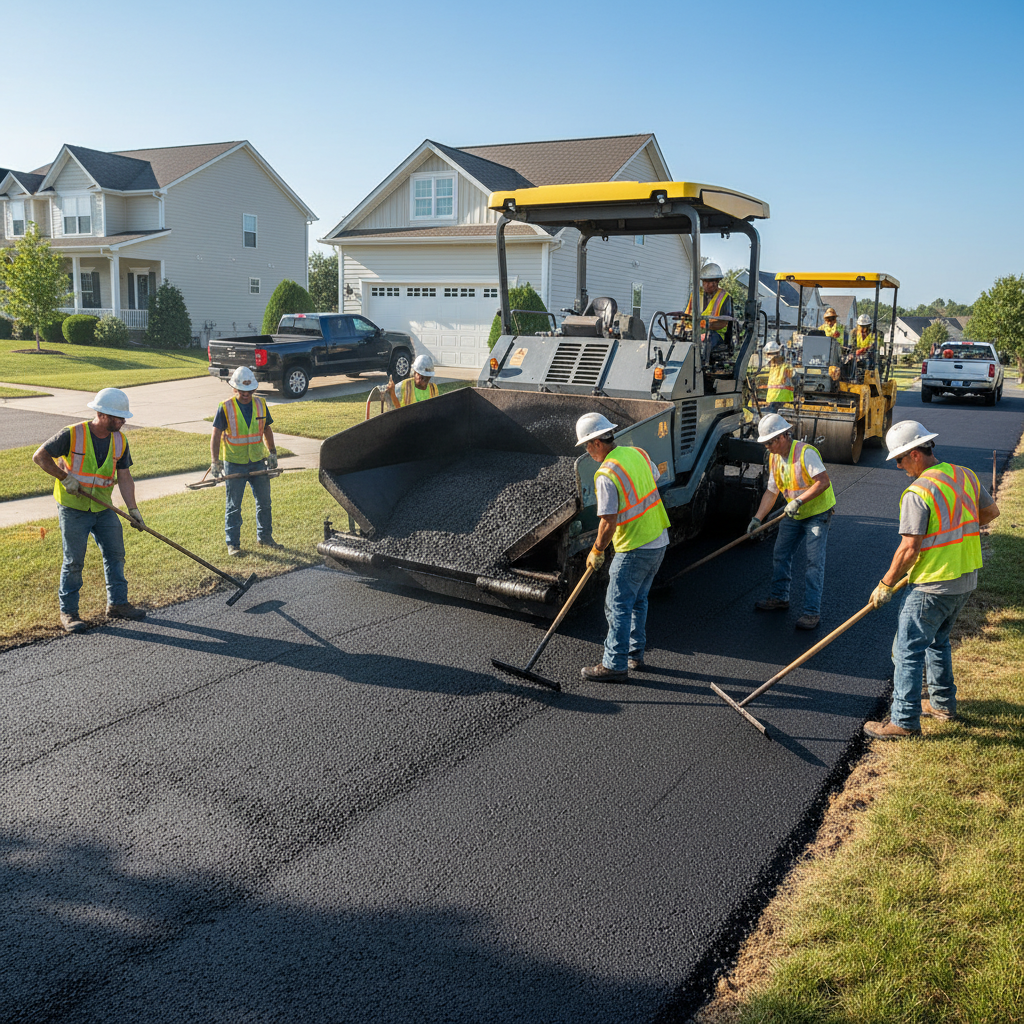
Driveway paving options and costs in Fernie
In Fernie, choosing a driveway surface is as much about surviving winter as it is about curb appeal. With 62.4% of dwellings being single-detached homes, most paving work in town is tied to private driveways that see daily traffic, ploughing, and spring melt. That’s important because Fernie’s housing stock skews older—59.6% of homes were built before 1981—so many properties have narrower foundations, less predictable drainage, and existing base materials that may not be frost-ready without upgrades. (Statistics Canada, 2021 Census)
The Kootenay region also has a colder interior climate where frost depth and repeated freeze–thaw cycles are major cost drivers for paved surfaces. Local frost penetration is commonly in the 45–60 inch range depending on elevation and micro-climate, so driveways and walkways typically need a deeper, well-compacted granular base and reliable drainage. Add in a shorter paving season in Fernie (late spring through early fall) and contractors often mobilize equipment in tight weather windows, which can raise pricing compared with milder parts of BC.
Trade demand is especially strong in established neighbourhoods with lots of older homes and regular driveway replacement cycles, such as the Coal Ridge and central Fernie core areas. If you’re comparing options, the right scope matters—base depth, drainage correction, and excavation/take-out can swing costs as much as the surface material itself. Use the table below as a practical starting point for budgeting before you request an itemised quote.
| Material |
Lifespan |
Maintenance |
Best For |
Price per sq ft |
Price Range |
| Asphalt (new installation, proper base) |
15–25 years |
Seal coat every 3–5 years; patch minor cracks as needed |
Clean, modern look; best balance of cost and durability |
$10–$18 |
$7,000–$13,000 |
| Asphalt (overlay on existing gravel base) |
10–18 years |
Seal earlier if base is marginal; more frequent patching |
Where removal is limited and base can still be stabilized |
$9–$16 |
$6,500–$11,500 |
| Interlocking concrete pavers |
25–35+ years |
Joint sand top-up; replace individual stones if damaged |
Curb appeal; repairability without full replacement |
$14–$24 |
$9,000–$16,000 |
| Poured concrete (broom finish) |
20–30 years |
Keep edges sealed; minor crack repair when needed |
Straightforward, low-fuss surface; plough-friendly |
$13–$22 |
$11,000–$18,000 |
| Exposed aggregate concrete |
20–30 years |
Seal periodically; address pop-outs if they occur |
Non-slip texture; higher-end finish |
$16–$28 |
$12,500–$20,500 |
| Gravel / crushed stone (budget option) |
1–5 years (depends on grading) |
Regrade, add stone, and recompact periodically |
Temporary solution; lower upfront spend |
$3–$7 |
$2,500–$6,000 |
Prices are estimates only and vary by project scope, site access and material selection.
What affects the price of paving in Fernie
In Fernie and across the Kootenays, it’s common to see quotes for the “same” driveway range by roughly 30–50%. The difference usually isn’t the asphalt or concrete—it’s the hidden work underneath: excavation depth, granular base design, drainage corrections, and how much of the old pavement has to be broken out and hauled away. In colder interior BC, those factors become decisive because frost-related movement can punish thin bases and poor water management.
Frost line depth and freeze–thaw cycles are the biggest drivers. Deeper frost demands a thicker compacted granular base—often in the 6–10 inch range for asphalt and interlocking pavers, adjusted upward where soils are weaker or clayey—to help prevent heave and cracking. In Fernie’s interior conditions, the goal is a stable, free-draining layer plus careful grading so meltwater doesn’t sit under the surface.
Season constraints also push pricing. Hot-mix asphalt placement typically requires air temperatures above 10°C, so work gets squeezed into late spring through early fall. When everyone’s trying to book the same weeks, mobilization and weather risk add cost, and scheduling pressure can show up even in a straightforward driveway.
Concrete costs can move either direction depending on site constraints. For example, if your driveway needs extra steel reinforcement or more subgrade stabilization due to soft patches, the price climbs toward the upper concrete band (often $11,000–$18,000). On the other hand, if the existing base is sound and joints and drainage are addressed cleanly, a poured slab can land near the lower end. For asphalt, you might budget around $7,000–$13,000 when base and drainage are done properly, but a short-cut overlay over weak material can reduce upfront cost only to increase repairs sooner.
| Price Factor |
Why It Matters |
Cost Impact |
| Driveway area in sq ft |
Most material and labour scale directly with square footage |
Major; usually the single largest line item |
| Base depth required |
Frost penetration determines granular thickness and compaction lifts |
Major in Fernie; can add significant excavation/import |
| Grading and drainage work |
Slope away from the house prevents saturation and frost action |
Moderate to major if swales/culverts need correcting |
| Tear-out of existing surface |
Breaking, loading, and hauling old asphalt/concrete increases labour |
Moderate; can be major for thick slabs |
| Edge restraints and curbing |
Prevents paver spread and helps hold the line under plough traffic |
Moderate; often essential for pavers |
| Sealing requirement |
Asphalt must be sealed after curing to protect binder from freeze/thaw damage |
Minor to moderate (timed cost adds up over time) |
| Site access |
Narrow lots slow equipment movement and increase manual work |
Moderate; can affect both excavation and grading |
| Asphalt mix specifications |
Freeze-thaw-rated mix design costs more and supports longer service life |
Moderate; typically reflected in the material unit cost |
Permits & regulations in British Columbia
In British Columbia, paving a private driveway within your own property usually does not require a building permit. The common exception is when the work touches the municipal right-of-way—think new curb cuts, modifications to the boulevard, or changes that affect storm drainage and how water flows across the front of the property. If your driveway ties into a lane/sidewalk area, or you need to reconfigure ditching, catch basins, or drainage outlets, you should assume municipal approval may be required.
For Fernie homeowners, the practical rule is: verify lot-grading and drainage expectations early. Some municipalities and local bylaws restrict how close hard surfacing can be to property lines or how water must be managed so it doesn’t run onto neighbouring lots. Even when a permit isn’t required, you should confirm whether a drainage plan or inspection is expected.
Before excavation, always confirm utility locates with BC 1 Call. Then verify the contractor properly: (1) licensing—check the contractor’s registration using the appropriate BC registry/search tools; (2) liability insurance—ask for a current certificate of insurance showing coverage for your project; and (3) workplace coverage—request proof of WSIB/WCB coverage. A legitimate contractor should be able to provide clear, current documentation before mobilization. After that, ask whether disposal of removed asphalt/concrete is included and whether the tender includes any required approvals or inspections.
Asphalt vs pavers vs concrete for Fernie driveways
For Fernie driveways, all three materials can perform well when the base is engineered for freeze–thaw, but they behave differently under winter and maintenance. Asphalt typically offers the lowest upfront cost, but it’s a “maintain-to-last” system: plan on sealing every 3–5 years to protect the binder from air void oxidation and moisture damage. Interlocking concrete pavers cost more up front, yet they’re a strong fit for homeowners who value repairability—individual stones can be lifted, the sub-base corrected, and the area rebuilt without tearing up the whole driveway. Poured concrete sits in the middle on price and is durable, but it is still sensitive to freeze–thaw if it isn’t air-entrained and properly finished and cured. Salt and repeated plough impacts can widen cracks over time if the slab thickness and joints aren’t right.
In the Kootenays, the base and drainage design matter at least as much as the surface. A well-compacted granular base (commonly 6–10 inches, adjusted upward where soils are weak) plus correct grading away from the house reduces frost pumping and helps each material hold up to spring melt. Asphalt and concrete also benefit from edge control; without it, you can see rutting, infiltration, and premature cracking along the sides.
A concrete example: if asphalt is priced at roughly $7,000–$13,000 for a properly built driveway, but pavers come in closer to $9,000–$16,000, the added cost can be justified when you want long-term curb appeal and the option to repair localized issues. If your priority is straightforward value and you’re willing to keep up with sealing, asphalt is usually the better fit for many Fernie households.
| Material |
Frost Resistance |
Curb Appeal |
Repair Method |
Lifespan |
Price Band |
| Asphalt (sealed regularly) |
Good with deep, free-draining base |
Medium |
Mill/patch or overlay local failures |
15–25 years |
$7,000–$13,000 |
| Interlocking concrete pavers |
Excellent when edge restraints and base are correct |
High |
Lift-and-replace individual pavers and reset base |
25–35+ years |
$9,000–$16,000 |
| Poured concrete (air-entrained) |
Good when air-entrained and joints are planned |
Medium |
Crack repair/patch; full replacement if widespread failure |
20–30 years |
$11,000–$18,000 |
| Exposed aggregate concrete |
Good to very good with proper base and finish |
Very high |
Localized patching is limited; replacement is often broader |
20–30 years |
$12,500–$20,500 |
| Permeable pavers (drainage grid) |
Very good if underdrains are designed correctly |
High (modern look) |
Reset affected units; clean/check system parts |
25+ years with proper maintenance |
$10,000–$18,500 |
| Chip seal / tar-and-chip |
Moderate; depends heavily on base quality |
Low to medium (utility look) |
Spot patch; may require resurfacing more often |
7–15 years |
$6,000–$11,000 |
How to choose a paving contractor in Fernie
Start by verifying British Columbia requirements before you sign. Ask for proof of current business registration and any trade licensing that applies to paving in BC, plus liability insurance that names you as the certificate holder when possible. For workplace coverage, request documentation showing WSIB/WCB coverage (what’s relevant to the worker’s jurisdiction and contractor’s setup). A reputable Fernie crew will provide these documents without pressure—if they hesitate, that’s a red flag.
Next, get 2–3 itemised written quotes. You want a breakdown showing labour and materials, not a single lump sum. The quote should spell out excavation depth, base course thickness and compaction method, disposal, and whether edge restraints are included. Also clarify exclusions: will they remove all existing asphalt/concrete to a specified depth, or is partial removal allowed? Ask whether compaction testing is part of the process (or at least documented lift/grade practices).
Warranty should be clear and separate between workmanship and products. Confirm how long workmanship is covered, whether the warranty transfers to a new owner if you sell, and what “defects” include. For payment, avoid large upfront deposits—keep it to about 10–15% maximum and use a holdback until the job is complete and reviewed. Finally, require a start date and an estimated completion window in writing, especially because Fernie’s paving season can tighten quickly when weather turns.
- Confirm current BC business registration and any applicable trade licensing before work begins.
- Request a current certificate of liability insurance.
- Verify WSIB/WCB coverage for workers (ask for documentation).
- Get 2–3 itemised quotes with labour and material breakdown.
- Make sure the scope lists excavation depth and granular base thickness.
- Confirm drainage/grading expectations (slope away from the house).
- Ask what tear-out depth is included and where disposal goes.
- For pavers, ensure edge restraints are included to prevent spreading.
- For asphalt, confirm sealing timing and whether seal coat is included or scheduled.
- Ask about compaction method (thin lifts, correct moisture, and grading control).
- Clarify warranty length and what defects are covered vs excluded.
- Use staged payments: small deposit, then progress payments with a holdback until final review.
Red flags I commonly see in Fernie: vague scopes (“as per site conditions” without numbers), quotes that don’t state base thickness or drainage responsibilities, refusal to provide insurance/coverage documentation, no written timeline tied to weather constraints, and pricing that includes sealing now but can’t explain the curing window or future maintenance needs.
Frequently asked questions — paving in Fernie
How much does it cost to pave a driveway in Fernie?
In Fernie, driveway paving commonly lands in the following budget bands depending on the surface and how much base work your site needs. Asphalt new installation with a proper granular base is often around $7,000–$13,000. If you choose interlocking concrete pavers, many projects come in near $9,000–$16,000. Poured concrete is typically $11,000–$18,000, mainly because of formwork, reinforcement (when required), and curing practices. The biggest swing factor is excavation and granular base depth for frost protection, plus drainage corrections—Fernie’s freeze–thaw cycles can punish thin or poorly drained subgrades. Homeowner households make up a large share of local demand, and many older properties have base/drainage upgrades that need to be addressed before any surface goes down. (Statistics Canada, 2021 Census)
Asphalt vs interlocking pavers vs concrete — which is best in Fernie?
“Best” depends on your priorities and how much maintenance you’re willing to do. Asphalt is usually the best upfront value: it’s commonly priced in the $7,000–$13,000 range when built with the right base and later sealed. Plan on sealing every 3–5 years to keep it performing through Fernie winters. Interlocking pavers are often the top choice for curb appeal and easy repairs; if a section ever settles, the crew can lift and reset those stones instead of replacing the entire driveway—typically $9,000–$16,000. Poured concrete can be a great long-term option if it’s air-entrained and finished with joints planned for freeze–thaw, usually $11,000–$18,000. Salt and plough impacts mean base preparation and drainage matter for all three materials—not just the surface.
How long does a paved driveway last in Fernie?
With proper base and drainage, asphalt driveways in Fernie often last about 15–25 years, especially when you keep up with sealing every 3–5 years. Without sealing, asphalt tends to age faster in freeze–thaw climates. Interlocking concrete pavers can last 25–35+ years because localized repairs are easier—replace individual units and correct any sub-base issue. Poured concrete commonly runs 20–30 years when it’s air-entrained, cured well, and built with appropriate thickness and jointing. The big “lifetime limiter” in Fernie is usually water: if meltwater sits under the driveway, frost action can lead to heave, cracking, and settlement, shortening lifespan for any material. Also remember Fernie’s shorter paving season can reduce contractor flexibility, so choosing a well-prepared crew for the job matters.
When is the best time of year to pave in Fernie?
For asphalt and concrete, the sweet spot is typically late spring through early fall in Fernie. Asphalt placement generally requires warmer conditions—hot mix is usually placed when air temperatures are above about 10°C—so winter and cold shoulders of spring/autumn aren’t ideal. Concrete can be workable in cooler shoulder periods with proper protection, but freeze risk during curing is a concern, especially with Fernie’s temperature swings. Scheduling also matters because demand compresses into the short season, and crews may have limited windows for full curing and proper sealing timelines. If you’re considering a seal coat for asphalt, plan it after the asphalt has cured properly—often a later-season window the following year is where homeowners commonly time it. A local contractor should give you a weather-aware schedule in writing.
How deep should the base be for Fernie's frost?
Base depth is determined by the frost and your soil conditions, but in the Kootenay interior climate a typical target for frost protection is a compacted granular base commonly in the 6–10 inch range for asphalt and pavers, adjusted upward if soils are weaker or more clayey. The reason is simple: repeated freeze–thaw cycles and frost penetration (often roughly in the 45–60 inch range depending on elevation and micro-climate) can push water/movement upward unless the driveway has a stable, free-draining layer. In practice, I look for a base design that includes correct grading away from the house, good compaction in thin lifts, and edge restraint (especially for pavers). Your contractor should state the specific base thickness and drainage plan in the quote; if they don’t, ask.
How often should I seal my asphalt driveway?
For Fernie’s freeze–thaw conditions, sealing is an important part of protecting asphalt. Many homeowners are best served by sealing every 3–5 years after the asphalt has cured (often after the recommended curing period following installation). Sealing helps reduce moisture infiltration and slows aging of the binder, which matters a lot when spring melt and cold nights repeatedly stress the surface. How often you seal can vary based on traffic, how much de-icing is used, and whether water is properly managed around the driveway. If your driveway is in good shape and the surface remains uniformly black and intact, you may stretch toward the longer end of the 3–5 year range; if you see raveling or map cracking, seal sooner. Repairs like patching should be addressed before sealing so you don’t lock in a problem.