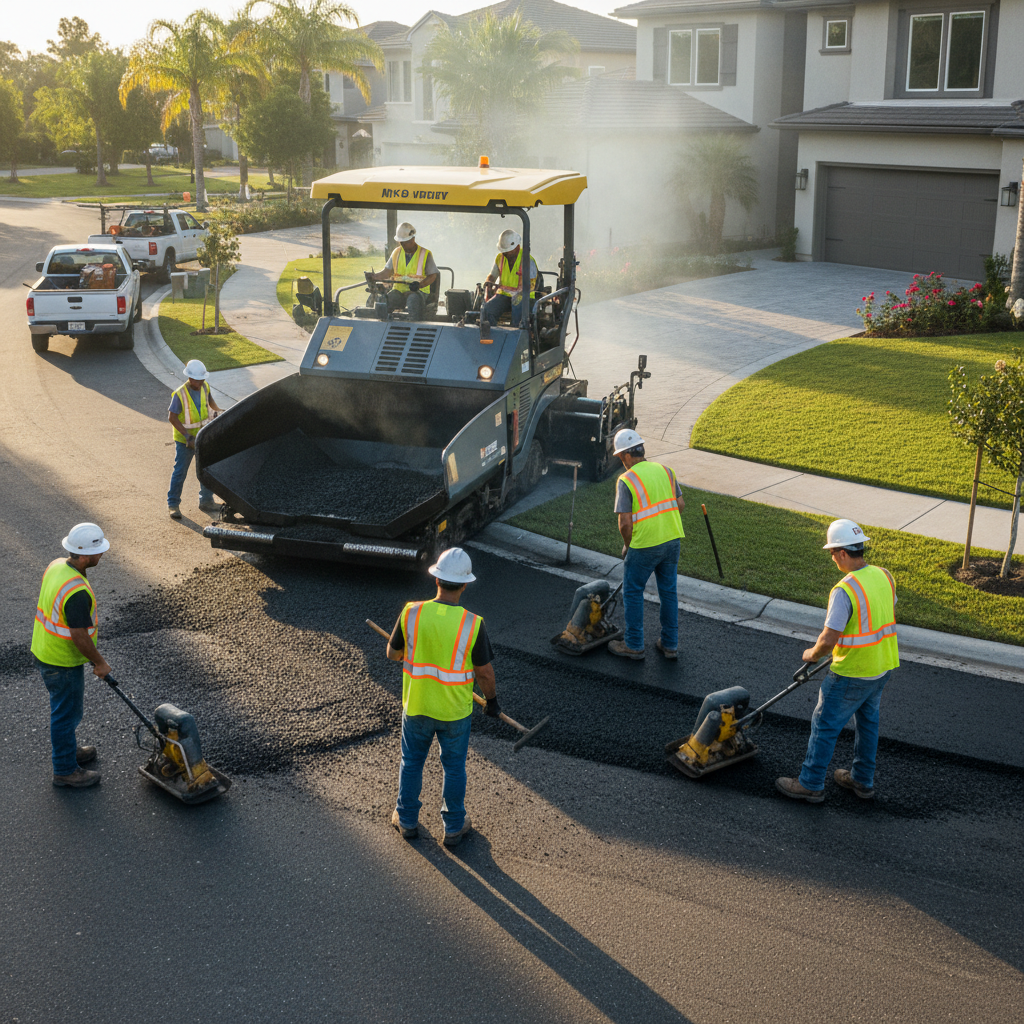
Driveway paving options and costs in Garden City
Garden City, British Columbia is a smaller community, but it sits in the same Lower Mainland–Southwest paving market that serves Vancouver, Surrey, Burnaby, Richmond and Abbotsford—so driveway pricing is shaped by the same real-world constraints: intense rainfall, drainage requirements, and busy crews competing for spring and early-summer schedules. With a population of 5,885 (Statistics Canada, 2021 Census), most driveways here are at detached homes with straightforward, repeated access patterns, which helps keep quotes comparable when you match scope. That said, the Fraser Valley can still see saturated soils and clay pockets after wet stretches, and that’s where costs tend to swing.
In this region, frost penetration is relatively shallow compared with Interior or Northern BC, but local practice still assumes a frost line around 18" for exposed applications. The result is that good jobs focus less on “thick asphalt” and more on the granular base, subgrade moisture conditions, and drainage details to prevent heaving, rutting and cracking. If you’re paving in an area with heavier truck access or frequent curb cut changes—often around the core residential pockets where garages connect close to the boulevard—you’ll typically pay more for excavation, haul-off and forming edge restraints.
Below is a practical comparison of common driveway surfaces and what homeowners usually spend in Garden City when they want a long-lasting install with proper base preparation. Use it as a budgeting anchor, then we’ll tighten the numbers once we confirm your driveway area, slope, and what needs to come out first.
| Material |
Lifespan |
Maintenance |
Best For |
Price per sq ft |
| Asphalt (new installation, proper base) |
15–25 years |
Seal coat every 3–5 years; patch as needed |
Smooth ride, good value, simplest ongoing upkeep |
$12 – $20 |
| Asphalt (overlay on existing gravel base) |
10–20 years |
Seal coat every 3–5 years; monitor settlement |
Budget-friendly upgrades when base is sound |
$10 – $17 |
| Interlocking concrete pavers |
25–35 years |
Re-sand and re-level as needed; replace individual blocks |
Curb appeal, easy repairs without full replacement |
$20 – $40 |
| Poured concrete (broom finish) |
20–30 years |
Occasional crack filling; seal if desired |
Clean, modern look; low routine maintenance |
$18 – $35 |
| Exposed aggregate concrete |
20–30 years |
Seal for stain resistance; crack repair when needed |
Slip resistance and decorative finish |
$22 – $40 |
| Gravel / crushed stone (budget option) |
3–8 years |
Top up and re-grade annually; weed control |
Short-term solution, minimal demolition |
$6 – $12 |
Prices are estimates only and vary by project scope, site access and material selection.
What affects the price of paving in Garden City
The same driveway can price out 30–50% differently across the Lower Mainland–Southwest and other parts of British Columbia because contractors price for risk and for how weather interacts with your subgrade. In milder coastal regions, crews still have to design for freeze–thaw around the assumed frost depth (about 18" for exposed conditions), but the bigger cost driver is often whether the base can be built and compacted to the right density during workable weather windows. Asphalt mix design also matters: a freeze–thaw-rated asphalt can cost more than standard mixes, and it’s one reason some “low bids” don’t perform as well after wet shoulder seasons.
Concrete examples that change costs in Garden City are straightforward. First, clay-heavy or saturated soil after extended rain can require deeper excavation and replacement—adding haul-away and granular costs. Second, slope and drainage: if the driveway sheds water toward the garage slab or toward the neighbour’s property line, we may need re-grading, improved subdrainage, or a better crown to protect the base. Third, tear-out: removing existing concrete or failed asphalt increases labour and disposal.
When you compare budgets, this is why a “basic” asphalt driveway typically fits the $12 – $20 per sq ft band, while full interlocking paver builds often land in the $20 – $40 per sq ft range once proper base gravel, bedding sand, and edge restraints are included. In practical terms, a 400 sq ft driveway can swing by thousands when base depth, drainage corrections, or demolition change—even if the surface finish choice stays the same.
| Price Factor |
Why It Matters |
Cost Impact |
| Driveway area in sq ft |
Most materials and labour scale directly with square footage |
High (often 50–70% of total cost) |
| Base depth required |
Freeze–thaw risk dictates compacted granular thickness for stability |
Medium to high (commonly adds thousands) |
| Grading and drainage work |
Correct slope prevents standing water and base saturation |
Medium (can add major labour/pipe costs) |
| Tear-out of existing surface |
Breaking, hauling and disposal add labour and equipment time |
Medium to high (especially with reinforced concrete) |
| Edge restraints and curbing |
Prevents paver spread and asphalt edge failure |
Low to medium (but crucial for longevity) |
| Sealing requirement |
Asphalt should be sealed after curing to protect against water intrusion |
Low (small yearly/recurring cost) |
| Site access |
Narrow drives slow equipment and may require smaller machinery |
Low to medium (varies by logistics) |
| Asphalt mix specifications |
Freeze–thaw-rated asphalt costs more but improves performance in coastal winters |
Medium (often tied to surface thickness) |
Permits & regulations in British Columbia
In British Columbia, paving a private driveway within your own property typically does not require a building permit when you’re simply replacing or resurfacing an existing surface on your lot. Where permits and approvals can come into play is when the work affects the municipal right-of-way—think new or changed curb cuts, modifications to the boulevard area, and any changes that alter storm drainage patterns or municipal infrastructure.
Step 1 for Garden City homeowners: confirm whether any portion of your proposed work touches the road frontage or the boulevard. If you’re widening the driveway, relocating the driveway entrance, replacing curb/sidewalk around the approach, or changing how water drains near the road, plan for municipal approval. Step 2: always request utility locates before any excavation. In BC, you can use BC 1 Call so underground services are identified and marked.
Next, verify your contractor properly. First, check the contractor’s BC licence/registration status using the relevant online provincial registry. Second, ask for a current Certificate of Insurance showing general liability appropriate for paving work. Third, confirm workers’ coverage as required (commonly WCB coverage in British Columbia). Finally, when you receive a quote, ensure the contractor’s paperwork matches the scope—especially for excavation and any traffic-control needs near the street.
If your plan includes grading changes close to property lines, also ask the municipality about lot-grading or hard-surface restrictions before work begins, so you don’t get delays after excavation starts.
Asphalt vs pavers vs concrete for Garden City driveways
For Garden City driveways, the “best” material depends on how you handle the region’s wet winters and how much you value curb appearance versus routine maintenance. Asphalt usually has the lowest upfront cost and a smoother driving feel, but it needs sealing every 3–5 years to keep water from working into the surface and base. Interlocking concrete pavers cost more to install, yet they’re the most homeowner-friendly when repairs are needed: a damaged section can be lifted, re-leveled and reset without replacing the entire driveway. Poured concrete lands in the middle on price, but it’s more susceptible to cracking if workmanship, air-entrainment, and subgrade moisture control aren’t right—freeze–thaw and de-icing practices in BC can amplify issues on poorly prepared bases.
Lower Mainland–Southwest jobs typically don’t require the same extreme base thickness you see in Ontario or Alberta, but you still need a properly compacted granular base and drainage strategy to manage water before it reaches the frost-affected zone. Where water stands, asphalt can rut and pavers can shift; where bases are stable and drained, all three perform well. If you regularly plough or treat with salt, the higher permeability of a drainage-friendly system (like well-designed paver drainage details) can reduce freeze–thaw stress.
Here’s where the price difference is justified: suppose you have a 400 sq ft driveway. An asphalt build often fits the $12 – $20 per sq ft range (about $4,800–$8,000 for surface scope), while pavers can land in the $20 – $40 range (about $8,000–$16,000). That extra spend is worth it if you want maximum curb appeal and the ability to repair individual areas after utility work or localized settlement.
| Material |
Frost Resistance |
Curb Appeal |
Repair Method |
Lifespan |
Price Band |
| Asphalt (sealed regularly) |
Good when base is drained and sealed on schedule |
Medium (clean, uniform black finish) |
Cut-out patch for potholes and localized failures |
15–25 years |
$12 – $20 |
| Interlocking concrete pavers |
Very good; movement can be managed by re-sanding and re-leveling |
High (design flexibility and premium look) |
Lift and replace individual blocks or sections |
25–35 years |
$20 – $40 |
| Poured concrete (air-entrained) |
Good with air-entrainment and correct subgrade preparation |
Medium (broom or textured finishes) |
Crack repair and patch; may require rework if structural |
20–30 years |
$18 – $35 |
| Exposed aggregate concrete |
Good when installed on a stable base and properly finished |
Very high (decorative texture and colour depth) |
Localized patching is possible, but colour match varies |
20–30 years |
$22 – $40 |
| Permeable pavers (drainage grid) |
Excellent for water management when engineered correctly |
High to very high (clean modern drainage aesthetics) |
Section replacement; periodic vacuuming/re-sanding may apply |
25+ years (design-dependent) |
$25 – $45 |
| Chip seal / tar-and-chip |
Moderate; performance depends heavily on binder and cover |
Lower (rougher feel than asphalt) |
Spot re-chip or resurfacing as stones wear |
8–15 years |
$10 – $18 |
How to choose a paving contractor in Garden City
Choosing a paving contractor in Garden City comes down to verifying capability before the first shovel hits the ground. In British Columbia, you should start by confirming the contractor’s licence/registration status in the appropriate provincial online registry. Next, request proof of liability insurance and ensure the Certificate of Insurance is current for paving/contracting activities (not a generic certificate that doesn’t match the job). For coverage of workers on site, ask for confirmation of workers’ compensation coverage as required in BC and verify it aligns with the company name on the quote.
Then get 2–3 itemised written quotes. You want labour and materials breakdowns (excavation, base gravel, geotextile if specified, asphalt/pavers/concrete supply, compaction, haul-away, and finishing). Avoid lump-sum quotes with vague wording like “proper base” unless it’s specified by depth and compaction method. Read exclusions carefully: is permit or approval work included if your driveway approach affects boulevard/street areas? Is disposal included for removed asphalt/concrete? Are traffic-control or sidewalk/curb interface items part of the plan?
Warranty is another area to verify. Ask for workmanship warranty length in writing and whether it covers base failures, not just surface defects. Also note product/manufacturer warranty—sometimes it’s limited to materials and not installation. Payment schedule should protect you: never pay more than 10–15% upfront, and hold a practical portion until completion and final cleanup. Finally, demand a written timeline with a start date and an estimated completion date; in the Lower Mainland–Southwest, scheduling can shift when heavy rainfall tightens work windows.
- Verify BC contractor licence/registration from the provincial online registry before signing.
- Check general liability insurance certificate is current and matches the legal business name.
- Confirm workers’ compensation coverage is in place for the crew that will be on site.
- Request 2–3 itemised quotes with line items for excavation, base depth, and compaction.
- Ask for base specs: granular depth (and whether geotextile is used) for your soil conditions.
- Confirm drainage plan: slope/crown, and what happens if water is currently pooling.
- Clarify tear-out scope and disposal: concrete/asphalt demolition hauled away and where to.
- Check edge restraint plan: steel/formed edges for asphalt and proper restraint for pavers.
- Ensure curing and sealing timing is included for asphalt (seal after curing, typically after 6–12 months).
- Ask what weather triggers are used; in BC, they should pause work during rain that ruins base compaction.
- Review warranty terms: workmanship coverage, exclusions, and how claims are handled.
- Set payment milestones: keep most funds until completion, cleanup, and any touch-ups are done.
In Garden City, common red flags include: vague “proper base” wording with no depths; quotes that don’t mention drainage/slope corrections; refusal to provide insurance or coverage documentation; asking for large upfront payments; and starting work without confirming utility locates after excavation is scheduled.
Frequently asked questions — paving in Garden City
Do I need a permit to pave my driveway in British Columbia?
In most cases in Garden City and across British Columbia, replacing or resurfacing a driveway within your own property typically does not require a building permit—especially if you’re not changing the driveway entrance to the street. Where it often becomes a permit/approval issue is when your work affects the municipal right-of-way, such as new or changed curb cuts, boulevard changes, or altered storm drainage patterns near the street. Before excavation, confirm with your municipality whether any boulevard/grading approvals are needed for your specific driveway approach. Also, arrange utility locates through BC 1 Call so digging doesn’t hit unseen services. A reputable contractor will flag this early and include the approvals in the scope if they apply to your frontage.
How long before I can drive on new asphalt?
After asphalt paving in British Columbia, you generally can drive once the surface has cooled adequately. For typical residential driveway installs in the Lower Mainland–Southwest, that often means waiting several hours on the day of paving, weather permitting (cooler, wetter days require longer). The critical piece is not just immediate access—it’s early-life protection. Avoid heavy turning or parking on soft spots, and don’t disturb edges while the mat is still curing. Sealing is a separate step: most homeowners plan to seal after the driveway has cured, often around 6–12 months after installation, depending on product and contractor recommendations. Budget-wise, asphalt usually fits the $12 – $20 per sq ft band, with sealing typically adding an additional $2 – $6 per sq ft equivalent when spread across time for the long-term plan.
What causes potholes and how are they repaired?
Potholes usually start with water. In Garden City’s wet-season conditions, if water infiltrates through cracks or weak edges, it can undermine the granular base. Then traffic causes “pump” action—fines and material move, leaving voids that collapse into potholes, especially along wheel paths. Repair in this region is more than patching asphalt on top: a good contractor cuts back to sound material, removes saturated base if needed, compacts new base material, then places asphalt in lifts to match the existing surface thickness. The key is identifying why the water entered (poor drainage, insufficient slope, edge failure, or settlement). Quick fixes that don’t address base drainage often re-fail within a season, while properly cut-and-recompacted repairs perform much better through coastal freeze–thaw cycles.
How do I prepare for a paving project?
Preparation is mostly about access and decisions that affect scope. Clear vehicles from the driveway area and keep the site free of landscaping that could limit equipment movement. Mark any utilities lines or private service points you know about (and let the contractor handle formal utility locates). If you’re replacing an existing surface, decide whether you want to save and reuse any materials like pavers or whether complete removal is needed—this affects tear-out cost. For drainage, note where water currently collects after rain; that observation helps contractors design the right slope and base. Ask the contractor to confirm whether any boulevard curb interface or lot-grading considerations apply for your driveway entrance. Finally, plan around weather: in the Lower Mainland–Southwest, heavy rainfall can delay base compaction and asphalt placement, so start/end dates might shift slightly.
How do I compare paving quotes fairly?
Compare quotes like-for-like. First, ask for itemised line entries rather than one lump sum: excavation, granular base depth, any geotextile, compaction, materials thickness (asphalt depth or concrete thickness), drainage corrections, and disposal. Second, verify the warranty terms and what’s excluded. Third, confirm sealing details for asphalt—when it’s applied and whether it’s included or an extra line item later. If one quote is far below the typical Lower Mainland–Southwest band, ask what is different: thinner asphalt, reduced base depth, no drainage corrections, or limited tear-out. Use the city-level budget anchors: asphalt typically fits the $12 – $20 per sq ft range and pavers often fall in the $20 – $40 per sq ft range when properly built. Fair quotes will explain those scope differences clearly.
Can asphalt be laid in cold weather in Garden City?
In Garden City, asphalt paving is possible when temperatures and conditions allow the asphalt to be placed and compacted correctly, but cold/rainy stretches can make it unsuitable. Asphalt mix and placement require adequate air and pavement temperatures; hot-mix asphalt typically needs air temperatures above about 10°C to achieve proper compaction and workability. Beyond the temperature, the bigger issue in the Lower Mainland–Southwest is moisture: wet or saturated subgrade can ruin base density and lead to early failures after freeze–thaw cycles around the shallow coastal frost zone. A reputable contractor will pause when conditions would compromise compaction. If you’re planning a schedule in shoulder season, ask for the contractor’s weather triggers and ask them how they’ll protect the base if rain starts mid-install.