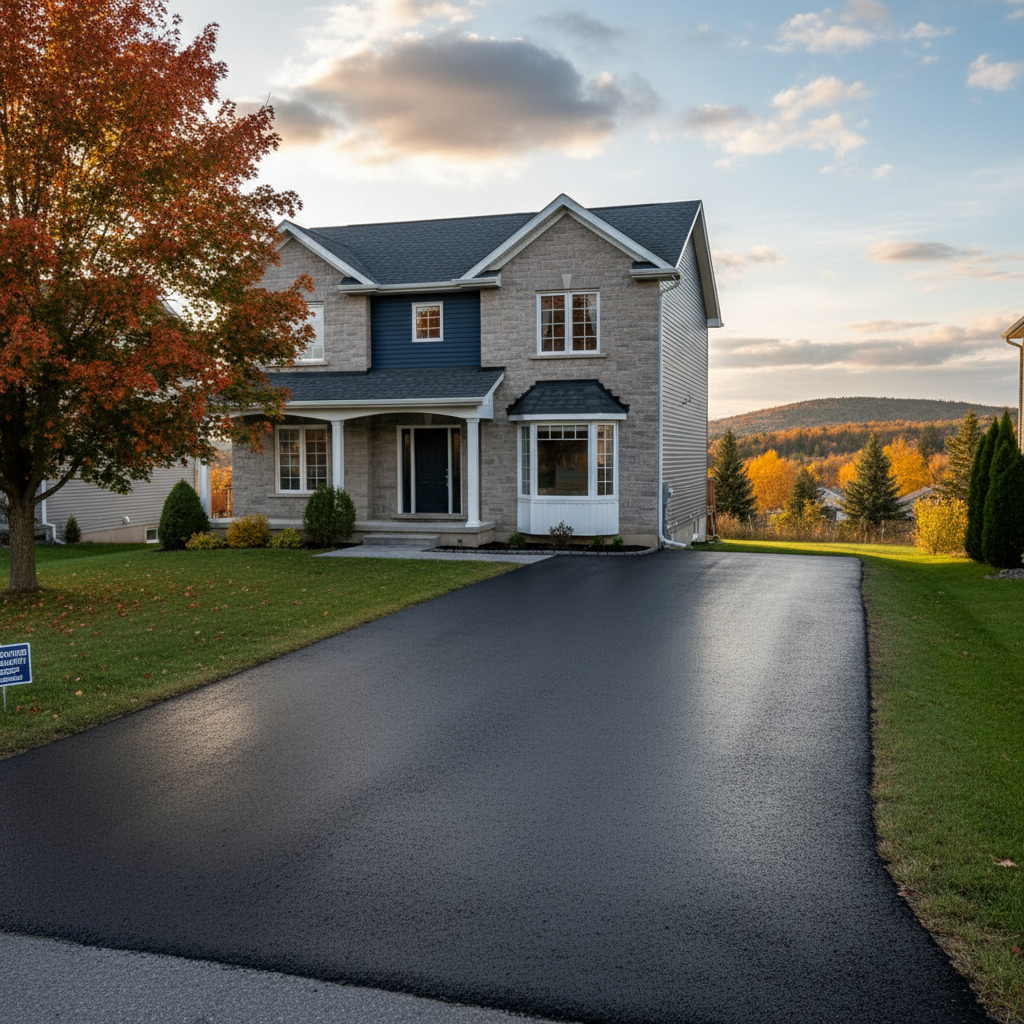
Driveway paving options and costs in Millrise
In Millrise, Alberta, choosing the right driveway finish usually comes down to three things: how your subgrade behaves in freeze–thaw winters, how much curb appeal you want, and what maintenance you’re willing to budget. Millrise has a residential base that’s dominated by single-detached neighbourhood living, which means many homeowners are planning driveways for daily use and long-term winter durability. With a 2021 population of 6,655 in the area (Statistics Canada, 2021 Census), it’s a smaller, neighbourhood-focused market where scheduling can tighten during peak summer months—especially when crews are also booked for other residential resurfacing around Calgary.
Calgary’s cold continental climate matters to cost. Frost can penetrate to around 1.2 m (4 ft), and repeated expansion from freeze–thaw cycles pushes contractors to build deeper, well-graded granular bases and enforce positive drainage. If the granular base and slope aren’t right, you’ll see early raveling, edge breakdown, and cracking—issues that often cost more later. On top of that, the paving season is compressed: hot-mix asphalt needs warm conditions to place and compact properly, so spring and early fall work is booked first. That demand pressure can add cost for smaller jobs, plus crews may build in mobilization time when the driveway access is tight or the site is slightly out of the core.
To help you compare options, here are realistic current price ranges for Millrise projects and where each material typically fits best.
| Material |
Lifespan |
Maintenance |
Best For |
Price per sq ft |
| Asphalt (new installation, proper base) |
15–25 years |
Seal coat every 3–5 years; crack repair as needed |
Clean, smooth finish with the lowest upfront cost |
$12–$20 |
| Asphalt (overlay on existing gravel base) |
10–18 years |
Seal coat and patching more often if drainage is imperfect |
Budget upgrade when the existing base is stable |
$10–$16 |
| Interlocking concrete pavers |
25–35 years |
Resand joints; lift-and-replace individual stones if required |
Maximum curb appeal and easier repairs without full replacement |
$18–$30 |
| Poured concrete (broom finish) |
25–30 years |
Seal if desired; crack repair and patching |
Low maintenance “set it and forget it” look |
$15–$25 |
| Exposed aggregate concrete |
25–30 years |
Occasional sealing; crack repair and patching |
Higher-end texture, traction, and curb appeal |
$18–$28 |
| Gravel / crushed stone (budget option) |
5–10 years |
Re-grade and top up annually; weed control |
Short-term solution or low-traffic locations |
$6–$12 |
Prices are estimates only and vary by project scope, site access and material selection.
What affects the price of paving in Millrise
In Millrise and across Calgary, two quotes for the same driveway can easily differ by 30–50% because the “hidden work” is where the money goes: base preparation, drainage corrections, tear-out, and access time. Even when the surface material looks similar, contractors may be building different thicknesses of granular base, choosing different asphalt mixes for freeze–thaw performance, or including (or excluding) disposal and re-compaction. Seasonal scheduling is another major driver—because the paving window is limited in colder regions, crews are booked tightly, and that demand spike can push costs upward for smaller jobs.
Frost line depth and freeze–thaw cycles are decisive cost factors in Calgary. With frost penetration around 1.2 m (4 ft), deeper granular bases are typically required to prevent subgrade heaving and surface cracking. In practice, that means more granular material and more compaction passes than you’d budget for milder climates. Asphalt also needs the right temperature during placement: hot-mix asphalt generally requires air temperatures above 10°C to compact properly, and that can restrict when work can start. On top of that, asphalt mix design for freeze–thaw durability costs more when you’re specifying a mix that performs well under repeated winter cycling.
Here are a few examples that commonly move the price up or down in Millrise. A driveway that slopes toward the garage without a proper swale often needs additional grading and drainage to prevent water pooling under the asphalt—this can add significant labour and aggregate. If you have existing concrete that’s spalled, tearing out and hauling concrete can add cost quickly compared with overlaying stable asphalt. If your driveway is 600–800 sq ft, even small differences in base depth can push your job from roughly the $12–$20 asphalt range toward the higher end when drainage and base work are required. Conversely, a straightforward removal-and-rebuild on a well-draining, stable lot can keep you closer to the lower end.
| Price Factor |
Why It Matters |
Cost Impact |
| Driveway area in sq ft |
Most costs scale with total square footage: saw-cutting, hauling, base, and asphalt/concrete |
Largest driver; smaller changes in cost per sq ft multiply quickly on larger drives |
| Base depth required |
Frost and water movement control how much granular thickness and compaction you need |
Adding base depth can increase material and machine time materially |
| Grading and drainage work |
Slope corrections and positive drainage prevent pooling and winter heave |
Can add labour and aggregate; costs rise if drainage ties into existing services |
| Tear-out of existing surface |
Breaking and hauling concrete or old asphalt determines disposal time and equipment use |
Often a major swing factor versus overlay options |
| Edge restraints and curbing |
Prevents paver spread or edge roll for asphalt and concrete |
Required for stability; adds forming/rebar and labour |
| Sealing requirement |
Asphalt needs sealing after installation to reduce oxidation and water intrusion |
Adds direct cost and shifts lifecycle budgeting by 3–5 years |
| Site access |
Narrow gates, steep approaches, or limited turning radius slow equipment movement |
Higher mobilization and labour time can apply |
| Asphalt mix specifications |
Freeze–thaw-rated mixes reduce moisture damage and cracking risk |
Can move you toward the higher end of the paving price band |
Permits & regulations in Alberta
For paving in Alberta, most homeowners in Millrise are pleasantly surprised: paving a private driveway within your own property typically does not require a building permit. Where approvals usually come into play is when you’re working in the municipal right-of-way or altering how water is handled in the street/boulevard area. That’s where you may need municipal approval—such as changing or creating a new curb cut, adjusting boulevard grading, or modifying storm drainage ties or connections near the roadway.
Before work begins, you should also confirm any lot-grading rules or hard-surface placement restrictions that your municipality may enforce. In many Calgary-area situations, lot grading affects where runoff can go and how close hard surfaces are permitted to sit near property boundaries. Don’t assume “more driveway” is automatically okay—Ask for the applicable lot-grading bylaw guidance early.
Step-by-step, here’s how to verify your contractor in Alberta. First, ask for their Alberta licence information (and then check the contractor’s business details through the appropriate online registry). Second, request a certificate of insurance showing liability coverage that matches driveway-scale work, plus proof they carry current coverage documentation. Third, for workforce protection, confirm they have the required coverage for their workers (WSIB/WCB coverage). Fourth, ask for a clearance letter if they provide it, or request documentation showing the status of their coverage for your project. Finally, require utility locates: contact Alberta One-Call and confirm locates are completed before excavation, especially where saw-cutting, drainage work, or base excavation may reach service corridors.
Asphalt vs pavers vs concrete for Millrise driveways
For Millrise driveways, asphalt, interlocking pavers, and concrete all have viable paths—but they perform differently under Calgary’s freeze–thaw cycles, plowing patterns, and winter maintenance. Asphalt is the lowest upfront option in most projects, and when it’s built on a proper, compacted granular base it can provide a smooth ride. The trade-off is lifecycle maintenance: asphalt should be sealed after installation (typically within the first 6–12 months), and then again every 3–5 years to slow oxidation and reduce water intrusion. That’s the difference between a driveway that looks good for a decade versus one that starts raveling early.
Interlocking concrete pavers have the highest upfront cost, but they are repairable without ripping out the entire surface. In a climate where localized settlement or edge movement can happen over time, pavers let you lift and replace small sections, which is valuable on residential driveways. Poured concrete sits mid-range on cost and can be durable when it’s air-entrained and properly finished, but it is more prone to cracking patterns if the base or drainage isn’t right. Exposed aggregate offers traction and appearance upgrades, while still following the same freeze–thaw and base-prep requirements as concrete.
In Calgary-area winters, salt and sand from routine plowing can accelerate surface wear. For example, if a 650 sq ft asphalt driveway runs you in the $12–$20 range, you might spend closer to $18–$30 per sq ft for pavers—but pavers can be justified when you want long-term curb appeal and easier spot repairs rather than future patch-and-overlay cycles. The best “value” is usually the option matched to your base quality, drainage plan, and willingness to maintain.
| Material |
Frost Resistance |
Curb Appeal |
Repair Method |
Lifespan |
Price Band |
| Asphalt (sealed regularly) |
Good when base is deep and drainage is positive |
Mid (clean, dark finish) |
Patch and re-seal localized areas |
15–25 years |
$12–$20 |
| Interlocking concrete pavers |
Very good with proper bedding and edge restraint |
High (wide colour and pattern choices) |
Lift-and-replace individual pavers |
25–35 years |
$18–$30 |
| Poured concrete (air-entrained) |
Good with air-entrainment and correct base |
Mid-high (clean broom finish) |
Crack repair and patching |
25–30 years |
$15–$25 |
| Exposed aggregate concrete |
Good when base and curing are done correctly |
High (textured, upscale look) |
Patch sections; touch-up options vary |
25–30 years |
$18–$28 |
| Permeable pavers (drainage grid) |
Very good if the underdrain design matches soil conditions |
High (distinct installation system) |
Lift-and-replace stones; maintain drainage layer |
20–30+ years |
$20–$34 |
| Chip seal / tar-and-chip |
Moderate to good; sensitive to base prep and grading |
Low-mid (practical finish) |
Spot re-chip and surface maintenance |
6–12+ years |
$10–$16 |
How to choose a paving contractor in Millrise
Choosing the right paving contractor in Millrise is less about flashy ads and more about paperwork, proof, and clarity. Start with Alberta licensing and confirm the contractor’s business details match the company quoting your job. Ask for their liability insurance certificate—this should clearly identify the insured party and show coverage for property damage and general liability. Next, verify WSIB/WCB coverage for their workers. If they can’t provide documentation quickly and clearly, treat that as a warning sign.
Then get 2–3 itemised written quotes with a labour-and-materials breakdown rather than one lump-sum number. You want to see line items for excavation, disposal, base granular supply and compaction, asphalt/concrete placement, and finishing details. Read the scope carefully: what is excluded (for example, removing old base, replacing substandard soil, or regrading)? Is permit handling included if the work touches a municipal right-of-way? Is disposal included in the quoted price? If not, ask for the hauling/disposal allowance.
Warranty should be specific. Ask for the workmanship warranty length and what it covers (and what it doesn’t). Confirm whether there’s a product/manufacturer warranty for the asphalt mix or concrete materials and whether it’s transferable to subsequent owners. For payment scheduling, never pay more than about 10–15% upfront. Use a holdback until the job is complete and deficiencies are corrected. Finally, insist on a written timeline: the start date and a reasonable completion estimate, along with what weather or curing steps could affect the schedule.
- Confirm Alberta licence status and business name match on the contract
- Request proof of liability insurance (certificate of insurance)
- Verify WSIB/WCB coverage for workers before work starts
- Get an itemised quote: excavation, base, labour, surface, finishing
- Ask what’s included for disposal, hauling, and grading
- Confirm whether drainage correction and slope adjustments are in-scope
- Ensure utility locates are included or coordinated (Alberta One-Call)
- Ask for the base build-up thickness and compaction method
- Require edge restraints/curbs specified in the scope
- Ask for asphalt mix specs or the freeze–thaw-rated approach
- Confirm warranty terms in writing (workmanship vs materials)
- Use a payment schedule with holdback until completion
In Millrise, watch for red flags like: (1) no written scope or missing base-thickness details, (2) a quote that allows overlay without assessing drainage and subgrade stability, (3) crews starting excavation before utility locates are done, (4) vague warranty language with no workmanship coverage period, and (5) asking for large upfront payments instead of a small deposit with holdback.
Frequently asked questions — paving in Millrise
Can asphalt be laid in cold weather in Millrise?
In Millrise and the Calgary area, cold weather is the main limiting factor for asphalt placement. Asphalt placement typically requires favourable conditions—hot-mix asphalt generally needs warm enough air temperatures (often above 10°C) to place, spread, and compact properly. If it’s too cold, the mix cools before compaction, which can lead to weak density, quicker moisture damage, and early surface breakdown. Contractors will also consider wind, overnight lows, and whether the base is properly dried after thaw. If your driveway needs work in shoulder season, a reputable crew may reschedule rather than compromise compaction quality. This is one reason seasonality can increase cost in peak periods: demand is higher when there’s enough consistent warmth to do durable work.
What is a driveway apron and do I need one in Millrise?
A driveway apron is the transition surface between the driveway and the curb/boulevard area—often a portion of paving at the road-side edge that helps manage runoff and protects the driveway edges from premature breakdown. Whether you need one depends on how your driveway meets the street or walkway and whether the boulevard grading is being changed. If the work touches the municipal right-of-way (for example, changes near curb lines, drainage, or a curb cut), you’ll likely need municipal approval and the “apron” details matter for drainage and edge support. Even when permits aren’t required for private property work, a proper apron reduces water infiltration at the driveway edge, which is critical in freeze–thaw climates like Alberta. Ask your contractor to show you in the quote what area is included.
How do I maintain my driveway through Millrise winters?
For Alberta winters, maintenance is mostly about preventing water and protecting edges. For asphalt, avoid aggressive scraping that gouges the surface—use the blade higher rather than pressing into the pavement. Keep an eye out for early seal coat failures and repair small cracks quickly so water can’t get under the surface during freeze–thaw cycles. For pavers, maintain joint sand so stones don’t shift and check drainage so melting snow can flow away rather than pool. If you use de-icing, choose what minimizes damage; salt and sand accelerate wear on surfaces, especially near garage edges and transitions. The biggest win is to clear snow in a consistent way and ensure drainage swales remain open. If you see heaving, depressions, or repeated wet spots after a thaw, address drainage early—repairs are cheaper before the subgrade starts moving.
Is it worth sealing a new driveway right away in Millrise?
Yes—sealing is usually worth it for a new asphalt driveway in Millrise, but timing matters. A quality seal coat is typically applied after the asphalt has cured enough (commonly within the first 6–12 months after placement, depending on manufacturer guidance, temperature, and weather). Sealing too early can trap moisture and reduce performance. When done correctly, sealing slows oxidation, helps reduce water penetration, and can extend the life of the surface—especially important in Calgary’s freeze–thaw climate where trapped moisture expands under winter cycles. Budget for sealing as part of lifecycle planning: it isn’t just a cosmetic step. If you compare materials, this maintenance helps asphalt compete with higher upfront options by reducing premature raveling and cracking. When you get quotes, ask whether the sealing is included now or scheduled later and how that affects total cost.
What is a chip seal driveway and is it suited to Millrise?
Chip seal (tar-and-chip) is a surface treatment where a binder is applied and aggregate chips are spread and rolled. It can be a practical choice for certain residential driveways where you want a lower initial cost and you’re comfortable with periodic maintenance. In Millrise, it can be suited where drainage is controlled and the base is properly built—because freeze–thaw cycles will punish poor base prep quickly. The surface can wear under plowing and de-icing, so it generally needs more attention than asphalt or pavers. If your goal is a longer-maintenance-light option, many homeowners prefer asphalt or concrete; if your goal is first-cost savings, chip seal can fit, with a realistic expectation of resurfacing later. If you’re comparing budgets, chip seal often lands below the $12–$20 asphalt band, but lifecycle timing should be discussed clearly in your quote.
How much does driveway crack repair cost in Millrise?
Crack repair pricing varies based on crack width, number of repairs, and whether there are signs of deeper base movement. For typical residential driveway work in the Calgary area, crack sealing or targeted repairs commonly fall within the $400 – $1,500 range for smaller sections, depending on labour time and surface preparation. If cracks are widespread or accompanied by pooling/drainage issues, surface repair alone may not solve the root cause; in those cases, the scope can expand to include patching, base correction, or a future overlay plan. Timing matters too: addressing small cracks early can prevent water infiltration during freeze–thaw cycles and reduce the chance of potholes or edge failures. When you request repair quotes, ask for photos, the proposed method (cleaning, routing if needed, and sealant type), and a timeline for when the driveway can be used again.