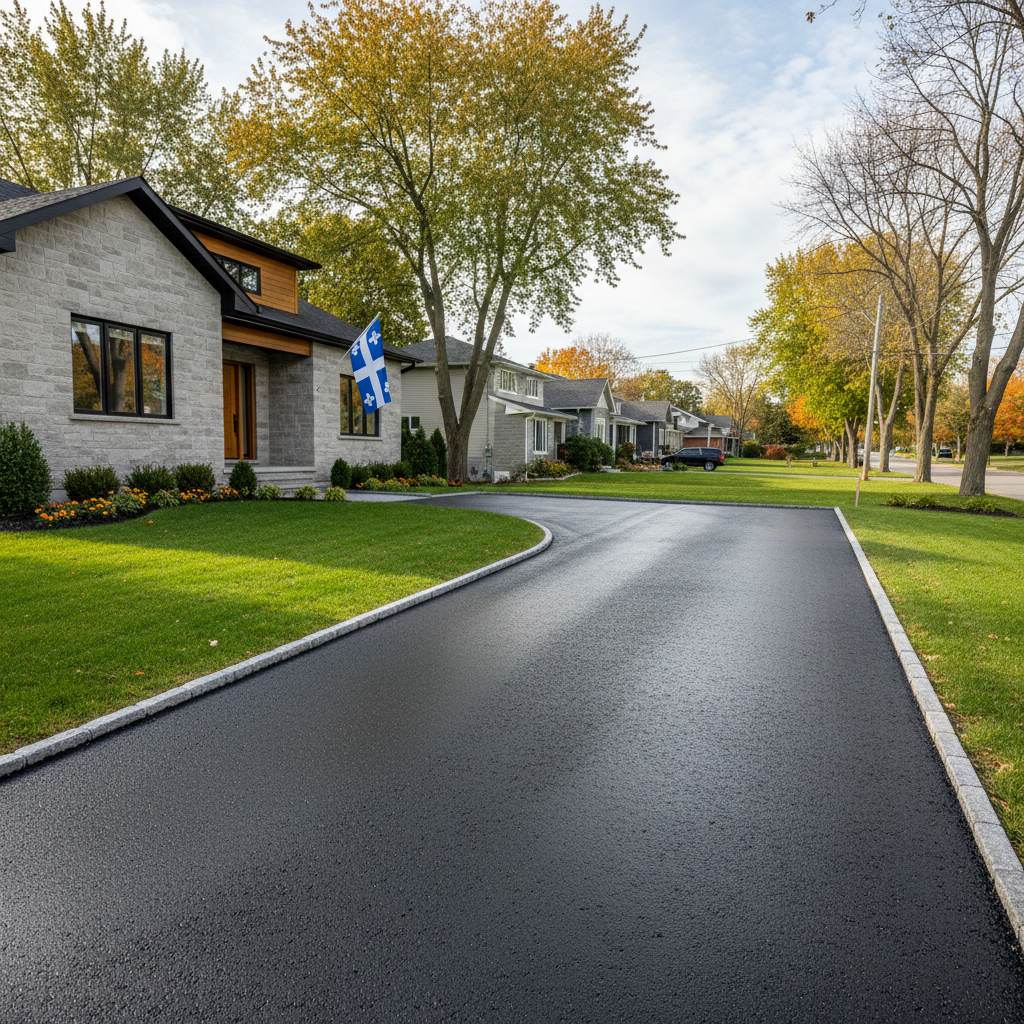
Driveway paving options and costs in Chestermere
In Chestermere, Alberta, choosing a driveway surface is usually about balancing winter durability, curb appeal, and long-term maintenance. With 80.2% of dwellings being single-detached homes, most driveways are sized for cars, trucks, and sometimes trailers—so the paving choice affects how your driveway handles heavy loads, plough access, and meltwater runoff. Chestermere’s population is 22,163 (Statistics Canada, 2021 Census), and that growth has kept contractors busy during the short spring-to-early-fall paving window.
Calgary-area pricing is shaped by a cold continental climate where frost can penetrate roughly 1.2 m (4 ft). That depth drives deeper granular base builds and careful drainage design, because repeated freeze–thaw cycles can push water expansion and cause heaving, cracking, and raveling if the base isn’t engineered correctly. Demand also spikes in peak months when hot-mix asphalt placement and compaction temperatures are viable, which can tighten scheduling and influence the labour portion of your quote.
You’ll see especially strong interest around new growth areas and established residential pockets like the Westmere Crescent and Edgefield-style neighbourhood streets, where homeowners often upgrade from gravel or older asphalt to more durable surfaces. To compare realistic options for Chestermere, use the table below as a practical starting point.
| Material |
Lifespan |
Maintenance |
Best For |
Price per sq ft |
| Asphalt (new installation, proper base) |
15–20 years |
Sealcoat every 3–5 years; crack filling as needed |
Lowest upfront cost with a clean, modern look |
$12–$20 |
| Asphalt (overlay on existing gravel base) |
10–15 years |
More frequent sealing and patching if the base is unstable |
Budget option when drainage and base are already adequate |
$10–$16 |
| Interlocking concrete pavers |
25–30 years |
Weed control; joint sand top-ups; lift-and-relay repairs |
Curb appeal and easy spot repairs without tearing up everything |
$18–$30 |
| Poured concrete (broom finish) |
25+ years (with proper air-entrainment and curing) |
Occasional crack repair; sealant optional |
Clean lines and solid performance under ploughing |
$15–$25 |
| Exposed aggregate concrete |
20–30 years |
Seal if desired; crack control and spot repairs |
Slip-resistant surface and decorative look |
$18–$28 |
| Gravel / crushed stone (budget option) |
2–5 years |
Regrade and re-top annually; weed control |
Short-term solution or lowest immediate cost |
$6–$12 |
Prices are estimates only and vary by project scope, site access and material selection.
What affects the price of paving in Chestermere
In the Calgary region, it’s common to see quotes for the “same” driveway swing by 30–50% because the difference usually isn’t the surface—it’s the base, drainage, and the effort required to prepare the site properly. A contractor who builds a frost-resilient granular base and corrects slope and runoff will charge more upfront, but it can prevent premature failures like edge breakdown, pumping, and alligator cracking that force costly repairs later. For homeowners comparing options, it helps to remember that asphalt and concrete budgets can both look similar on paper, yet labour and materials under the surface drive the final number.
Frost line depth and freeze–thaw cycles are decisive cost factors in Chestermere’s cold continental climate. Colder ground means deeper compacted granular base layers are often required to prevent heaving and cracking. It also means crews must get the asphalt placed and compacted within viable air-temperature windows—hot-mix typically requires conditions above about 10°C—so scheduling pressure in spring and early fall can raise per-hour labour rates and equipment mobilization costs. Mix design matters too: freeze–thaw-rated asphalt with the right binder and aggregate grading generally costs more than generic mixes.
Local conditions can also push costs up or down. For example, a slightly high driveway profile or a poorly draining slope can force additional grading and drainage corrections; that may add hours of excavation, base material, and re-compaction. Conversely, if your existing gravel base is well-drained and uniform, asphalt paving can stay closer to the lower end of local pricing—often around the $12–$20 per sq ft band—while concrete upgrades to pavers or broom-finish concrete usually land higher due to forms, base requirements, and finishing time.
| Price Factor |
Why It Matters |
Cost Impact |
| Driveway area in sq ft |
Most material and labour scale directly with area |
High (largest driver of total cost) |
| Base depth required |
Frost line determines granular thickness to reduce heaving |
High (base can be a major cost line item) |
| Grading and drainage work |
Slope correction and water routing prevent freeze–thaw damage |
Medium to high |
| Tear-out of existing surface |
Breaking and hauling concrete or old asphalt adds labour and disposal |
Medium to high (varies by thickness and access) |
| Edge restraints and curbing |
Prevents paver spread and asphalt edge raveling |
Medium |
| Sealing requirement |
Asphalt should be sealed after installation to reduce oxidation damage |
Low to medium (timing and frequency matter) |
| Site access |
Narrow lots slow equipment movement and can add staging time |
Medium |
| Asphalt mix specifications |
Freeze-thaw-rated mixes improve durability in Rocky Mountain winters |
Low to medium (but meaningful for longevity) |
Permits & regulations in Alberta
In Alberta, paving a private driveway within your own property usually does not require a building permit. Most homeowners in Chestermere can replace or pave their driveway surface without paperwork, as long as the work stays on the parcel and doesn’t alter municipal infrastructure. The key exception is when you touch anything in the municipal right-of-way—this includes new curb cuts, changes to boulevard areas, or alterations to storm drainage tied to the road. In those cases, you typically need municipal approval before excavation and construction.
Another area to confirm is lot-grading rules. Some municipalities place restrictions on how close hard surfaces or fill changes can be to property lines and require drainage to remain properly managed. Even if the paving itself is “minor,” changing how water flows can trigger compliance issues.
Before excavation, ensure utility locates are called. In Alberta, you should arrange locates through the appropriate one-call process before any digging so crews can mark buried gas, power, and other utilities. Step one for homeowners: ask the contractor to show proof of having completed locates for your address and date range.
Step two: verify licensing and coverage. Ask for (1) their Alberta business/contractor credentials where applicable, (2) a current certificate of liability insurance, and (3) confirmation of WSIB/WCB coverage. Step three: request a clearance letter or coverage verification document, and keep it with your contract. Step four: confirm in writing that the contractor will manage traffic and safety controls around your driveway access.
Asphalt vs pavers vs concrete for Chestermere driveways
For Chestermere driveways, asphalt is often the best “value-first” choice: it typically has the lowest upfront cost, but it needs routine maintenance—especially sealing—to resist oxidation and surface wear in Alberta’s freeze–thaw winters. Interlocking concrete pavers have the highest upfront cost in many quote comparisons, yet they’re repairable without replacing the entire driveway. That matters when you occasionally get utility patches or localized base settling. Poured concrete sits in the middle on cost and can perform very well if it’s air-entrained and finished correctly; however, concrete is still susceptible to cracking when base preparation or drainage isn’t right.
Base preparation is the deciding factor across all three. Because frost can penetrate deeply (about 1.2 m in the Calgary area), contractors typically need a properly compacted granular base and clean, well-graded drainage layers so water doesn’t sit and expand. In practice, that means more excavation and more aggregate placement than many homeowners expect, especially on lots with variable soils. For asphalt and pavers, edge restraint and proper runoff design are critical to prevent heaving and raveling at the driveway perimeter. For concrete, correct thickness, reinforcement details (as specified), and air-entrainment are what help it survive Alberta freeze cycles and repeated plough impacts.
A quick example: if asphalt paving lands near the $12–$20 per sq ft band, you may see pavers and some concrete styles move closer to the $18–$30 per sq ft range. That difference is justified when you want curb appeal and the ability to lift and relay damaged sections rather than paying for a full replacement. If your priority is the cleanest long-term “install once” approach, air-entrained concrete (or well-installed pavers) usually makes more sense than asphalt that won’t be sealed on schedule.
| Material |
Frost Resistance |
Curb Appeal |
Repair Method |
Lifespan |
Price Band |
| Asphalt (sealed regularly) |
Good (base and mix quality are key) |
Medium |
Mill and patch (localized repair possible) |
15–20 years |
$12–$20 |
| Interlocking concrete pavers |
Very good (flexible joints) |
High |
Lift-and-relay one section |
25–30 years |
$18–$30 |
| Poured concrete (air-entrained) |
Good (with proper base and air-entrainment) |
Medium to high |
Crack repair and patching; full replacement if widespread |
25+ years |
$15–$25 |
| Exposed aggregate concrete |
Good (surface texture helps traction) |
Very high |
Spot repair; may require finishing match |
20–30 years |
$18–$28 |
| Permeable pavers (drainage grid) |
Very good (reduces standing water) |
High |
Lift-and-relay; drainage components serviceable |
25 years (design-dependent) |
$22–$38 |
| Chip seal / tar-and-chip |
Fair to good (surface wear varies) |
Low to medium |
Spot patch; periodic re-surfacing |
5–10 years |
$10–$16 |
How to choose a paving contractor in Chestermere
Choosing the right paving contractor in Chestermere starts with proof, not promises. In Alberta, verify the company’s credentials and make sure they can show you current liability insurance. Ask for a certificate of insurance that matches the legal business name on the contract and covers the scope of driveway paving. Next, confirm WSIB/WCB coverage—paving companies should be able to provide clearance or coverage documentation so you’re not left responsible if a worker is injured on site.
Then get 2–3 itemised written quotes. You want a breakdown that separates labour from materials (base materials, asphalt/concrete, pavers, geotextile if used), and includes haul/disposal, compaction, and any crack-filling or joint sand. Avoid quotes that are lump sums with “allowances” but no measurements. Also read the exclusions: is permit handling included if the work affects the right-of-way, or is it on you? Is old asphalt or concrete disposal included? Who supplies and places granular base to the specified depth?
Warranty matters for workmanship and product. Ask how long the contractor covers compaction and installation defects, whether the manufacturer provides a separate material warranty, and whether any coverage transfers to a new owner. For payment, never pay more than 10–15% upfront; use a holdback until the job is complete and the final cleanup is done. Finally, require a written timeline with a start date and an estimated completion window—especially in Chestermere’s shorter paving season when crews are booked quickly.
- Confirm Alberta business details and the exact legal name on the contract.
- Request a current liability insurance certificate and verify coverage for driveway work.
- Ask for WSIB/WCB clearance or proof of coverage for the trade.
- Get itemised quotes: labour + materials + base build + disposal.
- Ensure the scope specifies base thickness, compaction expectations, and drainage grading.
- Ask whether geotextile fabric is included (and why it’s recommended for your soil).
- Verify edge restraint method (paver edging/curbing) and interface with garage aprons.
- Confirm tear-out scope if you have existing asphalt or concrete that must be removed.
- For asphalt: confirm sealcoat timing and whether it’s included (often after 6–12 months).
- For concrete: confirm air-entrainment and curing plan (cold weather precautions).
- Ask how the contractor will manage mud tracking and site cleanliness during construction.
- Keep a written schedule and include weather delays in the contract wording.
Concrete red flags: (1) they won’t provide insurance/WSIB/WCB documentation, (2) they refuse an itemised quote and only offer “all-in” pricing, (3) they promise one base thickness without assessing drainage and soil, (4) they skip edge restraint details for pavers, and (5) they pressure you for a large upfront deposit or won’t sign a written timeline for Chestermere.
Frequently asked questions — paving in Chestermere
How do I get the most accurate paving quote in Chestermere?
To get an accurate quote in Chestermere, provide a clear site picture and ask for measurements. The driveway area (length × width) and the current condition—whether you have gravel, aged asphalt, or cracked concrete—changes the base build and tear-out cost. Schedule a site visit where the contractor assesses drainage slope and where meltwater tends to pool after spring thaw. In Calgary-area winters, frost-driven freeze–thaw makes base and drainage design decisive, so request that the quote specifies base depth, compaction approach, and how runoff will be routed. When you compare bids, ensure the scope is truly comparable (for example, sealing included or not). If one quote is near the $12–$20 per sq ft asphalt band and another is higher, confirm whether the lower bid is building the same base and drainage correction.
How much does it cost to pave a driveway in Chestermere?
In Chestermere, pricing typically follows the local per-square-foot bands based on material and site prep. Asphalt new installation with a proper base often lands in the $12–$20 per sq ft range, while interlocking concrete pavers commonly fall around $18–$30 per sq ft depending on layout complexity and excavation needs. Poured concrete is frequently in the $15–$25 per sq ft band, but it can increase with thicker sections, reinforcement details, or extra prep if your subgrade is poor. Maintenance affects lifecycle cost: sealing and repair work can run from about $400 to $1,500 depending on repairs needed and the product schedule. Because frost in this region can reach about 1.2 m, contractors may include deeper granular bases and drainage corrections—these are real cost drivers, not “upgrades.”
Asphalt vs interlocking pavers vs concrete — which is best in Chestermere?
There isn’t one “best” for every Chestermere home, but the right pick depends on maintenance tolerance and how you expect to use the driveway. Asphalt is usually best for lower upfront cost and a straightforward look, provided you plan for regular sealing every 3–5 years to protect the surface from Alberta’s freeze–thaw cycles. Interlocking concrete pavers are often the best for homeowners who care about curb appeal and want repairability—one lifted section can be reset without replacing the entire driveway. Poured concrete can be an excellent mid-range option if it’s air-entrained and built on a well-compacted base; it resists plough impacts well, but poor drainage can still lead to cracking. If your quote difference is, for example, asphalt near $12–$20 per sq ft versus pavers near $18–$30 per sq ft, that extra paver cost is typically justified by longevity and easier spot repairs.
How long does a paved driveway last in Chestermere?
Expected lifespan in Chestermere depends on base quality, drainage, and maintenance—not just the surface type. Asphalt commonly lasts 15–20 years when the base is built for frost conditions and the driveway is sealed on schedule; without sealing, surface oxidation and raveling can shorten performance. Interlocking concrete pavers often last 25–30 years because the system can tolerate movement in freeze–thaw cycles with flexible joints and because spot repairs are practical. Poured concrete can last 25+ years if properly air-entrained, cured, and constructed with correct base support and proper slope so water doesn’t stay trapped. Poor drainage or inadequate base depth is what most often shortens life across all materials. Chestermere’s homeowner base includes many single-detached properties, and those driveways see repeated winter traffic and plough passes—so edge support and runoff control are especially important.
When is the best time of year to pave in Chestermere?
The best time is late spring through early fall in the Chestermere and Calgary region. Asphalt placement generally needs favourable air temperatures and workable ground conditions for compaction, and cold snaps can delay work or affect density. Because frost and freeze–thaw cycles are decisive here, contractors typically avoid paving when the subgrade is unstable or still frozen or near-freezing. Concrete projects also benefit from milder conditions—curing and finishing are easier when temperatures are consistent, reducing the risk of early-age issues. If you’re planning ahead, aim for your contractor’s earliest available slot once the ground is thawed and base material can be compacted. Scheduling sooner helps when the season is compressed and crews are booked solid.
How deep should the base be for Chestermere's frost?
Base depth isn’t one universal number in Chestermere, because it depends on subgrade conditions, drainage, and the driveway’s load class (typical passenger vehicles versus heavier equipment). That said, the practical reason contractors build deeper bases in this climate is frost penetration—about 1.2 m (4 ft) in the Calgary region—plus repeated freeze–thaw cycles that can move water and cause heaving. In many Alberta residential projects, you should expect a base build that’s deeper than what’s common in milder coastal climates; contractors often target several inches of granular base layers with enough thickness to remain stable under freezing conditions, plus proper compaction. Ask your contractor to state the planned base thickness in the quote and explain how they’ll address drainage so water doesn’t stay in the base. If the quote won’t specify thickness or drainage method, it’s not detailed enough for a frost-prone area.