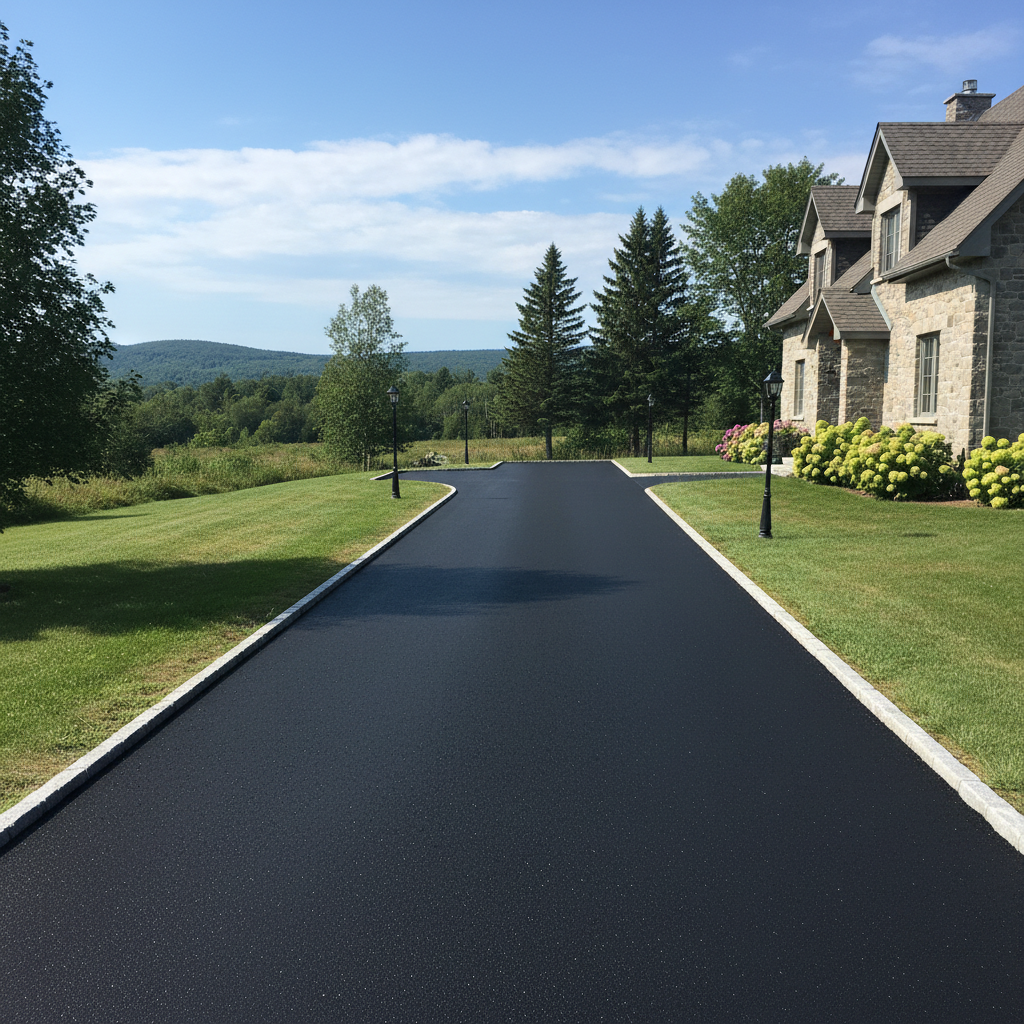
Driveway paving options and costs in Camrose
Camrose residents have a lot of driveway choices, but the “right” one usually comes down to how your site drains, the depth of frost protection your subgrade needs, and how much maintenance you’re comfortable budgeting. In Camrose, most homes are single-detached—about 62.4% of dwellings—so many driveways start from the same reality: a long-term outdoor structure that must survive snowmelt, freeze-thaw cycling, and spring thaw when soils are at their weakest. With 18,772 people living in the area and 5,365 homeowner households (65.9% of households own), there’s steady demand for upgrades and replacements each year (Statistics Canada, 2021 Census).
In the Camrose–Drumheller region, pricing is shaped by frost depth and freeze-thaw cycling. We plan base thickness and compaction to reduce frost heave, cracking, and settlement; in practice, that means more granular structure and careful moisture control than you’d see in milder climates. The paving season is also shorter, so if your job hits a tight spring window, crews may schedule fewer “extras,” and that scheduling pressure tends to keep costs toward the higher end of the regional bands. Locations with heavier traffic near shopping and older neighbourhoods—like the Westview area—often see faster turnaround for surfacing and base repairs.
Below is a practical comparison of materials homeowners typically consider, with realistic lifespan and maintenance expectations for Camrose weather. Use this to frame the scope you want in your quote, then verify base design and drainage details in the contract before you sign.
| Material |
Lifespan |
Maintenance |
Best For |
Price per sq ft |
Price Range |
| Asphalt (new installation, proper base) |
15–25 years |
Seal every 3–5 years |
Lower upfront cost with strong value when base is built right |
$7–$12 |
$6,000–$15,000 |
| Asphalt (overlay on existing gravel base) |
8–15 years |
Seal every 3–5 years; monitor edges |
Budget upgrade when drainage is acceptable and base is stable |
$6–$11 |
$5,500–$12,500 |
| Interlocking concrete pavers |
25–40 years |
Re-level individual units as needed |
Curb appeal and repairability (no “whole-lot” replacement) |
$12–$22 |
$9,000–$22,000 |
| Poured concrete (broom finish) |
20–30 years |
Seal as needed; manage surface scaling |
Straightforward, clean look with durable impact resistance |
$10–$18 |
$7,500–$18,000 |
| Exposed aggregate concrete |
20–35 years |
Seal to maintain finish; repair spalls selectively |
Slip resistance and premium appearance |
$14–$22 |
$9,500–$20,500 |
| Gravel / crushed stone (budget option) |
5–12 years |
Top up annually; regrade; manage ruts |
Short-term solution or seasonal overflow parking |
$3–$7 |
$3,000–$8,000 |
Prices are estimates only and vary by project scope, site access and material selection.
What affects the price of paving in Camrose
Two homeowners can receive quotes that look wildly different for what sounds like the same driveway—same width, same length—yet still come in 30–50% apart in Camrose–Drumheller and across Alberta. The difference usually isn’t the asphalt or concrete itself; it’s the “hidden work” needed to make the structure last through Alberta winters. If one crew includes full excavation to stable subgrade, drainage fixes, and proper base thickness, and the other is only resurfacing on marginal material, the lower quote often becomes expensive later.
Frost depth and freeze-thaw cycling are decisive cost factors here. In colder regions, deeper frost protection is commonly required, which means a thicker, well-compacted granular base to prevent heaving and cracking. Even small moisture problems—like a low spot that holds water—can turn into pumping and edge breakdown during spring thaw. Also, hot-mix asphalt requires air temperatures above 10°C to place and compact properly, so the paving season gets compressed; less time available for crews to work means scheduling pressure and sometimes higher labour rates at peak.
Concrete costs can change too. In older Camrose homes built before 1981—about 47.7% of the housing stock—more driveways were originally shaped for different drainage patterns, so upgrades may require extra grading and sometimes reworking the apron or gutter flow. Meanwhile, a straightforward poured slab in good subgrade might land nearer the concrete band (roughly $7,500–$18,000), but a tear-out plus drainage correction can push that toward the upper end. Asphalt, similarly, is often the lower first-cost option (typically $6,000–$15,000), but the price climbs quickly when excavation depth increases for frost protection.
In short: your quote should reflect frost-proof design, not just a surface finish. The next table shows the cost drivers that most commonly explain why Camrose bids vary.
| Price Factor |
Why It Matters |
Cost Impact |
| Driveway area in sq ft |
Most material and equipment time scales directly with square footage. |
Usually the largest single driver; larger lots can swing total price by thousands. |
| Base depth required |
Frost protection depends on subgrade and freeze-thaw risk; deeper frost needs thicker granular layers. |
More excavation and aggregate can add major cost, especially if trucking is required. |
| Grading and drainage work |
Proper slope and drainage prevent trapped water, which accelerates heaving and settlement. |
Commonly adds cost when swales, culverts, or regrading are required. |
| Tear-out of existing surface |
Removing old asphalt/concrete and hauling debris takes labour and disposal capacity. |
Can add substantial expense, especially with thick slabs or reinforced sections. |
| Edge restraints and curbing |
Prevents paver or asphalt edges from spreading and helps control future settlement lines. |
Often moderate cost, but critical for long-term performance. |
| Sealing requirement |
Asphalt needs sealing after placement (often 6–12 months) to protect binder from aging. |
Adds a planned maintenance item that you should budget from day one. |
| Site access |
Narrow gates, long pushes, or limited staging can slow equipment and increase labour hours. |
Small access issues can inflate labour and machine time. |
| Asphalt mix specifications |
Freeze-thaw-rated mixes cost more and often require specific aggregate and binder choices. |
Can raise material costs, but improves durability in Alberta winter conditions. |
Permits & regulations in Alberta
In Alberta, paving a private driveway within your own property usually does not require a building permit. Where homeowners typically run into the permitting process is when the work affects the municipal right-of-way—think curb cuts, changes to boulevard grades, or any modification to storm drainage that serves the road. If you’re changing how water leaves your property at the street line (for example, altering catch basins, swales, or crosswalk/sidewalk tie-ins), you should expect to request municipal approval first.
Some municipalities also have lot-grading bylaw requirements that restrict how close to property lines a hard surface can be and may limit changes to how runoff flows. Even if you don’t need a permit to repave the driveway area itself, those grading rules still matter because they can affect approval and how contractors design the slope and drainage.
Before any excavation, call for utility locates through Alberta One-Call. That step isn’t optional—hitting buried services can stop the job and create major repair costs.
To verify a contractor in Camrose, ask for three things and check them in writing: (1) their Alberta licence information (confirm it matches the trade that will be performed), (2) proof of liability insurance with current dates, and (3) coverage for workers (WSIB/WCB). Request the certificate of insurance and a clearance document where applicable, then keep copies for your records—especially if you’re tying the project to financing or insurance documentation.
Asphalt vs pavers vs concrete for Camrose driveways
For Camrose’s freeze-thaw climate, asphalt, interlocking pavers, and concrete all work—when the base and drainage are designed for frost protection. The differences show up in upfront cost, maintenance routines, and how each surface behaves when snowploughing and winter sanding come into play. Asphalt is usually the lowest upfront option, but it needs sealing regularly (commonly every 3–5 years) to slow binder aging. Interlocking concrete pavers cost more to install, yet they’re the most forgiving long-term: you can remove and re-level individual units if frost heave or settlement creates a spot problem. Poured concrete often lands in the mid-range, but it must be properly air-entrained and placed on a correct base to reduce cracking risk from freeze-thaw cycles and winter de-icing practices.
Base preparation is where Camrose jobs succeed or fail. With frost protection in mind (often requiring deeper granular structure depending on soil), all three systems perform best when you excavate to stable material, add a well-compacted granular base, and ensure water can’t sit in the structure. Interlocking and concrete both benefit from edge restraints; asphalt benefits from strong drainage grading so water doesn’t migrate under the mat.
A practical example: if you have a typical driveway and your paver quote is around $9,000–$22,000 while asphalt comes in near $6,000–$15,000, that extra spend is justified when you want repairability and curb appeal—and you’re likely to keep the home long enough to recover the higher initial cost. If your budget is tighter and you’ll maintain the asphalt seal coat, asphalt can still be a strong value. But in spots where drainage corrections are unavoidable, pavers and properly designed concrete often give homeowners more control during future repairs.
| Material |
Frost Resistance |
Curb Appeal |
Repair Method |
Lifespan |
Price Band |
| Asphalt (sealed regularly) |
Good with proper base and sealing |
Medium (clean, smooth appearance) |
Patch and resurface sections; full recoat if needed |
15–25 years |
$6,000–$15,000 |
| Interlocking concrete pavers |
Very good when base is stable and restrained |
High (variety of styles/colours) |
Remove individual blocks, re-level bedding, replace units |
25–40 years |
$9,000–$22,000 |
| Poured concrete (air-entrained) |
Good with air-entrainment and correct thickness |
Medium-high (depends on finish) |
Crack repair/patching; larger issues may require slab work |
20–30 years |
$7,500–$18,000 |
| Exposed aggregate concrete |
Good with proper mix design and base prep |
High (textured, premium look) |
Selective patching; spot repairs are possible but colour matching varies |
20–35 years |
$9,500–$20,500 |
| Permeable pavers (drainage grid) |
Good where you truly need water management |
High (modern/eco look) |
Re-level and replace affected units; manage infill and outlets |
20–35 years |
$10,500–$24,000 |
| Chip seal / tar-and-chip |
Limited durability for heavy ploughing unless maintained |
Low-medium (utility look) |
Re-chip/recoat; spot maintenance required |
6–12 years |
$5,000–$11,000 |
How to choose a paving contractor in Camrose
Choosing a paving contractor in Camrose is about more than getting the lowest number. Start with insurance and worker coverage, because a driveway job involves excavation, heavy equipment, and risk to your property. Verify Alberta licensing information for the trade work being performed, then ask for a current certificate of liability insurance and confirm the coverage is active for the project dates. For worker coverage, request proof of WSIB/WCB coverage where applicable and look for clearance documentation—don’t accept verbal assurances. If a contractor hesitates or won’t provide documents, treat that as a red flag.
Next, insist on 2–3 itemised written quotes. A fair quote breaks down labour and materials (excavation, base aggregate, compaction, drainage corrections, disposal, and surface material), not just a single lump sum. Read the scope carefully: is tear-out included if needed? Is disposal included in the price or billed separately? Is permit work included if any municipal approval is required for right-of-way or drainage? For asphalt, confirm when sealing will occur and whether sealing is included as part of the warranty plan.
Warranty matters in Alberta’s freeze-thaw world. Ask for the workmanship warranty length, what it covers (edge failures, settlement, cracking, re-lining), and whether it’s backed by the installer or limited to the manufacturer. Make sure you understand if the warranty is transferable if you sell your home.
On payment, never pay more than 10–15% upfront. Keep a holdback until the job is complete, cleaned up, and base/edge requirements are met. Finally, require a written start date and completion estimate that accounts for weather delays in Camrose.
- Confirm Alberta licence/trade status for the work being done.
- Request a current certificate of liability insurance (project dates included).
- Verify WSIB/WCB coverage with a clearance document where applicable.
- Get at least 2–3 itemised quotes (labour + materials breakdown, not only total price).
- Ask for the base design: excavation depth, aggregate thickness, and compaction method.
- Confirm drainage/grading corrections are included if your site shows low spots or runoff issues.
- Specify tear-out scope (depth, thickness expectations, and disposal/haul-away included or not).
- Clarify edge restraints/curbing requirements so asphalt/pavers/concrete don’t spread at the perimeter.
- For asphalt, confirm tack coat and when the seal coat is planned (often after 6–12 months).
- Review warranty terms: workmanship duration, what failures are covered, and exclusions.
- Use a payment schedule with a holdback; avoid large deposits before work begins.
- Require a written timeline with start and completion dates, plus weather delay communication.
In Camrose, common red flags include: a quote that assumes no tear-out or no base rebuild even when existing material is failing; refusing to show insurance/coverage documents; vague wording like “crack repair as needed” with no scope; and contracts that only offer manufacturer coverage (not workmanship) after the surface is installed.
Frequently asked questions — paving in Camrose
Why does my driveway crack and heave in winter?
Cracking and heaving in Camrose usually come down to moisture and frost protection. When water gets into the structure—either from poor drainage, a low spot, or runoff that flows onto the driveway—it can freeze and expand during Alberta nights. Over repeated freeze-thaw cycles, that expansion can lift the slab or distort asphalt at the edges, especially if the base wasn’t excavated deep enough or wasn’t compacted to spec. In Camrose, many driveways on older properties (nearly half built before 1981) were originally shaped for different drainage patterns, so re-grading is sometimes needed before the new surface goes down. If you’re seeing rutting or water pooling, plan for base and drainage corrections—not just surface patching.
Do I need a permit to pave my driveway in Alberta?
Usually, paving a private driveway within your own property in Alberta does not require a building permit. Where you may need municipal approval is when the work impacts the municipal right-of-way—such as new curb cuts, changes to boulevard grading, or alterations to storm drainage that affect how water moves at the street. Camrose homeowners should also be aware that lot-grading rules can restrict changes near property lines and may affect how contractors design slopes. Before digging, confirm utility locates through Alberta One-Call. If your driveway ties into curb/sidewalk drainage or you’re changing how runoff reaches the street, ask the contractor to clarify whether municipal approval is required before work begins.
How long before I can drive on new asphalt?
With asphalt in Camrose, it’s common to be able to drive shortly after placement and compaction, but the safest guidance depends on the temperature, mat thickness, and weather conditions that day. Asphalt is sensitive to handling when it’s still warm, and colder nights can extend curing time. Most crews allow light traffic relatively soon, but heavy loads and parking should be managed based on the installer’s instructions. If your quote is in the asphalt band (for example, $6,000–$15,000), confirm in writing whether the driveway will need staged access during the first 24–72 hours. For long-term performance, sealing is typically planned after the first season—often around 6–12 months—so ask how that fits into your warranty schedule.
What causes potholes and how are they repaired?
Potholes form when water enters a weak spot, the base gets saturated, and the surface breaks down under traffic. In Alberta winters, thaw periods can worsen damage: freeze-thaw expansion widens gaps, then ploughing can accelerate edge failure. Repairs usually start with removing the failed asphalt and, if needed, replacing compromised base and restoring drainage. A simple “top patch” without addressing the underlying base and water pathway often fails again quickly. In a proper repair, the crew cuts back to stable material, compacts new aggregate in lifts, then applies tack coat and hot-mix asphalt. Ask whether the repair includes drainage/grading corrections, particularly if you’ve noticed standing water after snowmelt.
How do I prepare for a paving project?
Preparation helps your driveway meet frost-protection expectations and keeps the schedule tight. In Camrose, plan for utility locates through Alberta One-Call before excavation. Clear the work area of vehicles, planters, hoses, and loose items; if you have gates or narrow access, mark the route for equipment. If your contractor is doing tear-out, confirm where old material will be hauled so there’s no confusion on disposal. Check that downspouts and drainage are reviewed—if water currently flows onto the driveway, talk to the contractor about corrective grading. Finally, review the contract for what’s included (base depth, disposal, edge restraints, and sealing timing). Preparation is one of the easiest ways homeowners prevent budget surprises.
How do I compare paving quotes fairly?
To compare quotes fairly in Camrose, look past the total price and compare scope and design assumptions. Start by confirming driveway area, excavation depth, and whether the quote includes drainage/grading corrections and proper base thickness for freeze-thaw performance. Make sure both proposals include the same tear-out and disposal scope—quotes that omit tear-out can look cheaper but cost more later. For asphalt, compare whether the mix is freeze-thaw rated and whether a seal coat is planned (often after 6–12 months); for concrete, ask about air-entrainment and finish type. A reasonable asphalt total often falls within $6,000–$15,000 depending on site conditions, while pavers typically price higher. If quotes differ by 30–50%, it’s usually scope differences—verify the base, drainage, and warranty details.