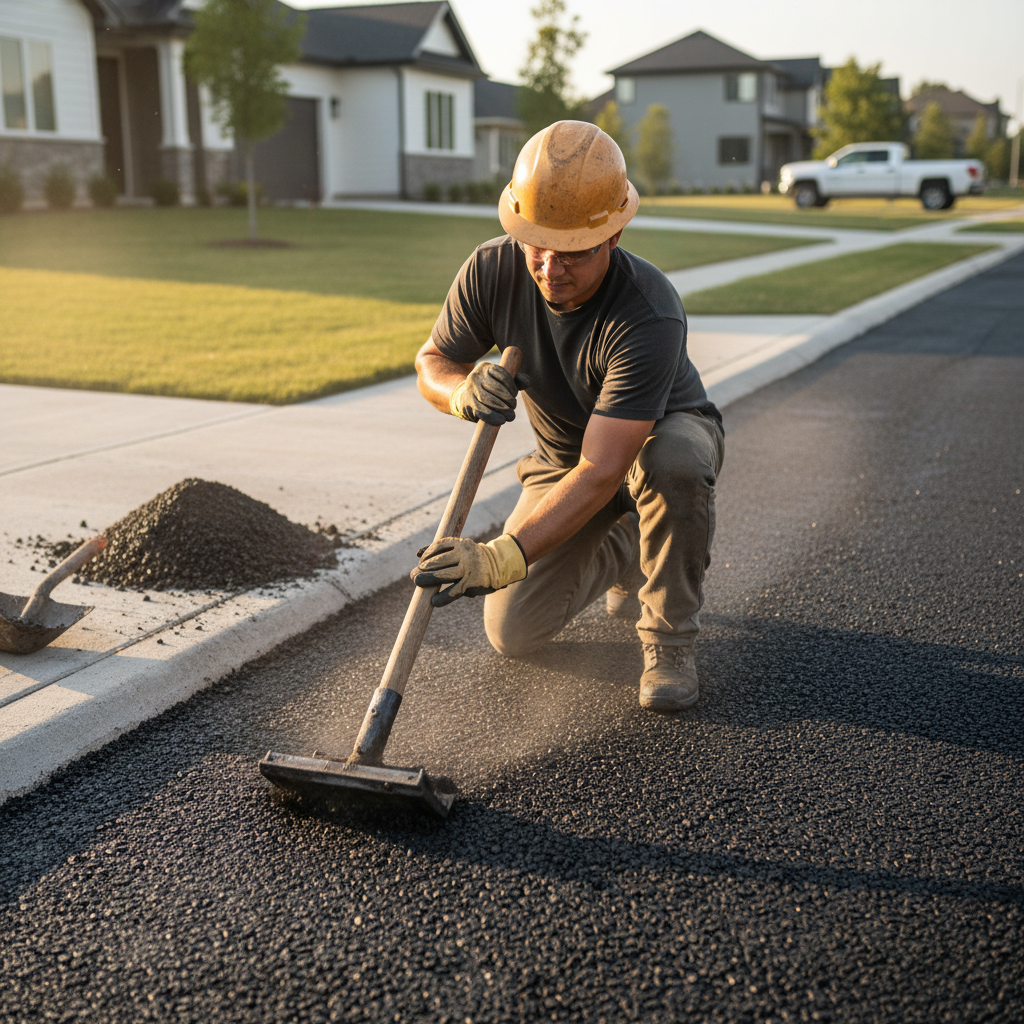
Driveway paving options and costs in Elk Point
Elk Point homeowners often start by comparing driveway paving options, because the right material has to survive both daily use and the region’s deep frost. In Elk Point, where 80.5% of dwellings are single-detached homes and homeowner households make up 64.8% of households (Statistics Canada, 2021 Census), most driveways are tied to detached properties—so demand is steady through the short May–September paving window. In the Wood Buffalo–Cold Lake economic region, pricing reflects deep frost penetration (roughly 1.2–1.5 m guidance for northern Alberta), intense freeze–thaw cycles, and a tighter work season. Contractors typically build thicker, well-compacted granular bases and emphasize drainage so meltwater sheds away from the surface instead of migrating into joints and causing differential movement.
Because work is weather-driven, quotes can vary even for the same square footage: mobilization, haul distances for aggregate, and schedule pressure during warm weeks all factor into asphalt and concrete unit costs. This is especially noticeable when paving is needed near the busiest residential pockets such as the downtown/central Elk Point area, where access for paving equipment and proper staging can be more constrained. If your home is older—57.4% of homes were built before 1981 (Statistics Canada, 2021 Census)—subgrade conditions can be less predictable, which may require additional grading, base reinforcement, and drainage correction.
Use the table below as a practical starting point for budgeting, then align the base design with the frost-and-drainage requirements that protect asphalt and concrete long-term in Elk Point.
| Material |
Lifespan |
Maintenance |
Best For |
Price per sq ft |
| Asphalt (new installation, proper base) |
15–25 years |
Sealcoat every 3–5 years; patch as needed |
Lowest upfront cost with good ride quality when base is engineered |
$6–$12 |
| Asphalt (overlay on existing gravel base) |
10–18 years |
Sealcoat every 3–5 years; more frequent patching if base settles |
Shorter timeline projects where the existing base can be stabilized |
$5–$10 |
| Interlocking concrete pavers |
25–35 years |
Re-lay individual stones; periodic joint sand refresh |
Where you want curb appeal and easy localized repairs |
$10–$18 |
| Poured concrete (broom finish) |
20–30 years |
Crack sealing as needed; keep edges clear of debris |
Clean, simple look with strong slab performance when properly drained |
$9–$16 |
| Exposed aggregate concrete |
25–35 years |
Seal surface (periodic); crack repairs as needed |
Textured surface for grip and higher-end appearance |
$12–$19 |
| Gravel / crushed stone (budget option) |
3–8 years |
Top up and re-grade annually or as needed |
Short-term solution or low-budget pad on stable soils |
$3–$7 |
Prices are estimates only and vary by project scope, site access and material selection.
What affects the price of paving in Elk Point
In Elk Point and the broader Wood Buffalo–Cold Lake economic region, two quotes for what looks like the same driveway can differ by 30–50% once the base design, drainage corrections, and access constraints are costed in. Frost depth and freeze–thaw cycles are the decisive factors: deeper frost requires a thicker compacted granular base and more rigorous subgrade preparation to reduce heaving and cracking. In northern Alberta, driveways often need a deeper, engineered foundation than you’d see in milder regions because water movement during thaw periods is what destabilizes the system. Asphalt mix design also matters—locally, asphalt is expected to meet freeze–thaw performance needs, and that can increase mix and quality-control costs compared with a basic “budget” approach.
The paving season is also shorter: hot-mix asphalt typically requires warmer air temperatures (often above 10°C), which concentrates demand and can raise scheduling pressure in spring and early summer. That’s why in Elk Point you may see asphalt projects clustered into May–September weeks, with overtime and weather contingencies built into pricing.
Concrete pricing can swing based on whether your contractor needs air-entrained concrete, additional subbase, and more controlled joints to manage movement. For example, if your current driveway is old and built on uneven fill, flattening and re-grading to achieve proper slopes can add several thousand dollars. Likewise, if your site needs drainage corrections—like installing a catch basin or improving flow away from the slab—expect a meaningful cost increase. On the flip side, a straightforward job with good existing base (and minimal tear-out) can keep you near the lower end of typical asphalt and concrete bands, such as asphalt at roughly $6,000 – $12,000 and concrete around $8,000 – $15,000, depending on square footage and access.
| Price Factor |
Why It Matters |
Cost Impact |
| Driveway area in sq ft |
Most costs scale directly with square footage |
Often the single biggest driver of the total quote |
| Base depth required |
Frost line guidance means thicker granular layers and stronger compaction |
Adding depth can increase material and machine-hour costs significantly |
| Grading and drainage work |
Proper slope and water shedding prevent freeze–thaw damage |
Can add substantial labour and materials when drainage corrections are required |
| Tear-out of existing surface |
Old asphalt/concrete must be broken, loaded, and hauled away |
Concrete tear-out usually costs more than asphalt removal |
| Edge restraints and curbing |
Prevents paver spread and maintains asphalt/concrete geometry |
Linear-foot pricing can add up on irregular driveways |
| Sealing requirement |
Asphalt needs sealcoat to protect from moisture and oxidation |
Costs recur; typically planned at 6–12 months after placement and then every few years |
| Site access |
Narrow lots and limited staging slow equipment movement |
Reduced productivity increases labour and equipment time |
| Asphalt mix specifications |
Freeze-thaw-rated mix improves durability in northern Alberta |
Higher-quality binder and QC can raise unit costs |
Permits & regulations in Alberta
In Alberta, paving a private driveway within your own property usually does not require a building permit. Typical examples that generally do not require a permit include: removing and replacing an existing driveway surface on your own lot, constructing a new driveway pad on your property, and installing asphalt, pavers, or concrete where you are not changing the municipal right-of-way.
Where approvals are commonly required is work in the municipal right-of-way or any change to how water and access are handled at the street. That can include: creating or modifying a curb cut/driveway entrance, changing boulevard conditions, altering storm drainage patterns, or relocating or adjusting any municipal drainage structures. If your project touches these areas, you should verify with the municipality before excavation.
Before anyone digs in Elk Point, arrange utility locates through Alberta One-Call so contractors can mark buried services. Next, verify your contractor’s Alberta compliance: confirm their business licence status through their website or local/regional registration information, then request a certificate of insurance showing liability coverage (and ask what subcontractors are covered). For work coverage, ask about WSIB/WCB status—your contractor should be able to provide evidence consistent with Alberta requirements for workers engaged on your site. Finally, ask whether they can provide a clearance letter or proof of account status upon request. Do these steps early so there are no surprises when base excavation begins.
Asphalt vs pavers vs concrete for Elk Point driveways
For Elk Point driveways, the best material is the one that fits both the freeze–thaw reality and how you maintain the surface during winter. Asphalt is typically the lowest upfront option and delivers a smooth ride, but it depends on correct base preparation and regular sealing to stay flexible through northern temperature swings. In practice, asphalt performance improves a lot when you plan for sealcoat in the first season (often within 6–12 months) and then every 3–5 years, which is important for moisture protection in a climate with repeated thawing and refreezing. If you’re chasing a budget like $6,000 – $12,000, asphalt is usually where homeowners land—especially on straightforward geometry.
Interlocking concrete pavers cost more upfront but shine in Elk Point because they’re modular: if a section ever settles or heaves slightly, contractors can lift and re-lay affected units without replacing the entire surface. Their curb appeal is a major reason homeowners choose them in communities with older housing stock—57.4% of homes built before 1981 often means driveways are being upgraded for both function and appearance.
Poured concrete sits in the mid-range and can last a long time when air-entrained and properly jointed, with good drainage and a well-compacted granular base. Concrete is more susceptible to cracking if water infiltrates under the slab or if de-icing practices and freeze–thaw stress aren’t managed. Salt and repeated plowing can accelerate surface wear and joint deterioration, so base thickness and edge detailing are critical.
Where is the price difference justified? If two bids are close—say asphalt in the $6,000 – $12,000 band versus pavers in the $9,000 – $18,000 band—the premium can make sense when you expect heavy use, want easier future repairs, or you’re finishing a visible approach in the downtown/central area where curb appeal matters.
| Material |
Frost Resistance |
Curb Appeal |
Repair Method |
Lifespan |
Price Band |
| Asphalt (sealed regularly) |
Good when base and drainage are engineered for deep frost |
Medium |
Patch hot-mix asphalt; re-seal section as needed |
15–25 years |
$6,000 – $12,000 |
| Interlocking concrete pavers |
Very good; movement can be corrected by resetting units |
High |
Remove and re-lay affected pavers; refresh joint sand |
25–35 years |
$9,000 – $18,000 |
| Poured concrete (air-entrained) |
Good to very good with proper base, joints, and drainage |
Medium |
Seal cracks; localized slab repair where feasible |
20–30 years |
$8,000 – $15,000 |
| Exposed aggregate concrete |
Good; depends on air entrainment and base prep |
Very high |
Crack sealing and surface maintenance; limited replacement of sections |
25–35 years |
$10,000 – $18,000 |
| Permeable pavers (drainage grid) |
Excellent for water management when installed to spec |
High |
Reset blocks; maintain infiltration layer/gravel structure |
25–30 years |
$12,000 – $22,000 |
| Chip seal / tar-and-chip |
Fair to good; works best as a maintenance or resurfacing layer |
Low to medium |
Re-surface cycles; spot repairs in affected areas |
5–10 years |
$4,000 – $9,000 |
How to choose a paving contractor in Elk Point
Choosing a paving contractor in Elk Point is mostly about confirming they can build for northern Alberta conditions—deep frost, freeze–thaw cycles, and short season scheduling—then verifying they’re insured and accountable. Start with licensing and coverage: ask for their Alberta business registration/licensing info (as applicable), then request a certificate of liability insurance showing active coverage for the full project period. Next, confirm WSIB/WCB coverage for workers assigned to your site. A legitimate paving company should provide documentation without hesitation; if they only discuss “general compliance” verbally, that’s a red flag.
Get 2–3 written, itemised quotes (labour + materials breakdown, not a lump sum). Make sure the scope states what’s included: base preparation thickness, grading and slope plan, drainage corrections (if needed), whether you’re getting new base or an overlay, the type of asphalt mix or concrete air-entrainment, and the compaction method. Clarify tear-out and disposal—breaking and hauling old concrete or old asphalt adds cost—and whether that cost is included. Also ask if permit/approvals support is included if the work touches a curb cut or municipal right-of-way, even if the driveway is on your property.
For warranty, distinguish workmanship warranty from product/manufacturer warranty. Ask for the warranty duration, what it covers (materials vs labour vs base issues), and whether it’s transferable to future homeowners. In terms of payment, never agree to more than about 10–15% upfront; a small deposit is common, but hold back the remainder until completion and cleanup.
Finally, require a start date and a realistic completion estimate in writing. With Elk Point’s weather windows, the timeline should include conditions under which work may shift.
- Request proof of liability insurance and confirm project dates are covered.
- Ask for WSIB/WCB proof for workers on your driveway.
- Verify they’ll handle utility locates (Alberta One-Call markings) before excavation.
- Require quotes broken into labour, materials, base, and surface course—not only totals.
- Confirm base design: granular type, thickness, and compaction specs.
- Check that drainage/slope work is explicitly included (not “assumed”).
- Ensure edge restraints are included for pavers and specified for long-term geometry.
- Ask how tear-out is handled and whether disposal/hauling is included.
- Clarify asphalt sealing schedule (first-season seal and future recoats).
- Ask about concrete air-entrainment and joint spacing/control plan.
- Confirm warranty length for workmanship and what triggers service calls.
- Use a payment schedule with a holdback until final grade and cleanup are verified.
Red flags to watch for in Elk Point: contractors who won’t provide insurance/WSIB/WCB documentation, quotes that ignore base thickness or drainage, “too-good-to-be-true” pricing that doesn’t include tear-out/disposal, no written scope for sealing or jointing, and crews that start without confirming utility locates and project access/staging.
Frequently asked questions — paving in Elk Point
Why does my driveway crack and heave in winter?
In Elk Point, cracking and heaving usually come down to water movement during freeze–thaw cycles. If meltwater can infiltrate the base or sits at the surface due to poor slope or weak drainage, the subgrade freezes and expands—then contracts as it thaws—creating movement that shows up as cracks, bumps, or heaved sections. Another common cause is an under-built granular base for northern Alberta frost penetration; a driveway can look “fine” in summer but fail once you get repeated cold snaps. Older homes (57.4% built before 1981) often have fill or compaction history that isn’t ideal, so base stabilization and proper drainage design can be the difference between short-lived repairs and long-term performance. Ask your contractor for a base and drainage plan, not just a new surface.
Do I need a permit to pave my driveway in Alberta?
Typically, paving a driveway within your own property in Alberta usually does not require a building permit. In Elk Point, the key is whether your project touches the municipal right-of-way or modifies street/curb drainage. Work that commonly needs municipal approval includes changes like a new or modified curb cut, alterations to boulevard conditions, or adjustments that affect storm drainage. If your driveway stays entirely on private property and you’re replacing the surface (asphalt, pavers, or concrete) without altering right-of-way features, permits are often not required. Even when a permit isn’t expected, utility locates through Alberta One-Call are still essential before excavation, and some lot-grading rules may restrict how close hard surfaces can sit to property lines.
How long before I can drive on new asphalt?
Most new asphalt driveways are set up so you can return to driving shortly after placement, but the exact timing depends on temperature, mix, and whether the surface is sealed as part of the job. In Elk Point’s short paving window, crews usually coordinate placement with weather and compaction so the mat cools safely. For homeowners planning around the $6,000 – $12,000 asphalt band, clarify your start date and whether your contractor will apply a first-season sealcoat within the recommended window. If sealcoat is applied, you’ll need to keep vehicles off until it cures fully to avoid tracking. The installer should provide a specific “drive-ready” timeframe in writing, since freeze–thaw conditions later in the year can also influence when follow-up work (like sealing) is scheduled.
What causes potholes and how are they repaired?
Potholes in Alberta almost always involve water. When water enters a weak spot in the asphalt—often at the edge of patches, near surface joints, or in low areas—it freezes and loosens the pavement structure. With repeated freeze–thaw cycles, the area expands and collapses, forming a pothole. Potholes are more likely when the base wasn’t adequately compacted or when drainage/slope wasn’t corrected. Repair is usually a localized “saw-cut and remove” approach: the contractor cuts out to sound material, cleans and re-compacts the base, then reinstalls asphalt in lifts, followed by proper compaction. If the surrounding pavement is already failing, it may be more cost-effective to do a wider patch or an overlay strategy rather than repeated spot repairs. In Elk Point, discuss whether your contractor sees a base issue or only a surface issue.
How do I prepare for a paving project?
Preparation helps control costs and avoids schedule delays in Elk Point. First, clear the driveway area of vehicles, trailers, and decorative items so equipment can stage and maneuver safely. Mark any sprinkler heads, power/utility access points, and plan where you want snow storage after the work. Confirm you have utility locates completed through Alberta One-Call before excavation begins. Next, review the written scope: make sure it states what’s included for tear-out and disposal, base thickness, grading and drainage correction, and—if it’s asphalt—how sealing will be handled after installation. If you expect follow-up sealing or joint work, ask about the timing relative to weather. Finally, agree on a payment schedule that doesn’t require more than about 10–15% upfront, and plan for minor access restrictions during cure and finishing.
How do I compare paving quotes fairly?
To compare quotes fairly in Elk Point, treat “price per square foot” as helpful but not sufficient. Look for identical scope items: base depth and granular type, compaction expectations, drainage/slope corrections, whether tear-out and disposal are included, and the surface specification (asphalt mix type and concrete air-entrainment). Quotes that skip base engineering can look cheaper but cost more later when freeze–thaw movement returns. Also compare warranty terms: workmanship coverage length, what it includes, and whether a product warranty is separate. Make sure the quote includes sealing requirements if it’s asphalt—commonly after the first season—and check if paver quotes include edge restraints and joint sand. Finally, compare within realistic bands such as asphalt at $6,000 – $12,000 or concrete at $8,000 – $15,000, then ask questions about any bid that sits far outside the range for similar scope.