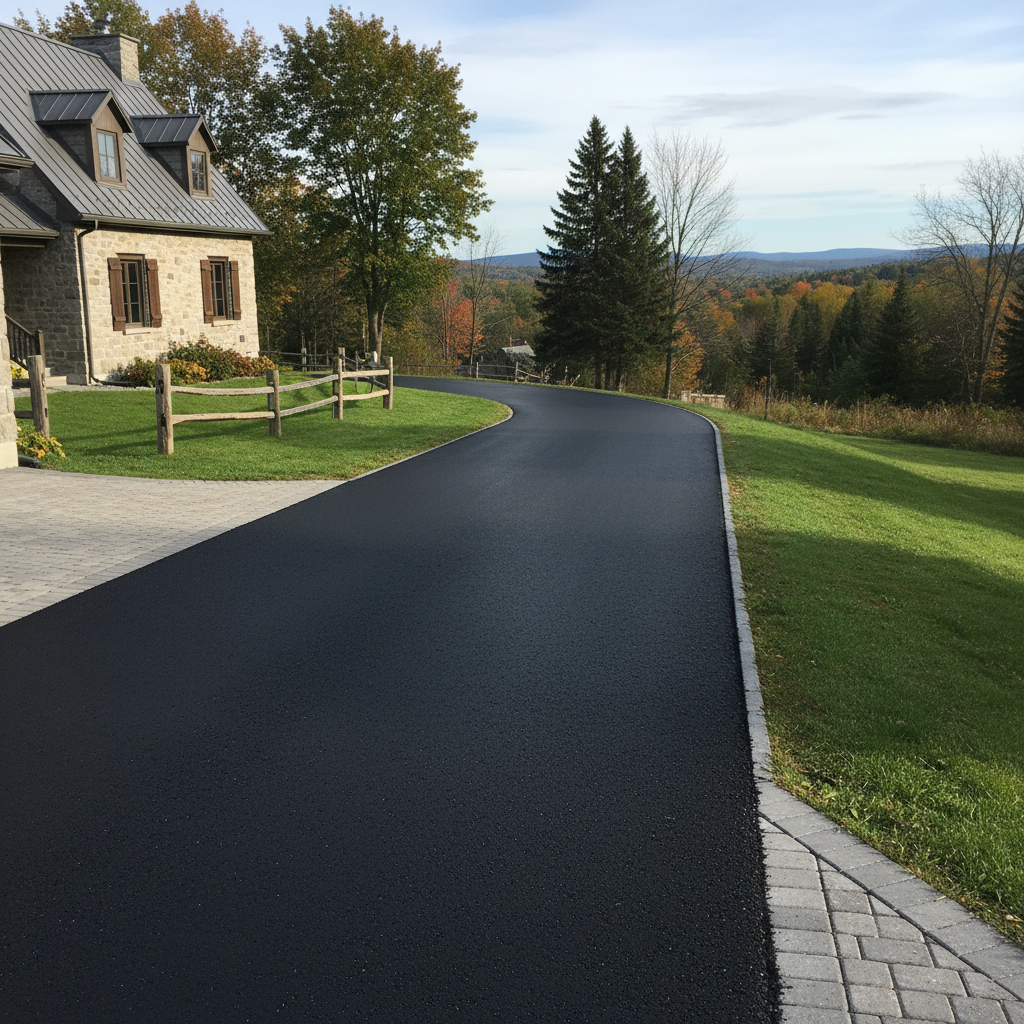
Driveway paving options and costs in Shawnessy
Shawnessy homeowners typically want a driveway that stays smooth through Calgary-area winter freeze–thaw cycles, looks sharp year-round, and doesn’t force constant patching. With Shawnessy sitting around 9,055 residents (Statistics Canada, 2021 Census), a lot of the demand is driven by private single-family lots—meaning most driveway projects are for detached-home properties where the driveway is a major part of curb presentation. In practice, you’ll see the trade especially busy around established pockets like the Shawnessy/Carrington Heights area, where streets are mature enough that many driveways are reaching the “resurface or replace” point.
Pricing in the Calgary economic region is shaped by two things: frost penetration and the short paving season. Here, frost routinely penetrates to about 1.2 m, and repeated freeze–thaw movement can heave poorly supported surfaces. Contractors respond by building deeper granular bases, tightening drainage, and using freeze–thaw-rated asphalt mixes—each adds labour and materials. On top of that, hot-mix asphalt needs warm conditions to place and compact properly (often above 10°C air temperature), so late-spring and summer scheduling can tighten crew availability for smaller projects, pushing costs toward the higher end of the bands.
That’s why you can see quotes swing noticeably even when the driveway looks similar. The table below compares the common options and gives a realistic starting point for budgeting before you get itemised quotes.
| Material |
Lifespan |
Maintenance |
Best For |
Price per sq ft |
Price Range |
| Asphalt (new installation, proper base) |
15–25 years |
Sealcoat every 3–5 years; crack fill as needed |
Best overall value with good base and drainage |
$3.25–$6.00 |
$3,200–$7,800 |
| Asphalt (overlay on existing gravel base) |
10–18 years |
Sealcoat every 3–4 years; more frequent patching if base is weak |
Lower-cost path when the subgrade is stable |
$3.00–$5.25 |
$2,700–$6,200 |
| Interlocking concrete pavers |
20–30 years |
Minimal; replace individual stones for spot repairs |
Maximum curb appeal and repairability |
$6.00–$10.50 |
$4,800–$11,500 |
| Poured concrete (broom finish) |
20–30 years (with proper joints) |
Seal if desired; crack repair early |
Clean look, strong surface when correctly built |
$5.25–$9.00 |
$3,900–$10,500 |
| Exposed aggregate concrete |
25–35 years |
Light sealing optional; maintain surface cleanliness |
Higher-end finish that resists tire scuffing |
$6.25–$11.00 |
$4,700–$12,500 |
| Gravel / crushed stone (budget option) |
5–12 years |
Top up annually; reshape and recompact |
Short-term or low-budget access roads |
$1.75–$3.50 |
$1,400–$4,600 |
Prices are estimates only and vary by project scope, site access and material selection.
What affects the price of paving in Shawnessy
In Shawnessy and across the wider Calgary area, two quotes for the “same” driveway can differ by 30–50% because the work isn’t truly the same under the surface. Many contractors quote differently on excavation depth, base thickness, drainage corrections, disposal, and how much of the existing driveway must be torn out. The material itself matters, but in freeze–thaw regions the engineering details usually drive the final number more than the surface finish.
Frost line depth and freeze–thaw cycles are decisive cost factors here. With frost routinely penetrating to about 1.2 m, contractors typically plan deeper, well-graded granular bases so the subgrade doesn’t pump water upward and heave. If base preparation is underbuilt, you’ll see early cracking, edge failures, and raveling—meaning more labour later. In colder zones like Calgary, that usually means thicker base build-ups than you’d expect in milder climates. The paving season is also compressed: hot-mix asphalt often requires air temperatures above about 10°C to place and compact properly, which concentrates demand in late spring through early fall. That schedule pressure can push asphalt labour/equipment availability and delivery costs toward the higher end of the $12–$20 asphalt band.
Concrete examples in Shawnessy often include (1) the amount of jointing and doweling required if you’re cutting around existing slabs or garage approaches; and (2) whether de-icing salt exposure is high, which makes air-entrained concrete and correct curing more important. As a result, a properly built concrete driveway may land closer to the $15–$25 band, while a value-focused asphalt job with a stable base can sit nearer the low-to-mid range—but only if drainage is handled and the granular layer isn’t skipped.
| Price Factor |
Why It Matters |
Cost Impact |
| Driveway area in sq ft |
Most charges scale directly with square footage and material tonnage. |
High (often the single biggest line item) |
| Base depth required |
Frost protection depends on granular thickness and compaction quality. |
High (can add major labour/material cost) |
| Grading and drainage work |
Positive slope and runoff control prevent water pooling and subgrade saturation. |
Moderate to high |
| Tear-out of existing surface |
Breaking and hauling concrete or removing old asphalt/gravel takes equipment time. |
Moderate to high |
| Edge restraints and curbing |
Prevents paver spread, asphalt edge drop, and loss of containment. |
Moderate |
| Sealing requirement |
Asphalt needs sealcoat after the cure window to reduce water intrusion and oxidation. |
Low to moderate (but important lifecycle cost) |
| Site access |
Narrow/tight lots slow equipment movement and increase time per hour. |
Moderate |
| Asphalt mix specifications |
Freeze–thaw-rated mixes and proper gradation cost more than basic mixes. |
Moderate |
Permits & regulations in Alberta
In Alberta, paving a private driveway within your own property typically doesn’t require a building permit. Where things change is when the work touches municipal infrastructure. If you’re doing work in the municipal right-of-way—such as installing or changing a curb cut, altering a boulevard, connecting or modifying storm drainage, or making changes that affect roadside drainage—municipal approval is usually required before construction.
Also check whether your community enforces lot-grading rules. Some jurisdictions restrict how close a hard surface can be placed to property lines and how runoff must be directed, especially if neighbouring properties are sensitive to water flow. In Shawnessy, where winter melt can overwhelm drainage if slopes aren’t corrected, that approval step can be the difference between “it looks great” and “it performs great.”
Before any excavation, require utility locates through Alberta One-Call. Step-by-step, here’s how Shawnessy homeowners can verify a contractor is ready to work legally and safely: (1) Ask for their Alberta business/licence details (and confirm they’re in good standing on the relevant online listings for contractors). (2) Request a current Certificate of Insurance showing liability coverage with your address/project named where appropriate. (3) Ask for WSIB/WCB coverage proof (Alberta workers’ compensation coverage) and ensure it matches the crew doing the work. (4) Get the written scope and confirm who handles disposal and any municipal paperwork. If the contractor won’t provide proof up front, that’s a major red flag.
Asphalt vs pavers vs concrete for Shawnessy driveways
For Shawnessy driveways, the “best” choice depends on how you want the surface to behave through Alberta winters—especially freeze–thaw movement, snow storage, and salt/sand exposure. Asphalt is usually the lowest upfront option and can look very clean with a proper base and correct thickness, but it relies on ongoing maintenance: sealcoat every 3–5 years helps reduce water intrusion. If you neglect sealing, freeze–thaw moisture movement accelerates oxidation and can shorten life—pushing you toward more frequent repairs.
Interlocking concrete pavers cost more upfront, often the highest in the typical comparison, but they shine in Calgary-area climate because they’re repairable. If a section heaves due to a local drainage or base issue, you can remove and reset only the affected blocks instead of replacing the whole driveway. This is a big deal for homeowners who want curb appeal and manageable repair costs when settling occurs.
Poured concrete sits in the middle price range, but it depends heavily on air-entrainment, proper curing, and smart joint placement to handle freeze–thaw expansion. In Calgary winters, if concrete isn’t correctly built, cracks can develop earlier—especially at edges and joints where de-icing practices and plough vibration concentrate stress. Exposed aggregate adds traction and durability to the surface, while chip seal/tar-and-chip is generally better suited to lower-speed, transitional surfaces than a premium residential driveway replacement.
To make the decision practical: if you’re budgeting and the driveway area is moderate, asphalt in the $12–$20 band may beat pavers on initial cost, but pavers can be justified when your goal is long-term curb appeal and localized repairs. For a homeowner comparing finishes on the same prepared base, an uplift from asphalt toward pavers often becomes worthwhile when you expect ploughing impacts and you prefer “fix the section” over “rebuild the slab.”
| Material |
Frost Resistance |
Curb Appeal |
Repair Method |
Lifespan |
Price Band |
| Asphalt (sealed regularly) |
Good when base/drainage are correct |
Good (clean finish, blacktop look) |
Patch and re-level; seal maintenance |
15–25 years |
$12–$20 |
| Interlocking concrete pavers |
Very good (especially with solid edge support) |
Excellent (wide range of colours/patterns) |
Remove/reset individual pavers |
20–30 years |
$18–$30 |
| Poured concrete (air-entrained) |
Good when jointing and mix are correct |
Good (broom finish; can be upgraded) |
Crack repair and partial patching |
20–30 years |
$15–$25 |
| Exposed aggregate concrete |
Very good surface durability with correct base |
High-end (textured, premium look) |
Limited to patching/replacement of sections |
25–35 years |
$18–$30 |
| Permeable pavers (drainage grid) |
Excellent if design includes subdrain/stone bed |
Good to excellent (modern look) |
Replace individual blocks; clean/maintain infill |
20–30 years |
$22–$35 |
| Chip seal / tar-and-chip |
Moderate (surface can ravel; base still critical) |
Basic/utility look |
Spot chip additions and maintenance lifts |
7–12 years |
$8–$15 |
How to choose a paving contractor in Shawnessy
Choosing the right paving contractor in Shawnessy is less about flashy photos and more about proof, process, and clarity. First, verify Alberta coverage. Request the contractor’s Alberta business details and confirm they can legally do the work. Ask for their Certificate of Insurance showing liability coverage (and ensure it’s current). For coverage of workers, ask for WSIB/WCB proof—do not assume it’s included. If anything is unclear, ask for the clearance letter or documentation they use for compliance.
Next, get 2–3 itemised written quotes. You want a breakdown that shows labour and materials separately, including excavation, disposal, base material (type/quality), compaction, and the final surfacing. Avoid a “lump sum with vague scope” unless the contractor has walked the site and measured accurately.
Read the exclusions closely: is permit pull included if you’re modifying drainage or boulevard elements? Is disposal of old asphalt/concrete included? Will they replace unsuitable soils if they find soft spots or organic material? Confirm warranty terms for workmanship (length, what it covers, and how claims are handled) and whether the product/manufacturer warranty applies to the specific materials installed. Also ask if the workmanship warranty is transferable if you sell the home.
Payment schedule matters in Alberta winter-proofing too. Never pay more than 10–15% upfront; hold back the remainder until the job is complete, cleaned up, and you’ve received final documentation. Finally, demand a written timeline with a start date estimate and completion window—paving in Shawnessy depends on curing and weather, so clarity prevents delays.
- Verify Alberta licence/business details and confirm they operate in your area.
- Request Certificate of Insurance for liability and ensure it’s active.
- Provide WSIB/WCB coverage proof for their workers and subcontractors.
- Insist on an on-site measurement (length/width) and a take-off of square footage.
- Require itemised costs: excavation, base, asphalt/concrete, and paving labour.
- Confirm base specification: granular type, depth, and compaction method.
- Ask how they handle drainage: slope, edge drains, and runoff control.
- Clarify tear-out scope: what gets removed and where debris is hauled.
- For pavers, confirm edge restraints/curbs and joint sand specification.
- For asphalt, ask about cure/season timing and when sealcoat is scheduled (typically after 6–12 months).
- Get warranty terms in writing, including workmanship and exclusions.
- Use a payment schedule with a 10–15% maximum deposit and a completion holdback.
Concrete red flags I see in Shawnessy include: (1) “We’ll just pave over it” without evaluating base/subgrade after an excavation test; (2) no mention of frost-proof base depth or drainage corrections; (3) quoting with a single lump sum and no disposal/tear-out details; (4) avoiding proof of insurance/WSIB/WCB coverage; and (5) pushing for large deposits (more than 10–15%) before any materials are ordered or work begins.
Frequently asked questions — paving in Shawnessy
How do I get the most accurate paving quote in Shawnessy?
To get an accurate quote in Shawnessy, start by asking contractors to visit the property and measure the driveway area on-site. A good estimator will confirm driveway width/length, the current drainage path, and whether any soft or unstable soil is present before final pricing. Request itemised quotes so you can compare base depth, compaction, and tear-out/disposal scope, not just the surface finish. Also ask if they’ll do utility locates through Alberta One-Call before excavation. In Calgary’s cold continental climate, the depth and quality of the granular base and positive drainage often matter more than the paving material alone. If you’re comparing options, note that asphalt is commonly priced in the $12–$20 range, while pavers typically sit higher, depending on design and edging.
How much does it cost to pave a driveway in Shawnessy?
Driveway paving cost in Shawnessy depends mainly on square footage, how much tear-out is required, and how much base and drainage work the site needs. For budgeting, many homeowners land in the middle of the province’s common bands: asphalt driveway paving often falls around $12–$20 per sq ft, while concrete is commonly $15–$25 per sq ft depending on finishing (broom finish vs exposed aggregate) and jointing requirements. Interlocking pavers usually run higher (often $18–$30 per sq ft) because of materials and the labour to install correctly with proper edge restraints. If your site has poor drainage or older base that needs replacement, the job can shift toward the upper end of those ranges. Always confirm whether disposal, grading corrections, and sealcoat scheduling for asphalt are included.
Asphalt vs interlocking pavers vs concrete — which is best in Shawnessy?
In Shawnessy, asphalt, interlocking pavers, and concrete can all perform well if the base and drainage are built for Calgary’s freeze–thaw conditions. Asphalt is usually the best choice when you want the lowest upfront cost and you’re willing to maintain it with sealcoat every 3–5 years; without sealing, freeze–thaw moisture can shorten its life. Interlocking pavers are ideal if curb appeal and repairability are your priorities—if a section settles, you can remove and reset only the affected area instead of replacing an entire slab. Poured concrete (properly air-entrained) can be a strong mid-range option but it’s sensitive to jointing and curing; cracks can happen if the mix or base isn’t right. As a practical example, moving from asphalt toward pavers often costs more than the $12–$20 asphalt band, but it can be worth it for homeowners who expect regular plough contact and want easier localized repairs.
How long does a paved driveway last in Shawnessy?
In Shawnessy’s climate, lifespan depends less on brand and more on base prep, drainage, and maintenance. Well-built asphalt driveways commonly last 15–25 years when the base is properly compacted and the asphalt is sealed on schedule (typically after 6–12 months and then every 3–5 years). Interlocking concrete pavers often last 20–30 years because they can be repaired section-by-section, which helps when freeze–thaw movement affects only a portion. Poured concrete can also last 20–30 years when joints are placed correctly and the mix is air-entrained for winter durability. Exposed aggregate may last longer due to surface wear resistance, but it still depends on base quality. Gravel/crushed stone is the least durable, often around 5–12 years with regular regrading. If you want maximum longevity, budget for drainage corrections, not just the top layer.
When is the best time of year to pave in Shawnessy?
The best time to pave in Shawnessy is late spring through early fall, when temperatures support compaction and curing. Asphalt placement typically needs air temperatures around 10°C or higher to achieve proper compaction, and Alberta’s freeze–thaw cycle makes early-winter or late-fall work risky for performance. Concrete can sometimes be poured later than asphalt, but it still requires cold-weather protection plans so curing isn’t interrupted and jointing stays correct. Scheduling also matters because the paving season is compressed in the Calgary area—crews and equipment book up quickly in peak months, especially for smaller residential jobs that need mobilization. If you’re planning an asphalt driveway, ask about when sealcoat can be applied after initial curing (commonly after 6–12 months), because that timing affects long-term durability.
How deep should the base be for Shawnessy's frost?
Base depth is the “make-or-break” item in Shawnessy because frost can penetrate deeply (about 1.2 m in the region). For driveways, contractors typically specify a deeper, well-graded granular base and ensure proper compaction to prevent water movement and heaving. The exact thickness depends on soil conditions, subgrade stability, driveway load assumptions, and drainage. If contractors propose paving with a minimal base or without evaluating subgrade, that’s a performance risk. Practically, many Calgary-area driveway builds end up with a granular thickness in the range often discussed for Alberta’s colder conditions—frequently more than what you’d see in milder regions—plus a properly shaped slope so water doesn’t pool. For your quote, ask what base depth they are assuming and what they’ll do if they uncover unsuitable or wet soils during excavation.