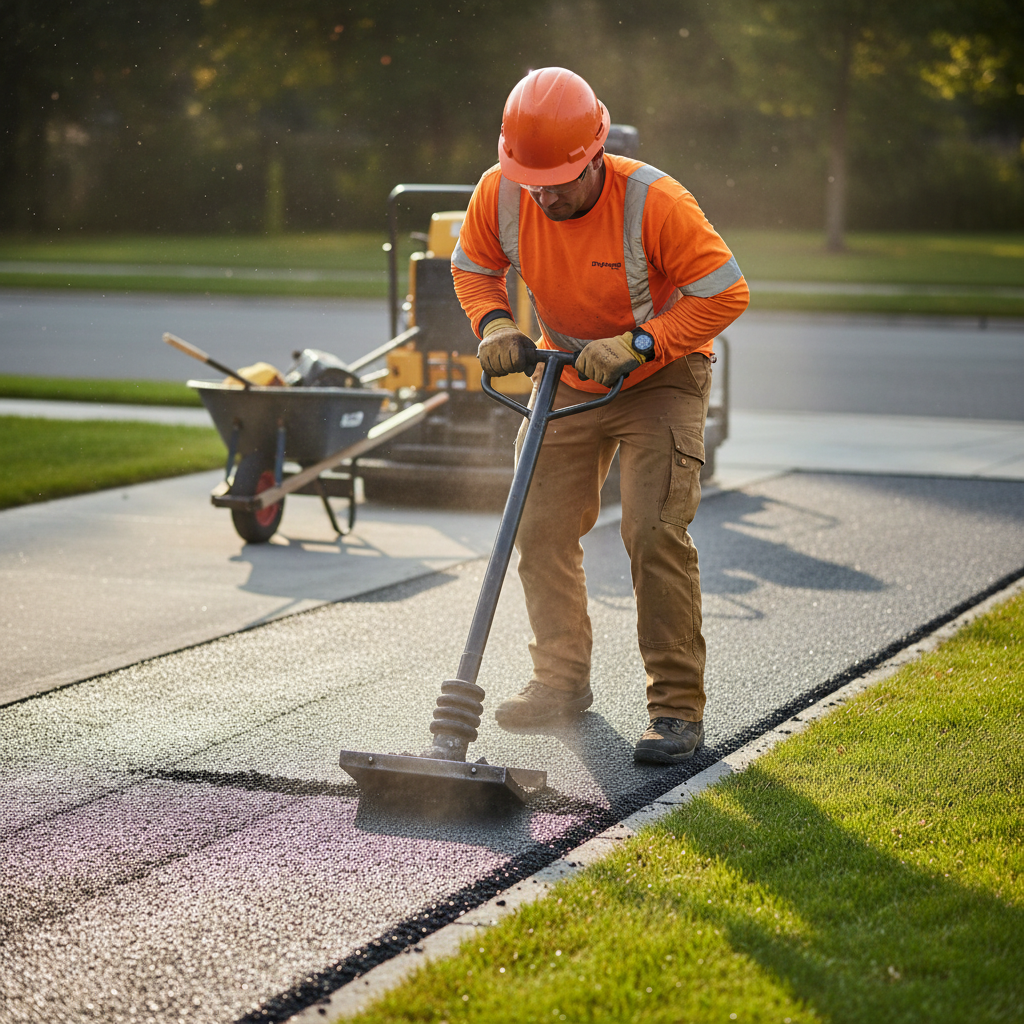
Driveway paving options and costs in Taber
Taber driveways are mostly tied to single-detached homes—92.6% of dwellings in the community—and that means a large share of property owners are choosing year-round durable surfacing. With 1,525 homeowner households (77.4% of all households) in the 2021 Census profile, the demand for resurfacing, full-depth rebuilds, and tidy curbside upgrades is steady across neighbourhoods like the Orchard Estates and older established pockets near the downtown core. In Lethbridge–Medicine Hat’s region, pricing is shaped by frost depth, freeze–thaw cycles, and a shorter effective paving season. In this part of Southern Alberta, frost penetration is commonly around the 6 ft range, so contractors often design for a deeper compacted granular base and emphasize drainage so water can’t sit and expand during cold swings.
That frost-driven build-up is one reason two homeowners in Taber can receive very different quotes for “the same driveway size.” Sites on heavier clay or with poor lot grading typically require more grading, thicker base, and longer compaction time—raising costs versus a flatter, well-drained yard. Scheduling also matters: hot-mix asphalt placement generally needs air temps above 10°C, so spring and early-summer weather windows can affect unit rates. If your driveway is older (53.3% of homes built before 1981), there’s often more chance of failing subgrade drainage, which pushes you toward full-depth asphalt or concrete rebuilds rather than a simple top dress.
Below is a practical comparison of common driveway materials and what they typically cost installed in Taber, using realistic price bands for this economic region.
| Material |
Lifespan |
Maintenance |
Best For |
Price per sq ft |
Price Range |
| Asphalt (new installation, proper base) |
15–25 years |
Seal every 3–5 years; crack repairs as needed |
Most value-focused homeowners with good drainage |
$6.50–$11.50 |
$6,000–$12,000 |
| Asphalt (overlay on existing gravel base) |
10–18 years |
Seal every 3–4 years; monitor reflective cracking |
When subgrade is solid and you’re avoiding full tear-out |
$5.50–$10.00 |
$5,500–$10,500 |
| Interlocking concrete pavers |
25–40 years |
Weed control; occasional re-leveling of stones |
Highest curb appeal and easier local repairs |
$10.00–$16.50 |
$9,000–$18,000 |
| Poured concrete (broom finish) |
25–35 years |
Crack monitoring; patching if needed |
Clean look, low daily maintenance |
$10.00–$15.50 |
$8,000–$16,000 |
| Exposed aggregate concrete |
20–35 years |
Seal 2–4 years after install (if specified) |
Slip resistance and “finished” appearance |
$12.00–$18.00 |
$10,000–$19,000 |
| Gravel / crushed stone (budget option) |
3–7 years (depends on base) |
Re-grade and top up annually; weed control |
Temporary solution or low-budget entry |
$3.00–$5.50 |
$3,000–$7,000 |
Prices are estimates only and vary by project scope, site access and material selection.
What affects the price of paving in Taber
In Taber and the wider Lethbridge–Medicine Hat region, you can absolutely see 30–50% quote differences for the same driveway size, even when both bids sound “standard.” The biggest reasons are (1) how each contractor accounts for frost-depth base design and drainage, (2) whether the quote includes tear-out and hauling, and (3) scheduling risk in a shorter paving window. Hot-mix asphalt placement generally requires air temperatures above 10°C, so if a crew has to wait for a weather window, that cost is often built into the unit pricing. That’s also why small jobs can price higher per square foot during peak periods when labour and equipment are busy.
Frost line depth and freeze–thaw cycles are decisive here. In southern Alberta, deeper frost commonly means thicker compacted granular base and subgrade preparation so the driveway doesn’t heave and crack. A thicker granular build-up and more meticulous compaction usually add labour and aggregate haul costs, pushing you toward the higher end of the asphalt band (for example, closer to $6,000–$12,000 installed) when full-depth work is required. Concrete and pavers also rise in price when proper bedding and drainage layers are installed to withstand repeated winter cycles.
Two practical Taber examples: If your yard drains poorly toward the garage slab or low spots exist, contractors may need extra grading and sub-drain adjustments before any asphalt or pavers—adding equipment time. If the existing surface is older asphalt that’s alligator-cracked, a true tear-out (breaking, loading and disposing) can shift the scope and cost sharply versus an overlay approach. Conversely, a newer driveway footprint with a stable, well-drained base can allow tighter pricing and keep you closer to mid-range costs instead of moving to the top of the band.
| Price Factor |
Why It Matters |
Cost Impact |
| Driveway area in sq ft |
All materials (asphalt/concrete), base, and labour scale primarily by square footage |
Major (most quotes vary most here) |
| Base depth required |
Frost requires thicker, well-compacted granular thickness to reduce heaving and early cracking |
Major (can move a job toward the top end of the band) |
| Grading and drainage work |
Slope, ditch/drain tie-ins, and correcting low areas prevent water trapping and freeze expansion |
Moderate to major |
| Tear-out of existing surface |
Breaking and hauling old asphalt or concrete increases labour and disposal costs |
Moderate to major |
| Edge restraints and curbing |
Prevents paver spread and asphalt edge break-down, especially at transitions and driveway sides |
Moderate |
| Sealing requirement |
Asphalt needs sealing after initial cure (commonly within 6–12 months) to protect binder from Alberta sun and water |
Low to moderate (but impacts long-term value) |
| Site access |
Narrow lots, gate limits, or difficult turning affects equipment efficiency and cycle time |
Moderate |
| Asphalt mix specifications |
Freeze–thaw-rated mix and proper thickness help prevent raveling and reflective cracking |
Low to moderate (often worth it) |
Permits & regulations in Alberta
In Alberta, paving a private driveway within your own property typically does not require a building permit. However, work that affects the municipal right-of-way often does—especially where you need a new or modified curb cut, change to the boulevard area, or any alteration to storm drainage (for example, adjusting grades so runoff is redirected). In Taber, that means if your project touches the frontage zone between your property line and the street (or involves drainage changes that could impact the municipal system), plan on municipal approval before work begins.
Here’s the practical homeowner approach. First, confirm exactly where the scope ends: measure from your property line and discuss whether curb cuts, boulevard leveling, or drainage tie-ins are included. Second, call for utility locates before any excavation—Alberta One-Call for underground services is essential. Third, ask the contractor to provide proof of their insurance and licence documents before work starts, so you’re not relying on promises after the fact.
To verify an Alberta contractor, do three checks step-by-step: (1) licence/registration—look for the contractor’s business registration and any trade licensing details they claim; (2) liability insurance—request a current certificate of insurance naming you where appropriate; and (3) WSIB/WCB coverage—ask for clearance or proof that coverage is active for the workers who will be on site. Keep copies of everything with your signed quote and contract.
Asphalt vs pavers vs concrete for Taber driveways
For Taber driveways, all three common options—black asphalt, interlocking concrete pavers, and concrete—can work well, but the “best” choice depends on how you maintain the driveway during winter and how you want repairs to be handled. Alberta’s freeze–thaw cycles and frost depth common to the Lethbridge–Medicine Hat region push every material to succeed or fail based on base preparation and drainage, not just surface type. In practice, asphalt is usually the lowest upfront installed cost, often landing in the $6,000–$12,000 range depending on excavation and base thickness; it’s also the most sensitive to missed sealing—many homeowners benefit from sealing after cure (commonly within 6–12 months) and then every 3–5 years.
Interlocking concrete pavers cost more upfront (often near the $9,000–$18,000 band) but they’re highly repairable: if a utility line is ever serviced or a localized base spot settles, you can lift and reset stones without tearing out the entire driveway. Poured concrete can be a strong mid-range option ($8,000–$16,000 typical), especially when air-entrained and designed for freeze conditions, but it still needs proper thickness, control joints, and base support to manage cracking risk. If you routinely use salt, concrete and its surface finish matter; pavers generally tolerate salt-and-sand traffic better because repairs are localized.
Where the price difference is justified: if you expect future drainage/utility adjustments or you want maximum curb appeal for an older, established Taber home area, pavers can be the better long-term value than paying for repeated asphalt seal/patch cycles. If you want the simplest maintenance routine and your site drains well, asphalt often delivers the best “cost to keep it nice.”
| Material |
Frost Resistance |
Curb Appeal |
Repair Method |
Lifespan |
Price Band |
| Asphalt (sealed regularly) |
Good with proper granular base and drainage |
Medium (clean, dark finish) |
Cut-out patch or full spot re-surface |
15–25 years |
$6,000–$12,000 |
| Interlocking concrete pavers |
Excellent with correct bedding and edge restraints |
High (colour/texture options) |
Lift-and-reset individual stones or sections |
25–40 years |
$9,000–$18,000 |
| Poured concrete (air-entrained) |
Good to very good when designed for freeze-thaw |
Medium to high (finish options) |
Patch concrete or recoat (limited) |
25–35 years |
$8,000–$16,000 |
| Exposed aggregate concrete |
Good with correct mix and curing |
Very high (decorative texture) |
Patch sections; refinishing is limited |
20–35 years |
$10,000–$19,000 |
| Permeable pavers (drainage grid) |
Excellent where water management is a known issue |
High (modern look) |
Remove and re-level localized sections |
25–40 years |
$11,000–$22,000 |
| Chip seal / tar-and-chip |
Fair to good; best for select, stable subgrades |
Low to medium |
Reseal or re-chip over time |
6–12 years |
$4,500–$9,000 |
How to choose a paving contractor in Taber
When you hire a paving contractor in Alberta, verifying licence, liability insurance, and WCB/WSIB coverage protects you as the homeowner. Start with the business information they provide: confirm their Alberta business registration details and any trade registration they reference. Next, ask for a current certificate of insurance (liability) and ensure it’s active for the job dates; you should be able to receive a copy before work begins. For WCB coverage, request proof or a clearance letter for the workers who will be on site—don’t accept “we’re covered” without documents. These checks matter because frost-depth base work often means excavations, equipment movement, and multiple labourers on site.
Then get 2–3 itemised written quotes, not lump sums. Itemise labour, base materials, asphalt/concrete thickness, disposal/tare, and the exact curb/edge work. Ask what’s excluded (for example, landscaping restoration, removing topsoil, or long-distance aggregate haul). Confirm whether the quote includes permit/municipal coordination if your job needs right-of-way approval, and whether disposal of old asphalt/concrete is part of the scope. For warranty, look for workmanship warranty length, the manufacturer warranty on materials, and whether it’s transferable if you sell the home.
For payment, never move beyond 10–15% upfront. Use a holdback until the final broom/edge cleanup and grading are complete. Finally, require a start date and completion estimate in writing—this is critical in Taber where weather windows strongly influence asphalt curing and scheduling.
- Request itemised quote with base depth, total asphalt/concrete thickness, and compaction expectations
- Confirm whether tear-out and hauling are included
- Verify drainage/grading adjustments and who re-establishes slopes
- Ask about edge restraints/curbing details (especially for pavers and asphalt edges)
- Get the asphalt mix specification or at least thickness and placement method
- Require utility locate confirmation before excavation
- Check insurance certificate validity dates and coverage limits
- Require WSIB/WCB clearance or proof for the listed crews
- Confirm warranty in writing (workmanship and materials) and what triggers warranty service
- Use a staged payment schedule with a holdback until final acceptance
- Ask for a written timeline and weather contingency plan
- Ensure site protection (silt control, fencing, and vehicle access plan) is included
Red flags we see in Taber include: “cash only” or refusal to provide an insurance certificate, vague scope language like “we’ll prep the base” without thickness/compaction details, no disposal plan for old asphalt or concrete, starting without utility locates, and quoting a price band without discussing drainage because frost heave risk isn’t addressed.
Frequently asked questions — paving in Taber
How long before I can drive on new asphalt?
In Taber, most new asphalt driveways can be driven on sooner than many people expect, but the timing depends on thickness, weather, and whether the surface has been sealed or left to cure naturally. Typically, light vehicle traffic may be possible after the asphalt has cooled and set (often the same day), while heavier vehicles and tight turns should be delayed until the mix has fully cooled and stabilized. If the crew is doing a seal coat program, sealing is usually planned after curing—often after 6–12 months—so the “drive time” and “seal time” are different. Your contractor should specify day-by-day expectations in writing, and you should avoid parking or turning directly on warm areas. This matters because Alberta’s freeze–thaw cycle doesn’t forgive premature surface disturbance.
What causes potholes and how are they repaired?
Potholes usually start with water. In Southern Alberta conditions near Taber, repeated freeze–thaw cycles can widen small cracks, let water in, and loosen the granular base underneath the asphalt. When the base loses support, the asphalt breaks down into a pothole. Heavy snowplow impacts and sharp turning can worsen early failures. Repairs are typically more than just patching the top: a proper pothole fix cuts back to sound material, removes any saturated or failed base, replaces and compacts granular material, and then repaves to match thickness. If the damage is widespread, you may need a broader overlay rather than spot work to keep costs from climbing toward the upper end of the asphalt band (often near $12,000 installed depending on scope).
How do I prepare for a paving project?
Preparation is where projects either go smoothly or become expensive. Before the crew arrives in Taber, clear vehicles from the work area and ensure access for a small skid-steer/excavator where needed. Keep pets and children away from excavation zones, and remove any fragile items along the driveway edges. Ask your contractor how they handle topsoil/landscaping restoration so there are no surprises. If you have sprinklers or garden beds close to the driveway, plan for protection or temporary relocation. Confirm that utility locates will be called before digging, and make sure the path of equipment is available. It also helps to decide now whether you’re doing asphalt, pavers, or concrete—because base requirements for frost depth and drainage affect how much excavation and grading will occur.
How do I compare paving quotes fairly?
Fair quote comparisons come down to scope clarity. Ask for itemised pricing that breaks down base depth, total pavement thickness, excavation/tear-out, haul-away/disposal, and edge restraints/curbing. In the Lethbridge–Medicine Hat region, frost-depth-driven base design is decisive, so verify whether each quote includes drainage corrections and the same granular thickness and compaction approach. Compare like-for-like: a “cheaper” asphalt number may omit tear-out, use a different thickness, or skip drainage work—leading to faster cracking and more repairs. For example, if one bid lands near the low end of the asphalt band ($6,000) and another is closer to $12,000, read the scope carefully before assuming one contractor is overpriced. Also confirm warranty terms, sealing plan (if asphalt), and whether taxes and disposal are included.
Can asphalt be laid in cold weather in Taber?
In Alberta, cold weather can affect asphalt placement and long-term performance, so contractors should not lay asphalt when conditions won’t support proper compaction and bonding. Hot-mix asphalt generally needs air temperatures above 10°C for best placement and compaction results. Even if the material arrives warm, freezing nights or damp base conditions can trap moisture or prevent full densification, which increases the risk of early surface failure in the next freeze–thaw cycle. In Taber, where weather windows can be tight in spring and early fall, reputable crews schedule around temperature and precipitation. If a contractor is pushing paving during cold snaps, ask what safeguards they use (base moisture checks, mix temperature targets, and laydown/compaction timing) and insist on those details in writing.
What is a driveway apron and do I need one in Taber?
A driveway apron is the transition area between your driveway surface and the street/approach—often related to a curb cut and how the apron slopes down to meet the roadway. In Taber, whether you “need” an apron depends on your exact frontage conditions: if your driveway access involves a municipal curb cut, grade change in the boulevard, or altered drainage, the apron and approach geometry become important for smooth snow removal and long-term performance. Improper transitions can funnel water, promote edge breakdown, and speed up cracking near the curb. If your project touches the municipal right-of-way or storm drainage connections, you’ll likely need municipal approval before construction. Ask your contractor to show the proposed transition grades and confirm the permit/approval responsibility before they start excavation.