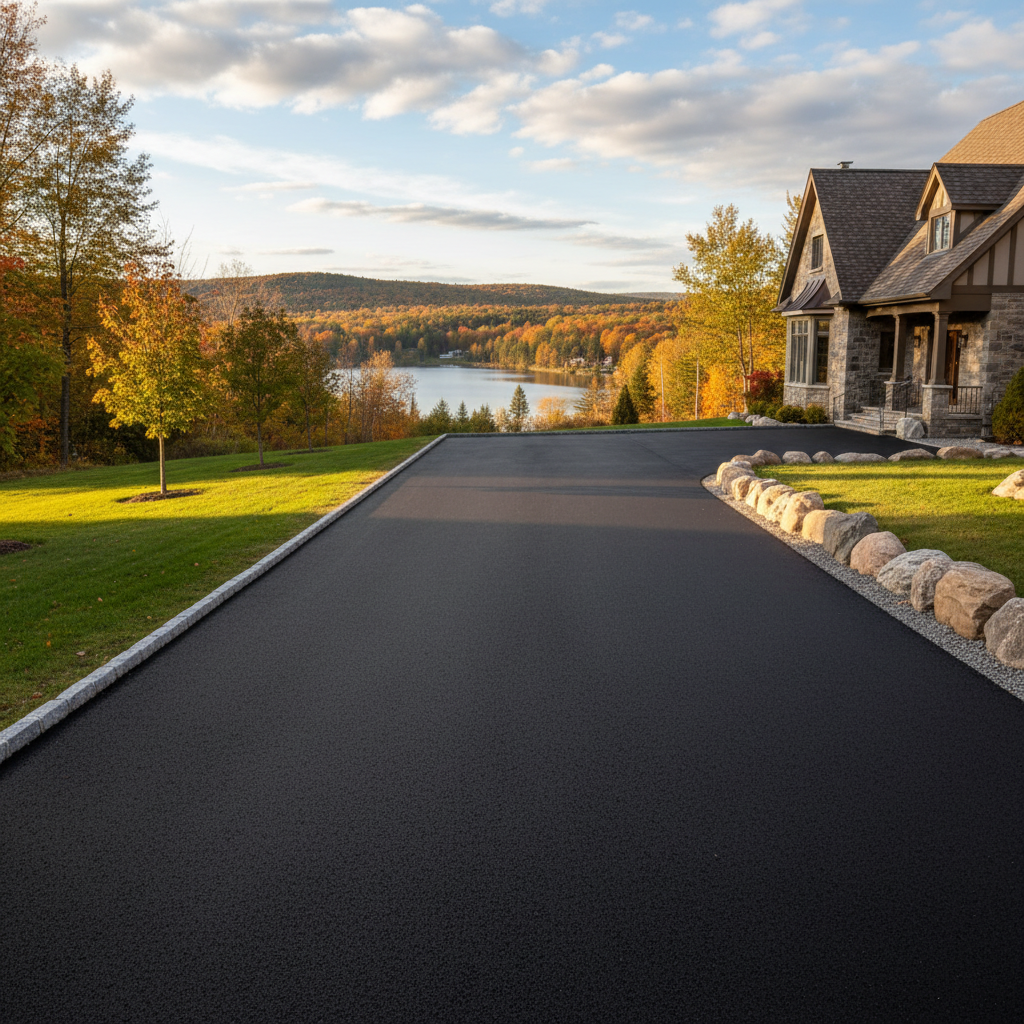
Driveway paving options and costs in Edmonton
Edmonton homeowners typically compare driveway paving options against the realities of central Alberta weather and older housing stock. With 49.6% of dwellings in Edmonton being single-detached homes, most driveways you’ll see are private, snow-plowed, and built to carry regular vehicle traffic—often with a base that was never designed for today’s freeze-thaw intensity. Edmonton also has a large share of homes built before 1981 (40.5%); many of those driveways were installed when granular design and drainage detailing were less consistent, so “resurfacing” sometimes turns into base reconstruction.
In the Edmonton economic region, pricing is driven less by asphalt versus concrete on paper and more by frost protection and drainage. Freeze-thaw cycling is a major cost driver here because water trapped in the base expands when frozen and weakens the structure during thawing. That means bids commonly include extra excavation, drainage stone, and compaction time, especially where the existing gravel is pumping or the grading is flat. The working season is also shorter in Edmonton—hot-mix asphalt needs warm placement conditions—so crews often tighten scheduling in spring and early summer.
Trade demand is particularly strong in mature neighbourhoods where driveway replacement is common, such as St. Albert Trail / Callingwood and other central, older-stock areas. From there, most homeowners move into a material comparison to understand what budget aligns with longer-term performance. Use the table below as a practical baseline for Edmonton projects.
| Material |
Lifespan |
Maintenance |
Best For |
Price per sq ft |
Price Range |
| Asphalt (new installation, proper base) |
15–25 years |
Seal coat every 3–5 years |
Cost-effective, smooth finish, good all-rounder |
$5.50–$9.00 |
$7,000–$15,000 |
| Asphalt (overlay on existing gravel base) |
8–16 years (depends on base) |
Seal coat every 3–5 years; monitor edge raveling |
When the subgrade is stable and drainage is corrected |
$4.75–$7.50 |
$6,500–$13,000 |
| Interlocking concrete pavers |
20–30+ years |
Replace single stones as needed; re-leveling occasionally |
Premium curb appeal and modular repairs |
$12.00–$18.00 |
$12,000–$28,000 |
| Poured concrete (broom finish) |
20–35 years (with air-entrainment & drainage) |
Minor patching as needed; keep surface sealed if specified |
Low maintenance, clean look |
$10.00–$16.00 |
$9,000–$22,000 |
| Exposed aggregate concrete |
20–30 years |
Periodic cleaning; occasional patching |
Slip-resistant finish and higher-end appearance |
$12.00–$18.50 |
$11,000–$26,000 |
| Gravel / crushed stone (budget option) |
3–8 years (varies with traffic & drainage) |
Regrade and top up 1–3 times per year |
Short-term solution or drainage-focused areas |
$3.00–$6.00 |
$3,000–$8,500 |
Prices are estimates only and vary by project scope, site access and material selection.
What affects the price of paving in Edmonton
In Edmonton, two contractors can quote the same driveway and land 30–50% apart because the “paving” cost is only one part of the job. The big swing factor is whether your existing base is sound. If the subgrade is soft, waterlogged, or poorly graded, Edmonton crews often have to excavate deeper, rebuild the granular layers for frost protection, and correct drainage before any asphalt or concrete goes down. Labour availability can also tighten in the colder shoulder months, and equipment mobilization becomes more expensive when access is limited or multiple small areas need separate pours or lifts.
For central Alberta, frost protection and freeze-thaw cycling are decisive. Deeper frost commonly means a thicker compacted granular base; for Edmonton projects this often translates to a 6–12 inch granular thickness (and sometimes more) depending on conditions and design, so water doesn’t sit and expand during freezing. Freeze-thaw cycling also affects the asphalt mix design—mixes must be engineered to tolerate repeated temperature swings, and that can shift material costs. Asphalt placement is further constrained by temperature: hot-mix asphalt generally needs air temperatures above 10°C, which concentrates demand into a shorter paving season and adds spring/summer scheduling pressure.
Concrete pricing also responds to Edmonton conditions. If your slope is wrong or the drainage needs reworking, poured concrete may still be an efficient long-term option, but the base prep and forms drive cost up. Conversely, exposed aggregate can cost noticeably more than standard broom-finish concrete, yet it may be justified if you want slip resistance for snow days and a higher-end look that matches mature neighbourhood curb appeal.
As a practical reference, many driveways in Edmonton land in the asphalt paving band of $7,000–$15,000 when the base is rebuilt properly, while full paver installs commonly push into the interlocking band of $12,000–$28,000 once excavation, edge restraints, and a re-levelable base system are included—especially on driveways with multiple vehicle turns or uneven elevations.
| Price Factor |
Why It Matters |
Cost Impact |
| Driveway area in sq ft |
Most line items scale directly with surface area and excavation volume |
High impact (primary driver) |
| Base depth required |
Frost protection depends on granular thickness and compaction; deeper frost needs thicker base |
High impact |
| Grading and drainage work |
Slope, tie-ins to existing services, and managing water prevents heaving and washouts |
Medium to high impact |
| Tear-out of existing surface |
Breaking concrete or removing old asphalt includes disposal and can reveal unstable subgrade |
Medium to high impact |
| Edge restraints and curbing |
Pavers need containment; asphalt/concrete need solid edges to resist raveling and spreading |
Medium impact |
| Sealing requirement |
Asphalt needs sealing after curing (often 6–12 months) to reduce oxidation and moisture ingress |
Low to medium impact (plan for future cost) |
| Site access |
Narrow lots, gates, or soft shoulders slow equipment movement and add labour time |
Medium impact |
| Asphalt mix specifications |
Freeze-thaw-rated mixes cost more and are required for winter durability |
Medium impact |
Permits & regulations in Alberta
In Alberta, paving a private driveway within your own property usually does not require a building permit. Where permits and approvals come in is when the work affects municipal infrastructure or stormwater handling. If your project involves work in the municipal right-of-way—such as a new curb cut, changing the boulevard, altering catch basins, or modifying storm drainage—plan on needing municipal approval. In addition, some municipalities have lot-grading or drainage requirements that restrict how close a hard surface can be to property lines or how runoff must be directed.
For Edmonton homeowners, the practical process is straightforward: before excavation, call for utility locates through Alberta One-Call and confirm any locates required for your specific lot. Then, if any portion of your driveway ties into boulevard areas or changes drainage patterns, confirm whether you need approval before work starts. A solid contractor will already know what triggers municipal review and should include that communication in the scope.
To verify a contractor’s credentials, ask for (1) their Alberta business licence details if applicable in their operating area, (2) a certificate of liability insurance showing adequate limits for paving work, and (3) WSIB/WCB clearance documentation to confirm workers are covered. Don’t accept “we’re covered” verbally—request the certificates directly and review expiration dates. If a contractor can’t provide current documentation, treat it as a major red flag and move on.
Asphalt vs pavers vs concrete for Edmonton driveways
For Edmonton’s freeze-thaw climate, asphalt, interlocking pavers, and concrete all can work well—but each fits different homeowner priorities. Asphalt typically has the lowest upfront cost (often landing in the $7,000–$15,000 band), delivers a smooth ride, and can be quick to install. The trade-off is maintenance: asphalt should be sealed after curing (commonly within 6–12 months, then every 3–5 years) to slow oxidation and reduce moisture penetration.
Interlocking concrete pavers usually cost the most upfront (often within the $12,000–$28,000 band) because of excavation, edge restraints, and a well-graded base designed for flexible movement. In Edmonton winters—plus snow removal—pavers can outperform expectations because individual units can be lifted and reset if any area fails, rather than replacing an entire surface. That’s a big advantage on driveways with localized drainage or where vehicle turning stresses one area.
Poured concrete sits in the middle on price (frequently $9,000–$22,000) and is durable when properly designed with air-entrainment and good drainage. However, concrete is more susceptible to cracking if there’s inadequate base preparation, trapped moisture, or improper jointing. Salt and de-icing routines can also worsen surface scaling on poorly finished slabs.
Base thickness and drainage design matter for all three. Edmonton’s deeper frost risk makes a stable granular foundation and correct slopes essential. For example, if asphalt bids are low because they’re skipping base rebuild, you can end up paying twice; conversely, pavers can be worth the premium when you know you’ll want long-term repairability and crisp curb appeal in a neighbourhood where frontage matters.
| Material |
Frost Resistance |
Curb Appeal |
Repair Method |
Lifespan |
Price Band |
| Asphalt (sealed regularly) |
Good when base is rebuilt and drainage is correct |
Moderate (clean black-top look) |
Patch/overlay local sections |
15–25 years |
$7,000–$15,000 |
| Interlocking concrete pavers |
Very good due to modular system and reset capability |
High (premium frontage) |
Lift and replace individual pavers |
20–30+ years |
$12,000–$28,000 |
| Poured concrete (air-entrained) |
Good with proper air-entrainment and base prep |
Moderate to high (depends on finish) |
Patch or replace slab sections if needed |
20–35 years |
$9,000–$22,000 |
| Exposed aggregate concrete |
Good with correct mix and curing |
High (textured, upscale surface) |
Patch with matching aggregate/grout (limited) |
20–30 years |
$11,000–$26,000 |
| Permeable pavers (drainage grid) |
Very good where you want controlled infiltration and drainage |
High (special-purpose look) |
Lift and reset; clean/recharge sub-base as specified |
20+ years (design dependent) |
$14,000–$34,000 |
| Chip seal / tar-and-chip |
Fair (best for lower-speed, budget resurfacing) |
Low to moderate |
Re-chip or overlay as deterioration occurs |
5–12 years |
$5,500–$12,000 |
How to choose a paving contractor in Edmonton
Choosing the right paving contractor in Edmonton comes down to documentation and details, not just the lowest number. In Alberta, verify their coverage before work starts: request proof of liability insurance (certificate of insurance with job-site coverage), and obtain WSIB/WCB clearance (or equivalent clearance documentation) showing workers are properly covered. If the contractor can’t produce current certificates or will only show expired documents, that’s a strong sign to walk away. Also ask whether they hold any required business registrations for their operating practice and whether they can provide references for similar Edmonton-style frost-protection projects.
For pricing, insist on 2–3 itemised written quotes that break down labour and materials, including excavation depth, base materials, drainage work, disposal, and finishing. Avoid “lump sum” quotes that don’t state what’s included. Read the scope line-by-line: is permit/municipal approval support included if the work touches the right-of-way? Is tear-out and hauling included? Will they supply edge restraints for pavers or thickened sections for vehicle turning areas? For asphalt, confirm whether they include a sealing recommendation and timeline rather than implying it’s unnecessary.
Warranty matters too. Ask for the workmanship warranty length and what it covers (settlement vs. cracking vs. workmanship only). Product/manufacturer warranties don’t usually cover poor base prep. Payment should be controlled: never pay more than 10–15% upfront, and use a holdback until substantial completion and final cleanup are done. Get a start date and completion estimate in writing, and ask how delays due to weather will be handled—Edmonton schedules change quickly when temperatures swing.
- Confirm current liability insurance and that limits are appropriate for paving work
- Obtain WSIB/WCB clearance documentation before the first day on site
- Ask for proof of experience with Edmonton frost-protection base designs
- Request 2–3 itemised quotes with labour + materials breakdown (not only totals)
- Verify excavation, base depth, and compaction specifications are written in the quote
- Confirm drainage corrections are included if your grade is flat or water ponds
- Clarify tear-out scope: who breaks, hauls, and disposes debris
- Check whether edge restraints/curb components are included (especially for pavers)
- Ask when sealing is recommended for asphalt and whether it’s planned as an add-on
- Confirm warranty terms in writing, including what “excluded” means
- Keep payment staged: no more than 10–15% upfront; hold back until completion
- Get a written timeline and a weather-delay communication plan
Red flags I commonly see around Edmonton include contractors who won’t describe the base thickness and drainage plan, quotes that skip tear-out and dispose details, pressure to pay large deposits early, vague warranties (“we guarantee it”) without dates or coverage, and crews that start without verifying utility locates or discussing frost-related excavation risks.
Frequently asked questions — paving in Edmonton
When is the best time of year to pave in Edmonton?
In Edmonton, the best window is late spring through summer when temperatures stay reliably warm enough for placement and compaction. Asphalt needs warm conditions—hot-mix placement is generally done when air temperatures are above about 10°C—so many projects are scheduled for warmer weeks. Concrete timing is more flexible, but you still need proper curing conditions and protection from cold snaps and early frosts. If you’re replacing a failing base, contractors may need additional time for excavation and drainage stone placement before paving can occur. Homeowners in older neighbourhoods (many built before 1981) often plan around the thaw cycle to avoid trapping water in the base during excavation and grading.
How deep should the base be for Edmonton's frost?
Base depth in Edmonton isn’t one-size-fits-all because it depends on subgrade conditions, soil type, and drainage. That said, Edmonton’s freeze-thaw environment usually requires a thicker compacted granular foundation than you’d see in milder climates. In many practical driveway designs, you’ll hear granular base thickness target ranges around 6–12 inches (or more where conditions warrant) to improve frost protection and reduce heave and cracking. The critical part is not just the number—it’s that the granular material is correctly graded, compacted in lifts, and drained so water doesn’t sit. If water ponds or the driveway has a low spot, base work often needs adjustment before any asphalt or concrete is placed.
How often should I seal my asphalt driveway?
For Edmonton driveways, sealing is typically a routine maintenance item rather than a one-time step. After new asphalt placement, most crews recommend sealing once the surface has cured—often within 6–12 months—so moisture and oils stabilize. After that, plan on resealing every 3–5 years depending on traffic, sun exposure, and how aggressively the driveway is sanded/salted. Regular sealing helps slow oxidation and reduces water infiltration into the pavement structure, which matters because freeze-thaw cycling punishes moisture weaknesses. If your driveway is in the typical asphalt paving budget range of $7,000–$15,000, budgeting for sealing is how you protect that investment over the full lifespan.
Why does my driveway crack and heave in winter?
Cracking and heaving are usually symptoms of water and frost working together. When water gets into the base or subgrade—often from poor grading, weak drainage, or a low spot—it freezes, expands, and pushes the pavement upward (heave). When thaw returns, the structure loses strength, which can lead to settlement and cracking. In Edmonton, the freeze-thaw cycle is intense enough that even “small” drainage issues can become structural over a couple seasons. Another common cause is insufficient frost protection base thickness or inconsistent compaction. If your driveway crack pattern follows the wheel paths or appears near low areas, the fix is often drainage and base rebuild, not just patching.
Do I need a permit to pave my driveway in Alberta?
For most Edmonton homeowners, paving work confined to your private property usually doesn’t need a building permit. However, permits and municipal approvals can be required when your work affects the municipal right-of-way—such as creating or changing a curb cut, altering the boulevard, or modifying storm drainage features. Some lots may also be subject to lot-grading rules that affect how runoff is handled and where hard surfaces can sit relative to lines and drainage patterns. Best practice is to call Alberta One-Call for utility locates before excavation and confirm any lot-grading or boulevard requirements with the municipality if your scope touches those areas. A good contractor will flag these triggers early and won’t assume “no permit” if the driveway tie-in impacts city infrastructure.
How long before I can drive on new asphalt?
It depends on temperature, weather conditions, and whether the asphalt is freshly laid and compacted. In general, once the surface is properly cooled and compacted, light vehicle traffic may be permitted relatively soon, but you should plan for more conservative use during the first day to avoid tracking and raveling. Windy, cool days can extend curing time, while hot summer days speed it up. Your contractor should provide a specific “open to traffic” instruction in writing for your Edmonton site conditions. If you’re comparing budgets, asphalt driveways often fall within the $7,000–$15,000 range when the full frost-protection base is done; proper curing time is part of protecting that performance.