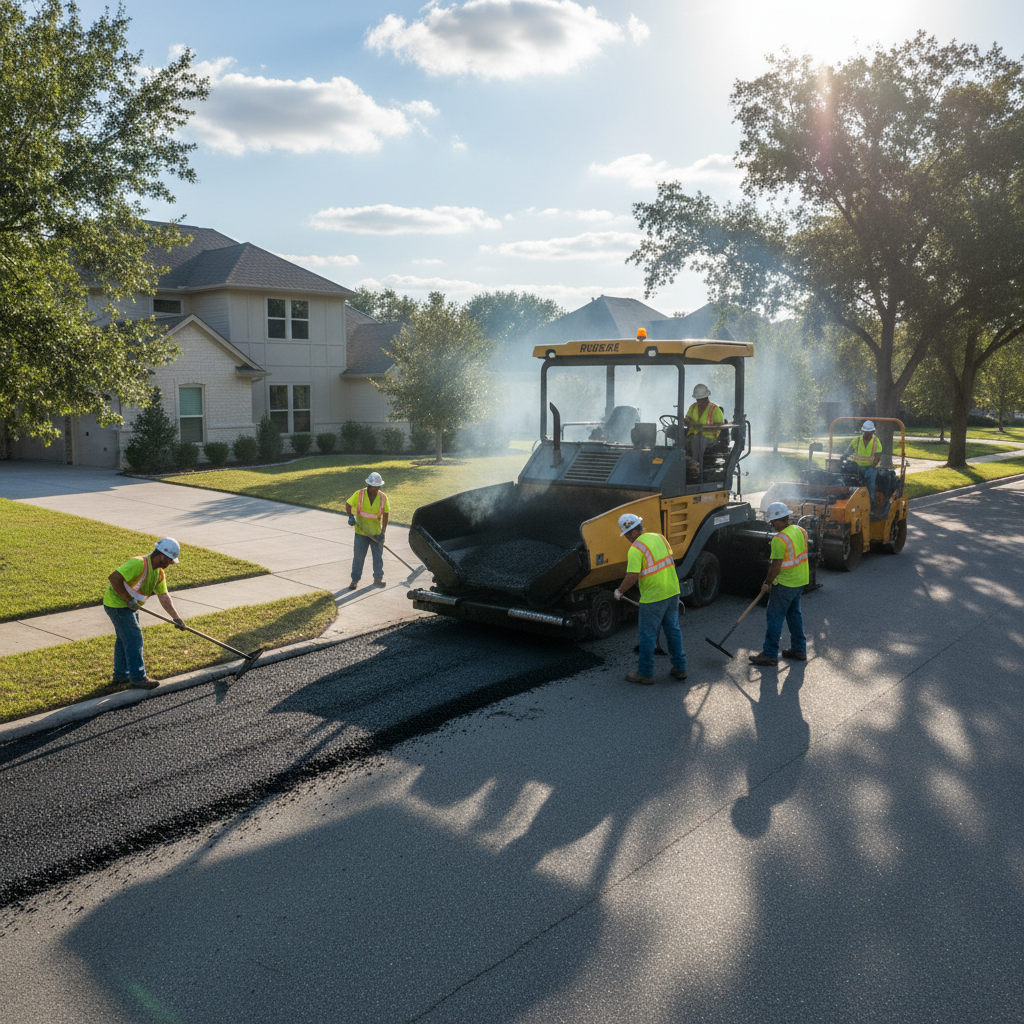
Driveway paving options and costs in Stettler
In Stettler, choosing a driveway surface is as much about the ground beneath it as the finish you see. With 1,745 homeowner households in the area (73.3% of households own), most driveways are tied to long-term residential use—so homeowners generally want a dependable surface that survives freeze-thaw cycling without constant patching. Stettler also has a housing profile where 60.5% of homes were built before 1981, which often means existing driveways weren’t designed for today’s heavier maintenance routines (plowing patterns, more frequent snow/ice treatment) and can have older, less-stable bases.
In the Camrose–Drumheller economic region, frost protection is a real cost driver. Local conditions commonly involve frost depth roughly in the 6 to 10+ foot range depending on soil and elevation, and the freeze-thaw cycles can shift water around in the structure if drainage isn’t corrected. That’s why quotes in Stettler often cluster in bands: better excavation, a deeper compacted granular base, and proper slope/drainage details cost more up front—but they reduce the risk of heaving, cracking, and settlement later. On top of that, the paving season is shorter than in milder parts of Alberta, so scheduling pressure during spring and early summer can affect labour availability and timelines—especially for neighbourhoods where multiple residents upgrade at once.
In Stettler, upgrades are especially common around established residential areas like the north side of town where lots are accessed off narrower streets and driveways often share similar grades. If you’re comparing options, the table below will help you line up typical material lifespans and realistic price ranges before you ask for an itemised quote.
| Material |
Lifespan |
Maintenance |
Best For |
Price per sq ft |
| Asphalt (new installation, proper base) |
15–25 years |
Sealcoat every 3–5 years; patch as needed |
Cost-effective, smooth ride, good overall value with correct base and drainage |
$6.50–$11.00 |
| Asphalt (overlay on existing gravel base) |
10–18 years |
Sealcoat every 3–5 years; more frequent patching if base is weak |
When you’re not ready for full rebuild but need a paved surface |
$5.50–$9.50 |
| Interlocking concrete pavers |
25–35+ years |
Occasional re-leveling; replace individual pavers as needed |
Highest curb appeal, easier repairs without ripping out the whole driveway |
$10.50–$16.50 |
| Poured concrete (broom finish) |
20–30 years |
Cure properly; crack control joints; seal only if desired |
Low maintenance surface with clean, modern lines |
$9.00–$14.50 |
| Exposed aggregate concrete |
20–30 years |
Sealer varies by product; maintenance depends on finish |
Slip resistance and a premium look |
$11.00–$18.00 |
| Gravel / crushed stone (budget option) |
3–8 years |
Re-grade; top up; weed control |
Short-term solution or where paving access is limited |
$3.00–$6.00 |
Prices are estimates only and vary by project scope, site access and material selection.
What affects the price of paving in Stettler
In Stettler (and across the broader Camrose–Drumheller area), you can absolutely see the same driveway job come back 30–50% apart between quotes, even when the asphalt or concrete type sounds identical. The biggest reason is that contractors may be treating the job as “just paving” instead of a full frost-and-drainage correction. In colder Alberta markets, your base preparation and water management are what determine whether a surface lasts or fails early—especially with freeze-thaw cycling that repeatedly loads and unloads the subgrade.
Frost line depth and freeze-thaw cycles are decisive cost factors here. Deeper frost protection needs a thicker, well-compacted granular base; as a practical range, it often translates to roughly 6–12 inches of engineered granular layers in many Ontario/Alberta-style residential applications, while coastal regions can get away with less because of milder temperatures. In Stettler, if the base is too thin or moisture can migrate, you’ll see cracking and settlement much sooner. The paving season is also shorter: hot-mix asphalt typically needs air temps above about 10°C for reliable paving and compaction, so summer scheduling pressure can push labour and equipment time into more expensive slots.
Two more local examples that change the dollar number: older homes built before 1981 frequently have compacted fill that’s inconsistent—meaning you may pay for extra excavation and replacement. And if your driveway needs drainage correction (fixed slope, ditch tie-ins, or subgrade stabilization), that can add significant scope even before the first tonne of asphalt. Depending on how much work is required, an asphalt driveway often lands in the broader $6,000–$15,000 band, while interlocking pavers typically fall into the $9,000–$22,000 range when you include proper base, edge restraints, and setting material.
| Price Factor |
Why It Matters |
Cost Impact |
| Driveway area in sq ft |
Most materials and labour scale with square footage |
Highest impact on the total |
| Base depth required |
Frost protection depends on engineered granular thickness |
Can change the quote by thousands if base must be rebuilt |
| Grading and drainage work |
Water control reduces frost heave and subgrade pumping |
Often adds extra excavation/stone and time |
| Tear-out of existing surface |
Breaking, loading and hauling old asphalt/concrete is labour-heavy |
Commonly increases cost and schedule risk |
| Edge restraints and curbing |
Prevents paver spread and keeps asphalt edges stable |
Moderate to high impact on paver projects |
| Sealing requirement |
Asphalt needs sealcoat after the surface cures, typically after 6–12 months |
Adds a recurring maintenance budget |
| Site access |
Narrow driveways or tight turns slow equipment movement |
Can raise labour cost due to extra handling time |
| Asphalt mix specifications |
Freeze-thaw rated mix design improves durability in Alberta winters |
Material cost is higher than basic mixes |
Permits & regulations in Alberta
In Alberta, paving a private driveway within your own property is typically handled as private property work and usually does not require a building permit. Where permits and municipal approvals can come in is when the project affects the public right-of-way or municipal infrastructure. For example, if you’re requesting a new driveway approach/curb cut, changing the boulevard grade, modifying drainage ditches, altering catch basins or storm servicing tied to the road, or making changes to municipal sidewalks/curbs, you’ll want municipal approval before construction.
Some municipalities in Alberta also maintain lot-grading rules that restrict how close a hard surface can be built to property lines and how surface water must be managed (so runoff doesn’t flow onto neighbours). Before you sign a contract in Stettler, ask the contractor whether any portion of your plan touches boulevard, ditching, or storm drainage—if it does, ask which approvals they will support (and confirm whether permit pulls, if required, are included).
Step 1: call utility locates through Alberta One-Call before any excavation. Step 2: verify contractor licensing and coverage. In Alberta, confirm the contractor is properly registered/eligible for the scope you’re buying, and request a certificate of insurance showing general liability limits that match the job size. Also confirm WSIB/WCB coverage for any workers on site. Step 3: get everything in writing—scope, start/completion dates, and whether disposal and grading materials are included.
If your driveway involves significant excavation, it’s a good practice to ask for a copy of their clearance letter/locate documentation (or proof they completed locates) before mobilization.
Asphalt vs pavers vs concrete for Stettler driveways
For Stettler’s freeze-thaw climate, the best driveway option isn’t only about first cost—it’s about how the system handles water and movement under winter loads. Asphalt usually has the lowest upfront price, but it depends on a well-built granular base and routine maintenance: most homeowners need sealcoat every 3–5 years to protect the surface from water intrusion. Interlocking concrete pavers cost more at the start, yet they can be the most forgiving if settlement happens in one corner; you can remove and replace individual stones rather than re-laying a full section. Poured concrete sits in the middle on upfront cost, and the key is air-entrainment and proper jointing to manage freeze-thaw expansion. Without correct design and curing, concrete can still crack—though the cracks often reflect joints/control measures rather than “failure.”
In Camrose–Drumheller, drainage design is what typically separates a good driveway from a problematic one. Your contractor should address slope, subgrade stability, and base drainage so water doesn’t remain in the structure long enough to freeze and heave. In practice, asphalt and pavers both need proper engineered granular layers; pavers also rely on edge restraints to prevent shifting when plows push snow and ice. Concrete’s performance depends heavily on mix design and air void structure, plus joint spacing and finishing.
Where the price difference is justified: if your existing base is questionable, a full paver or concrete build with correct excavation can cost more, but it avoids repeat tear-outs and “patch-and-pray” repairs. For context, asphalt projects commonly land in the $6,000–$15,000 band, while pavers frequently approach the $9,000–$22,000 range—particularly when a deeper base and restraints are included. If you’re planning to keep the home long-term (common in neighbourhoods with older housing stock), paying for the right base now often costs less than fixing the same failure mode twice.
| Material |
Frost Resistance |
Curb Appeal |
Repair Method |
Lifespan |
Price Band |
| Asphalt (sealed regularly) |
Good with engineered base and drainage |
Medium (clean, uniform finish) |
Cut-and-patch localized repairs |
15–25 years |
$6,000–$15,000 |
| Interlocking concrete pavers |
Excellent with compacted bedding and correct base |
High (upgrade look) |
Replace individual pavers/sections |
25–35+ years |
$9,000–$22,000 |
| Poured concrete (air-entrained) |
Good when air-entrained and properly jointed |
Medium to high (broom finish or special finishes) |
Patch at cracks/sections; deeper repairs can require grinding/break-out |
20–30 years |
$7,500–$18,000 |
| Exposed aggregate concrete |
Good with correct base and curing |
Very high (textured, premium look) |
Localized grinding/patching; replace sections if needed |
20–30 years |
$9,000–$18,000 |
| Permeable pavers (drainage grid) |
Very good where infiltration is feasible and designed |
High (modern drainage system) |
Replace grid/pavers in localized areas |
20–35+ years |
$11,000–$24,000 |
| Chip seal / tar-and-chip |
Moderate; depends on base quality and thickness |
Low to medium (utility look) |
Spot repairs and re-treatments |
7–12 years |
$5,500–$12,000 |
How to choose a paving contractor in Stettler
When you’re hiring a paving contractor in Stettler, verifying Alberta compliance and protection is your first line of defence. Start by asking for their proof of general liability insurance (certificate of insurance) and confirmation of WSIB/WCB coverage for any workers they use. To check credibility, look for a valid business presence and licensing/registration information through the relevant Alberta registry channels, and ask for the exact policy details before work begins. If something goes wrong—subgrade failure, a damaged service line, or an injury on site—you want coverage that actually matches the job.
Next, request 2–3 itemised written quotes. You want line items for excavation, granular base thickness and compaction, drainage corrections, any tear-out, hauling/disposal, base preparation, material supply, paving or placement, edge restraints, and cleanup. Avoid “lump sum only” quotes that don’t specify the build-up. Also check what’s excluded: permit pulls, municipal approvals, driveway grading to tie into sidewalks/approaches, and disposal of old asphalt/concrete should be clearly stated.
Warranty matters. Ask for a workmanship warranty length, and separate it from any manufacturer warranty on products. Confirm whether the warranty is transferable to a future homeowner (important in Stettler’s long-term ownership market). Payment schedule should protect you: never pay more than 10–15% upfront. Use a holdback until the job is complete and the final inspection/cleanup is done. Finally, insist on the start date and estimated completion date in writing—weather delays can happen, but the plan should be documented.
- Verify insurance: general liability certificate with project/jobsite coverage.
- Confirm WSIB/WCB coverage for all workers (ask for confirmation, not just a statement).
- Ask for the company’s safety practices for cold-weather staging and equipment use.
- Get 2–3 itemised quotes (labour + materials + disposal + drainage/base build-up).
- Demand explicit base thickness and granular spec (not “standard base”).
- Clarify drainage scope: slope correction, outlet connection, and water control.
- Check excavation depth and whether weak subgrade will be removed/replaced.
- Confirm whether edge restraints/curbing are included (critical for pavers).
- Ask how old asphalt/concrete is torn out and where waste is hauled.
- Review warranty details: workmanship length, exclusions, and process to make a claim.
- Agree on a payment schedule: keep 10–15% max upfront and holdback until completion.
- Get written timeline: start date, completion target, and how weather delays are handled.
Red flags to watch for in Stettler: quotes that ignore base thickness or drainage, no written scope for tear-out/disposal, “too-good-to-be-true” pricing that omits restraints or proper compaction, refusal to provide insurance/WSIB/WCB proof, and vague timelines without a plan for spring scheduling in a short paving season.
Frequently asked questions — paving in Stettler
How much does driveway crack repair cost in Stettler?
In Stettler, crack repair cost depends on whether the crack is cosmetic (surface) or structural (base/subgrade movement). For small, stable cracks, many contractors can do a clean-out and seal treatment, often priced as a minor service within the typical sealing & repair range of about $500–$2,500. If a crack has opened from freeze-thaw movement, you may need localized patching, tack coat, and additional base correction, which pushes the price higher within that same band. With many pre-1981 properties, we sometimes see cracks tied to older base layers; in those cases, the “repair” is only a temporary improvement unless the drainage/slope and base stability are addressed.
As a rule of thumb, if you’re seeing multiple cracks spreading or ponding water on the driveway, spending only on patching can lead to repeat work. In Alberta, it’s usually better to fix the water path first, then seal or patch.
What base thickness do I need for pavers in Stettler?
For pavers in Stettler, base thickness is driven by frost depth risk and how stable your existing subgrade is, not just the paver type. In a cold Alberta climate with significant freeze-thaw cycling, contractors typically build a compacted granular base system designed to prevent water migration and frost heave. Practically, many driveway builds end up with engineered layers that total roughly 6–12 inches in similar Alberta residential builds when frost protection and drainage are treated properly. If your driveway subgrade is weak, saturated, or has inconsistent fill, you may need additional excavation and replacement to reach a stable base.
Your quote should specify: excavation depth, granular type, compaction process, bedding layer thickness for pavers, and edge restraint details. If a contractor won’t commit to base thickness in writing, you’re taking a bigger durability risk in Stettler’s winter conditions.
How do I get the most accurate paving quote in Stettler?
To get an accurate paving quote in Stettler, treat it like a materials-and-build system estimate, not a finish-only price. First, ensure the contractor can access the whole driveway for measurement and to assess base condition, drainage, and any visible failures. Second, ask for an itemised breakdown that includes excavation/tar-concrete/asphalt tear-out, granular base thickness and compaction, drainage corrections, disposal, and edge restraints/curbing where applicable. Third, confirm whether the quote includes permit work if any portion affects the municipal right-of-way (for example, new curb cuts or boulevard drainage changes), since that scope can change costs materially.
Finally, ask for start date and completion estimate, and make sure the contractor addresses the short paving season realities. Hot-mix asphalt work generally depends on favourable temperatures, which affects scheduling and may influence how soon your job can be completed.
How much does it cost to pave a driveway in Stettler?
Driveway paving cost in Stettler varies mainly by square footage and how much base work and drainage correction is needed. For planning purposes, asphalt driveway paving commonly falls in the $6,000–$15,000 band for many typical residential projects, assuming proper base preparation. Interlocking concrete pavers often land in the $9,000–$22,000 range once you account for excavation, granular layers, restraints, and setting materials. Poured concrete is commonly seen in the $7,500–$18,000 range depending on finishing and jointing requirements.
Because frost depth and freeze-thaw cycling are significant here, quotes that include only surface paving without addressing base build-up and water control can fail early—sometimes within a few seasons. In older homes (60.5% built before 1981), base instability is a common reason costs shift upward, because contractors may need to remove weak material and rebuild for frost protection.
Asphalt vs interlocking pavers vs concrete — which is best in Stettler?
The “best” choice in Stettler is usually the one that matches your priorities and tolerances for maintenance, while still building the right base and controlling water. Asphalt is typically the most cost-friendly upfront (often within the $6,000–$15,000 range) and provides a smooth ride, but it needs sealcoat after it cures—commonly after 6–12 months, then every 3–5 years—to resist Alberta freeze-thaw water damage. Interlocking concrete pavers cost more (commonly $9,000–$22,000), but they offer excellent curb appeal and allow for localized repairs by replacing only affected pavers. That can be valuable if a driveway corner settles due to drainage or subgrade conditions.
Poured concrete (often $7,500–$18,000) can perform well if air-entrained and properly jointed, but it can crack when frost and movement occur without correct design and curing. Given Stettler’s winter maintenance routine (plowing, salt/sand use), water control and proper build-up are the deciding factors.
How long does a paved driveway last in Stettler?
In Stettler, paved driveway lifespan depends on the full assembly: subgrade stability, granular base thickness, drainage, compaction, and how well the surface is maintained. With proper base preparation and sealing, asphalt commonly lasts about 15–25 years; if sealcoat is skipped and water penetrates, lifespan can drop. Interlocking concrete pavers often last 25–35+ years because individual stones can be replaced and the system can be re-leveled if needed. Poured concrete typically lasts 20–30 years when air-entrained and correctly finished with appropriate joints to manage freeze-thaw expansion.
Older housing stock matters because driveways in pre-1981 properties can sit on less consistent fill; that can shorten the effective lifespan if contractors don’t rebuild to stable frost-protected layers. If you plan for drainage correction and maintain asphalt sealing, you’re far more likely to reach the longer end of these ranges in Alberta winters.