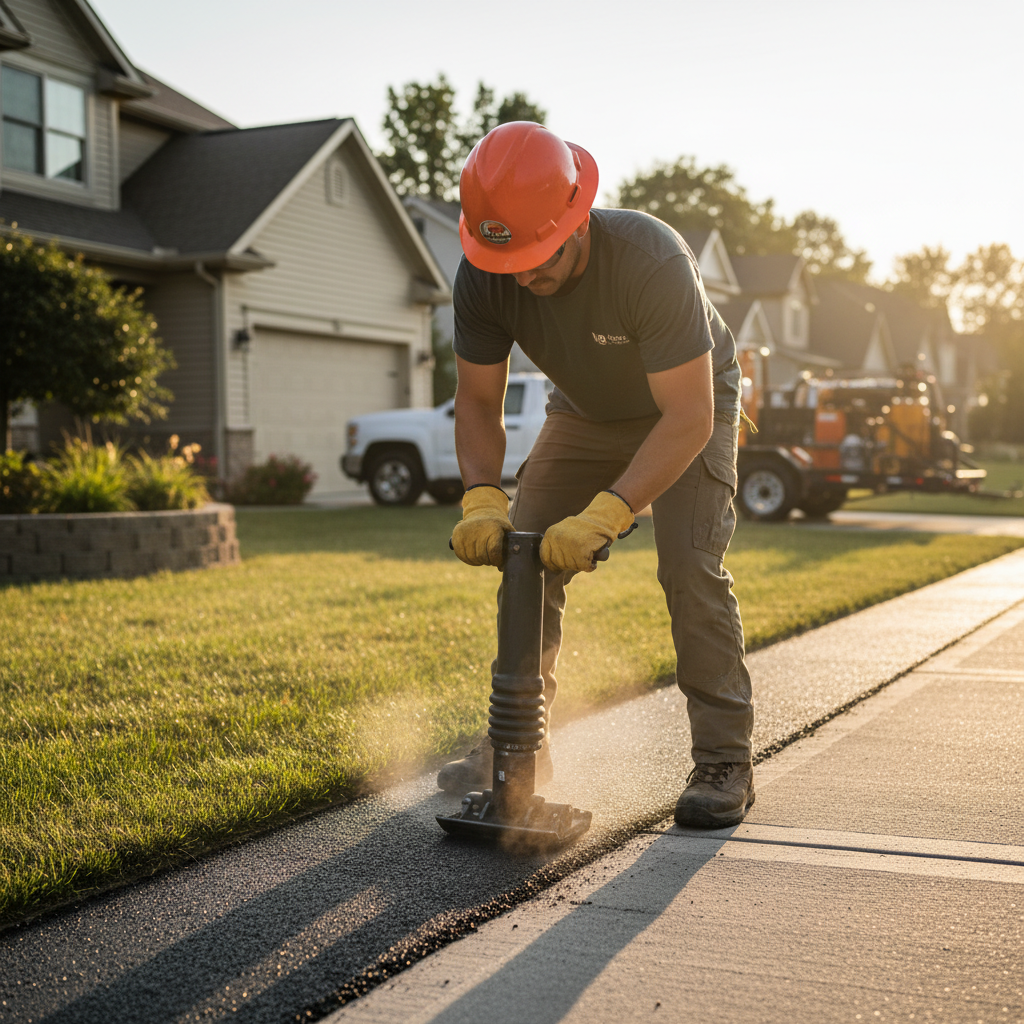
Driveway paving options and costs in Banff
In Banff, choosing the right driveway paving option is mostly about matching your budget to how the mountain climate beats up pavement. With a population of 8,305 and about 42.0% of households owning their homes (Statistics Canada, 2021 Census), most private driveway work is tied to single-detached houses—those are a meaningful share of local dwellings, and they tend to have driveways that need year-round, vehicle-ready surfaces. In the Banff–Jasper–Rocky Mountain House corridor, frost depth and aggressive freeze–thaw cycles are the big cost drivers. Central and northern Alberta design for frost penetration that can reach roughly the 1.5 m range, so contractors can’t “thin out” the base if they want to prevent heaving, cracking, and rutting.
Cost also reflects a shorter paving season. Hot-mix asphalt typically needs warm conditions (air temperatures above 10°C), so scheduling gets tighter from late spring to early fall, and mobilization can be more expensive. That’s why you’ll often see higher pricing than national averages for similar driveway sizes. Labour availability can also shift quickly when weather windows open and close, especially in places with lots of tourism traffic like Banff townsites and the surrounding hamlets.
In Banff, demand is especially common around residential pockets with lots of older homes and frequent vehicle use—areas where owners are replacing worn gravel aprons or upgrading long gravel approaches. That naturally leads to comparing material choices side-by-side, including how they perform over the first winter and beyond.
| Material |
Lifespan |
Maintenance |
Best For |
Price per sq ft |
| Asphalt (new installation, proper base) |
15–25 years |
Seal coat every 3–5 years; patch as needed |
Most cost-effective upgrade with good appearance |
$9 – $18 |
| Asphalt (overlay on existing gravel base) |
10–18 years |
Seal coat every 3–5 years; frequent patching if base is unstable |
When excavation is limited and base is genuinely stable |
$10 – $20 |
| Interlocking concrete pavers |
25–40 years |
Joint sand top-ups; lift-and-replace individual pavers |
Higher curb appeal and easier spot repairs |
$18 – $45 |
| Poured concrete (broom finish) |
25–30 years |
Crack monitoring; patch repairs; occasional resurfacing |
Low maintenance look with a clean, modern finish |
$15 – $30 |
| Exposed aggregate concrete |
25–35 years |
Seal (if specified); patch spalls if they occur |
Better slip resistance and premium look |
$18 – $40 |
| Gravel / crushed stone (budget option) |
2–7 years |
Regrade and top-up annually; weed control |
Short-term solution or drainage-focused sites |
$4 – $10 |
Prices are estimates only and vary by project scope, site access and material selection.
What affects the price of paving in Banff
Two neighbours in Banff can get quotes that differ by 30–50% for what looks like the same driveway, and the reason is usually under-the-ground work. One contractor may include a full frost-depth granular base with tight compaction and proper drainage corrections; another may assume the existing subgrade is “good enough.” Another big swing comes from schedule pressure—when the weather window is short, crews may charge more for expedited sequencing and mobilization. Labour and disposal costs also rise when hauling distances increase through the mountain corridor.
Frost line depth and freeze–thaw cycles are decisive cost factors in the Banff–Jasper–Rocky Mountain House region. Deeper frost requires a thicker, well-graded granular base to prevent heaving and cracking, and in practice that means more excavation and more aggregate. The snow and freeze action also means water control is non-negotiable—positive slope and drainage so the base doesn’t stay wet through shoulder seasons.
The paving season is shorter here, and asphalt generally needs air temperatures above 10°C for proper placement and compaction. That concentrates demand late in the spring and early in the summer, which can push you toward higher pricing for asphalt work compared with milder areas. Asphalt mix design also tends to be slightly more robust for thermal cracking in colder regions, which can cost more but helps the driveway survive winter traffic and plowing.
Concrete can be lower if your site prep is simple, but in Banff older sites built before 1981 (38.1% of homes) often need more prep—settlement, poor drainage, or buried remnants—so concrete prices can jump. If you’re comparing options, an asphalt driveway upgrade in the $9–$18 per sq ft band may look attractive versus interlocking pavers at $18–$45 per sq ft, but the pavers may be worth it if you expect utility work or want replaceable sections. Sealing is another lever: asphalt sealing & repair typically runs about $300–$1,200 depending on scope and patching, and that routine maintenance extends service life in this freeze–thaw climate.
| Price Factor |
Why It Matters |
Cost Impact |
| Driveway area in sq ft |
Everything scales: excavation, base, asphalt/pavers/concrete, and labour |
Primary driver; often 50–70% of total installed cost |
| Base depth required |
Frost dictates granular thickness and the depth you must excavate |
Major swing; deeper frost can add substantial aggregate and labour |
| Grading and drainage work |
Proper slope and drainage prevent trapped water from freezing and expanding |
Can add several thousand dollars if drainage ties-in are required |
| Tear-out of existing surface |
Breaking and hauling old asphalt/concrete increases equipment time |
Often mid to high cost; disposal fees and trucking add up |
| Edge restraints and curbing |
Edges stop paver spread and keep asphalt lines from migrating |
Usually modest per linear foot, but can be significant on long drives |
| Sealing requirement |
Asphalt needs sealing after curing to reduce moisture and oxidation damage |
Budget $300–$1,200 for typical sealing/repair packages |
| Site access |
Narrow driveways and tight lots slow equipment movement and staging |
Higher labour and extra time; sometimes requires smaller trucks |
| Asphalt mix specifications |
Freeze–thaw-rated mix design can cost more and may require tighter QA |
Can raise material cost but improves winter durability |
Permits & regulations in Alberta
For most homeowners in Alberta, paving a driveway within your own property usually does not require a building permit—especially for like-for-like surface replacements on private land. However, the moment your work touches municipal infrastructure, things can change. If your project includes work in the municipal right-of-way—such as a new curb cut, changes to the boulevard area, or any modification to storm drainage—expect to need municipal approval. Some areas also enforce lot-grading expectations that restrict how close a new hard surface can be to property lines, and you should verify grading runoff will not be directed onto a neighbour’s property.
Before excavation, always call for utility locates (Alberta One-Call) and confirm the exact depth and routes where utilities run. Then verify the contractor’s documentation:
Step-by-step contractor checks (Banff homeowners):
- Licence: ask for the contractor’s Alberta business information and confirm it on the relevant online registry the province provides for construction activities.
- Liability insurance: request a current certificate of insurance naming you as additional insured if applicable.
- WCB/WSIB coverage: in Alberta this is WCB—ask for proof of coverage/clearance letter as required for the trade.
- Itemised contract: ensure labour and material amounts are listed, including disposal of demolition and any drainage repairs.
Once you confirm access to utilities, grading expectations, and proper contractor coverage, you’re in a much safer position to plan a job that fits the short Banff paving window.
Asphalt vs pavers vs concrete for Banff driveways
For Banff driveways, the “best” material is the one that survives freeze–thaw plus how you maintain the driveway in winter—plowing with sand and occasional de-icing, plus meltwater that wants to find weak spots. Asphalt is usually the lowest upfront cost and gives a smooth ride, but it performs best when you plan for routine sealing every 3–5 years and prompt crack patching. Interlocking concrete pavers cost more upfront, but they’re the easiest to repair: damaged units can be lifted and replaced without tearing out the whole surface.
Concrete sits in the middle to upper range. Poured concrete (especially when air-entrained) can be durable, but freeze–thaw can still produce cracking if the base isn’t properly compacted and if drainage is poor. Exposed aggregate concrete adds traction and a premium look, but repairs are typically more involved than pavers. For Banff’s harsh winters, the common denominator across all options is frost-depth preparation: a deep, well-graded granular base and correct slope so water drains away and doesn’t stay in the pavement structure.
To ground the decision in dollars: if an asphalt driveway comes in around $9–$18 per sq ft, interlocking pavers may land in the $18–$45 per sq ft range. That extra cost can be justified if you want higher curb appeal, easier partial repairs after any future utility work, or if you anticipate needing to correct small settlement areas over time. If your priority is value and you’re willing to budget sealing & repair (commonly $300–$1,200 depending on scope), asphalt often offers the best long-term balance for many Banff homeowners.
Overall, interlocking pavers often hold up best to “real life” winter maintenance because you can address localized failures quickly, while asphalt and concrete need more proactive maintenance to prevent water from getting into the structure.
| Material |
Frost Resistance |
Curb Appeal |
Repair Method |
Lifespan |
Price Band |
| Asphalt (sealed regularly) |
Good with deep base and sealing |
Clean, simple finish (limited patterns) |
Cut-out and patch; re-seal sections |
15–25 years |
$9 – $18 |
| Interlocking concrete pavers |
Very good when base and bedding are correct |
High (colour/pattern options) |
Lift-and-replace individual pavers |
25–40 years |
$18 – $45 |
| Poured concrete (air-entrained) |
Good with proper air-entrainment and base |
Moderate to high (depending on finish) |
Crack repair/patch; slab repairs if localized |
25–30 years |
$15 – $30 |
| Exposed aggregate concrete |
Good with correct mix and base |
High (premium texture) |
Patch spalls/cracks; more visible repairs |
25–35 years |
$18 – $40 |
| Permeable pavers (drainage grid) |
Good, improves water handling |
Medium to high (modern look) |
Replace pavers; clean/maintain system |
20–35 years |
$25 – $55 |
| Chip seal / tar-and-chip |
Moderate; depends heavily on traffic control |
Lower (functional, textured surface) |
Spot repairs; re-chip as needed |
8–15 years |
$7 – $14 |
How to choose a paving contractor in Banff
Choosing the right contractor matters more in Banff than most places because freeze–thaw punishes shortcuts. Start with Alberta licence and coverage. Ask for their current Alberta business details (so you can confirm they’re active), then request a certificate of liability insurance (current dates, limits that fit the job size, and the correct legal name). For workers’ coverage, ask for WCB proof or a clearance letter—don’t accept “we’re covered” without documentation.
Next, get 2–3 itemised written quotes. You want a breakdown that separates labour and materials (excavation, base aggregate, compaction, asphalt/pavers/concrete, saw cutting, disposal, and any drainage correction). A fair quote also shows what’s included versus excluded—like whether permits or utility coordination are handled, and whether old pavement removal disposal is priced in or treated as an extra.
Read warranty carefully: confirm workmanship warranty length, what it covers (for example, base/subgrade issues versus surface defects), and whether it’s transferable if you sell your home. For payment schedule, avoid large deposits—never pay more than 10–15% upfront, and hold back a final portion until punch-list items and cleanup are complete. Finally, lock in a written timeline with a start date and completion estimate, remembering the Banff paving season is short and crews may be weather-dependent.
- Ask for photos of similar Banff-area jobs with detailed base work (not just finished surface).
- Confirm the base section thickness and compaction method in the quote.
- Ensure drainage/slope corrections are explicitly included if needed.
- Request an itemised materials list (aggregate type, asphalt mix specs, paver bedding sand).
- Verify disposal/recycling of old asphalt or concrete is included.
- Check edge restraint details (steel edging, concrete curb forms, or equivalent).
- Confirm sealing timing for asphalt (typically after curing) is planned and costed.
- Get warranty documents in writing, including workmanship and any product/manufacturer warranty.
- Ask who supplies and places the granular base—subcontracted base work should be specified.
- Review the schedule impact: confirm what happens if weather stops paving (re-scheduling terms).
- Use a written contract with scope boundaries, exclusions, and change-order rules.
- Keep communications in writing and verify site conditions at start-up.
Red flags I see in Banff include: skipping the granular base depth in the proposal, offering “cheap asphalt” without freeze–thaw-rated mix or proper compaction details, quoting a lump sum while excluding tear-out/disposal, asking for a large upfront payment, and refusing to provide proof of WCB coverage and liability insurance.
Frequently asked questions — paving in Banff
What causes potholes and how are they repaired?
Potholes usually start when water gets into a weak area—often at joints, around edges, or where the base wasn’t compacted evenly. In Banff and across Alberta, freeze–thaw cycles expand that trapped water. Over time, traffic and plowing break the softened asphalt, turning small failures into potholes. The most common repair is to saw-cut a neat perimeter, remove failed material down to a stable base layer, then rebuild with proper tack coat and asphalt compaction. If the base has deeper instability, a patch can fail again unless the base is corrected first—so a good contractor will diagnose, not just “fill and go.” If your driveway is in the asphalt $9–$18 per sq ft range, consider that early patching is cheaper than waiting for full-area replacement.
How do I prepare for a paving project?
Preparation in Banff is mostly about access and protection. Clear the driveway and provide safe staging for equipment—move vehicles, and if you have landscaping, mark what must stay. If you’re paving over an existing drive, ask the contractor when tear-out will happen and whether they’ll need to haul debris through snow piles. For utility safety, ensure all exterior fixtures and gates are accessible and confirm Alberta One-Call locates are completed before excavation. If you have a slope or drainage issue, plan to keep downspouts away from the work area; contractors may adjust grading to direct water safely. Finally, coordinate dates so curing and weather windows align—hot-mix asphalt placement generally needs air temperatures above about 10°C.
How do I compare paving quotes fairly?
To compare quotes fairly in Banff, insist that each estimate includes the same scope items. Ask for itemised labour/materials—excavation depth, granular base quantity, compaction requirements, asphalt/paver/concrete thickness, edge restraints, and disposal. Confirm whether drainage corrections are included or treated as an extra. Compare warranties side-by-side: workmanship length, what triggers coverage, and whether it’s transferable. Prices can differ widely: for instance, asphalt often lands in the $9–$18 per sq ft band, while interlocking pavers frequently sit in the $18–$45 per sq ft range. If one quote is “much lower,” it’s usually omitting base depth, drainage, tear-out disposal, or freeze–thaw spec details—not just cheaper materials. A clear, line-by-line scope is the best way to avoid surprises.
Can asphalt be laid in cold weather in Banff?
In Banff, asphalt placement is constrained by temperature and weather. Hot-mix asphalt generally requires air temperatures above about 10°C for consistent compaction and proper performance. Cold nights come early at elevation, and even if material is delivered warm, compaction can suffer if the surface cools too fast. Freeze–thaw damage isn’t immediate, but poor placement can shorten life. A reputable contractor will monitor forecast conditions and won’t roll in questionable weather. If paving must be delayed, you may need a re-scheduling plan rather than “pushing through.” For owners, it’s often better to wait for a proper weather window than to gamble on early winter conditions that can compromise your driveway’s lifespan.
What is a driveway apron and do I need one in Banff?
A driveway apron is the paved transition area where your private driveway meets the adjacent road surface or the area at the property line/curb cut. In Banff, an apron matters because it’s where plows, vehicle turning, and meltwater concentrate wear. Whether you “need” one depends on your current site: if you have exposed gravel at the road interface, ruts, or a rough transition, an apron typically improves drainage and reduces failure points at the edges. It can also be required where the municipality’s right-of-way is involved, especially if a curb cut or boulevard grading is changed—those situations generally need municipal approval. If you’re planning any storm drainage adjustments, confirm requirements before excavation.
How do I maintain my driveway through Banff winters?
Maintenance in Banff focuses on keeping water out of the pavement structure and reducing early damage from snow and de-icing. For asphalt, sealing and timely patching are the big wins—after curing, plan sealing in the first season and then every 3–5 years based on wear (many projects see sealing/repair packages around $300–$1,200). During winter, plow carefully at the edges and avoid gouging seal coats. Use sand when possible; heavy salt use and aggressive scraping can accelerate surface breakdown, especially on concrete. For any material, keep an eye on low spots and edge failures—if you notice water pooling after melt, correct drainage or the next freeze–thaw can enlarge the problem. If your home is in an older housing stock area (38.1% built before 1981, Statistics Canada, 2021 Census), settlement-related low spots are more common, so inspections after spring melt are a smart habit.