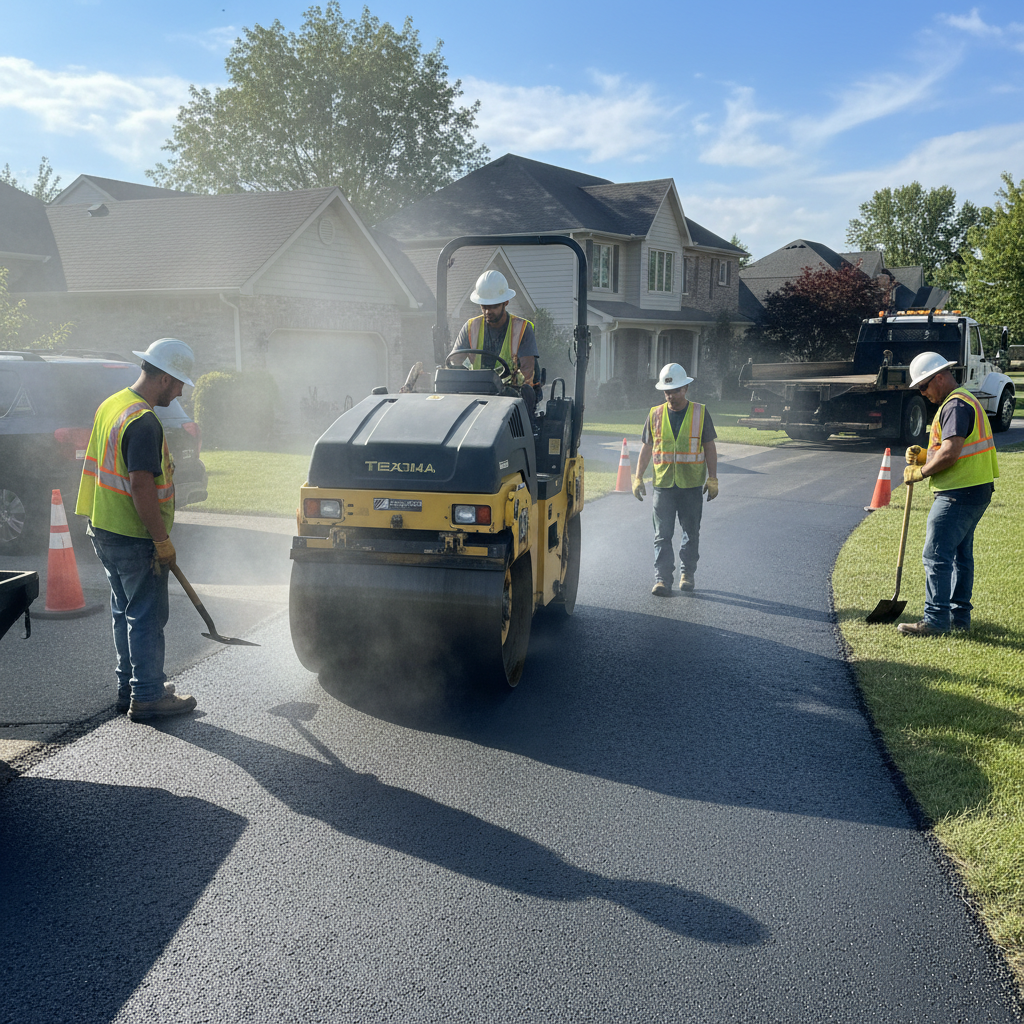
Driveway paving options and costs in Citadel
In Citadel, Alberta, homeowners typically choose between asphalt, interlocking pavers, and concrete based on winter performance and curb appeal. With a total population of 10,180 (Statistics Canada, 2021 Census), the area has a steady stream of private driveway replacements and upgrades as properties mature and owners add or rework access. In practice, most driveways serve single-detached homes, and the driveway is one of the most used surfaces on the property—so a “cheap at first” option can become expensive once you factor in freeze–thaw damage and repairs.
Calgary’s cold continental climate is the biggest cost driver. Frost can penetrate to about 1.2 m (4 ft), and repeated freeze–thaw cycles move water in and out of the subgrade. That means paving contractors in Citadel must build deeper granular bases, ensure positive drainage, and pay extra attention to edge restraint so the surface doesn’t ravel or heave. On top of that, the paving season is compressed: hot-mix asphalt needs air temperatures above 10°C, and crews often get booked quickly in late spring and early summer. For smaller projects during peak months, the mobilization cost can show up more clearly in your quote.
Demand is especially noticeable around the busier residential pockets and new development corridors where properties are still being serviced and driveway upgrades are common—so it’s smart to schedule your estimate early and compare materials with the same base-depth assumptions. Use the table below as a starting point for typical pricing by material and expected maintenance.
| Material |
Lifespan |
Maintenance |
Best For |
Price per sq ft |
Price Range |
| Asphalt (new installation, proper base) |
15–25 years |
Sealcoat every 3–5 years; crack filling as needed |
Lowest upfront cost with good winter upkeep |
$12–$20 |
$2,200–$4,500 |
| Asphalt (overlay on existing gravel base) |
10–18 years |
Sealcoat every 3–5 years; patching if base is weak |
Budget upgrade where the existing base is stable |
$10–$18 |
$1,900–$3,900 |
| Interlocking concrete pavers |
25–40 years |
Weed control, re-leveling of small areas, spot replacements |
Repairability, premium curb appeal |
$18–$30 |
$3,200–$6,800 |
| Poured concrete (broom finish) |
20–30 years |
Seal (optional but helpful); manage cracking with fillers |
Durable, clean look with mid-range cost |
$15–$25 |
$2,700–$5,500 |
| Exposed aggregate concrete |
20–30 years |
Seal (often recommended); patch and re-seal localized areas |
Non-slip finish and upgraded appearance |
$17–$28 |
$3,100–$6,200 |
| Gravel / crushed stone (budget option) |
3–10 years |
Top-ups, grading, and weed control |
Temporary access or low-budget starter pad |
$6–$12 |
$900–$2,400 |
Prices are estimates only and vary by project scope, site access and material selection.
What affects the price of paving in Citadel
Even when you’re comparing the same driveway size in Citadel, two quotes can differ by 30–50% across Calgary-area contractors because the hidden variables aren’t the surface—they’re the base, drainage, and how much labour is required to prepare the site properly. A “low number” often assumes minimal excavation, simple grading, and standard base depth. In contrast, a more realistic quote includes frost-protection granular thickness, proper compaction, subdrainage where needed, and correct edge restraint to handle winter movement.
The key climate factor is frost line depth and freeze–thaw cycles. In this region, frost can penetrate to about 1.2 m (4 ft), so contractors generally need a thicker compacted granular base (often in the 6–12 inch range in Alberta conditions) than you’d see in milder areas. If the base is too thin or drainage is weak, water expands during freezing, pushing up and cracking asphalt and concrete, and loosening paver bedding sand. That’s why “base depth” and “drainage fixes” are cost items you should not treat as optional. On the asphalt side, Calgary’s paving season is compressed: hot-mix asphalt needs air temperatures above 10°C, and the rush in late spring and early fall can tighten scheduling and raise labour costs, especially for smaller jobs. Asphalt mix design also matters; freeze–thaw-rated mixes and proper binder selection can cost more but reduce early raveling.
Two concrete examples from Citadel: (1) If your driveway ties into a slope and water runs toward the house, adding grading and a proper catchment can add materials and hours—but it typically prevents repeating repairs after each spring thaw. (2) If you’re switching from gravel to asphalt or concrete, reworking a weak subgrade (soft spots or pumping) can increase excavation and import costs, pushing the total toward the higher end of the $2,200–$4,500 asphalt band. Conversely, a straightforward, flat site with solid soil and easy access may land closer to the lower portion of the $1,900–$3,900 upgrade range.
| Price Factor |
Why It Matters |
Cost Impact |
| Driveway area in sq ft |
More square footage means more asphalt/concrete, base, and labour time. |
Largest variable; scaling is usually near-linear. |
| Base depth required |
Frost penetration and freeze–thaw movement demand adequate compacted granular thickness. |
Deeper base adds excavation, aggregate, and compaction passes. |
| Grading and drainage work |
Proper slope and runoff control reduce water-related heaving and surface failures. |
Can add several labour hours and drainage materials. |
| Tear-out of existing surface |
Breaking and hauling old asphalt or concrete adds equipment time and disposal costs. |
Often a mid-range cost jump versus “new base only.” |
| Edge restraints and curbing |
Edges keep pavers and asphalt from spreading and cracking under winter movement. |
Adds materials and cutting/setting labour. |
| Sealing requirement |
Asphalt needs sealcoat after 6–12 months to protect binder from water and oxidation. |
Direct add-on cost and future schedule item. |
| Site access |
Narrow lanes and limited turning radius slow equipment and increase handling time. |
Higher mobilization and sometimes smaller crews. |
| Asphalt mix specifications |
Freeze–thaw-rated mix design improves durability in Calgary’s cycles. |
More costly materials can raise per-sq-ft pricing. |
Permits & regulations in Alberta
In Alberta, most paving work on your own private property typically does not require a building permit—especially when you’re replacing an existing driveway surface in roughly the same footprint and you’re not changing the overall drainage pattern. Where rules change is when the work touches the municipal right-of-way or alters municipal infrastructure. In Citadel, the common “permit/approval needed” items include new or modified curb cuts, changes to the boulevard, and any alterations that affect storm drainage (for example, redirecting water flow in a way that impacts ditching or municipal catchment). If your contractor proposes cutting into or changing the municipal portion of drainage, that’s the time to confirm approvals before excavation.
Here’s a practical step-by-step way to verify your contractor in Alberta: first, ask for their business details and confirm they have the appropriate Alberta licence for contracting work (you can check through official government/business listings). Second, request a current certificate of liability insurance showing limits suitable for paving operations. Third, confirm coverage for workplace requirements—contractors must be registered and provide evidence of WSIB/WCB coverage where applicable; ask for the clearance letter or proof of account status. Finally, confirm who is responsible for utility locates: have the contractor call for locates through Alberta One-Call before digging.
Also check your municipality’s lot-grading bylaws, because some communities restrict how close to property lines a hard surface can sit and how drainage must be managed to protect neighbouring lots. If you plan additional drainage features, include that in writing in your scope.
Asphalt vs pavers vs concrete for Citadel driveways
For Citadel driveways, the “best” material is really the one that matches your winter routine and your tolerance for maintenance. Asphalt usually offers the lowest upfront cost, but it needs sealcoating every 3–5 years to protect the binder—especially under Calgary-area freeze–thaw and wet spring conditions. Interlocking concrete pavers cost more to install, yet they’re more forgiving when the ground moves: if a section settles, pavers can be lifted, base can be re-compacted, and the area can be reset without replacing the whole driveway. Poured concrete sits in the middle on cost, but it can be vulnerable to cracking if not properly air-entrained and detailed for expansion joints and drainage.
In this cold climate where frost can reach about 1.2 m (4 ft), base preparation matters more than marketing. All three options should be built with well-graded aggregates, proper compaction, and positive drainage so water doesn’t sit under the slab or asphalt mat. Edge support also becomes critical: without restraints, paver borders can spread during freeze–thaw, and asphalt edges can ravel and funnel water. Your local winter maintenance routine matters too—frequent plowing is usually manageable, but sand and de-icing salts can accelerate wear on top surfaces, so concrete should be air-entrained and asphalt should be sealed and kept patched.
Where price differences can be justified: if you’re comparing asphalt to pavers on a medium-sized driveway, an asphalt install may land near the $2,200–$4,500 estimate range, while pavers often fall within the $3,200–$6,800 band. Paying the higher paver price makes sense when you want easier repairs and higher curb appeal—especially if your lot has slightly variable soil where localized settling is possible. If your site is straightforward and you’ll commit to sealing, asphalt can be the most cost-effective lifecycle choice.
| Material |
Frost Resistance |
Curb Appeal |
Repair Method |
Lifespan |
Price Band |
| Asphalt (sealed regularly) |
Good when base/drainage are correct and mix is freeze–thaw rated |
Medium |
Patch-and-compact; sealcoat after repairs |
15–25 years |
$12–$20 per sq ft |
| Interlocking concrete pavers |
Very good with proper edge restraint and bedding sand |
High |
Remove affected pavers, re-level base, reset units |
25–40 years |
$18–$30 per sq ft |
| Poured concrete (air-entrained) |
Good with air entrainment, joints, and good drainage |
Medium to High |
Crack repair and patching; localized slab fixes |
20–30 years |
$15–$25 per sq ft |
| Exposed aggregate concrete |
Good when properly finished and sealed |
Very High |
Patch/replace localized areas; re-seal as needed |
20–30 years |
$17–$28 per sq ft |
| Permeable pavers (drainage grid) |
Excellent for managing water when designed as a system |
High (if designed well) |
Spot clean/re-level; repair base as a zone |
20–35 years |
$20–$35 per sq ft |
| Chip seal / tar-and-chip |
Moderate; performs best as a surface layer with strong base |
Low to Medium |
Re-seal and spot patch |
8–15 years |
$10–$16 per sq ft |
How to choose a paving contractor in Citadel
Choosing a contractor in Citadel comes down to documentation and workmanship details, not just the lowest number. Start by verifying Alberta licensing in the way your contractor documents it (ask for their business details and confirm the correct contracting registration through official listings). Next, request a certificate of liability insurance; confirm it’s current and that it covers paving-related operations. For workplace coverage requirements, ask for proof of WSIB/WCB coverage—most reputable contractors can provide a clearance letter or a clear statement of coverage status for the project. If they hesitate on any of these items, treat it as a risk.
Then get 2–3 itemised written quotes. You want a breakdown that shows labour and material quantities separately (excavation, base aggregate, asphalt mix or concrete thickness, rebar if used, disposal, and compaction). Avoid lump-sum quotes that don’t define thickness, drainage fixes, or edge restraint. Carefully read what’s excluded: permit pull (if needed), disposal, saw-cutting, or repairs to adjacent areas. Ask about warranty terms—workmanship warranty length matters, product/manufacturer warranty is separate, and you should confirm whether warranty coverage is transferable if you sell your home.
Payment schedule matters: never pay more than 10–15% upfront, and ask for a holdback until the job is complete and surfaces have properly cured where applicable. Finally, get a start date and a completion estimate in writing, because Calgary-area schedules can shift with temperature windows.
- Confirm Alberta contracting/licensing details before signing
- Request a current certificate of liability insurance
- Ask for WSIB/WCB proof (clearance letter or coverage status)
- Get 2–3 itemised quotes with labour and material breakdown
- Verify base depth and compaction requirements are written in the scope
- Confirm drainage/grading corrections and who performs them
- Clarify tear-out, disposal, and haul distance assumptions
- Ensure edge restraints/curbs are included where required
- Check asphalt sealcoat timing (after 6–12 months) and who applies it
- Ask about concrete air-entrainment and joint spacing details
- Review warranty: workmanship length and exclusions
- Use a staged payment plan with a 10–15% max deposit and a holdback
In Citadel, red flags I commonly see include: (1) no written base-depth or drainage plan, (2) refusing to provide insurance/coverage proof, (3) vague “lump sum” scopes that omit disposal or edge restraint, (4) asking for most payment upfront, and (5) promising paving during marginal temperatures without addressing curing and compaction requirements.
Frequently asked questions — paving in Citadel
How often should I seal my asphalt driveway?
For asphalt in Citadel, a typical rule is sealcoat every 3–5 years, then reassess based on how much wear you see and how much water sits on the surface after spring thaw. Calgary-area freeze–thaw cycles accelerate binder aging, and the first sign is often fine cracking or a dull, faded finish. If you’ve just had a new installation, contractors generally recommend seal after curing—commonly after 6–12 months—so the asphalt isn’t trapped with moisture. If your quote assumed proper base and mix design, sealing is part of protecting that investment. If your driveway is already in the $2,200–$4,500 install range, sealing is also one of the most cost-effective ways to avoid premature patching and bigger repairs later.
Why does my driveway crack and heave in winter?
Cracking and heaving are usually the result of water + movement. In the Citadel area, frost can penetrate deeply (about 1.2 m / 4 ft) and repeated freeze–thaw cycles expand water in the subgrade and weaken the bond between layers. Common causes include insufficient granular base thickness, poor drainage/slope (water staying under the driveway), and missing or weak edge support that lets the surface “float” or spread. Sometimes the issue starts with an originally weak gravel base that wasn’t rebuilt. De-icing and heavy plowing don’t cause the underlying movement, but they can expose damage sooner. The fix is typically drainage and base correction first, then surface repair or resurfacing.
Do I need a permit to pave my driveway in Alberta?
In Alberta, most paving within your own private property usually does not require a building permit—particularly if you’re replacing an existing driveway surface in place. However, permits or municipal approvals can be required when the work affects the municipal right-of-way, such as creating or changing curb cuts, altering the boulevard, or changing storm drainage patterns. In Citadel, it’s also worth confirming lot-grading bylaws, because drainage requirements and how close hard surfaces sit to property lines can be regulated. Before excavation, always ensure utility locates are completed (Alberta One-Call). A reputable contractor will explain whether your work triggers municipal approval and will include it clearly in the quote scope.
How long before I can drive on new asphalt?
For new asphalt in Alberta, you can typically drive on it once the surface has cooled sufficiently and the crew has finished any rolling and final touches. In practice, many jobs allow access the same day or shortly after placement, but conditions matter—air temperature, wind, and how thick the mat was. If you want an easy answer for planning, ask your contractor for their specific curing/access guidance for your mix and thickness. Also remember: sealcoat timing is different from “drive time.” Even after you can drive on asphalt, sealing is usually scheduled after about 6–12 months to protect the binder without trapping moisture. Planning for that sealcoat is part of getting the lifespan you paid for.
What causes potholes and how are they repaired?
Potholes form when water penetrates through cracks or weak spots, softening the base. Under Alberta freeze–thaw cycles, that weakness expands; plowing can then break the softened asphalt surface. Common contributors are untreated cracks, poor compaction, or areas where drainage directs water onto the driveway. Repairs start with proper removal: cut out the damaged material back to solid edges, assess and correct the base, and compact fresh asphalt in lifts to restore density. A surface patch alone often fails again if the base remains soft. In Citadel winters, repairing early before water spreads can be the difference between a small patch and seal situation and a larger resurfacing project.
How do I prepare for a paving project?
Preparing well protects your schedule and your driveway quality. First, clear the driveway area of vehicles, stored items, and loose yard materials so crews can work safely and quickly. Mark any sprinkler heads, landscaping, or features you need protected, and confirm whether sod removal or landscaping restoration is included. Make sure access for equipment is realistic: narrow gates or long distances from the road can increase labour and equipment time. Confirm utility locates are ordered through Alberta One-Call before excavation. Review the written scope for tear-out, disposal, and any drainage/grading changes. Finally, plan for cure times—especially for concrete—and remember asphalt sealing is separate and typically falls in the 6–12 month window, with future sealcoat cycles every 3–5 years.