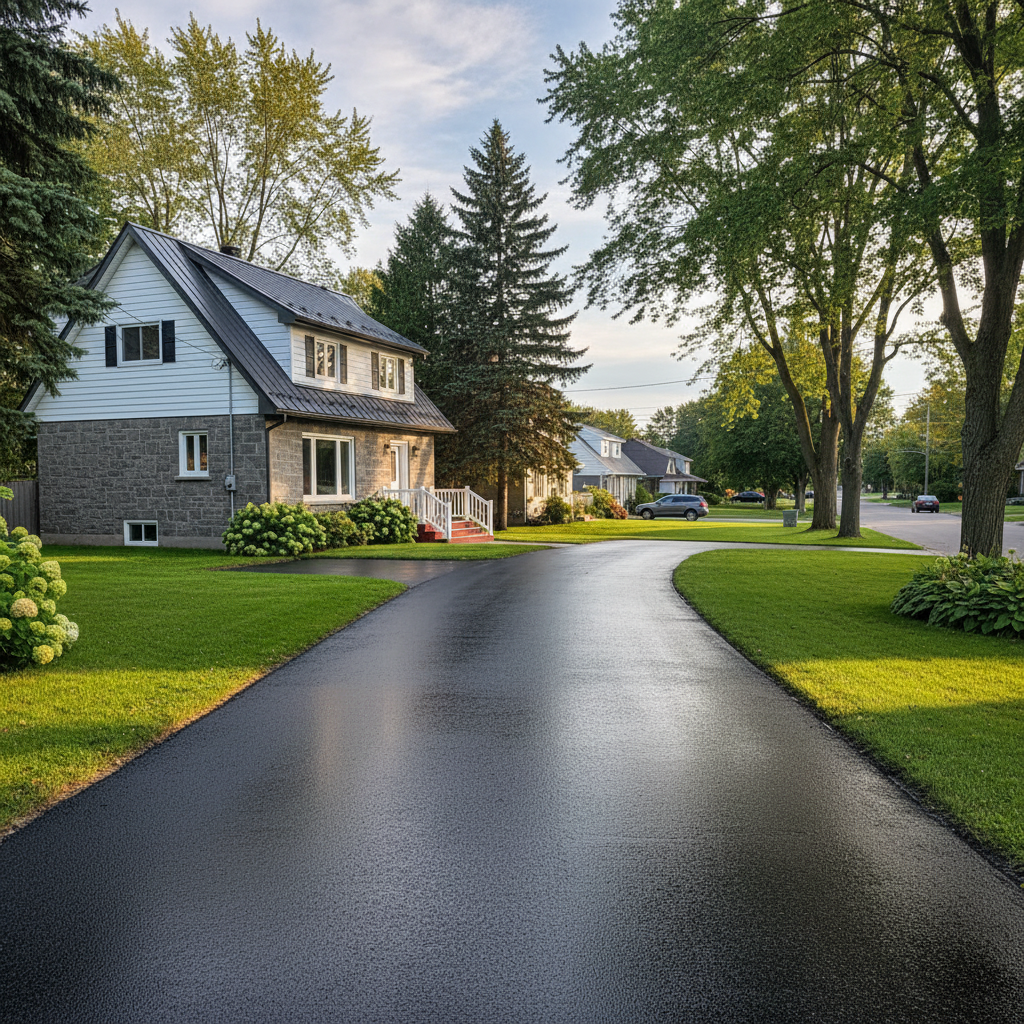
Driveway paving options and costs in Yorkdale-Glen Park
Yorkdale-Glen Park homeowners often face the same question: what driveway material makes sense for our Toronto winters without overspending. With a population of 14,804 residents (Statistics Canada, 2021 Census), the area supports plenty of private-lot driveway work where access, soil conditions, and frost protection all matter. In practice, most driveways here serve detached and semi-detached homes, so you’ll typically be budgeting for a full resurfacing or replacement on a medium-sized footprint rather than the larger commercial-style pours. That’s important because the Toronto market is busier than smaller Ontario towns, and quotes can swing when contractors are filling their late-spring through early-fall schedule.
Toronto’s climate is a cost driver. Frost depth and freeze–thaw cycles are decisive: in this region, ground freezing commonly reaches roughly 3–4 feet. That means driveways need a deeper, well-compacted granular base and dependable drainage so water can’t sit under the pavement and cause heaving and cracking. Labour and material costs also reflect the shorter paving season—hot-mix asphalt placement typically needs above certain temperature thresholds, which compresses demand into peak months and pushes pricing for prime dates. If you’re near a busy corridor such as Yonge Street or the wider Yorkdale area where access can be tight, you may also see scheduling and equipment-movement costs.
Below is a practical comparison of the main options you’ll see in Yorkdale-Glen Park, with typical installed price ranges by material. Use this as a starting point before you request itemised quotes.
| Material |
Lifespan |
Maintenance |
Best For |
Price per sq ft |
Price Range |
| Asphalt (new installation, proper base) |
15–25 years |
Sealcoat every 3–5 years |
Best all-round value for Toronto freeze–thaw |
$8–$14/sq ft |
$3,500–$8,000 |
| Asphalt (overlay on existing gravel base) |
10–20 years |
Sealcoat as needed; patching earlier if base is weak |
Lower disruption when existing base is sound |
$7–$12/sq ft |
$3,300–$7,000 |
| Interlocking concrete pavers |
25–40 years |
Re-screed/replace individual stones as required |
Curb appeal and easy spot repairs |
$15–$25/sq ft |
$9,000–$20,000 |
| Poured concrete (broom finish) |
20–35 years |
Joint/ crack monitoring; occasional patching |
Clean, modern look with long-term durability |
$14–$22/sq ft |
$6,000–$15,000 |
| Exposed aggregate concrete |
20–35 years |
Sealer typically every few years (product dependent) |
Slip resistance and decorative texture |
$16–$26/sq ft |
$7,500–$17,500 |
| Gravel / crushed stone (budget option) |
5–12 years |
Re-grade and top up periodically |
Temporary driveway or tight budget |
$4–$8/sq ft |
$1,500–$4,500 |
Prices are estimates only and vary by project scope, site access and material selection.
What affects the price of paving in Yorkdale-Glen Park
In Yorkdale-Glen Park (and across the Toronto economic region), you can see the “same” driveway project quoted 30–50% apart, even when the final surface looks similar. The reason is usually what’s under it: excavation depth, granular base design, drainage corrections, tear-out complexity, and how much labour a crew needs to move equipment around gates, sidewalks, and landscaping. Two quotes can both say “asphalt driveway,” but one may be building the proper freeze–thaw-resistant foundation while the other is trying to pave over marginal subgrade or skipping costly drainage upgrades.
Frost depth and freeze–thaw cycles are primary cost drivers here. With ground freezing commonly to about 3–4 feet, Toronto driveways often require a thicker compacted granular base. If your design calls for deeper base and stricter compaction, the work can jump—think additional excavation and material haul, plus more time for base prep and proof rolling. The paving season is effectively compressed into late spring through early fall, because hot-mix asphalt placement generally needs above certain soil and air temperatures. That short window concentrates demand and increases pricing pressure for prime scheduling. Also, asphalt mix design must be freeze–thaw rated for the region; specialty mixes and quality control can add cost but reduce early failure.
Concrete costs can also move based on details. For example, adding proper control joints and air-entrainment is essential in Ontario to manage cracking during freeze–thaw. On older properties, if you discover clay pockets or poor drainage near the foundation line, you may need underdrain work or revised slope plans—both typically increase the installed price. On the other hand, if your existing base is stable and only the top layer needs attention, an asphalt overlay can come in closer to the lower end of the local $3,500–$8,000 range rather than a full replacement. That same “scope reality” applies to pavers and concrete—edges, removal, and base engineering are where the money is won or lost.
| Price Factor |
Why It Matters |
Cost Impact |
| Driveway area in sq ft |
Material, base, and compaction scale directly with square footage |
Often 40–70% of total cost |
| Base depth required |
Frost line determines granular thickness to prevent heaving/cracking |
Can change pricing by 15–30% |
| Grading and drainage work |
Slope corrections and drainage stop water from migrating under the surface |
Commonly adds 5–20% |
| Tear-out of existing surface |
Hauling and disposal for old asphalt/concrete increases labour and dump fees |
Can add 10–25% |
| Edge restraints and curbing |
Prevents paver spread and keeps asphalt/concrete edges from failing |
Can add 3–15% |
| Sealing requirement |
Asphalt typically needs sealcoat after the surface cures (often 6–12 months) |
Budget $300–$1,500 for future planning |
| Site access |
Narrow lots, stairs, or tight turns slow equipment movement and increase labour time |
Often adds 5–15% |
| Asphalt mix specifications |
Freeze-thaw-rated mixes improve durability in Toronto’s winter conditions |
Usually adds 5–10% but reduces early failure |
Permits & regulations in Ontario
In Ontario, paving a private driveway within your own property usually doesn’t require a building permit. In most typical Yorkdale-Glen Park driveway projects, you’re resurfacing or rebuilding on your lot—so a permit is often not triggered. Where permits and approvals commonly come into play is when your work affects the municipal right-of-way or municipal infrastructure.
Work that DOES typically require municipal approval includes installing or changing a curb cut (new driveway access), altering the boulevard, and changing storm drainage patterns that connect to municipal systems. If you’re regrading in a way that impacts runoff direction into the street or neighbouring property drainage, expect additional review. Also, some municipalities have lot-grading rules that limit how close a hard surface can be to property lines or how runoff must be managed—always confirm local lot-grading bylaws with the municipality.
Work that typically does NOT require a permit is like-for-like replacement on your property footprint: removing and replacing asphalt or concrete in the same general location, adding interlock where the base sits on your lot, and routine patching/resurfacing—assuming you’re not touching the municipal boulevard or storm connections.
Step-by-step for Yorkdale-Glen Park homeowners: (1) confirm all utilities are located before excavation (Ontario One Call). (2) ask for the contractor’s Ontario licence status (check the relevant online registry for paving/contracting eligibility when applicable). (3) request proof of liability insurance (certificate of insurance) naming you as the certificate holder where appropriate, and (4) verify WSIB/WCB coverage. (5) when they pull permits or do boulevard work, ask to see approval documentation.
Asphalt vs pavers vs concrete for Yorkdale-Glen Park driveways
For Yorkdale-Glen Park’s freeze–thaw climate, asphalt, interlocking pavers, and concrete can all work—what differs is upfront cost, repair flexibility, and how well each system survives repeated winter wetting and thawing. Asphalt is usually the lowest upfront option, and when it’s built on a properly compacted granular base, it performs well through Ontario winters. The trade-off is that asphalt typically needs sealcoat every 3–5 years, particularly if you’re seeing winter sanding/salting and frequent ploughing.
Interlocking concrete pavers cost more upfront, but they’re the easiest to live with: if a section settles or heaves due to localized drainage issues, you can lift and reset stones without replacing the entire driveway. That repairability matters in Toronto’s cycling conditions. Pavers also offer strong curb appeal and can be detailed with edging and soldier courses to keep water and fine material from migrating.
Poured concrete sits in the mid-range and can last a long time, but it’s more sensitive to mix design and jointing. In Ontario, air-entrained concrete and correctly placed control joints help manage freeze–thaw expansion and contraction; otherwise, cracking can show up sooner. Exposed aggregate adds texture and slip resistance but still depends heavily on proper base prep and curing.
In real Yorkdale-Glen Park budgets, an asphalt driveway often comes in around the lower side of the local $3,500–$8,000 band, while interlock typically lands in the $9,000–$20,000 range. That price difference is justified when curb appeal, long-term spot repair, and a driveway that “tolerates” small movement are priorities—especially on homes where drainage paths are challenging near the property line. With asphalt, if you skip the base and edge detailing, you can pay again sooner. With pavers and concrete, you usually pay more once—but you’re buying better long-term resilience against winter maintenance stresses.
| Material |
Frost Resistance |
Curb Appeal |
Repair Method |
Lifespan |
Price Band |
| Asphalt (sealed regularly) |
Good when base is built deep and drained (3–4 ft frost region design) |
Low to mid (clean, dark finish) |
Patch and re-compact; mill/overlay if needed |
15–25 years |
$3,500–$8,000 |
| Interlocking concrete pavers |
Very good due to flexible paneling and reset capability |
High (varied colours/patterns) |
Lift stones, correct base/drainage, relay |
25–40 years |
$9,000–$20,000 |
| Poured concrete (air-entrained) |
Good with correct mix, joints, and drainage |
Mid (clean broom/finishes) |
Patch with matching mix; slab replacement if widespread |
20–35 years |
$6,000–$15,000 |
| Exposed aggregate concrete |
Good with proper base; texture supports salt/sanding wear |
High (decorative finish) |
Localized patching or resurfacing if available |
20–35 years |
$7,500–$17,500 |
| Permeable pavers (drainage grid) |
Very good when engineered drainage is correct (reduces water under slab) |
High (modern look) |
Targeted spot repairs to base layers and joints |
20–30+ years |
$10,000–$22,000 |
| Chip seal / tar-and-chip |
Moderate; best as maintenance approach on select subgrades |
Low (textured, utility look) |
Re-spray/re-surface patches; periodic rework |
6–12 years |
$3,000–$6,500 |
How to choose a paving contractor in Yorkdale-Glen Park
Choosing the right paving contractor in Yorkdale-Glen Park is less about “cheapest per square foot” and more about whether the contractor is protecting you against Toronto’s frost–thaw realities. Start with Ontario licensing: ask the contractor to provide their business registration and the correct trade/contracting eligibility where applicable, then verify it via the relevant online registry. Next, confirm liability insurance (ask for a certificate of insurance) and ensure coverage limits are appropriate for driveway work. Finally, verify WSIB/WCB coverage—request proof that workers are covered for on-site activities, not just general business insurance. A legit crew will provide documents quickly and will explain how they handle utility locates and jobsite safety.
Then get 2–3 itemised written quotes (not a lump sum). You want a breakdown that shows excavation, base material and compaction, drainage work, disposal, edge restraints, and the final surface course. Clarify exclusions: is permit pull included if needed for boulevard work? Is saw-cutting and haul-away included? What about restoring grass/landscaping or topping up topsoil? For warranty, ask for (1) workmanship warranty length, (2) whether the product/manufacturer warranty applies, and (3) whether coverage is transferable if you sell your home.
Payment schedule matters. Never pay more than 10–15% upfront. Use holdback until the driveway is fully completed, swept clean, and properly cured/finished. Also require timeline details: a start date and completion estimate in writing, since Ontario’s paving season is compressed and prime dates can shift.
- Confirm Ontario licensing/eligibility and ask for proof up front.
- Request a certificate of liability insurance and verify it’s active.
- Verify WSIB/WCB coverage with proof of active coverage.
- Get utility locate confirmation in writing (Ontario One Call) before excavation.
- Insist on itemised scope: excavation, base depth, compaction, drainage, and surface course.
- Ask for base compaction specs and how they’ll verify (e.g., proof rolling/compaction method).
- Confirm edge restraints/curbing (especially for pavers) are included.
- For asphalt, confirm the plan for sealcoat timing (often after 6–12 months).
- Clarify disposal and haul-away—old concrete and asphalt disposal fees can be significant.
- Ask who handles repairs if settlement occurs (first-winter policy details).
- Review warranty length and what it covers (materials vs labour vs exclusions).
- Use a payment schedule with a holdback until final grade and cleanup are complete.
Red flags to watch in Yorkdale-Glen Park: contractors who won’t provide insurance/WSIB documents, quotes that skip base thickness details, vague language like “we’ll pave it” without drainage/grading scope, promises of year-round work that ignores Ontario temperature limits, and payment requests above 10–15% upfront with no written timeline.
Frequently asked questions — paving in Yorkdale-Glen Park
How deep should the base be for Yorkdale-Glen Park's frost?
In Yorkdale-Glen Park and the Toronto region, the key issue is freeze–thaw and the fact that frost can reach roughly 3–4 feet in the ground. That doesn’t mean you excavate the whole driveway to 3–4 feet, but it does mean your granular base and drainage layers must be engineered for that frost environment. Most successful driveway builds in Ontario rely on a thicker, well-compacted granular base (often “deeper base” in the range of 6–12 inches, depending on soil conditions and design) plus proper slope and water control so water doesn’t sit under the pavement. Your contractor should explain their proposed base depth, compaction method, and how they’ll handle drainage before they touch the existing surface. If a quote skips base thickness and drainage, it’s usually the first sign of a future crack/heave problem.
How often should I seal my asphalt driveway?
For asphalt in Ontario, sealing isn’t just cosmetic—it helps protect the surface from moisture and abrasion during winter sanding and ploughing. Many homeowners should plan to seal after the asphalt has cured, commonly after about 6–12 months, then again every 3–5 years depending on traffic and weather exposure. If you’re in Yorkdale-Glen Park and your driveway sees heavy de-icing traffic, earlier sealing can be beneficial. A typical sealing and repair budget often lands in the local range of $300–$1,500, but the exact cost depends on driveway size and surface condition. If your asphalt is still new, a good contractor should recommend the right timing and surface prep (cleaning and crack sealing) so the sealcoat bonds properly rather than trapping moisture.
Why does my driveway crack and heave in winter?
Cracking and heaving are usually a foundation-and-water story, not just “bad asphalt.” In Ontario’s freeze–thaw cycle, any water that gets into the subgrade or sits within weak layers can expand as it freezes. That expansion can push the pavement up (heave) and create stresses that show up as cracks—often near edges where water has an escape route but the drainage plan is missing or ineffective. Another common cause in Yorkdale-Glen Park is insufficient granular base depth or poor compaction, especially if the soil is clay-rich or drainage is directed incorrectly toward the driveway. If you see cracking plus raised sections after winter, that’s a strong hint the base and drainage engineering weren’t built for Toronto’s frost conditions. Addressing only the top surface (patching) can help short-term, but it won’t fix an underlying water pathway.
Do I need a permit to pave my driveway in Ontario?
Usually, paving within your property footprint in Ontario doesn’t require a building permit for a private driveway. In Yorkdale-Glen Park, most resurfacing or replacement work on your own lot is treated as private site work. However, you may need municipal approval if the work affects the municipal right-of-way—examples include changing a curb cut, altering boulevard areas, or changing storm drainage connections. Some municipalities also have lot-grading rules that impact where and how hard surfaces are installed. Before excavation, you should still do utility locates through Ontario One Call. When you get quotes, ask the contractor whether your specific scope requires municipal approval and whether permit-related steps are included. A reputable contractor will discuss this early rather than after the base is already excavated.
How long before I can drive on new asphalt?
Asphalt curing time depends on temperature, weather, and mix thickness, but a common homeowner guideline in Ontario is that you can usually drive on the surface after it has properly cooled and set—often within about 24–48 hours for typical residential driveway work. If the crew uses tack coat and applies multiple lifts, timing can vary, and they may recommend limiting turning/parking during the first couple of days to avoid surface pickup. In Yorkdale-Glen Park, winter is not the time to rush this—paving is generally scheduled for workable conditions in late spring through early fall. If you’re receiving an asphalt quote in the $3,500–$8,000 range, confirm in the written scope when the contractor expects you’ll be able to drive and whether they provide guidance for vehicle weight and traffic patterns while the pavement cures.
What causes potholes and how are they repaired?
Potholes typically form when water penetrates the asphalt or base. In Toronto’s freeze–thaw season, water expands when frozen, and that motion loosens aggregate and weakens the base. Over repeated cycles—plus traffic—small failures widen into pits. Poor compaction, drainage that directs water toward the driveway, or a weak granular layer under the asphalt can all accelerate pothole formation. Repairs in Yorkdale-Glen Park usually start with cutting out to remove loose material, then re-compacting the base and adding proper patch asphalt with correct thickness. For frequent or widespread failures, the better fix may be a planned overlay rather than patch-after-patch. Ask your contractor to explain whether they’re just resurfacing the crater or also addressing the water/weak-base cause underneath.