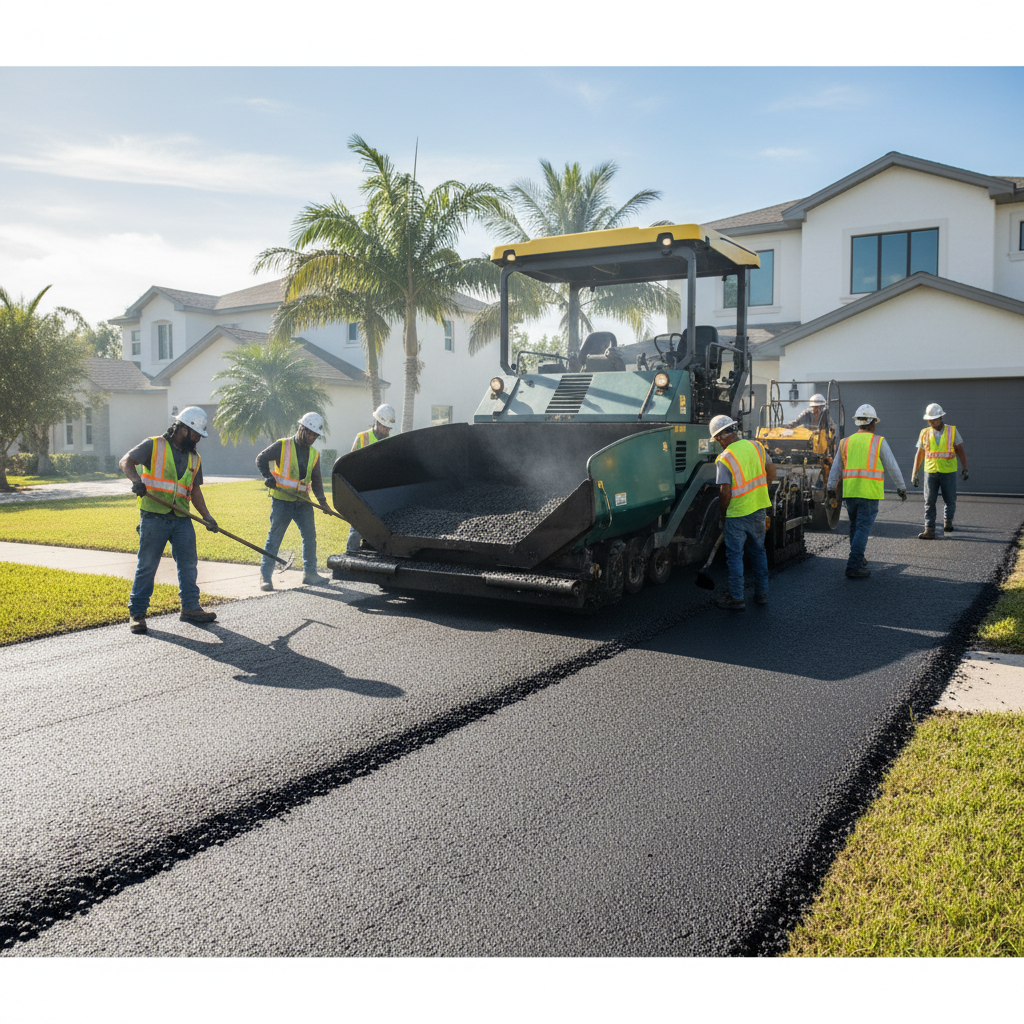
Driveway paving options and costs in Oshawa
Oshawa homeowners typically choose between asphalt, interlocking pavers, and concrete because each performs differently through Toronto-area freeze–thaw cycles. With Oshawa at 175,383 residents (Statistics Canada, 2021 Census) and many homes being owner-occupied (64.2% of households) (Statistics Canada, 2021 Census), driveways are a major “visible” exterior upgrade—especially in neighbourhoods with older housing stock, like Eastdale and parts of Lakeview. Oshawa also has a large share of single-detached homes (55.5% of dwellings), which means most driveways are tied to private attached properties, so access, grading, and storm-water handling become part of the cost.
In the Toronto economic region, frost depth and freeze–thaw are the primary reasons pricing can jump: ground freezing to roughly 3–4 feet means you need a deeper compacted granular base, reliable drainage, and proper edging so water can’t sit under the pavement. That engineering work adds excavation, hauling, and labour compared with milder climates. Pricing is also tighter because the paving season effectively runs from late spring into early fall—hot-mix asphalt placement depends on air/ground conditions (often above 10°C), and prime dates in late spring can be booked quickly.
To compare realistic budgets for Oshawa, use the table below as a guide for typical driveway sizes and properly built bases.
| Material |
Lifespan |
Maintenance |
Best For |
Price per sq ft |
| Asphalt (new installation, proper base) |
15–25 years |
Seal coating every 3–5 years |
Lowest upfront cost with good performance if built for frost depth |
$3,500 – $8,000 |
| Asphalt (overlay on existing gravel base) |
10–18 years |
Seal coating every 3–5 years; monitor edges |
When the base is sound and you want a faster, less disruptive upgrade |
$3,000 – $6,500 |
| Interlocking concrete pavers |
25–40 years |
Occasional re-leveling; sealers optional |
Premium curb appeal and repairs without replacing the full surface |
$9,000 – $20,000 |
| Poured concrete (broom finish) |
20–30 years |
Seal only if desired; manage minor surface spalls |
Durability with a smooth look; straightforward snow-ploughing |
$6,000 – $15,000 |
| Exposed aggregate concrete |
20–30 years |
Seal every few years (optional based on product) |
Slip resistance and decorative appearance |
$7,000 – $16,500 |
| Gravel / crushed stone (budget option) |
3–8 years |
Top up annually; weed control |
Short-term solution or lowest initial cost |
$1,500 – $4,000 |
Prices are estimates only and vary by project scope, site access and material selection.
What affects the price of paving in Oshawa
In Oshawa and the wider Toronto economic region, the same driveway size can produce quotes that vary by 30–50%. The difference usually isn’t the “surface” material—it’s the engineered base, drainage, and the amount of excavation and haul-off needed for frost protection. Two contractors can quote the same asphalt thickness on paper, but if one company builds a deeper, better-compacted granular base for freeze–thaw stability and the other leaves it shallower, you’ll see different outcomes and different costs.
Frost line depth and freeze–thaw cycles are decisive cost drivers in this region. With ground freezing to roughly 3–4 feet in Toronto, driveways need deeper, compacted granular layers and careful subgrade preparation so water can’t remain trapped under the slab or pavement. When that base is insufficient, you get heaving and cracking as the ground cycles between freezing and thawing. This also compresses the paving season into late spring through early fall, because hot-mix asphalt placement depends on temperatures—often requiring above 10°C—so contractors face a tighter schedule and higher demand for prime dates. That pushes pricing within the Toronto-area asphalt band (often starting around the mid single-thousands per typical driveway scope).
Concrete pricing can move too. For example, older Oshawa homes (58.6% built before 1981) often have uneven slopes, buried downspout discharge, or older drainage patterns that require more grading before any concrete or pavers go down. If your driveway ties into existing sidewalks or there’s poor drainage toward the street, expect additional excavation and drainage correction that can swing a concrete job toward the higher end of the $6,000–$15,000 band. Conversely, if your subgrade is already stable and your site access is straightforward, you may land closer to the lower end of asphalt pricing (e.g., near $3,500), especially if an overlay or targeted base work is appropriate.
| Price Factor |
Why It Matters |
Cost Impact |
| Driveway area in sq ft |
Most costs scale directly with square footage and waste hauling |
Larger drives can add thousands quickly; typically the biggest line item |
| Base depth required |
Frost protection needs thicker compacted granular layers in freezing climates |
More excavation and more aggregate hauling; can move the job up one band |
| Grading and drainage work |
Proper slope and daylighting prevent water pooling under the surface |
May add time, labour, and extra materials for catch basins or drainage runs |
| Tear-out of existing surface |
Concrete breaks/hauls are heavier than asphalt removal; disposal fees apply |
Can be a major swing factor if deep concrete or multiple layers exist |
| Edge restraints and curbing |
Prevents paver spread and helps keep asphalt from migrating |
Additional materials and labour; often necessary for longevity |
| Sealing requirement |
Asphalt needs seal coating after initial curing to reduce water/oxygen damage |
Low-cost maintenance that affects long-term performance; sometimes quoted separately |
| Site access |
Narrow drives slow equipment movement and increase manual labour |
Tight access can add labour hours and reduce production efficiency |
| Asphalt mix specifications |
Freeze–thaw-rated mix design improves durability in Ontario winters |
Better mix can cost more per tonne but reduces early failure |
Permits & regulations in Ontario
For Ontario, paving a private driveway within your own property generally does not require a building permit. In most cases, the work you do on your yard is considered a homeowner improvement. Where approvals commonly come into play is when you alter the municipal portion of drainage or the right-of-way—think changes to boulevard grading, new or modified curb cuts, work tied into municipal storm servicing, or any alteration that affects municipal drainage patterns. If you’re changing slope toward a ditch or altering how water runs during storms, the municipality may require review.
In Oshawa, you should also be mindful that some lot-grading and drainage rules can restrict how close a hard surface can be to property lines and how runoff must be managed. Before excavation, always confirm your services with Ontario One Call so you can protect gas, hydro, telecom, and other buried lines. If your contractor plans to dig near curb or adjust storm catchment/edge drainage, ask them whether municipal approval is required for that exact scope.
To verify an Oshawa contractor is set up correctly, start with an Ontario business/labour-facing licence confirmation (for contractors who should be licensed for your scope), then check liability insurance and WSIB/WCB coverage. Request a Certificate of Insurance showing adequate liability limits and ask for the WSIB/WCB clearance document (or equivalent proof) that matches the company name doing the work. A reputable paving contractor will provide these before scheduling and will name the specific subtrades if any are involved.
Asphalt vs pavers vs concrete for Oshawa driveways
For Oshawa’s freeze–thaw climate, asphalt is usually the lowest upfront choice: it’s budget-friendlier, quick to place during the late spring to early fall window, and it performs well when the base is engineered for roughly 3–4 feet of frost depth protection. The trade-off is maintenance—seal asphalt after the initial cure window and then again about every 3–5 years to slow oxidation and reduce water penetration, which becomes a failure trigger during winter cycling.
Interlocking concrete pavers cost more upfront (often within the $9,000–$20,000 range), but they hold up exceptionally well when properly edged and built on a well-compacted base and correct bedding sand. The big advantage in Oshawa winters is repairability: if a section heaves or settles, many contractors can lift and re-level those units without ripping out the entire driveway. That flexibility is valuable in older neighbourhoods where drainage patterns and subgrade conditions vary from lot to lot.
Poured concrete sits in the mid-range (often $6,000–$15,000) and can be strong for daily parking and ploughing. However, concrete needs air-entrainment and smart jointing to manage freeze–thaw expansion/contraction. Poor drainage or salt exposure without the right mix design can accelerate surface deterioration and cracking.
Where the price difference is justified: if you’re choosing between asphalt (~$3,500–$8,000) and pavers (~$9,000–$20,000), pavers make sense when curb appeal is a priority or when you expect future subgrade/drainage adjustments. If you want the best value and your site access is straightforward, asphalt with a deep, well-drained base is often the smarter long-term budget.
| Material |
Frost Resistance |
Curb Appeal |
Repair Method |
Lifespan |
Price Band |
| Asphalt (sealed regularly) |
Good with frost-rated base and drainage |
Good (clean, uniform finish) |
Mill/patch or overlay section |
15–25 years |
$3,500 – $8,000 |
| Interlocking concrete pavers |
Very good if edged and re-compacted properly |
Excellent (highest design options) |
Remove and re-lay individual units or sections |
25–40 years |
$9,000 – $20,000 |
| Poured concrete (air-entrained) |
Good with air entrainment and joint control |
Medium (clean, modern look) |
Spall/patch; full replacement if widespread cracking |
20–30 years |
$6,000 – $15,000 |
| Exposed aggregate concrete |
Good with correct mix and cure |
High (textured decorative surface) |
Patch only; often less seamless than pavers |
20–30 years |
$7,000 – $16,500 |
| Permeable pavers (drainage grid) |
Very good when designed to manage runoff and prevent pooling |
High (modern drainage concept) |
Lift/replace grid or paver sections |
20–35 years |
$11,000 – $22,500 |
| Chip seal / tar-and-chip |
Fair to good; depends heavily on prep and maintenance |
Low to medium (more utilitarian) |
Spot repair and periodic re-seal |
8–15 years |
$3,000 – $6,000 |
How to choose a paving contractor in Oshawa
Choosing the right contractor in Oshawa is about proving three things: they’re legally set up to work, they build for Toronto-area freeze–thaw conditions, and they’re transparent about what’s included. First, verify Ontario licensing/credentials for the contractor’s scope (and confirm they’re the company doing the work, not just managing it). Next, request liability insurance showing coverage limits and confirm it’s current. For worker coverage, ask for WSIB/WCB documentation (often a clearance letter or proof of coverage) that matches the contracting entity’s name. If they can’t provide these documents promptly, that’s a red flag.
Then get 2–3 itemised written quotes. “Itemised” means you should see labour and materials separated—especially line items for excavation, base (type and depth), compaction, drainage corrections, disposal/tip fees, and the paving surface. Avoid quotes that lump everything together without stating what’s actually being built.
Read the scope carefully: what’s excluded (removal of deep-rooted landscaping, driveway widening, engineering/drainage redesign, concrete saw cutting, patching sidewalks), is disposal included, and is any required permit or municipal approval work included if your scope touches curb cuts or storm drainage? Ask about workmanship warranty length and whether any manufacturer product warranty is included (and whether it’s transferable to you if you sell your home). Finally, payment should be staged—never more than about 10–15% upfront, with a holdback until completion and final walkthrough.
Get the start date and an estimated completion window in writing so you can plan for the seasonal scheduling pressure that impacts Oshawa driveways.
- Ask for base design details (aggregate type and compacted thickness) tied to frost protection.
- Confirm drainage plan: slope verification, outlet/ditch tie-ins, and downspout discharge considerations.
- Request an itemised quote: excavation, hauling/disposal, granular base, geotextile (if needed), and surface.
- Check liability insurance and WSIB/WCB clearance/proof before work begins.
- Verify warranty: workmanship length, what’s covered (settlement/heaving/cracking), and response timeline.
- Clarify material grades and mix specs (freeze–thaw rated asphalt mix where applicable).
- Confirm edge restraints (curb forms/locking borders) for pavers and stable asphalt transitions.
- Ask how they handle existing utilities/locates and what happens if buried lines are found during excavation.
- Ensure schedule realism: start date, completion estimate, and weather contingency planning.
- Agree on disposal/tip fees and whether these are included in the quote.
- Set payment terms: small deposit, holdback until final inspection, no full prepayment.
- Get proof of past Oshawa/Toronto-area driveway projects—photos showing base thickness and drainage details.
Common Oshawa red flags include: refusing to provide insurance/WSIB/WCB proof, quoting without stating base depth or drainage steps, pressuring you for large deposits, offering a vague warranty (“we’ll fix it” without terms), or starting work without clear confirmation of site access and disposal/disruption plan.
Frequently asked questions — paving in Oshawa
How much does it cost to pave a driveway in Oshawa?
In Oshawa, typical driveway paving budgets are often in the $3,500–$8,000 range for asphalt when the job includes proper base construction, excavation, and drainage. If you go with interlocking concrete pavers, you’ll usually see a higher $9,000–$20,000 range because of the extra layers, edging, and labour-intensive installation. Poured concrete commonly lands around $6,000–$15,000 depending on thickness, jointing, and any tear-out/disposal. The biggest swings are not the top surface—they’re the frost-driven granular base depth, how much grading you need for drainage, and how difficult access is for hauling. Also, because the paving season is concentrated late spring through early fall in Ontario, prime scheduling can affect pricing.
Asphalt vs interlocking pavers vs concrete — which is best in Oshawa?
For Oshawa winters with frequent freeze–thaw, asphalt is usually best for homeowners who want the lowest upfront cost and can commit to sealing every 3–5 years. Interlocking pavers are often the best “long game” when curb appeal matters or when you want easier repairs—because individual units (or sections) can be re-set without replacing the full driveway. Poured concrete is a strong option too, especially if it’s air-entrained, properly jointed, and built on the right base to handle expansion and contraction. If your driveway has drainage issues or older subgrade conditions (common in homes built before 1981), pavers can be more forgiving because you can troubleshoot localized problems. If you want value and your base/drainage design is solid, asphalt typically fits well within the $3,500–$8,000 range.
How long does a paved driveway last in Oshawa?
With correct frost-prepped base, drainage, and installation quality, asphalt driveways commonly last 15–25 years in Oshawa. Interlocking concrete pavers often provide 25–40 years, largely because they’re repairable and can be re-leveled if needed. Poured concrete is typically 20–30 years when air-entrainment, curing, and joints are done properly, but freeze–thaw can shorten lifespan if water pools under the slab. Exposed aggregate concrete is similar in lifespan to other concrete finishes. The key is keeping water from sitting beneath the surface, since that’s what drives heaving and cracking. For asphalt specifically, seal coating after the driveway cures (and then about every 3–5 years) is one of the simplest maintenance steps that helps preserve lifespan in Ontario’s winters.
When is the best time of year to pave in Oshawa?
The best time in Oshawa is usually late spring through summer into early fall, because asphalt placement depends on air/ground conditions—hot-mix asphalt generally needs temperatures above about 10°C to place and compact correctly. Ontario’s freeze–thaw cycles make late fall and early winter more risky: base moisture can freeze, compaction becomes inconsistent, and you can trap water under new asphalt. Concrete can be placed later than asphalt in some cases, but proper curing and weather protection still matter. In practice, homeowners often lock schedules for prime dates in May–June or early September when both materials and crews can work efficiently. A contractor should confirm the forecast and explain weather contingency steps in writing.
How deep should the base be for Oshawa's frost?
For Oshawa-area driveways, base depth isn’t one “magic number”—it depends on subgrade condition, groundwater, and drainage—but Toronto-region frost depth studies indicate ground freezing to roughly 3–4 feet. That’s why reputable contractors build a deeper, compacted granular base and focus heavily on drainage. In many Ontario driveway builds, that means layered granular excavation and compaction that often results in total granular thickness in the range of about 6–12 inches (or more where conditions require), with geotextile and proper slope considerations as needed. The critical goal is preventing water from sitting under the driveway so freeze–thaw can’t heave the pavement. Always ask your contractor to explain base depth and how they determined it for your lot.
How often should I seal my asphalt driveway?
In Ontario (including Oshawa), asphalt seal coating is commonly done after the pavement cures, then repeated about every 3–5 years depending on sun exposure, traffic, and winter conditions like salt and sanding. If you seal too early, you can trap moisture in the pavement; if you wait too long, oxidation and water penetration accelerate, which can lead to raveling and cracking during freeze–thaw cycles. A typical plan is: apply the first seal coating once the asphalt has cured sufficiently, then set a maintenance schedule based on condition—many homeowners end up closer to the 3-year mark if the driveway sees heavy vehicle traffic or lots of winter treatment. Keep in mind that sealing helps protect the surface, but the deeper “why” for longevity is still the base prep and drainage.