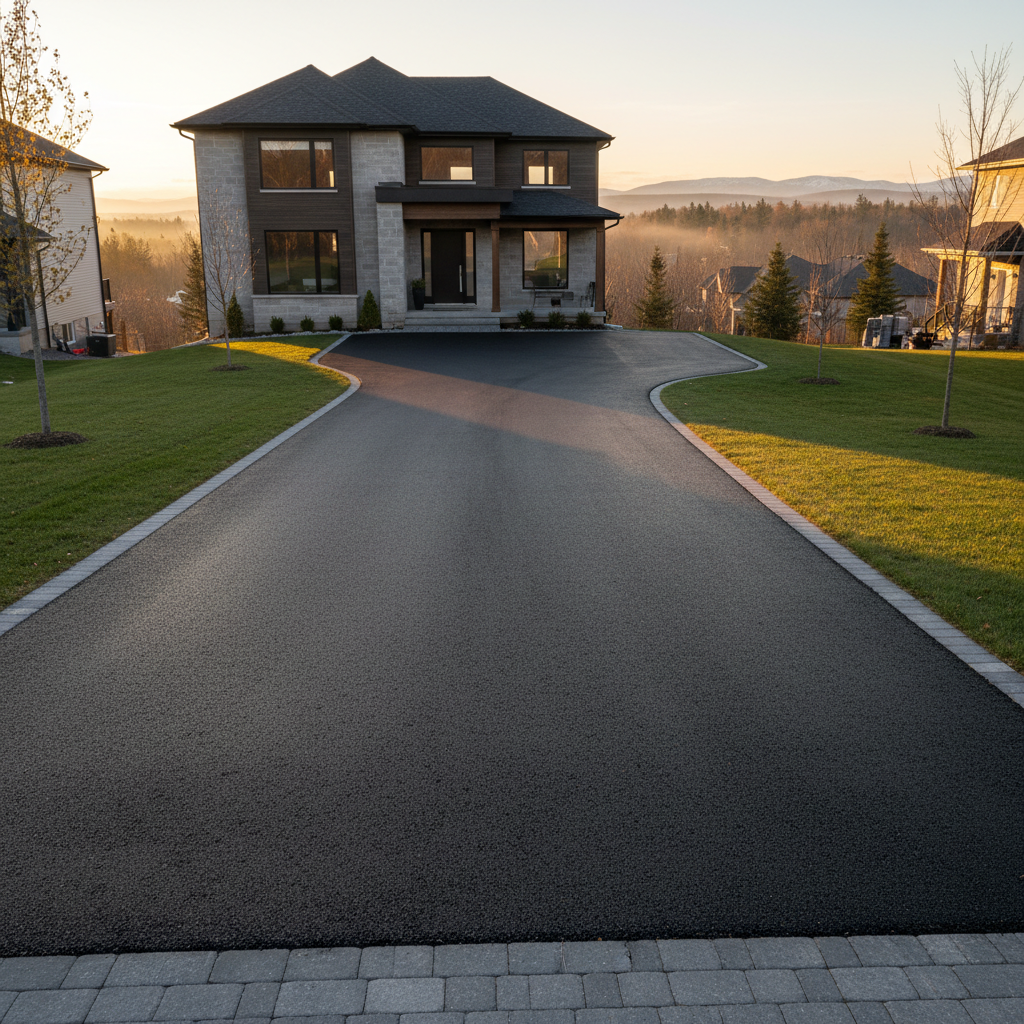
Driveway paving options and costs in Shelburne
Shelburne homeowners usually have three practical driveway routes: asphalt, interlocking pavers, or concrete. In Shelburne, most private driveways belong to owner-occupied households (80.2% of households own), and the housing stock is dominated by single-detached homes (72.9% of dwellings). That matters because detached driveways tend to be longer, wider, and more exposed to runoff—so base drainage and compaction are where good contractors protect your budget.
In the Kitchener–Waterloo–Barrie economic region, frost depth and freeze-thaw cycles are a major cost driver. As the ground repeatedly freezes and thaws, pavement systems need a deeper, well-compacted granular base and reliable water management to reduce heaving, settlement, and reflective cracking. The colder Ontario winter also tightens the paving window: hot-mix asphalt production and placement require air temperatures typically above 10°C, so spring scheduling can be busier and more expensive than you’d see in milder regions. Contractors may also charge more in neighbourhoods with heavier demand—like near Main Street / Highway 124 corridors—because crew availability gets stretched.
Below is a realistic comparison of common driveway approaches, using typical residential scope and the additional frost resilience expected in this corridor. Use it as a starting point before you request itemised quotes.
| Material |
Lifespan |
Maintenance |
Best For |
Price per sq ft |
Price Range |
| Asphalt (new installation, proper base) |
15–25 years |
Seal every 3–5 years; patch as needed |
Best value for long-term performance |
$5–$10 |
$3,500–$7,000 |
| Asphalt (overlay on existing gravel base) |
10–18 years |
Seal as above; more frequent patching if base is weak |
When excavation is limited |
$6–$11 |
$4,000–$7,500 |
| Interlocking concrete pavers |
25–40 years |
Spot repair by lifting and replacing units; joint sand top-ups |
Curb appeal and easy repairs |
$14–$22 |
$12,000–$22,000 |
| Poured concrete (broom finish) |
20–30 years |
Minimal, but seal can help reduce staining |
Clean look with straightforward maintenance |
$10–$17 |
$9,000–$16,000 |
| Exposed aggregate concrete |
20–30 years |
Occasional cleaning; sealing optional based on finish |
Higher traction and decorative finish |
$12–$19 |
$10,000–$18,000 |
| Gravel / crushed stone (budget option) |
5–12 years |
Re-grade and add stone yearly or as needed |
Lowest upfront cost or short-term solution |
$3–$6 |
$2,000–$4,500 |
Prices are estimates only and vary by project scope, site access and material selection.
What affects the price of paving in Shelburne
Two quotes can look wildly different for the same driveway in Shelburne—even in the same street—because small changes in site conditions and workmanship requirements drive real labour and material costs. In the Kitchener–Waterloo–Barrie market and across Ontario, it’s common to see pricing vary by about 30–50% once you factor in excavation volume, base depth, drainage corrections, disposal, and how much of the old surface must be removed.
The decisive factor here is frost depth and freeze-thaw cycling. In colder Ontario conditions, deeper compacted granular base is required to prevent heaving and cracking. That usually means thicker, well-graded stone layers and stricter compaction checks than you’d see in milder climates. Asphalt also has a seasonal constraint: hot-mix asphalt placement generally needs air temperatures above roughly 10°C, which concentrates demand into a shorter window. When plants and crews are booked, scheduling pressure can push installed pricing toward the top end—especially for new installs that need the full granular system.
Concrete pricing can move up or down based on how you manage water and joints. For example, if your driveway ties into a garage apron with poor slope or ponding, contractors often increase drainage grading and add saw cuts or control joints—work that protects your concrete from winter moisture expansion. Also, older homes built before 1981 (38.5% of dwellings are pre-1981) often have more irregular grading, buried services, or legacy drainage patterns, which can add tear-out and rework costs. Even on well-priced options like asphalt in the $3,500–$7,000 range, the difference between “overlay” and “full base rebuild” is where the money goes—and where performance is won or lost.
| Price Factor |
Why It Matters |
Cost Impact |
| Driveway area in sq ft |
Material and labour scale directly with surface area and thickness |
Typically the biggest driver (often 50%+ of the total) |
| Base depth required |
Frost line dictates granular thickness and compaction for stability |
Can add substantial cost—especially if excavation is required |
| Grading and drainage work |
Slope corrections and drainage improvements prevent pooling and pumping |
Often a mid-to-high cost add, depending on how far grading must change |
| Tear-out of existing surface |
Breaking and hauling concrete or old asphalt increases labour and disposal |
Frequently one of the largest “surprise” items |
| Edge restraints and curbing |
Proper restraint prevents paver spread and asphalt edge failure |
Moderate, but essential for long-term performance |
| Sealing requirement |
Asphalt typically needs sealing after installation within the first year window |
Usually a lower-cost maintenance item compared to full replacement |
| Site access |
Narrow lots slow equipment movement and increase setup time |
Can add labour and raise per-day costs |
| Asphalt mix specifications |
Freeze-thaw-rated mix design and binder selection improves durability |
May increase upfront cost, but reduces early raveling/cracking |
Permits & regulations in Ontario
In Ontario, paving a private driveway within your own property typically does not require a building permit. In Shelburne, most homeowners are simply replacing or surfacing an existing driveway area on private land, and contractors can usually proceed with standard trade practices after locates and traffic planning. That said, the work that does require municipal approval is any activity in the municipal right-of-way—think new or altered curb cuts, changes to boulevard areas, modifications that affect storm drainage, or re-grading that impacts how municipal runoff is handled.
Step one for any project is utility locates. Before the excavator moves an inch, confirm buried services using Ontario One Call (and ensure the marked areas are respected). Step two is confirming whether any lot-grading or surface-drainage rules apply to your specific location—some municipalities restrict how close hard surfaces can be to property lines or how runoff must be directed.
Step three is verifying the contractor is properly set up. Ask for their Ontario licence details (from the appropriate public registry if applicable to their trade), a current certificate of liability insurance naming you as additionally insured if they can, and proof they carry WSIB coverage for workers (or the applicable proof of clearance/coverage status). A reputable paving contractor should provide these documents before work starts so you can confirm they’re compliant and protected.
Asphalt vs pavers vs concrete for Shelburne driveways
For Shelburne driveways, the “best” choice is usually the one that matches your tolerance for maintenance and your expectations around winter performance. Asphalt is typically the lowest upfront option, but it relies on regular sealing (generally every 3–5 years) to resist water intrusion and deterioration from salt, sand, and ploughing. Interlocking concrete pavers cost the most to install, yet they shine for homeowners who want curb appeal and a surface that can be repaired section-by-section—so localized failures don’t force full replacement. Poured concrete sits in the middle; if it’s properly air-entrained and jointed, it can perform well, but poor drainage and untreated freeze-thaw moisture cycling can lead to cracking over time.
Kitchener–Waterloo–Barrie’s frost and freeze-thaw cycles mean all three options depend on the same foundation: adequate granular base thickness and drainage that prevents ponding. In practice, asphalt and concrete both need strong subgrade moisture control to reduce heaving and reflective cracking. Pavers are more forgiving of minor surface distress because individual units can be lifted and reset, but the bedding layer and edge restraints must still be installed correctly.
Here’s a realistic example: if your driveway is sized so the asphalt system lands around $3,500–$7,000, pavers may come in around $12,000–$22,000. That extra cost is justified when you value curb appeal, want easier future repairs, and expect long-term ownership. It’s less justified if your goal is to minimize upfront spending and you’re comfortable with sealing maintenance on asphalt.
| Material |
Frost Resistance |
Curb Appeal |
Repair Method |
Lifespan |
Price Band |
| Asphalt (sealed regularly) |
Good with proper base and sealing |
Medium |
Cut out and patch affected areas |
15–25 years |
$3,500–$7,000 |
| Interlocking concrete pavers |
Very good with correct bedding and restraints |
High |
Lift units, rebuild base if needed, relay |
25–40 years |
$12,000–$22,000 |
| Poured concrete (air-entrained) |
Good when joints and drainage are correct |
Medium–high |
Patch with colour-matched resurfacer or localized repair |
20–30 years |
$9,000–$16,000 |
| Exposed aggregate concrete |
Good with correct mix and finishing control |
High |
Resurfacing or localized patching (varies by finish) |
20–30 years |
$10,000–$18,000 |
| Permeable pavers (drainage grid) |
Very good for managing water where designed |
High (unique look) |
Replace grid sections or lift pavers if clogged |
20–35 years |
$13,000–$24,000 |
| Chip seal / tar-and-chip |
Variable; needs good maintenance and base |
Lower |
Spot re-surfacing and recoating |
7–15 years |
$3,000–$6,000 |
How to choose a paving contractor in Shelburne
Choosing the right paving contractor in Shelburne is mostly about verification and paperwork before you ever talk design. In Ontario, first confirm they carry liability insurance (ask for a current certificate of insurance, and review the effective dates). Then confirm WSIB coverage for workers: request proof of current coverage or clearance status and keep copies for your records. A contractor who cannot provide these up front is a risk—especially with excavation and heavy equipment on private property.
Next, get 2–3 itemised written quotes rather than a single lump sum. You want a labour/material breakdown for base, grading, asphalt or concrete, saw cuts or restraints, edge work, and cleanup/disposal. Review the exclusions: is permit work included if the job touches the right-of-way? Is old surface tear-out included, and what happens to the waste? If a quote only says “remove and dispose” without specifying scope, clarify it.
Warranty matters too. Ask for the workmanship warranty length, what it covers (settlement, cracking, drainage failures), whether the warranty is transferable to the next owner, and how quickly they respond if there’s a defect. Finally, manage payment: never pay more than about 10–15% upfront, and hold back a meaningful portion until the job is fully complete and cleaned up. Make sure the schedule is in writing with a start date and realistic completion timing given the shorter Ontario paving season.
- Ask for WSIB proof (or clearance) and keep it with your contract documents.
- Request liability insurance and confirm coverage amounts match the project risk.
- Get an itemised breakdown (base, aggregate, asphalt/concrete, restraints, disposal).
- Clarify what “proper base” means (base depth, compaction expectations, drainage provisions).
- Confirm whether utility locates are included and who submits the locate request.
- Request start date and completion estimate in writing.
- Verify curb cut/right-of-way involvement—ask whether municipal approvals are needed.
- Ask for warranty terms on workmanship and whether it’s transferable.
- Review payment schedule and keep holdback until final inspection/cleanup.
- Confirm sealing timing for asphalt (commonly after installation within a defined window).
- Ask who supplies and installs edge restraints/curbing (especially for pavers).
- Check cleanup scope: brooming, regrading disturbed lawn/bed areas, and debris hauling.
In Shelburne, watch for these red flags: vague base specifications (“proper base” without depth/stone type), quotes that ignore drainage/ponding or existing slope problems, missing or outdated insurance/WSIB documentation, refusal to provide a written schedule and warranty details, and change orders added without documenting the reason and updated unit pricing.
Frequently asked questions — paving in Shelburne
When is the best time of year to pave in Shelburne?
In Shelburne, late spring through summer is the practical window for asphalt and concrete driveway work. Asphalt placement generally needs warm conditions—hot-mix asphalt is typically placed when air temperatures are above about 10°C—so paving too early in spring can risk poor compaction and early raveling. Contractors in the Kitchener–Waterloo–Barrie corridor also face a shorter season than milder parts of Ontario, so booking early often matters. If you’re aiming for asphalt, plan for cooler evenings as well and ask your contractor how they manage temperature targets, curing time, and sealing scheduling afterward. For concrete, timing still matters, but curing and protection against temperature swings are the priority. Homeowners with older drainage patterns (common in older housing stock) should schedule during the driest stretch to reduce subgrade moisture surprises.
How deep should the base be for Shelburne's frost?
There isn’t one universal depth for every Shelburne driveway because base depth depends on subgrade conditions, drainage, and soil moisture, but frost and freeze-thaw cycles are decisive. In this region, you should expect deeper, well-compacted granular layers than in milder climates to resist heaving and cracking. The contractor should assess your current subgrade, identify any soft/poor-draining areas, and then build a granular system designed for Ontario frost performance. As a homeowner, ask specifically for base depth in inches and the type of aggregate being used, along with a plan for drainage correction if water ponds near the garage or along the edges. If your site needs significant grading due to settling or runoff issues, base depth and excavation quantities typically rise, which is often why quotes can shift substantially within the asphalt range of $3,500–$7,000 versus higher full-base rebuild scenarios.
How often should I seal my asphalt driveway?
For most residential asphalt driveways in Ontario—including Shelburne—the usual guidance is to seal after the pavement has cured, then repeat on a cycle based on wear and weather exposure. Many asphalt contractors recommend sealing about every 3–5 years after the initial sealing window. The reason is moisture control: sealing helps reduce water infiltration, which fuels freeze-thaw deterioration during winter. If you plough aggressively up to the surface or use lots of de-icing salt, expect faster wear and consider more frequent maintenance. If your contractor proposes sealing too soon, ask about the curing timeline and surface readiness (clean, dry, and properly weathered). Good base construction and proper drainage are still the foundation; sealing is maintenance, not a substitute for a correct granular system.
Why does my driveway crack and heave in winter?
Cracking and heaving in Shelburne typically come down to moisture and frost action. When water enters the pavement system—through poor edge drainage, ponding, or thin/compacted base—it can freeze and expand, pushing the surface upward (heave). Then, as temperatures swing, stresses accumulate and you see cracking, raveling, or settlement. Older driveways (and those built on inconsistent drainage patterns) are especially prone because the subgrade can hold water longer. Another common cause is inadequate base depth or compromised compaction during the original build. In some cases, winter de-icing salt and repeated ploughing accelerate surface wear, but salt usually worsens an underlying moisture problem rather than causing it alone. If you’re seeing recurring issues, ask for the contractor’s drainage and base plan—not just patching.
Do I need a permit to pave my driveway in Ontario?
Often, no. In Ontario, paving a driveway area within your own property typically does not require a building permit, and most residential driveway resurfacing or replacement falls into that category. However, you may need municipal approval if the work affects the municipal right-of-way—for example, changing a curb cut, modifying boulevard areas, or altering storm drainage tied to municipal infrastructure. Some municipalities also have lot-grading or runoff rules, which can restrict how you direct water or how close hard surfaces can be to property lines. In Shelburne, the best approach is to ask your contractor to confirm whether your scope touches any right-of-way elements. Regardless of permits, you should always do utility locates before excavation and confirm compliance with any local grading requirements.
How long before I can drive on new asphalt?
For new asphalt driveways in Shelburne, the “driveable” timeline depends on weather and the specific paving process, but you can usually expect you’ll be able to drive sooner than you would with full concrete cure. Asphalt is typically compacted while hot, and once it has cooled enough and is properly compacted, light traffic may be allowed. Heavier use should wait until it’s fully cooled and cured per the contractor’s instructions. Ask your contractor for a clear written timeline for your exact project and temperature conditions, since Ontario evenings can cool quickly even in summer. Also remember sealing: asphalt sealing is not done immediately on placement every time—many contractors plan sealing after a defined initial period, often within the first year, and then repeat every 3–5 years. If you’re budgeting, these steps help protect your investment in the typical asphalt range of $3,500–$7,000 by reducing early moisture damage.