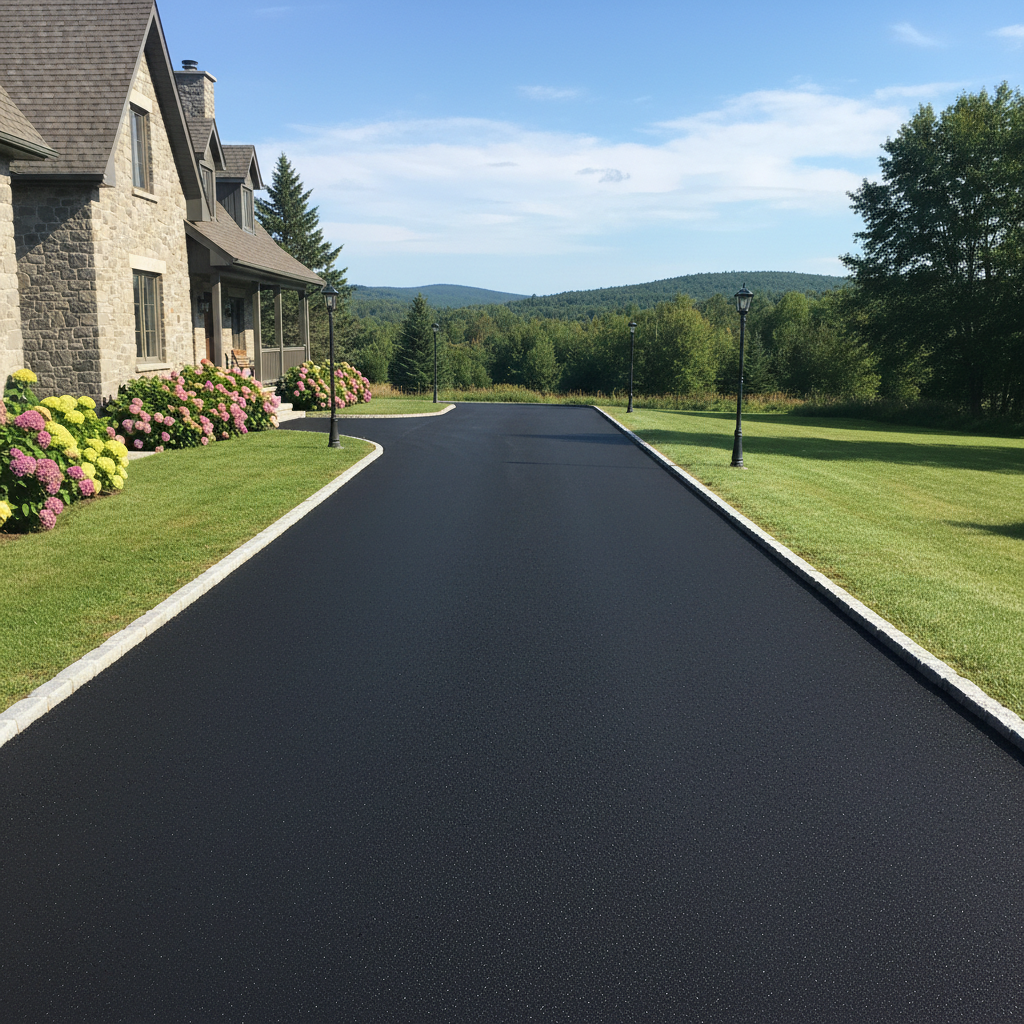
Driveway paving options and costs in Port Colborne
Port Colborne is where a lot of Ontario homeowners want their driveway to look sharp year-round, but it also has a very real cold-season reality: frost and freeze–thaw cycles. With Port Colborne having a population of 20,033 (Statistics Canada, 2021 Census) and about 72.7% of homeowner households owning their homes, many neighbours are actively budgeting for long-term surfaces rather than quick patches. You’ll also see a housing mix where single-detached houses make up 70.6% of dwellings—so driveways are a major part of how properties “hold value” on the street.
In the Hamilton–Niagara Peninsula market, pricing is shaped by a moderate-to-cold climate and the need for a deeper, well-compacted granular base with dependable drainage. Contractors typically plan for frost penetration around the 1.2–1.5 m range, which pushes granular base depth up (often 6–10 inches compacted) and makes proper excavation/drainage part of the “true” driveway budget. That base and drainage can easily represent 35–45% of a residential driveway job.
Demand is especially strong in older neighbourhoods—many homes here were built before 1981 (80.5%, Statistics Canada, 2021 Census)—because you’re more likely to find settlement, shallow base, or drainage issues beneath existing gravel or failing asphalt. Around communities like the west-side residential corridors near the Lake Erie waterfront and along busier streets toward downtown, schedules can tighten as crews gear up for the effective paving season (roughly April–October). Use the table below to compare materials and realistic price ranges before you ask for quotes.
| Material |
Lifespan |
Maintenance |
Best For |
Price per sq ft |
Price Range |
| Asphalt (new installation, proper base) |
15–25 years |
Seal coat every 3–5 years; patch as needed |
Best all-around value for cold climates |
$3.50–$7.50 |
$3,000–$8,000 |
| Asphalt (overlay on existing gravel base) |
10–18 years |
Seal coat every 3–5 years; monitor for base failure |
When excavation is limited but base is still sound |
$4.25–$8.75 |
$3,500–$7,500 |
| Interlocking concrete pavers |
25–40 years |
Occasional re-leveling; replace individual stones |
Curb appeal and easier spot repairs |
$10.00–$18.50 |
$9,000–$20,000 |
| Poured concrete (broom finish) |
20–35 years |
Sealer optionally every 3–7 years; manage cracks |
Clean look, long straight service life |
$8.50–$16.50 |
$7,000–$18,000 |
| Exposed aggregate concrete |
20–35 years |
Sealer recommended; crack management |
Slip resistance and premium appearance |
$10.00–$19.50 |
$8,000–$20,000 |
| Gravel / crushed stone (budget option) |
5–12 years |
Re-grade and top up 1–2 times/year |
Short-term budget or rural-style access |
$2.00–$4.50 |
$2,000–$5,500 |
Prices are estimates only and vary by project scope, site access and material selection.
What affects the price of paving in Port Colborne
In Port Colborne, two homeowners can get quotes that land 30–50% apart for what looks like the “same” driveway. The difference is usually not the asphalt or the pavers—it’s the underground work: how deep they excavate, what base depth they’re targeting for frost protection, and whether drainage is corrected before a new surface goes down. In a seasonally busy Southern Ontario window, contractors also price for demand pressure; when crews and plants are booked in late spring and early summer, scheduling can tighten and unit costs climb.
The Hamilton–Niagara Peninsula climate is a decisive cost factor because freeze–thaw cycling punishes weak subgrades. Frost penetration is planned for around 1.2–1.5 m in this zone, so driveways need a thicker compacted granular base (often 6–10 inches, and sometimes closer to 10 inches depending on soil and drainage). Deeper frost requires more granular material, more hauling, and more compaction time—exactly the work that can represent 35–45% of the driveway budget. Asphalt mix design matters too; a freeze-thaw-rated hot mix will cost more than a basic mix but helps resist early rutting and surface breakdown.
Concrete costs can also swing based on local conditions. For example, older driveways on silty or clay-leaning subsoils may require additional base stabilization and thicker edge support to control settlement. If you have existing concrete that’s lifting or fractured, tear-out and disposal can move a job from mid-band to upper-band; that’s one reason a paving project that might start around the $3,000–$8,000 asphalt band can rise once full-depth excavation and drainage corrections are included.
Finally, the schedule matters: asphalt paving needs workable air temperatures (commonly above about 10°C for hot-mix operations). In colder stretches in April or late October, projects are delayed, which can raise labor/equipment costs. If your home was built before 1981 (many are, at 80.5% of dwellings, Statistics Canada, 2021 Census), you’re more likely to encounter old grades and drainage patterns that drive excavation depth—and cost—up or down.
| Price Factor |
Why It Matters |
Cost Impact |
| Driveway area in sq ft |
Most materials and machine time scale directly with surface area |
Largest driver; can account for 40–60% of total cost |
| Base depth required |
Frost protection depends on compacted granular thickness and soil conditions |
Deeper base can add 10–25%+ |
| Grading and drainage work |
Slope, swales, and tie-ins prevent water from saturating the base |
Often 10–20% of the budget for corrections |
| Tear-out of existing surface |
Breaking/hauling concrete or milling asphalt is labor-intensive |
Commonly adds 5–20% depending on thickness |
| Edge restraints and curbing |
Helps stop paver spread and asphalt edge blowouts |
May add 3–10% but protects long-term performance |
| Sealing requirement |
Asphalt needs seal coat after initial cure (typically 6–12 months) to slow oxidation |
Improves lifespan; direct cost 2–5% now, saves repairs later |
| Site access |
Narrow driveways and tight turns increase handling time and equipment moves |
Can add 5–15% if extra labor/equipment is needed |
| Asphalt mix specifications |
Freeze-thaw-rated mixes better resist Ontario temperature swings |
Often adds 5–12% versus basic mix options |
Permits & regulations in Ontario
In Ontario, paving a private driveway within your own property usually does not require a building permit. That said, there are common exceptions in Port Colborne where approvals are needed, and homeowners should plan for that during the quote stage. Any work that impacts the municipal right-of-way—such as creating or changing curb cuts, altering boulevard areas, adjusting storm drainage, or modifying municipal catch basins/inlets—typically requires municipal approval before excavation or construction begins.
Another area to confirm is lot grading. Some Ontario municipalities have by-laws that restrict how close hard surfaces can be built to property lines or regulate how water must drain across a site so it doesn’t spill onto neighbouring lots or overwhelm municipal systems. Your contractor should include drainage tie-ins in the scope, but you should verify the municipal lot-grading rules with Port Colborne administration before work starts.
Always start with utility locates. In Ontario, call Ontario One Call (now part of a broader network under the same concept) before digging, so locators mark buried services. Then verify your contractor’s paper trail: ask for a current certificate of insurance (liability, and often property if they’re onsite doing staged work) and confirm they have WSIB coverage or are properly registered for workplace safety coverage—then request proof. Finally, confirm contractor licensing and standing using the appropriate online resources for Ontario contractor credentials, and keep a copy of all documentation with your contract.
Step-by-step for homeowners in Port Colborne: 1) Request the contractor’s licence/credentials number(s), 2) ask for WSIB/WCB clearance evidence, 3) obtain a certificate of insurance showing your project address as applicable, 4) confirm the utility locate ticket, and 5) ask whether any right-of-way approvals/curb-cut permits are included or required for your specific location.
Asphalt vs pavers vs concrete for Port Colborne driveways
For Port Colborne driveways, asphalt, interlocking concrete pavers, and concrete all have a place—but freeze–thaw performance and winter maintenance routines (salt, sand, ploughing) make base quality and drainage non-negotiable. Asphalt is the lowest upfront cost option in most residential comparisons and tends to be more forgiving under temperature swings, but it needs sealing—typically every 3–5 years after the initial cure—to slow oxidation and keep water out of the surface. Interlocking concrete pavers cost more to install, yet they’re highly repairable: if one area settles, it can often be lifted, re-leveled, and re-set without replacing the entire driveway. Poured concrete is mid-range in many bids, but it can crack if it isn’t properly air-entrained and jointed for Ontario freeze–thaw movements.
On the Hamilton–Niagara Peninsula, the base preparation is where the durability is won or lost. For asphalt and concrete, contractors commonly plan for a deeper granular base (often around 6–10 inches compacted for residential driveways here), plus well-graded subbase and edge support. For pavers, base depth is critical because point loads from vehicles and differential movement can telegraph through if the bedding sand and base aren’t designed correctly.
Winter performance also matters. All three materials can survive road salt, but asphalt seal coats and proper drainage help prevent raveling and surface breakdown. Concrete that’s properly air-entrained and correctly jointed holds up well, yet de-icing salt applied frequently on small edges can still accelerate wear around cracks and joints. If you’re comparing options: an asphalt driveway might land in the $3,000–$8,000 band, while interlocking pavers often start around $9,000–$20,000 in comparable scopes—worth it when you want long-term curb appeal and the ability to repair localized damage after a frost-related settlement event. If your main goal is value and fast installation, asphalt usually makes the most sense; if curb appeal and easier spot repairs are priorities, pavers are the better long-term choice.
| Material |
Frost Resistance |
Curb Appeal |
Repair Method |
Lifespan |
Price Band |
| Asphalt (sealed regularly) |
Good with proper base/drainage and freeze–thaw mix |
Moderate |
Mill and patch or patch localized failures |
15–25 years |
$3,000–$8,000 |
| Interlocking concrete pavers |
Very good when base is engineered and edges restrained |
High |
Lift/replace individual stones or re-level small zones |
25–40 years |
$9,000–$20,000 |
| Poured concrete (air-entrained) |
Good with air entrainment, thickness, and joints |
Moderate to high (varies by finish) |
Crack repair and patching; larger issues may require sections |
20–35 years |
$7,000–$18,000 |
| Exposed aggregate concrete |
Good when properly finished and sealed if specified |
Very high |
Patch repairs blend visually; localized replacement possible |
20–35 years |
$8,000–$20,000 |
| Permeable pavers (drainage grid) |
Very good where drainage design is truly integrated |
High (clean modern look) |
Spot replacement if clogged or damaged; base may be serviced |
20–35 years (design-dependent) |
$10,000–$22,000 |
| Chip seal / tar-and-chip |
Moderate; can ravel without good base and maintenance |
Low to moderate |
Re-chip and patch over time |
6–12 years |
$2,500–$6,000 |
How to choose a paving contractor in Port Colborne
Choosing a paving contractor in Port Colborne is mostly about verifying the basics and then matching the scope to your soil and drainage. Start by confirming Ontario licensing where applicable for contracting services, then ask for proof of liability insurance and workplace coverage. For WSIB/WCB coverage, you should request the clearance or coverage evidence the contractor uses for Ontario jobs—don’t accept “it’s covered” without a document. Next, require an itemised written quote: you want a breakdown of excavation, granular base depth/materials, compaction, curbs/restraints, lifting/hauling, and the final surfacing course—rather than a single lump-sum number.
Read the scope for inclusions and exclusions: does the quote include permits or approvals if your driveway ties into right-of-way elements? Is disposal of existing concrete or asphalt included, or is it extra? Confirm whether grading is included (and how slopes/tie-ins to existing elevations will be addressed) because that’s what prevents water from undermining the base in freeze–thaw cycles. Also ask about the warranty details: separate workmanship warranty (what the installer covers) from product or manufacturer warranties (what the material covers). For workmanship, ask the length, what triggers coverage, and whether it’s transferable to future owners.
Payment schedule matters in Ontario. Avoid paying more than 10–15% upfront. Hold back until the job is complete and you’ve reviewed finish quality, edges, drainage tie-ins, and any required cure/seal steps. Finally, insist on a written timeline: a target start date and an estimated completion window.
- Request itemised quotes (not lump sums) with measurements and thicknesses.
- Confirm granular base type (Granular A/B where used) and compaction expectations.
- Ask how they handle drainage and slope corrections (swales/tie-ins).
- Verify utility locates are completed and documented before excavation.
- Check liability insurance certificate is current and project-address relevant.
- Request WSIB/WCB clearance proof (not just a verbal statement).
- Confirm licensing/registration details for the contracting activity they’re doing.
- Review what tear-out includes (breaking, hauling, disposal fees).
- Ask if edge restraints/curbs are included and what type.
- Confirm asphalt sealing plan (typically after cure, often 6–12 months).
- Get warranty length, exclusions, and whether it covers freeze–thaw failures.
- Use a payment schedule with 10–15% maximum upfront and a completion holdback.
In Port Colborne, common red flags include: quotes that ignore base depth and drainage yet promise “long life,” vague warranty language (“we stand behind it” without term/details), asking for large deposits upfront, no proof of insurance/coverage, and starting excavation before utility locates. If a contractor won’t put thicknesses, drainage notes, and disposal into writing, treat that as a serious risk.
Frequently asked questions — paving in Port Colborne
Is it worth sealing a new driveway right away in Port Colborne?
In Port Colborne, sealing is usually worth it, but “right away” depends on cure time. Asphalt needs time to cool, stabilize, and cure so the sealer can bond properly. In most Ontario driveway projects, you typically wait until the surface is ready—often around 6–12 months for the first sealing cycle—then you plan repeat seal coats every 3–5 years depending on traffic and weather exposure. Sealing helps slow oxidation and reduces water penetration, which is important here because freeze–thaw cycling can expose weak spots. If your quote is in the $3,000–$8,000 asphalt band, ask whether sealing is included or billed separately (many good installers include only the initial paving and recommend the first seal later, after cure).
What is a chip seal driveway and is it suited to Port Colborne?
Chip seal (also called tar-and-chip) is a surfacing system where a binder (bituminous emulsion) is sprayed and aggregate chips are spread and compacted. It can be a budget-friendly option and is sometimes used where a lower-cost, maintenance-ready surface is acceptable. In Port Colborne’s freeze–thaw climate, chip seal can work if the base is engineered correctly and the drainage is solid, but it generally doesn’t deliver the same long-term smoothness as asphalt or the crack-resistance you get with a deeper, properly built paved base under asphalt. Expect more frequent maintenance planning versus traditional asphalt: re-chipping and spot repairs are common. If you’re comparing costs and your paving options are in the $3,000–$8,000 asphalt range, chip seal is often lower upfront but usually shorter lifespan (commonly closer to the mid-single-digit to teens depending on build quality and traffic).
How much does driveway crack repair cost in Port Colborne?
Crack repair pricing in Port Colborne depends on how wide and deep the crack is, whether water is getting underneath, and the driveway material. For asphalt, typical crack sealing (routing/cleaning and filling) is often priced by linear foot or by small job minimums; patching localized failures can be more. For concrete, repair can range from crack filler and joint sealant to patching spalled areas, but if the crack indicates base movement, you may need more extensive remedial work. As a ballpark, “repair & seal” projects frequently sit around the $400–$2,000 band for smaller areas. If the crack pattern is widespread after freeze–thaw, a contractor may recommend milling/patching or a larger overlay rather than repeat small repairs. A good quote should identify the crack type and include whether they recommend a base/drainage fix to prevent recurrence.
What base thickness do I need for pavers in Port Colborne?
Paver base thickness in Port Colborne should be designed around frost protection, soil strength, and site drainage—not just a standard recipe. In Southern Ontario’s moderate-to-cold zone, a common residential approach is to build a deeper compacted granular base (often in the 6–10 inch range compacted) plus bedding sand, with edge restraints to stop lateral movement. If your soil is softer or your existing grade drains poorly, contractors may recommend thicker base and/or stabilization. For pavers, the bedding sand layer is usually relatively thin, but the base is the real “insurance” against differential movement during freeze–thaw cycles. If you’re comparing paver bids in the $9,000–$20,000 range, ask how many inches of granular base are included and whether they include drainage grading corrections. If a quote skips base details, it’s a sign the design may not be frost-aware.
How do I get the most accurate paving quote in Port Colborne?
To get the most accurate quote in Port Colborne, provide a clear measurement of driveway width and length and make sure the contractor measures on-site. Ask for a driveway thickness and build-up breakdown: excavation depth, granular base type and compacted depth, drainage tie-ins, and surfacing thickness. A truly itemised quote should include tear-out scope (breaking and hauling), disposal, edge restraints/curbs, and any permits or right-of-way approvals if your driveway ties into the municipal boulevard. Request a written start window and completion estimate so you understand how the April–October season affects scheduling. Finally, confirm the contractor’s Ontario coverage—liability insurance and WSIB/WCB proof—so there are no surprises during work. If you’re budgeting near the $3,000–$8,000 asphalt band, make sure the quote includes the base and drainage line items; that’s where most “quote gaps” are created.
How much does it cost to pave a driveway in Port Colborne?
Driveway paving costs in Port Colborne typically fall within regional Southern Ontario price bands, primarily depending on asphalt vs pavers vs concrete, driveway area, and how much base/drainage work is required. For asphalt driveway paving, many residential installs land within the $3,000–$8,000 range, assuming proper base preparation. Concrete driveway projects commonly fall in the $7,000–$18,000 band, while interlocking concrete pavers often start around $9,000–$20,000 depending on pattern, edge details, and excavation depth. If your home is in an older area (many dwellings were built before 1981, 80.5% per Statistics Canada, 2021 Census), the likelihood of drainage corrections or deeper excavation increases—so your final price may lean toward the upper side of these ranges. A reliable contractor will confirm soil condition and frost-proof base design before you lock a budget.