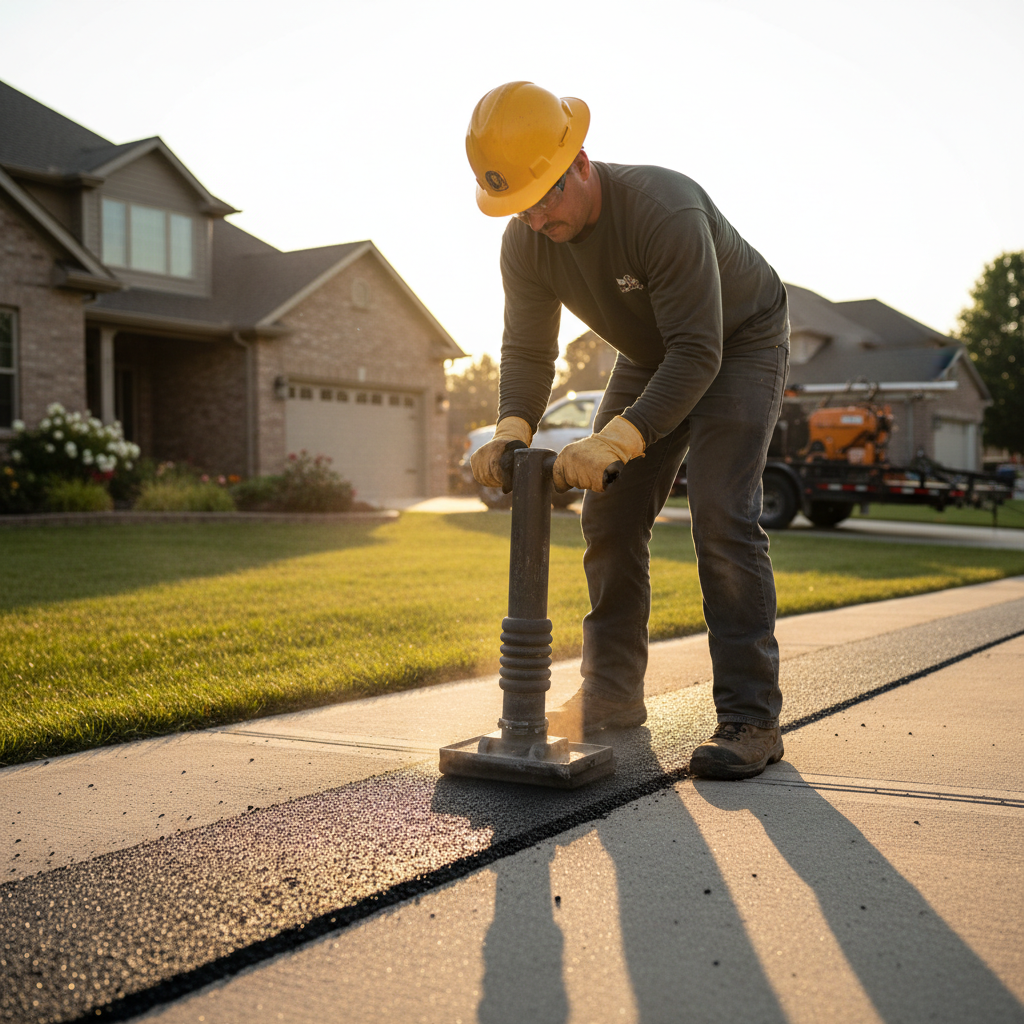
Driveway paving options and costs in Pickering
Pickering homeowners typically have several solid driveway paving choices, but the “right” one usually comes down to budget, how your lot sheds water, and how your driveway copes with Toronto’s repeated freeze–thaw cycles. In Pickering’s housing stock, 59.6% of dwellings are single-detached homes, so many driveways are attached to detached houses with a similar footprint and access style. That matters for estimating because excavation, base prep, and paving crew time scale closely with the driveway area and how tight the equipment route is.
In the Toronto economic region, frost depth and freeze–thaw are primary cost drivers. Ground can freeze roughly 3–4 feet, so contractors commonly need deeper, well-compacted granular base and reliable drainage to prevent water pooling under the pavement. The paving season in Ontario is also compressed into late spring through early fall, which can tighten scheduling and nudge pricing for peak dates. If you’re in neighbourhoods like Dunbarton or West Shore, demand tends to be steady during that work window, especially when multiple neighbours complete projects in the same season.
Below is a realistic cost comparison for common driveway finishes, assuming proper base preparation and typical residential site conditions. Use it to sanity-check quotes before you book a site visit and ask the contractor to show how they’ll handle base depth, drainage, and edge restraint.
| Material |
Lifespan |
Maintenance |
Best For |
Price per sq ft |
Price Range |
| Asphalt (new installation, proper base) |
15–25 years |
Seal every 3–5 years |
Good value, smooth ride, quick install |
$6.50–$12.50 |
$3,500–$8,000 |
| Asphalt (overlay on existing gravel base) |
10–20 years |
Seal every 3–5 years; monitor edge movement |
Budget refresh when base is stable |
$6.00–$10.50 |
$3,500–$7,500 |
| Interlocking concrete pavers |
25–40 years |
Occasional re-leveling; replace individual stones |
Curb appeal, easy localized repairs |
$14.00–$26.00 |
$9,000–$20,000 |
| Poured concrete (broom finish) |
20–30 years |
Seal if desired; keep joints maintained |
Clean, durable surface; moderate maintenance |
$11.00–$20.00 |
$6,000–$15,000 |
| Exposed aggregate concrete |
25–35 years |
Seal periodically; manage jointing |
Higher-end look, skid-resistant finish |
$13.00–$22.00 |
$7,000–$18,000 |
| Gravel / crushed stone (budget option) |
3–10 years (varies) |
Top up yearly; weed control |
Lowest upfront cost, short-term solution |
$3.00–$6.00 |
$2,000–$5,000 |
Prices are estimates only and vary by project scope, site access and material selection.
What affects the price of paving in Pickering
In Toronto and the broader Ontario market, you can absolutely see a 30–50% spread between quotes for what sounds like the same driveway. The difference usually isn’t the asphalt or concrete itself—it’s the “hidden” work: excavation depth, granular base and compaction, drainage correction, disposal, and how carefully the contractor builds the edges to handle frost movement. Two driveways that both measure “about the same size” can still differ dramatically if one has poor soil saturation, an old base that failed, or a steep slope that requires additional grading.
For Pickering, frost line depth and freeze–thaw cycles are decisive cost factors. With ground freezing roughly 3–4 feet in the Toronto area, contractors often need a thicker compacted granular base and stronger subgrade preparation so the pavement doesn’t heave and crack when it freezes and thaws. In practical terms, thicker base means more material, more hauling, more labour and compaction time. Also, the paving season is shorter here because hot-mix asphalt is typically placed above air/road temperature thresholds (commonly above 10°C for best performance). When demand concentrates in late spring and early summer, prime dates cost more and scheduling pressures can add labour premiums.
Concrete pricing can swing based on mix design and detailing. For example, a broom-finished poured slab that’s properly air-entrained and jointed can be mid-range (often starting around the $6,000–$15,000 band), while decorative finishes like exposed aggregate usually cost more due to formwork, finishing labour, and curing/efflorescence risk management. Meanwhile, if your driveway was built before 1981 (31.2% of homes in Pickering were built before then), you may find older grading, buried topsoil, or sub-base inconsistencies that increase tear-out and base rebuild costs. In contrast, a well-drained lot with stable gravel often keeps asphalt new-install pricing closer to the lower end of the $3,500–$8,000 band.
| Price Factor |
Why It Matters |
Cost Impact |
| Driveway area in sq ft |
Most material and paving labour scale directly with square footage |
High (primary driver) |
| Base depth required |
Frost line demands sufficient compacted granular thickness to prevent heaving |
High (major material + excavation) |
| Grading and drainage work |
Fixing slope, adding drainage, and preventing ponding reduces freeze-thaw damage |
Medium to high |
| Tear-out of existing surface |
Breaking concrete or removing old asphalt plus proper disposal affects labour and equipment time |
Medium to high |
| Edge restraints and curbing |
Reliable restraints prevent paver spread and asphalt edge raveling under frost movement |
Medium |
| Sealing requirement |
Asphalt needs sealing after installation to protect against moisture infiltration and oxidation |
Low to medium (adds future scheduled cost) |
| Site access |
Narrow lots, long drive paths, or limited staging increase equipment and labour time |
Low to medium (can jump if access is tight) |
| Asphalt mix specifications |
Freeze-thaw-rated mixes cost more but improve durability in Ontario winter conditions |
Medium |
Permits & regulations in Ontario
In Ontario, paving a private driveway within your own property usually does not require a building permit. However, there are important exceptions tied to what you change beyond your lot line. Work in the municipal right-of-way—such as a new curb cut, modifications to the boulevard, or changes that affect storm drainage—typically requires municipal approval. If your project involves altering catch basins, adjusting drainage patterns, or connecting drainage in a way that impacts municipal infrastructure, expect permit/approval steps.
Some municipalities also have lot-grading bylaws that restrict how close hard surfaces can be placed to property lines or how grading can divert runoff. Even when a permit isn’t required for the pavement itself, verifying drainage requirements matters in Pickering because improper grading is a common trigger for winter heaving and premature surface failure.
Step-by-step, verify your contractor before excavation:
- Confirm they carry liability insurance and that the certificate lists your address (or at least shows current coverage limits).
- Ask for proof of WSIB/WCB coverage (as applicable) and keep a copy for your records.
- Check their Ontario business details and credentials via official public registries (and ensure the person/company on the contract matches the insurance).
- Use Ontario One Call to request utility locates before any digging, and require the contractor to wait for locate confirmation.
- Ask whether disposal, saw-cutting/tie-in details, and any municipal approval support are included—or billed separately.
If your driveway ties into municipal curb/drainage, ask the contractor to spell out which approvals are needed and who is responsible for pulling them.
Asphalt vs pavers vs concrete for Pickering driveways
For Pickering’s freeze–thaw climate, asphalt, interlocking pavers, and concrete can all perform well—but they get there through different strategies. Asphalt is usually the lowest upfront cost, with a smooth ride and a faster install. The trade-off is that asphalt must be sealed regularly (typically every 3–5 years in Ontario) to protect against moisture infiltration. With Toronto-area frost pushing/pulling moisture in the soil, that sealing schedule helps slow deterioration and can reduce cracking around edges and high-stress zones.
Interlocking concrete pavers cost more upfront, but they’re the most forgiving to localized repairs. When water or frost movement causes minor settlement, a good paver system built on compacted base and proper bedding can be re-leveled by section without demolishing the whole surface. For curb appeal in neighbourhoods across Pickering—especially near retail corridors and newer subdivisions—pavers are also a visual upgrade that often matches homeowners’ maintenance expectations.
Poured concrete is mid-range to higher depending on finish. Concrete can be durable if it’s air-entrained, properly jointed, and installed over the right base depth to manage frost movement. Without good drainage detailing and air-entrainment, Ontario winters and de-icing salts increase cracking risk.
A quick dollar reality check: if asphalt new installation lands near the $3,500–$8,000 band, moving to interlocking pavers often targets the $9,000–$20,000 band. That extra cost is justified when you want high curb appeal, easy spot repairs, and a surface that tolerates minor movement better than a monolithic slab. If your priority is lowest initial cost and you can commit to sealing, asphalt is often the practical choice for many detached homes.
| Material |
Frost Resistance |
Curb Appeal |
Repair Method |
Lifespan |
Price Band |
| Asphalt (sealed regularly) |
Good when base is deep/compacted and drainage is correct |
Medium |
Mill and overlay sections; patching for localized issues |
15–25 years |
$3,500–$8,000 |
| Interlocking concrete pavers |
Very good with proper base and edge restraint |
High |
Remove and reset individual pavers or small areas |
25–40 years |
$9,000–$20,000 |
| Poured concrete (air-entrained) |
Good with air-entrainment, jointing, and drainage |
Medium |
Crack repair/seal; full slab replacement if extensive |
20–30 years |
$6,000–$15,000 |
| Exposed aggregate concrete |
Good to very good when joints and drainage are engineered |
High |
Repair patches are possible but often less “invisible” than pavers |
25–35 years |
$7,000–$18,000 |
| Permeable pavers (drainage grid) |
Excellent for managing surface water when designed correctly |
Medium to high |
Targeted stone replacement; inspect sub-base if issues persist |
25–35 years (depends on sub-base) |
$10,000–$22,000 |
| Chip seal / tar-and-chip |
Variable; depends heavily on base and maintenance |
Low to medium |
Spot repairs; re-chip periodically |
7–15 years |
$3,000–$7,000 |
How to choose a paving contractor in Pickering
Choosing the right contractor in Pickering is mostly about confirming competence, coverage, and clarity—because the basement-level work (base, drainage, compaction, and edge restraints) drives long-term performance in our freeze–thaw climate. Start by verifying Ontario coverage:
- Ontario licensing/registration (where applicable): ask what category their work falls under and provide proof of current business registration.
- Liability insurance: request a current certificate of insurance and confirm it covers paving/excavation scope.
- WSIB/WCB coverage: ask for proof that applies to the crew doing the work.
- Utility locates: confirm they will call Ontario One Call and won’t start excavation until locates are complete.
- Itemised quotes: require a line-by-line breakdown—excavation, base material and compaction, geotextile (if used), paving material, edging/restraints, and disposal.
- Scope exclusions: get it in writing (what’s not included—sidewalk/approach adjustments, permit costs if applicable, drainage upgrades, topsoil backfill, or saw-cutting).
- Warranty: ask for workmanship warranty length and whether there’s a product/manufacturer warranty; confirm what’s transferable if you sell.
- Payment schedule: don’t pay more than about 10–15% upfront. Hold back the remainder until final completion and cleanup.
- Start/completion dates: ask for a written timeline, including curing/settling time before final driving.
- Adverse weather plan: in Ontario, work sequencing matters—ask how they handle unexpected cold snaps or rain delays.
- Compaction/testing approach: ask how they verify base compaction and how they document it.
For practical decision-making, compare quotes not just by total price but by how they engineer for frost and water control. In Pickering, red flags include: vague “lump sum” pricing with no base depth stated, no mention of drainage or edge restraint, refusing to provide insurance/WSIB proof, starting work before locates are marked, and a warranty that only covers “materials” but not workmanship.
Frequently asked questions — paving in Pickering
How often should I seal my asphalt driveway?
In Pickering (and across the Toronto area), sealing timing is one of the simplest ways to protect asphalt through winter moisture and freeze–thaw. As a rule of thumb, plan on sealing about once every 3–5 years after installation, depending on traffic, weather exposure, and how quickly the surface dries between wet spells. If your driveway is frequently plowed or has lots of direct tire wear, sealing may be closer to every 3 years. If it’s lightly used and well-drained, you may stretch it closer to 5. Sealing also helps delay small surface oxidization that can lead to cracking. If you’re budgeting, note that sealing is a recurring maintenance step—so compare the long-term value of an asphalt quote (often within the $3,500–$8,000 band for new installs) against pavers or concrete options if you prefer less recurring upkeep. (Statistics Canada, 2021 Census)
Why does my driveway crack and heave in winter?
Cracking and heaving are usually signs that water and frost are working together under the pavement. In Pickering, frost can penetrate to roughly 3–4 feet, so if drainage isn’t correct or the base/subgrade isn’t compacted to the right depth, moisture can sit under the surface and expand when it freezes. That expansion pushes upward, leading to heaving, then cracking when traffic loads the area. Common triggers include poor slope toward the street, missing/weak edge restraint that lets material migrate, and an old base with voids that traps water. De-icing salts and repeated plow impacts can worsen the surface once cracks begin. The fix is not just “patch and move on”—a durable repair typically involves correcting drainage, rebuilding the base, and installing the right asphalt mix for freeze–thaw performance.
Do I need a permit to pave my driveway in Ontario?
Often, no permit is required to pave the portion of a private driveway within your own property in Ontario. In Pickering, you typically can proceed without a permit when the work stays on your lot and doesn’t alter municipal infrastructure. However, permits or municipal approvals are commonly required when you’re working in the municipal right-of-way—such as creating a new curb cut, changing boulevard conditions, or modifying storm drainage in a way that affects municipal systems. Some locations also regulate lot grading, which can impact how close and how you shape runoff around a driveway. Before excavation, confirm utility locates through Ontario One Call and ask your contractor to clearly state whether their scope includes any required municipal approvals. A good contractor will spell out these boundaries in the written proposal.
How long before I can drive on new asphalt?
After new asphalt installation in Pickering, you can usually drive on it relatively soon, but the timing depends on temperature and lift thickness. In typical residential driveway work, contractors commonly allow light vehicle use after the asphalt has cooled and set enough to prevent raveling—often the same day. If the job includes thicker placement, base changes, or additional touch-up lifts, the crew may extend that window. For best results, follow your contractor’s instructions for the first 24–48 hours and avoid sharp turns and heavy loads until the surface is fully cured. A proper base and correct compaction also affect how the asphalt settles after installation. If your quote includes an asphalt system designed for freeze–thaw, the workmanship matters as much as the material; that’s one reason reputable contractors don’t rush the final steps.
What causes potholes and how are they repaired?
Potholes in Pickering are usually the result of water getting into the asphalt or base, then expanding during freeze–thaw and breaking the structure underneath. Over time, traffic loads remove the weakened material, and the damaged area grows into a pothole. Patch failures can also happen when repairs are done on top of unstable base instead of removing and rebuilding to a sound layer. A proper pothole repair typically involves cutting out the damaged area, removing failing base if needed, compacting the sub-base, and then repaving the section with appropriate asphalt lifts and tack bonding. If potholes are frequent in the same area, it’s a warning that drainage or base thickness may be inadequate—not just a “surface issue.” That’s exactly why detailed, itemised quotes matter when you’re comparing options in the $3,500–$8,000 asphalt new-install range versus alternatives.
How do I prepare for a paving project?
Preparation helps your paving go smoother in Ontario’s short working season. First, clear the driveway area of vehicles, basketball hoops, and stored items so the crew can stage equipment. If you have landscaping or interlock edging to protect, ask the contractor what’s included for removal and reinstatement. Schedule around your arrival dates, and ask for a written start/completion estimate because late spring through early fall can be busy in the Toronto market. Before excavation, confirm utilities are located via Ontario One Call and ensure the contractor waits for locate clearance. Also, review the written scope for what’s included—disposal, grading, drainage corrections, and any tie-ins. Finally, set expectations for curing and any sealing schedule for asphalt (often every 3–5 years after install), so you don’t end up surprised by follow-up maintenance. (Statistics Canada, 2021 Census)