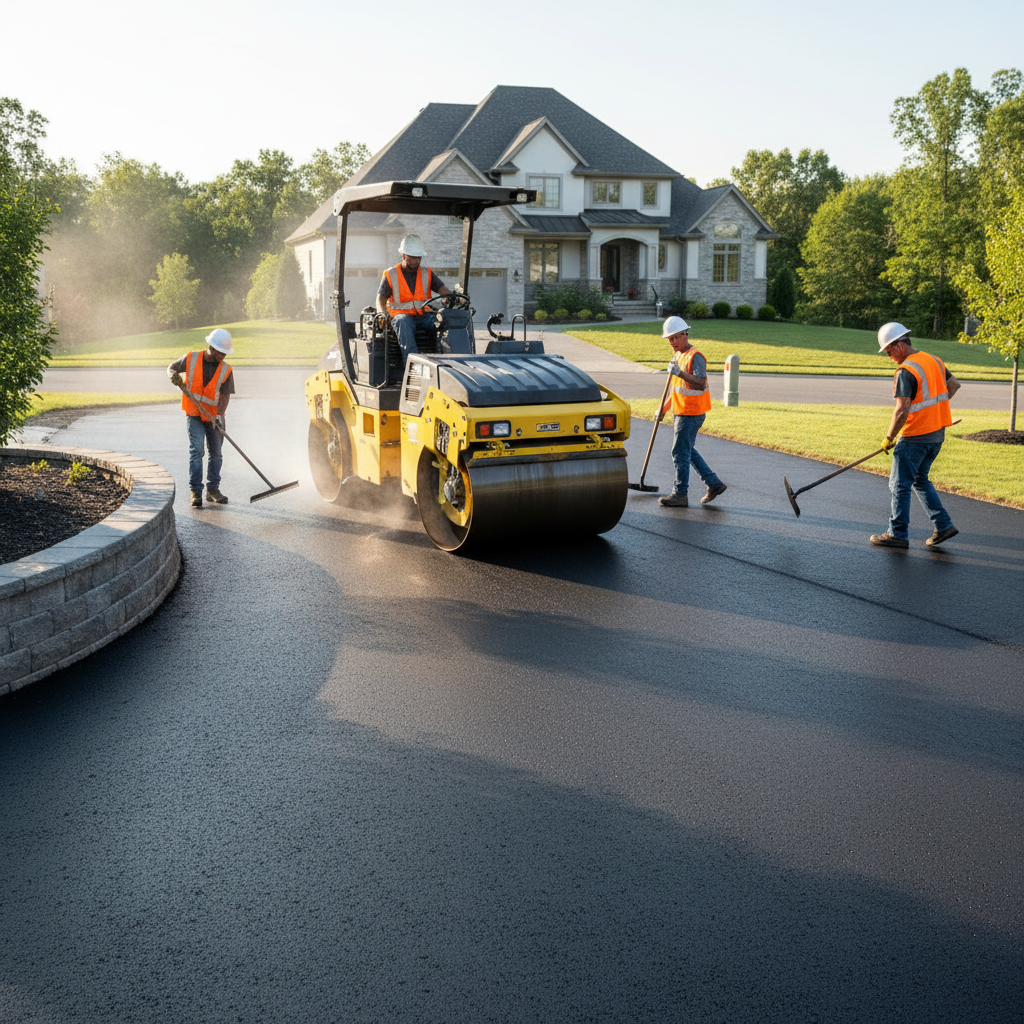
Driveway paving options and costs in Cambridge
In Cambridge, Ontario, homeowners typically choose among asphalt, interlocking concrete pavers, and concrete because most private driveways connect to single-detached houses, and single-detached homes make up 56.8% of dwellings locally. Cambridge also has a large pre-1981 housing stock (48.4% of homes built before 1981), so it’s common to see older driveways that need full reconstruction or a proper overlay rather than a quick patch. In this Kitchener–Waterloo–Barrie corridor, frost depth and freeze-thaw cycles are a major cost driver: contractors often have to excavate deeper, rebuild a well-compacted granular base, and pay extra attention to drainage so the surface doesn’t heave or crack prematurely. The paving season is shorter here too—hot-mix asphalt generally needs warm air and pavement temperatures above about 10°C—so scheduling pressure during spring and early summer can affect pricing and availability. That’s why two quotes for the same footprint can differ materially if one contractor includes drainage corrections, granular base thickness, and proper compaction testing while the other doesn’t.
If you’re driving through areas like Preston (and similar Cambridge neighbourhoods with frequent driveway replacements), you’ll also notice more demand for paver work because curb appeal matters and repairs can be localized. Use the table below to compare typical lifespan, maintenance expectations, and realistic price ranges for common residential driveway setups in Cambridge, before you request an itemized quote.
| Material |
Lifespan |
Maintenance |
Best For |
Price per sq ft |
Price Range |
| Asphalt (new installation, proper base) |
15–25 years |
Seal every 3–5 years; patch as needed |
Lower upfront cost with good longevity |
$7–$12 |
$3,500–$7,000 |
| Asphalt (overlay on existing gravel base) |
10–18 years |
Seal every 3–5 years; fix localized failures |
Smaller budgets when base conditions are strong |
$6–$10 |
$3,200–$6,200 |
| Interlocking concrete pavers |
25–40 years |
Weed control; occasional joint sand refresh |
Premium look and easy spot repairs |
$18–$30 |
$12,000–$22,000 |
| Poured concrete (broom finish) |
25–35 years |
Seal optional; manage surface cracking |
Clean, durable surface with straightforward cleaning |
$14–$22 |
$9,000–$16,000 |
| Exposed aggregate concrete |
25–35 years |
Seal optional; periodic cleaning |
Slip-resistant finish and premium texture |
$16–$26 |
$11,000–$18,500 |
| Gravel / crushed stone (budget option) |
5–10 years |
Re-grade; top up annually or as needed |
Temporary solution or overflow parking |
$3–$7 |
$2,000–$4,500 |
Prices are estimates only and vary by project scope, site access and material selection.
What affects the price of paving in Cambridge
In the Kitchener–Waterloo–Barrie market, it’s common to see paving quotes move by 30–50% for the “same” driveway when the scope isn’t identical. The biggest differences usually come down to how much excavation is included, whether drainage problems are corrected, what granular base thickness is specified, and how much of the existing surface is removed (and disposed of) versus reused. Frost depth and freeze-thaw cycles are decisive in this region: deeper frost requires a thicker, well-compacted granular base (often in the 6–12 inch range for typical Ontario driveway builds depending on subgrade and design), because the pavement system needs to resist heaving, settlement, and cracking. In colder Ontario, the paving season also tightens—hot-mix asphalt typically needs air and surface conditions warm enough (generally above 10°C) to place and compact properly—so contractors concentrate crews and plants into a narrower window. That scheduling pressure can push asphalt pricing toward the upper end of its band.
Concrete costs can swing too. For example, a driveway built on older, potentially weaker subgrade (common in pre-1981 homes) may require additional base rebuild before poured concrete is poured; otherwise, you can get early surface cracking. Conversely, if your site already drains well and the existing base is sound, an asphalt overlay may come in closer to the lower end of the asphalt band (around $3,500–$7,000 installed), with less excavation. If drainage is poor or water pools toward the foundation or garage apron, expect more base and grading work, which can raise the total close to the higher side of asphalt or shift you into interlocking paver pricing territory ($12,000–$22,000) where restraint and reconstruction of problem areas can be done methodically.
| Price Factor |
Why It Matters |
Cost Impact |
| Driveway area in sq ft |
The surface itself drives material and paving time. |
Major: often the largest line item (100 sq ft increase can be several hundred to over $1,000 depending on material). |
| Base depth required |
Frost resilience depends on granular thickness and compaction. |
Major: deeper excavation/base rebuild increases aggregate, labour, and equipment hours. |
| Grading and drainage work |
Correct slopes and outlets reduce water migration that causes heave. |
Medium to major: can add significant excavation, pipe, and regrading time. |
| Tear-out of existing surface |
Old asphalt/concrete must be broken and hauled; base may be compromised. |
Medium: impacts disposal fees and crew time; can become major if full-depth reconstruction is required. |
| Edge restraints and curbing |
Restraints keep pavers from spreading and control asphalt/concrete edges. |
Medium: added materials and forms/blocks, especially on irregular lots. |
| Sealing requirement |
Asphalt performance in freeze-thaw improves with routine sealing. |
Low to medium: modest annual/periodic cost, but included or excluded affects your quote comparison. |
| Site access |
Narrow drives slow equipment movement and require more staging time. |
Medium: added handling time can raise labour costs. |
| Asphalt mix specifications |
Freeze-thaw-rated mixes help resist rutting and surface deterioration. |
Low to medium: slightly higher material cost, but can extend life and reduce early failures. |
Permits & regulations in Ontario
In Ontario, paving a private driveway within your own property usually does not require a building permit—especially when the work is limited to the driveway surface and typical reconstruction on your own lot. However, if your project touches the municipal right-of-way, that’s where approvals commonly come into play. In Cambridge, work that typically does require municipal approval includes things like creating or modifying a curb cut, altering boulevard areas, changing grading in the street allowance, or modifying storm drainage connections. If your plan changes how water leaves the site (for example, adding catch basins, reconnecting downspouts, or changing drainage patterns near the roadway), confirm requirements before excavation.
Step-by-step, a Cambridge homeowner can stay compliant: first, schedule utility locates before any digging (Ontario One Call). Next, ask the contractor whether they will handle any required municipal applications or confirm they know what’s needed for your specific location. Then verify the contractor’s Ontario coverage paperwork: request an Ontario licence reference/number if applicable to their scope, and ask for a certificate of insurance showing general liability (and confirm WCB/WSIB coverage where relevant to their trade operations). Finally, confirm the contractor can provide a clearance letter or equivalent proof of account status and that the certificate of insurance matches the legal business name on the contract—this is where disputes often get avoided.
Asphalt vs pavers vs concrete for Cambridge driveways
For Cambridge driveways, the choice usually comes down to upfront budget versus long-term repair strategy in a freeze-thaw climate. Asphalt is typically the lowest upfront option and, when installed over a properly prepared granular base, can perform well through winter—just plan to seal regularly (commonly every 3–5 years). Asphalt also tends to be the most economical if you have decent subgrade drainage and want a clean, smooth finish without paver-level labour. Interlocking concrete pavers are the premium upfront choice (often the highest installed cost) but they’re highly forgiving when repairs are needed: individual stones can be lifted and reset, which matters when a single area settles or a utility trench is later reopened. Poured concrete usually lands in the mid-to-high range; it can be durable and low maintenance, but freeze-thaw cracking risk increases if the mix isn’t properly air-entrained and if the base isn’t built to handle Ontario frost.
In Kitchener–Waterloo–Barrie conditions, drainage design is the deciding factor for all three materials: correct slopes, daylighting to safe outlets, and keeping water from migrating under the slab or base reduce heaving and premature deterioration. For homeowners who regularly use salt and get routine plowing, asphalt’s longevity improves when it’s sealed on schedule and patching is handled quickly. A simple cost example: if you’re choosing between asphalt ($3,500–$7,000) and concrete ($9,000–$16,000) for a driveway where base conditions are already good, the asphalt may be hard to beat on budget. But if you expect future utility access or you want the ability to repair a local problem without replacing the entire surface, pavers can justify the jump toward $12,000–$22,000.
| Material |
Frost Resistance |
Curb Appeal |
Repair Method |
Lifespan |
Price Band |
| Asphalt (sealed regularly) |
Good when base and drainage are correct; seal helps protect |
Medium |
Patch and reseal localized areas |
15–25 years |
$3,500–$7,000 |
| Interlocking concrete pavers |
Very good due to segmented system and flexible repairs |
High |
Lift/replace individual units; reset bedding sand |
25–40 years |
$12,000–$22,000 |
| Poured concrete (air-entrained) |
Good when properly air-entrained and reinforced as needed |
Medium to high |
Repairs are typically patching/crack repair; sometimes slab replacement |
25–35 years |
$9,000–$16,000 |
| Exposed aggregate concrete |
Good when mixed and cured correctly; surface texture aids slip resistance |
High |
Patch/repair exposed areas; may require surface rework for larger failures |
25–35 years |
$11,000–$18,500 |
| Permeable pavers (drainage grid) |
Very good drainage reduces freeze-thaw stress when designed correctly |
High (modern look) |
Replace affected units; maintain aggregates/joints |
25–40 years |
$14,000–$24,000 |
| Chip seal / tar-and-chip |
Fair; more sensitive to base quality and temperature swings |
Low to medium |
Spot chip maintenance; recoating when required |
5–12 years |
$2,800–$5,800 |
How to choose a paving contractor in Cambridge
Choosing the right paving contractor in Cambridge comes down to verifying coverage, then confirming what’s actually included in the scope. Start with Ontario licensing (where applicable to their trade and the work they’re performing) and ask for proof of general liability insurance. For workers, confirm WCB/WSIB coverage where relevant—request a clearance letter or proof of account status. You can also verify certificates by matching the business name on the certificate to the contract and ensuring the policy is active for the project dates. If a contractor can’t provide documents promptly, that’s a meaningful red flag.
Next, get 2–3 itemised written quotes. Avoid a single “lump sum” number without breakdowns. A fair quote should separate labour and materials where practical, list excavation depth and base build-up, include disposal details for removed asphalt or concrete, and specify whether edge restraints, geotextile (if used), and drainage corrections are included. Read the exclusions: ask whether a permit is included if municipal approval is needed, whether utilities are protected, and whether site cleanup and final grading are part of the package.
Warranty matters too. Ask for the length of workmanship warranty and whether the product/manufacturer warranty applies and is transferable to you as the homeowner. For payment, keep upfront deposits modest—typically no more than 10–15%—and use a holdback until the job is complete and you’ve confirmed grading, compaction, and final surface match. Finally, get the start date and a realistic completion window in writing, because Cambridge projects often need to lock scheduling early in the season.
- Request insurance certificates and confirm they match the contractor’s legal business name.
- Verify WCB/WSIB coverage with a clearance letter where applicable.
- Ask for at least 3 references from Ontario residential driveways completed within the last 2 years.
- Get an itemized quote: excavation, base depth, drainage work, materials, and disposal.
- Confirm who provides utility locates and how protection is handled on-site.
- Ask how they’ll ensure proper compaction (method and how they validate base).
- Clarify edge details: restraints/curb runs to prevent wash-out and paver spread.
- For asphalt, confirm sealing plan (timing after install and whether it’s included).
- Confirm concrete mix requirements (air-entrainment) and curing plan for freeze-thaw.
- Check warranty terms in writing: workmanship vs materials, and any exclusions.
- Review the schedule: start date, milestones, and what happens if weather delays work.
- Set payment milestones with a holdback until final grading and cleanup are verified.
Common red flags in Cambridge include: vague scopes that don’t specify base thickness or drainage corrections, refusal to provide insurance/WCB/WSIB documentation, quoting “cheap” without disposal or proper tear-out, promising paving in conditions that don’t meet temperature requirements, and taking large deposits early with no written schedule or contract terms.
Frequently asked questions — paving in Cambridge
How do I prepare for a paving project?
In Cambridge, preparation starts before equipment arrives. Clear your driveway and keep pets away during excavation and paving. If you have shrubs, retaining edges, or a garden bed close to the driveway, mark what you want protected and ask the contractor how they’ll handle restoration. Schedule utility locates through Ontario One Call before any digging. If your driveway ties into a curb cut or affects boulevard grading, confirm municipal requirements early so you’re not waiting on approvals mid-project. Also, document existing issues with photos: low spots, standing water after rain, or areas that heave in winter—these help the contractor design drainage and base thickness correctly, which is critical in Kitchener–Waterloo–Barrie freeze-thaw conditions (Statistics Canada, 2021 Census).
How do I compare paving quotes fairly?
Compare quotes line-by-line, not just by total price. Ask each contractor to spell out excavation depth, granular base design, compaction expectations, and whether drainage corrections are included. Confirm disposal fees for old asphalt or concrete, and whether edge restraints are part of the scope—those details can easily change the final number. For example, one asphalt quote may land near the lower band (about $3,500–$7,000) by assuming overlay-ready conditions, while another may price full tear-out to address drainage or weak subgrade, which raises cost. Make sure warranties, sealing timelines (for asphalt), and concrete mix requirements (air-entrainment) are stated clearly in the contract.
Can asphalt be laid in cold weather in Cambridge?
Asphalt can be damaged when placed in unsuitable weather, so in Ontario you generally shouldn’t rely on “cold-weather asphalt” unless the contractor can meet temperature and compaction requirements. Hot-mix asphalt needs warm conditions—typically air and pavement temperatures above about 10°C—so in Cambridge you often see work concentrated from spring into early fall when crews can maintain proper placement. If a contractor schedules work through marginal temperatures, ask how they’ll protect the surface, manage compaction, and meet mix specifications for freeze-thaw performance. A properly planned job in the paving season is what helps prevent early raveling, bleeding, and premature cracking.
What is a driveway apron and do I need one in Cambridge?
A driveway apron is the transition area that connects your driveway surface to the curb line or the street edge. In Cambridge, whether you need one depends on your existing driveway arrangement and how water flows at the road interface. If your driveway meets the street with a rough transition or if there’s a curb cut that needs adjustment, an apron (often with proper slope, materials, and sometimes curb/edge work) helps control edge break-up and reduces water infiltration into the base. If your apron work extends into the municipal right-of-way, municipal approvals may be required. Ask your contractor if the apron scope is included and whether any curb cut or drainage changes trigger an approval process.
How do I maintain my driveway through Cambridge winters?
Winter maintenance is about protecting the surface and minimizing water and salt impact. For asphalt, keep plowing blades properly adjusted to avoid gouging; remove sand and debris when weather permits (sand trapped in the surface can hold moisture and accelerate wear). Avoid over-salting—use salt in moderation, focusing on safety. After freeze-thaw cycles, watch for early signs: small edge failures, soft spots, or cracks widening. Address them quickly with patching rather than waiting, because freeze-thaw can expand minor defects. If you have interlocking pavers, brush off loose sand and keep joints filled as needed. Concrete also benefits from timely crack repair and good drainage so meltwater doesn’t pool against the slab.
Is it worth sealing a new driveway right away in Cambridge?
For asphalt, sealing is usually beneficial, but “right away” depends on product timing and curing. Most contractors recommend waiting until the asphalt has cured sufficiently before applying sealcoat—often after the initial set-up period—so sealing too early can trap moisture and reduce performance. In Cambridge’s freeze-thaw climate, sealing is one of the lower-cost maintenance steps that can help protect asphalt from water penetration and oxidation, and it fits within typical maintenance planning even when budgets are tight. If your quote is targeting the asphalt band (for example around $3,500–$7,000), ask whether your contractor includes the first sealcoat and what timeframe they recommend. For concrete, sealing is optional and depends on the finish and homeowner goals.