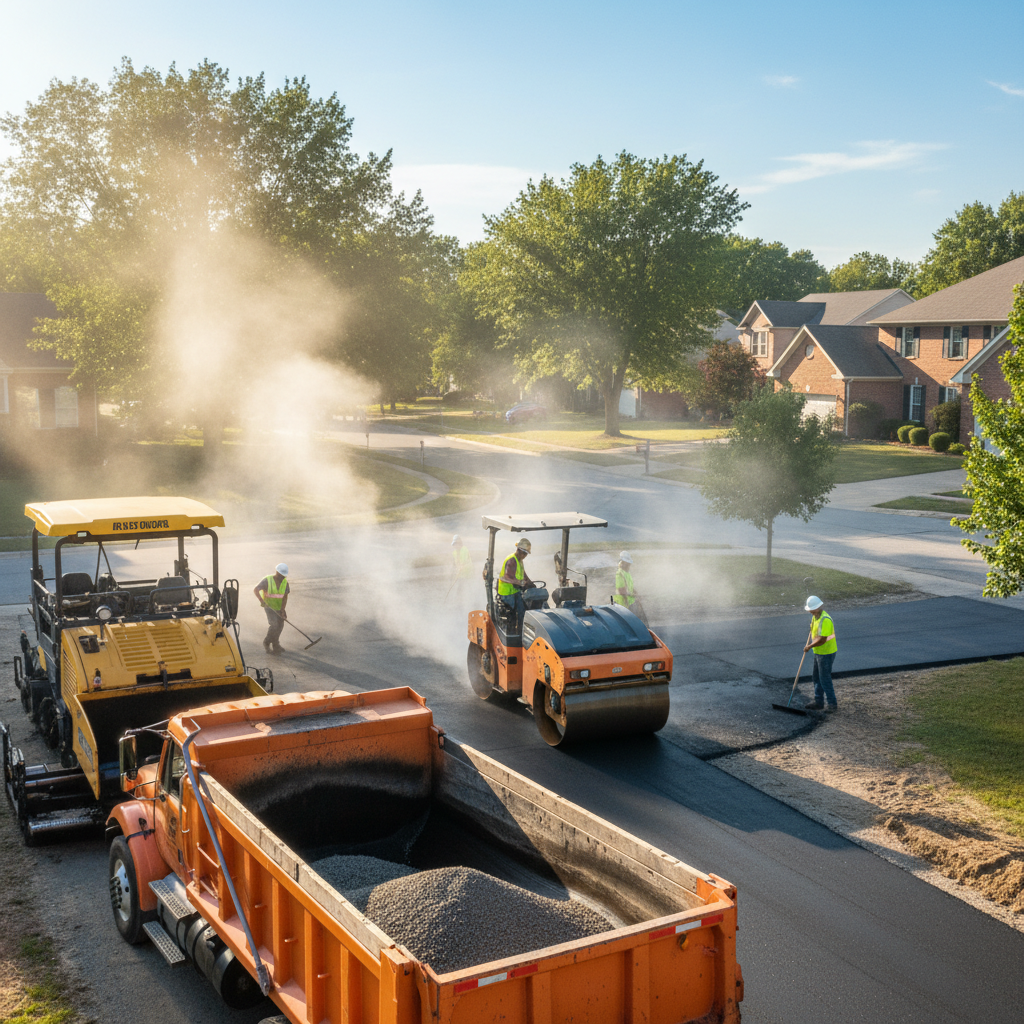
Driveway paving options and costs in Parkdale
In Parkdale, Ontario, choosing a driveway finish comes down to balancing upfront cost with how well the surface handles Toronto’s freeze–thaw swings. With Parkdale’s population at 1,404 (Statistics Canada, 2021 Census), you’re often working with tight, residential lots where access and drainage details matter as much as the finish itself. The Toronto economic region also means you’ll see a lot of homes with established curb lines and older services, so proper excavation and base rebuilds are common—especially in neighbourhood pockets with frequent sidewalk or utility upgrades. In practice, that’s why two “similar” driveways can price 30–50% differently when one needs a full base correction and the other only needs surface work.
Toronto’s frost depth and frequent freeze–thaw cycles are primary cost drivers. Local frost line conditions around 3–4 feet mean we design for water control under the pavement, thicker compacted granular bases, and reliable slopes. The paving season is effectively late spring through early fall, so prime scheduling can increase labour costs for projects starting in the peak months.
Demand is especially steady around high-traffic residential streets near Queen Street West and the surrounding Parkdale-Kensington area, where homeowners often want a cleaner, more “finished” look that still survives winter maintenance (plows, sanding, and de-icing salts). Below is a practical comparison of common driveway options and typical installed price ranges to help you translate contractor quotes into like-for-like numbers, then we’ll break down what actually drives those differences.
| Material |
Lifespan |
Maintenance |
Best For |
Price per sq ft |
| Asphalt (new installation, proper base) |
15–25 years |
Seal coat every 3–5 years; address minor patching promptly |
Lowest upfront cost with strong performance when base is engineered |
$5 – $9 |
| Asphalt (overlay on existing gravel base) |
10–18 years |
Seal coat every 3–5 years; ongoing patching if base is weak |
Budget upgrades when excavation is limited and base is sound |
$4 – $7 |
| Interlocking concrete pavers |
25–40 years |
Re-sand joints as needed; replace individual stones if damaged |
Curb appeal and repairability for busy winter environments |
$10 – $18 |
| Poured concrete (broom finish) |
20–30 years |
Crack monitoring; occasional patching; avoid early de-icing on new slabs |
Clean, low-maintenance look with good durability when designed well |
$8 – $14 |
| Exposed aggregate concrete |
25–35 years |
Sealers optional; patching when needed; regular debris removal |
Slip-resistant texture and premium appearance |
$10 – $17 |
| Gravel / crushed stone (budget option) |
5–12 years |
Top-up and re-grade annually; weed control; edging maintenance |
Lowest initial cost where drainage is already proven |
$2 – $4 |
Prices are estimates only and vary by project scope, site access and material selection.
What affects the price of paving in Parkdale
In Toronto and across Ontario, quotes for the same driveway size can vary by 30–50% because the “real work” is often below the surface. Contractors may price different base depths, drainage fixes, and disposal scope—plus labour rates change with scheduling and how busy the season is. Even when the finish material looks identical, a driveway with poor slope, a wet subgrade, or buried services typically needs more excavation and thicker granular structure to prevent heaving and cracking over winter.
Frost line depth and freeze–thaw cycles are decisive cost factors in the Toronto economic region. When ground freezing is roughly 3–4 feet, we need a deeper, properly compacted granular base and dependable drainage so water can’t sit underneath. In colder Ontario conditions, that often translates to thicker compacted layers than you’d see in milder areas, and the practical result is higher material and labour costs. Asphalt also requires a freeze–thaw-rated hot-mix design, and in Toronto the season is compressed—hot-mix asphalt placement works best when temperatures are reliably above about 10°C, which concentrates demand into a few peak months.
Concrete can rise or fall in price depending on site conditions. For example, a driveway that needs major tear-out and subgrade correction can push concrete toward the upper end of the $6,000–$15,000 band. Conversely, a well-drained site with clear access may let you stay closer to the lower end, especially for broom-finished concrete. For asphalt, if your existing base is stable and you’re simply moving from gravel to asphalt, pricing may land closer to the $3,500–$8,000 range; but if the contractor must rebuild failing base, the job starts to resemble new installation costs.
| Price Factor |
Why It Matters |
Cost Impact |
| Driveway area in sq ft |
More surface means more material, labour, and compaction time |
Larger driveways often add disproportionately to equipment hours |
| Base depth required |
Frost line conditions determine how much granular base is needed |
Deeper frost design increases excavation and rock quantity |
| Grading and drainage work |
Correct slope and drainage routes water away from under the slab |
Added labour and aggregate; sometimes minor stormtie-ins |
| Tear-out of existing surface |
Old asphalt or concrete removal requires breaking, hauling, and disposal |
Can be one of the biggest swings in total cost |
| Edge restraints and curbing |
Restraints prevent paver spread and help asphalt maintain its shape |
Added materials plus careful installation time |
| Sealing requirement |
Asphalt needs protection from moisture and salt wear |
Seal coats increase long-term maintenance spend |
| Site access |
Narrow lots slow equipment movement and extend working time |
More labour hours and additional handling costs |
| Asphalt mix specifications |
Freeze–thaw-rated mix design better resists winter damage |
Higher material cost and sometimes longer lead times |
Permits & regulations in Ontario
In Ontario, paving a private driveway within your own property usually does not require a building permit. However, if the work touches the municipal right-of-way, you typically need municipal approval first. That includes things like creating a new curb cut, modifying existing curb/boulevard openings, changing storm drainage patterns near the roadway, or altering the boulevard in a way that affects how water flows. Some municipalities also enforce lot-grading rules that can restrict how close hard surfaces can be to property lines or require specific drainage grading so runoff doesn’t cross onto neighbours’ properties. For Parkdale homeowners, this is especially relevant where driveways meet mature curbs and where existing drainage swales have already been established.
Before any excavation, call for utility locates using Ontario One Call. In practice, that means: (1) you request locates, (2) the contractor verifies the marked utilities match the work plan, and (3) you adjust the excavation approach if marks don’t align with the proposed base area. When verifying a contractor, also confirm Ontario licence status where applicable (for the type of work and business activities they perform), and ensure they carry liability insurance and WSIB/WCB coverage for their workers.
Step-by-step verification is simple: ask for a current certificate of insurance (liability), look for evidence of WSIB/WCB account/clearance where required, and request written proof of any licences/registrations the contractor must hold. Don’t rely on verbal assurances—save copies of documents for your records.
Asphalt vs pavers vs concrete for Parkdale driveways
For Parkdale driveways in the Toronto freeze–thaw climate, asphalt, interlocking pavers, and concrete all can perform well—but they fail differently when drainage or base prep isn’t engineered. Asphalt is usually the lowest upfront option, and it generally fits the $3,500–$8,000 driveway paving range when the contractor can build on a stable base. Its trade-off is maintenance: a quality seal coat schedule (commonly every 3–5 years) helps slow moisture and salt wear. In winter, asphalt flexes slightly, which can be an advantage when the base is properly compacted and drainage is right.
Interlocking concrete pavers cost more upfront, typically falling in the $9,000–$20,000 band, but they’re the most repairable. If a small area moves due to freeze–thaw or a service repair, you can lift and reset sections without replacing the entire surface. That’s a strong fit for Parkdale where homeowners may face periodic utility access or where curb edges get stressed by plows and seasonal sanding.
Poured concrete sits in the $6,000–$15,000 mid-range. It can hold up well when properly air-entrained, with good base preparation, control joints, and drainage planning to manage expansion and contraction. If air-entrainment and jointing aren’t done correctly, concrete is more prone to visible cracking over time in Ontario freeze–thaw conditions.
Here’s a concrete example: if your driveway is about 400 sq ft, asphalt might land near the middle of the $3,500–$8,000 range, while pavers may cost roughly 2× once restraints, base, and edging are included. That price difference is usually justified when you want long-term curb appeal and easier spot repairs after winter wear, rather than repeating seal-coated maintenance cycles.
| Material |
Frost Resistance |
Curb Appeal |
Repair Method |
Lifespan |
Price Band |
| Asphalt (sealed regularly) |
Good with engineered base and proper drainage |
Medium (clean, dark finish) |
Cut and patch localized areas |
15–25 years |
$3,500 – $8,000 |
| Interlocking concrete pavers |
Excellent with correct bedding and edge restraints |
High (custom patterns and colours) |
Lift/reset or replace individual pavers |
25–40 years |
$9,000 – $20,000 |
| Poured concrete (air-entrained) |
Good when air-entrained and jointed correctly |
Medium to high (texture options) |
Patch cracks/spalls; sometimes section replacement |
20–30 years |
$6,000 – $15,000 |
| Exposed aggregate concrete |
Good with proper mix and finishing |
Very high (premium look, slip-resistant texture) |
Patch with matching exposed aggregate (more visible than asphalt) |
25–35 years |
$9,000 – $18,000 |
| Permeable pavers (drainage grid) |
Excellent when base layer and outlet design are correct |
High (designed appearance) |
Replace individual sections; protect outlet from clogging |
20–35 years |
$10,000 – $22,000 |
| Chip seal / tar-and-chip |
Moderate; performance depends heavily on base prep |
Low to medium (texture-driven look) |
Spot patching; re-seal or overlay later |
8–15 years |
$3,000 – $6,500 |
How to choose a paving contractor in Parkdale
Choosing the right contractor in Parkdale starts with verification. For Ontario driveway paving, ask for their liability insurance certificate and confirm the coverage is current and matches the scope (asphalt, concrete, interlock, excavation). Next, confirm WSIB/WCB coverage for their workers—request a clearance letter or proof tied to their account. If they claim they’re subcontracting, insist the subcontractors are also covered.
Then get 2–3 itemised written quotes, not lump sums. A good quote breaks labour and materials separately and shows line items for excavation, base material, compaction, disposal, edging/restraints, and the final surface. Make sure the scope includes what you actually need: is permit pull included (if required for boulevard/right-of-way work), and is disposal/hauling included? Ask whether they’re removing the existing base far enough to correct weak or waterlogged soils.
Warranty matters. Clarify the workmanship warranty length, whether it’s tied to surface defects or also base-related movement, and whether the product/manufacturer warranty is transferable if you sell. For payment, never pay more than about 10–15% upfront—use a holdback until the job is fully complete and final cleanup is done. Finally, require a written start date and a completion estimate; with Toronto’s shorter workable season and compressed spring schedules, timing is a major risk factor.
- Verify liability insurance certificate is current and covers your project type.
- Confirm WSIB/WCB clearance (request proof, not just a statement).
- Ask for Ontario business details and ensure the quote is in writing under a traceable company name.
- Request 2–3 itemised quotes with labour/material breakdown (no “total only”).
- Confirm excavation depth and base design in writing for Toronto freeze–thaw conditions.
- Specify disposal included (where debris is hauled and how it’s handled).
- Check slope and drainage plan: where runoff goes, and how pooling is prevented.
- Confirm edge restraints/curbing details (especially for pavers).
- For asphalt, ask about seal coat plan and timing (after curing, not immediately).
- Clarify patch/repair approach if they find soft subgrade during excavation.
- Review warranty terms: workmanship length, exclusions, and any transferability.
- Set a payment schedule with a holdback until final inspection and cleanup.
Concrete red flags I see in Parkdale: “we don’t need to rebuild the base,” vague quotes with no excavation/disposal line items, refusal to provide insurance/WSIB proof, pressure to pay most costs upfront, and promises like “done before winter with zero weather risk” without a written schedule.
Frequently asked questions — paving in Parkdale
Asphalt vs interlocking pavers vs concrete — which is best in Parkdale?
In Parkdale, the “best” choice depends on how you value upfront cost, maintenance, and long-term repair options in a Toronto freeze–thaw climate. Asphalt is usually the best value if your contractor designs the base and drainage correctly and you’re comfortable sealing every 3–5 years; driveway paving commonly falls in the $3,500–$8,000 band. Interlocking pavers cost more (often $9,000–$20,000), but they’re excellent for curb appeal and spot repairs—important if sections ever shift after winter or if utilities are accessed. Air-entrained concrete is a strong mid-range option in the $6,000–$15,000 band, but it requires proper jointing and drainage to reduce visible cracking. If you want the easiest future repairs, pavers usually win; if you want lowest upfront cost, asphalt is typically the practical pick.
How long does a paved driveway last in Parkdale?
With correct base preparation and drainage, you can generally expect 15–25 years from well-installed asphalt when sealed regularly, while interlocking pavers often reach 25–40 years due to their rebuildable structure. Air-entrained poured concrete commonly lasts 20–30 years, and exposed aggregate is in a similar or slightly longer range when it’s properly mixed and finished. The big variable in Parkdale and the wider Toronto region is freeze–thaw damage caused by water trapped under the surface. If the contractor excavates only the top, skips compaction checks, or doesn’t fix grading, lifespan can drop significantly—sometimes by half. Also note that the work timing matters: paving placed during a cold stretch or without temperature-appropriate conditions is more likely to perform poorly during Ontario winters.
When is the best time of year to pave in Parkdale?
For Parkdale, late spring through early fall is the safest window because both base work and hot-mix asphalt placement need favourable temperatures. Asphalt placement is typically done when air and surface conditions are reliably warm—hot-mix asphalt is commonly placed when temperatures are above about 10°C to achieve proper compaction. In a compressed Ontario season, contractors also get booked quickly, so scheduling in early summer can avoid peak-month rush pricing. If you’re doing concrete, you’ll still want a period with stable weather and time for curing before harsh cold. The key is planning your start date and base readiness: if excavation and drainage aren’t finished promptly, the surface pour or asphalt paving can’t wait indefinitely, and delays can cost more.
How deep should the base be for Parkdale's frost?
In the Toronto economic region, frost freezing to roughly 3–4 feet is a primary reason base design can’t be “one size fits all.” The depth of the compacted granular base depends on your soil condition, subgrade moisture, and drainage corrections—not just the driveway size. In Ontario projects, it’s common to see engineers/contractors design for deeper granular structure than you’d choose in milder climates to prevent heaving and cracking during freeze–thaw cycles. When base depth is inadequate or poorly compacted, asphalt can rut or crack and concrete can heave or show control-joint issues sooner than expected. The most reliable approach is to have the contractor assess subgrade during excavation, verify compaction, and confirm a base plan that matches Toronto frost conditions and your site’s drainage.
How often should I seal my asphalt driveway?
In Parkdale, sealing is one of the simplest ways to protect asphalt from moisture and winter wear. A typical schedule is every 3–5 years, but the exact timing depends on surface condition, sun exposure, traffic, and how harshly de-icing chemicals and plowing affect your driveway. Contractors usually apply the first seal after a new asphalt surface has cured long enough to accept the coating properly—rushing seal coats can trap moisture. If your driveway is still holding colour and has only minor surface wear, you may lean toward the longer end of the range. If you see drying, raveling at edges, or more frequent patching, seal sooner. Even with good paving, sealing is part of how you protect your investment in Ontario winters.
Why does my driveway crack and heave in winter?
Cracking and heaving in Parkdale usually comes down to water and base performance during freeze–thaw cycles. When drainage isn’t corrected, water infiltrates the subgrade and freezes underneath the asphalt or concrete, expanding and lifting the surface. As the freeze–thaw repeats across late fall, winter, and early spring, small movements can become visible cracking, uneven slabs, and edge lifting. Another common issue is inadequate compaction or insufficient granular base depth—contractors sometimes underestimate how much structure is needed for Toronto’s frost conditions (roughly 3–4 feet). In concrete, poor air-entrainment or inadequate jointing can worsen freeze-related cracking. For asphalt, weak base or missing seal protection can allow moisture ingress, making the surface deteriorate faster. The fix is usually drainage/base correction, not just surface patching.