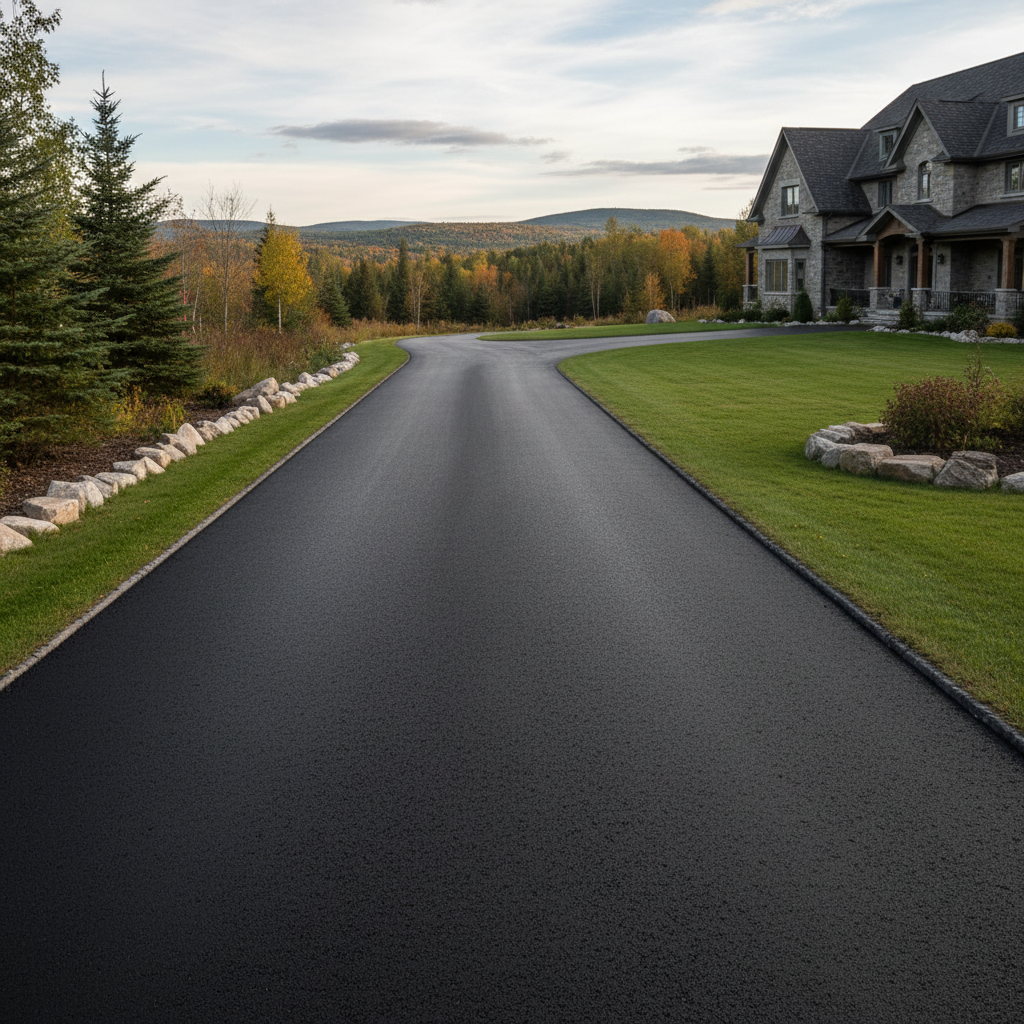
Driveway paving options and costs in Halton Hills
In Halton Hills, homeowners typically have driveway decisions tied to the way their property is laid out—most local households are owner-occupied, and the housing stock is dominated by single-detached homes. With 18,610 homeowner households (Statistics Canada, 2021 Census) and 73.0% of dwellings being single-detached, there’s a steady demand for new asphalt, interlocking, and concrete driveways on straight-in private approaches, plus replacement work when older surfaces start to ravel. Just as important is how the Toronto economic region treats your subgrade: frost depth and freeze–thaw cycles are primary cost drivers. In our climate, ground freezing to roughly 3–4 feet means the base must be engineered and compacted so water can’t sit under the driveway and heave when it freezes. That drives excavation, drainage improvements, and more granular base—often pushing costs toward the higher end of the pricing bands.
There’s also a scheduling effect. Paving season is effectively late spring through early fall, because hot-mix asphalt placement needs suitable temperatures. So if you want prime-date work in months like June or early July, contractors often quote tighter availability and higher labour demand. In communities like Georgetown (including older streets with driveways built out of the 1970s and early 1980s), replacement frequency can be higher because many homes date back to before 1981 (Statistics Canada, 2021 Census), when drainage details and base construction were less consistent.
Below is a practical cost comparison you can use to sanity-check quotes—then we’ll break down what makes one estimate land higher than another in Ontario.
| Material |
Lifespan |
Maintenance |
Best For |
Price per sq ft |
Price Range |
| Asphalt (new installation, proper base) |
15–25 years |
Seal every 3–5 years; patch as needed |
Best balance of cost and performance |
$7.50–$13.00 |
$3,500–$8,000 |
| Asphalt (overlay on existing gravel base) |
12–20 years |
Seal within 6–12 months; manage drainage |
When the old surface is gravel and base can be rebuilt lightly |
$6.50–$12.00 |
$3,200–$7,000 |
| Interlocking concrete pavers |
25–35 years |
Re-screed and occasional panel lifts; seal optional |
High curb appeal and repairable sections |
$14.00–$22.00 |
$9,000–$20,000 |
| Poured concrete (broom finish) |
20–30 years |
Seal optional; crack control and joint maintenance |
Clean lines and low visual maintenance |
$12.00–$20.00 |
$6,000–$15,000 |
| Exposed aggregate concrete |
20–30 years |
Seal recommended in freeze–thaw; joint/patch as needed |
Slip resistance and a premium look |
$15.00–$26.00 |
$8,000–$18,000 |
| Gravel / crushed stone (budget option) |
3–10 years |
Top up annually; grading and weed control |
Temporary or lowest upfront budget |
$3.50–$7.00 |
$1,800–$4,500 |
Prices are estimates only and vary by project scope, site access and material selection.
What affects the price of paving in Halton Hills
Even when two contractors price the “same” driveway, quotes in the Toronto economic region can realistically vary by 30–50%. The difference is usually not the asphalt itself—it’s what’s underneath it: excavation depth, base thickness, drainage corrections, and disposal. In Halton Hills, your cost can jump or come down depending on how much frost protection your subgrade needs. Toronto-area frost line conditions (ground freezing to roughly 3–4 feet) mean deeper granular base and proper subgrade compaction are decisive for preventing heaving and cracking. In practice, that often translates to more granular material and labour, not just more surface asphalt.
The paving season is also compressed. Hot-mix asphalt generally needs air temperatures above about 10°C for reliable placement and compaction, so contractor schedules tighten in late spring, summer, and early fall. That demand pressure can drive higher pricing for prime dates. Mix design matters too: asphalt needs a freeze–thaw-rated approach, which can be priced slightly higher than generic mixes.
Concrete projects can be affected by local workmanship and detailing. For example, a typical broom-finish driveway that’s not planned with good drainage and properly spaced control joints can crack earlier—meaning you pay for repairs sooner. Conversely, a well-planned concrete pour with the right air-entrainment and saw-cut timing can outperform a cheaper “rush” install. If your neighbourhood has older homes and driveways built before 1981 (Statistics Canada, 2021 Census), you may see more work restoring subgrade due to settlement or poor drainage, which adds cost compared with a new-build base.
As a quick anchor: a well-built asphalt install often lands in the broader range of $3,500–$8,000, while interlocking can move you into $9,000–$20,000 depending on excavation, edging, and how far the contractor has to rebuild the base.
| Price Factor |
Why It Matters |
Cost Impact |
| Driveway area in sq ft |
Material and machine time scale directly with surface area |
Highest impact (often the biggest driver) |
| Base depth required |
Frost line conditions dictate granular thickness to prevent heaving |
Can add thousands where excavation is deeper |
| Grading and drainage work |
Correct slope and drainage prevent standing water under pavement |
Moderate to high, especially with swales or low spots |
| Tear-out of existing surface |
Old asphalt/concrete needs breaking, hauling, and sometimes subgrade rehab |
Moderate to high depending on thickness and disposal distance |
| Edge restraints and curbing |
Prevents pavers/spread and asphalt edge failure |
Often a necessary add-on for long-term performance |
| Sealing requirement |
Asphalt performance improves when sealed after cure window |
Low per-year cost; can be materialised in year one |
| Site access |
Tight lots slow delivery, compaction, and waste removal |
Moderate impact on labour hours |
| Asphalt mix specifications |
Freeze–thaw-rated mix costs more than generic mixes |
Low to moderate; worth it for winter durability |
Permits & regulations in Ontario
In Ontario, paving a private driveway within your own property usually does not require a building permit. If you’re simply removing an existing surface and re-paving your driveway where the work stays fully within your lot, most homeowners handle it as private property improvement. However, if your project affects the municipal right-of-way, it typically does require municipal approval—especially when you’re changing curb cuts, altering the boulevard, or modifying storm drainage that interacts with municipal infrastructure. Some areas also enforce lot-grading rules through local by-laws that can restrict how close hard surfaces sit relative to property lines and how water is directed during heavy rain.
Start with utility locates. Call Ontario One Call before excavation so utilities can be marked on site; trenching or deep base work without locates can create safety risks and costly delays. Then verify contractor compliance:
Step-by-step for Halton Hills homeowners:
- Request the contractor’s Ontario business/contractor registration info (where applicable) and their written address—avoid “no paperwork” quotes.
- Ask for a certificate of insurance and confirm it includes liability coverage appropriate for exterior construction.
- Confirm they carry WSIB coverage (coverage status and clearance letter should be provided or explained with documentation).
- Keep your copies—permit applications (if required) and inspection notes should align with the quoted scope.
If your contractor proposes changing grading or any water management features near the road allowance, ask directly whether a municipal approval is required before they start digging.
Asphalt vs pavers vs concrete for Halton Hills driveways
For Halton Hills driveways, the “best” material depends on what you want to optimize: lowest upfront cost, highest curb appeal, or easiest long-term repairs. Asphalt is typically the lowest upfront option and can look clean when newly installed. In our freeze–thaw climate, though, asphalt needs a proper base, good drainage, and regular sealing—plan on sealing every 3–5 years so surface voids don’t accelerate winter damage. Interlocking concrete pavers usually cost more upfront, but they shine in Ontario winters because they’re repairable in sections: if a spot settles or a utility trench opens, contractors can lift and reset a limited area without replacing the entire driveway. Poured concrete sits in the mid-range and can last decades, but freeze–thaw performance depends heavily on air-entrainment, correct joint placement, and managing meltwater/salt exposure.
Across the Toronto region, driveway bases need robust frost protection. With ground freezing to roughly 3–4 feet, you typically need deeper, well-compacted granular layers and a drainage plan that sheds water rather than letting it sit. If you plow regularly and your driveway catches a lot of salt-laden runoff, concrete without careful mix and joint strategy can crack sooner—while asphalt can tolerate movement better if the base and mix are designed for freeze–thaw cycles. Interlock performs well with the right edge restraints and base thickness, especially when the installer accounts for slight seasonal movement without opening joints.
Dollar-wise, an asphalt driveway in the $3,500–$8,000 band can be justified if you want value and you’re comfortable with sealing and patching over time. If your priority is curb appeal and “local repairability,” stepping into interlocking in the $9,000–$20,000 band is often justified—especially on longer driveways where a few problem spots would be more disruptive to re-do in asphalt or concrete.
| Material |
Frost Resistance |
Curb Appeal |
Repair Method |
Lifespan |
Price Band |
| Asphalt (sealed regularly) |
Good with engineered base and freeze–thaw-rated mix |
Medium (clean and dark when fresh) |
Mill and patch sections; localized repairs |
15–25 years |
$3,500–$8,000 |
| Interlocking concrete pavers |
Very good with proper base, edges, and joint sand |
High (variety of patterns and colours) |
Lift/reset affected panels only |
25–35 years |
$9,000–$20,000 |
| Poured concrete (air-entrained) |
Good with air-entrainment and controlled joints |
Medium to high (depends on finish) |
Crack repair and patching; may require resurfacing later |
20–30 years |
$6,000–$15,000 |
| Exposed aggregate concrete |
Good with correct mix and sealing plan |
High (texture and visual depth) |
Patch/grind and match finish where feasible |
20–30 years |
$8,000–$18,000 |
| Permeable pavers (drainage grid) |
Excellent where drainage management is engineered well |
Medium to high (modern look) |
Replace grid/paver units if needed |
25–30 years |
$11,000–$22,000 |
| Chip seal / tar-and-chip |
Moderate; depends on prep and thickness |
Low to medium (more utilitarian) |
Spot reseal or re-chip sections |
7–15 years |
$2,500–$6,500 |
How to choose a paving contractor in Halton Hills
Choosing the right contractor matters more in Halton Hills than many homeowners expect, because Toronto-area freeze–thaw stresses reveal shortcuts quickly. Start with compliance. Ask for their Ontario licence/registration details (where applicable), a current certificate of insurance (liability coverage for exterior work), and proof they carry WSIB coverage. The simplest check is to request documentation upfront and verify the information on the documents matches the company name and address they provide.
Next, get 2–3 itemised written quotes—not just a single lump-sum number. You want labour + materials broken out (excavation, granular base layers, geotextile where used, asphalt or pavers, compaction, disposal, and edging). Read the scope for inclusions and exclusions: Is permit work included if the project affects boulevard or right-of-way? Is disposal included for old asphalt/concrete? Are saw-cutting and grinding included for clean tie-ins? If base drainage is needed, does the quote include regrading and any drainage components?
Warranty matters too. Ask for workmanship warranty length (and what it covers), product/manufacturer warranty terms, and whether the warranty is transferable to future owners. For payment, a common homeowner protection is to avoid paying more than 10–15% upfront. Use a holdback until the job is complete and cleanup is verified. Finally, require a written timeline—start date and estimated completion date—so you can coordinate driveway access and parking.
- Request proof of insurance and WSIB before signing.
- Verify the company name on documents matches the quote and invoice.
- Get itemised pricing (base, material, labour, disposal, edging).
- Confirm base engineering details (depth, compaction method, drainage plan).
- Ask whether geotextile is recommended for your soil conditions.
- Clarify tear-out scope and how debris is hauled away.
- Check if edging/curbing is included to prevent paver spread.
- For asphalt, ask about cure time before sealing.
- Ask how they handle transitions at garage doors and sidewalks.
- Confirm who provides traffic protection and site safety measures.
- Get warranty details in writing and what triggers it.
- Never sign a quote with vague “misc.” line items without amounts.
Red flags I see around Halton Hills: vague scopes (“we’ll pave it properly”), no documented WSIB/insurance, no breakdown of base depth and drainage, warranties offered verbally only, and contractors pushing full payment early without a clear completion and punch-list process.
Frequently asked questions — paving in Halton Hills
Is it worth sealing a new driveway right away in Halton Hills?
In Halton Hills, sealing right away usually isn’t the right move. Asphalt needs time to cure so the surface can properly accept the sealer; sealing too early can trap moisture and reduce performance. Many reputable crews will plan sealing after the asphalt has had time to cool and cure (often within a window of about 6–12 months, depending on weather and the contractor’s process). If you’re comparing budgets, sealing is commonly treated as part of long-term upkeep—often within the overall paving plan rather than an immediate extra expense. It also matters because winter freeze–thaw cycles can open up surface voids faster when asphalt isn’t protected. If your quote is in the $3,500–$8,000 range, ask whether sealing is included, and if not, budget it as a future maintenance step.
What is a chip seal driveway and is it suited to Halton Hills?
Chip seal (tar-and-chip) is a surface treatment where a binder is sprayed, then stone chips are broadcast and rolled. It can be suited to some Halton Hills properties when you want a lower-cost, functional driveway and your base is prepared correctly. That said, with Toronto-region freeze–thaw cycles and plowing/salt exposure, chip seal tends to age sooner than asphalt or pavers if drainage and base thickness aren’t engineered well. In practice, it’s often best for low-traffic sections, cottages, or as a budget pathway before upgrading later. If you’re considering it, make sure the contractor explains the base build-up and how they’ll prevent water pooling—because that’s what drives premature breakdown. Typical pricing can fall below major paving options, often around $2,500–$6,500, but longevity will depend on prep and winter maintenance.
How much does driveway crack repair cost in Halton Hills?
Crack repair pricing in Halton Hills varies because not all cracks are the same: a narrow surface crack filled with sealant costs less than a crack that signals base movement. For small, well-defined cracks, many contractors will price work as a sealing/filling line item; for wider failures, they may recommend spot removal and re-asphalting (or core repairs) to stop water infiltration. If drainage is the root cause, fixing just the crack may not hold up through the next freeze–thaw season. As a rough planning range, sealing and minor patch-style repairs often start around a few hundred dollars, while structural repairs can rise quickly depending on the area. For context, full driveway paving typically sits in the $3,500–$8,000 band for asphalt and can go higher for interlock, so it’s usually worth addressing cracks early to avoid escalation.
What base thickness do I need for pavers in Halton Hills?
In Halton Hills, you size paver base for frost protection and drainage, not just “typical” thicknesses. Because Toronto-area ground can freeze to roughly 3–4 feet, installers usually need a properly compacted granular base with enough depth to prevent heaving and water-related pumping. The exact thickness depends on your soil, groundwater conditions, and the driveway load (cars, possible SUV/van frequency), plus whether the contractor uses geotextile and how they build the leveling course. A good quote should specify granular layers (e.g., base and bedding) and describe compaction methods, not just “we’ll do base.” If a contractor won’t explain the layers and frost logic, that’s a concern. Proper base engineering is one reason interlock can land in the $9,000–$20,000 band—because the foundation is where winter durability is won.
How do I get the most accurate paving quote in Halton Hills?
The most accurate paving quotes come from a site visit and an itemised scope. Ask the contractor to measure your driveway area in square feet, then assess existing conditions: base condition, drainage, slope toward/away from the garage, and how water behaves during a rain. For older drives (common in Halton Hills due to a large share of homes built before 1981 (Statistics Canada, 2021 Census)), they should check for settlement, soft spots, and loss of granular material. Make sure they include utility locates if excavation is required and confirm whether any right-of-way changes (like curb cuts or storm drainage) would require municipal approval. Request 2–3 quotes with a line-item breakdown of excavation, base depth, asphalt/paver material, edging/curbing, disposal, and any sealing plans. This prevents “apples vs oranges” pricing that can otherwise create 30–50% quote swings across the Toronto region.
How much does it cost to pave a driveway in Halton Hills?
Typical driveway paving costs in Halton Hills depend on the material and how much base work is required. For asphalt with a proper base, the commonly quoted range is about $3,500–$8,000. If you’re looking at interlocking concrete pavers, many projects fall around $9,000–$20,000 depending on excavation, base rebuilding, and edging. Poured concrete often lands in the $6,000–$15,000 band, while exposed aggregate and premium drainage features can push higher. In our Toronto economic region, costs can rise because freeze–thaw performance requires deeper frost protection, reliable drainage, and quality compaction. That’s why two similar-sized driveways can still differ—especially if one site needs major tear-out and drainage correction.