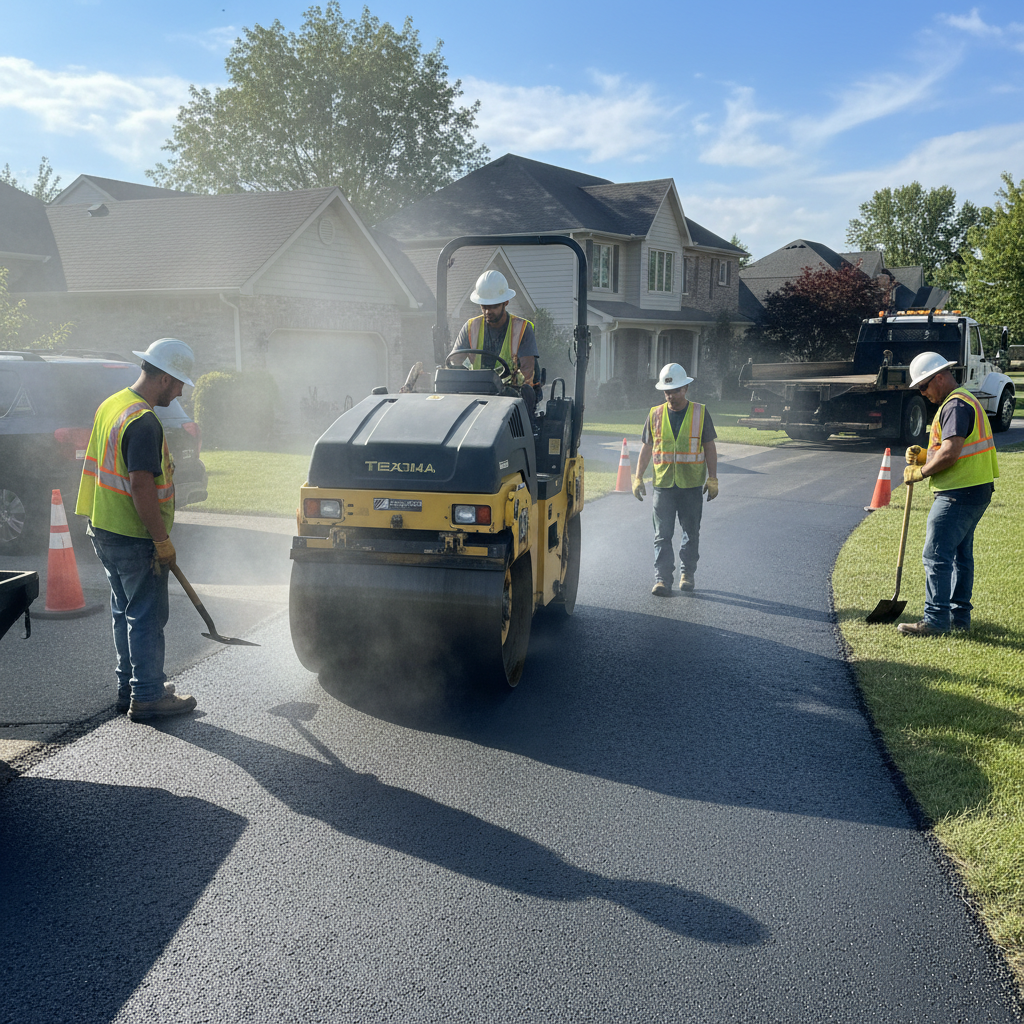
Driveway paving options and costs in Deseronto
Deseronto homeowners typically have three main driveway routes to consider: asphalt, interlocking concrete pavers, or concrete. With about 1,747 residents and 505 homeowner households (70.1% of households own), most driveway projects are on established private lanes behind single-detached homes—about 73.8% of dwellings are single-detached, which is why this trade stays steady even when the paving window is short.
In the Kingston–Pembroke economic region, pricing is strongly shaped by frost penetration and freeze–thaw cycles. Frost influence is commonly around 4 feet (≈1.2 m) in much of Southern and Eastern Ontario, so contractors plan for a deeper, well-compacted granular base and robust drainage to limit heaving and cracking. Winter is longer and spring shoulder seasons are wet, which compresses the work season because hot-mix asphalt generally needs air temperatures above about 10°C. That means fewer crews can mobilize at once, and when demand peaks, scheduling pressure can push pricing toward the higher end of the local bands. You’ll notice especially strong demand in areas with older housing stock—Deseronto’s homes built before 1981 make up 73.6%, and many driveways are being upgraded from gravel or patched asphalt.
Below is a practical cost comparison to help you budget. Use it as a baseline, then we’ll refine the numbers once we measure square footage, inspect drainage, and confirm how much tear-out is needed around the edges.
| Material |
Lifespan |
Maintenance |
Best For |
Price per sq ft |
Price Range |
| Asphalt (new installation, proper base) |
15–25 years |
Sealcoat every 3–5 years; patch as needed |
Most cost-conscious driveways with good drainage |
$6.50–$10.50 |
$4,500–$9,000 |
| Asphalt (overlay on existing gravel base) |
10–18 years |
Heavier patching expected; sealcoat every 3–5 years |
When the existing subgrade is stable and thickness is adequate |
$6.00–$9.50 |
$4,500–$8,500 |
| Interlocking concrete pavers |
25–40 years (stones can be reset) |
Re-leveling joint sand; occasional stone replacement |
High curb appeal, easy repairs, and long-term value |
$10.50–$16.50 |
$6,500–$14,000 |
| Poured concrete (broom finish) |
20–30 years (with air-entrainment) |
Minor crack sealing; protect joints |
Clean look, straightforward maintenance |
$11.00–$18.00 |
$7,000–$15,000 |
| Exposed aggregate concrete |
20–30 years |
Crack sealing; periodic cleaning |
Slip resistance and upgraded appearance |
$12.00–$19.00 |
$7,500–$15,500 |
| Gravel / crushed stone (budget option) |
3–7 years (varies widely) |
Top up and re-grade yearly; weed control |
Temporary solution or low-budget lanes |
$2.00–$4.00 |
$1,500–$4,000 |
Prices are estimates only and vary by project scope, site access and material selection.
What affects the price of paving in Deseronto
In Deseronto, two quotes for the “same driveway” can still differ by 30–50% because the real cost drivers aren’t the surface material alone—they’re the base, drainage, and how much excavation and haul-distance is involved across the Kingston–Pembroke region. A backyard driveway that’s straight and level can pave efficiently; one with clay pockets, a weak existing base, or drainage issues can require deeper granular rebuilds and extra grading to get below frost influence and keep water from pooling. Labour availability also plays a role: because the paving window is shorter in colder Eastern Ontario, crews may be busier in spring/summer, which tightens schedules and raises effective day rates.
Frost line depth and freeze–thaw cycles are decisive here. In much of Ontario, frost influence is commonly around 4 feet (≈1.2 m), and contractors typically build a thicker compacted granular base to prevent heaving and surface cracking. In practical terms, that means more aggregate and compaction passes than you’d see in milder climates, but also more excavation and often more imported material. The season also matters for asphalt: hot-mix asphalt generally needs air temperatures above about 10°C, so work is concentrated when conditions allow, increasing demand pressure.
Concrete can also cost more depending on how your driveway will handle winter maintenance. For example, a driveway planned with air-entrainment and proper jointing resists scaling better; if not, freeze–thaw and de-icing salt can accelerate cracking. If your home is on older-grade fill—common in pre-1981 housing stock (73.6% of dwellings built before 1981)—you may need additional subgrade stabilization, which can push asphalt toward the higher local band of $4,500–$9,000 or pavers into the $6,500–$14,000 range once the full base build is included.
| Price Factor |
Why It Matters |
Cost Impact |
| Driveway area in sq ft |
The surface and base are measured per square foot; bigger areas scale all line items. |
Often the largest swing; can change total by 40–70% |
| Base depth required |
Frost influence drives how thick the compacted granular base must be to reduce heaving. |
Deeper base can add 15–30% to the project |
| Grading and drainage work |
Fixing slope, swales, and ditch tie-ins prevents standing water that breaks down base. |
Can add 10–25% depending on excavation |
| Tear-out of existing surface |
Breaking and hauling asphalt or concrete is labour- and equipment-intensive. |
Commonly adds 10–20% (more if thick slabs are present) |
| Edge restraints and curbing |
Pavers need restraint to prevent lateral movement, especially with plowing. |
May add 5–12% but reduces long-term movement |
| Sealing requirement |
Asphalt relies on sealcoat to slow oxidation and water infiltration. |
Ongoing cost; typical install + initial planning affects quote by 3–8% |
| Site access |
Narrow entrances and steep grades slow equipment movement and increase labour time. |
Often adds 5–15% for access and logistics |
| Asphalt mix specifications |
Freeze–thaw-rated mixes and correct thickness improve durability in Ontario winters. |
Can add 5–10% versus lowest-spec mixes |
Permits & regulations in Ontario
In Ontario, paving work on a private driveway within your own property generally does not require a building permit. Most homeowners in Deseronto can schedule asphalt, pavers, or concrete right on their lot—assuming the work is contained to the driveway footprint and doesn’t alter municipal infrastructure.
Where permits and municipal approvals can be required is when the work impacts the public right-of-way or storm servicing. Typical examples include installing or changing a curb cut, modifying the boulevard, altering storm drainagegradinglot-grading bylaws that restrict how close to property lines a hard surface can be and how water must be directed away from neighbours and foundations.
Before any excavation, always call for utility locates (Ontario One Call) so contractors and homeowners can confirm where services run. Then verify the contractor properly:
- Confirm an Ontario licence (where applicable for the contracting category) and that the business is registered.
- Ask for a current certificate of liability insurance and ensure it’s active on the project dates.
- Verify WSIB coverage (or the correct provincial coverage where applicable for the contractor’s trade structure).
- Request a clear letter of clearance or documentation showing coverage status.
- Keep the COI/coverage documents with your contract paperwork.
Asphalt vs pavers vs concrete for Deseronto driveways
For Deseronto’s freeze–thaw reality, asphalt usually offers the lowest upfront cost, interlocking pavers deliver the best curb appeal and the easiest repairs, and concrete sits in the middle for cost with solid performance if it’s done correctly. With asphalt, the key is a strong base and planned maintenance: sealcoat is typically needed every 3–5 years to slow water infiltration and oxidation. In older driveways—especially where the original base has been disturbed by winter plowing—skimping on drainage or thickness can shorten asphalt’s life quickly.
Interlocking concrete pavers tend to hold up best to Deseronto’s winter maintenance routine because you can reset individual stones if something shifts, rather than replacing the whole slab. However, they only perform at the top end when restraint, correct base, and joint sand are installed properly. Poured concrete can look great and is durable when it’s air-entrained and properly jointed; otherwise, freeze–thaw and de-icing salt can contribute to cracking and surface scaling.
In the Kingston–Pembroke region, base preparation should be designed for frost influence, and drainage should be engineered so water doesn’t sit under the driveway. If you have a slight slope that sends meltwater toward the garage corner, pavers often give you the best long-term fixability without full removal. As a practical example, if a 400 sq ft driveway is priced at the low asphalt band near $4,500–$9,000 and pavers land closer to $6,500–$14,000, that extra cost can be justified when you expect future repairs or you care about matching brick/stone features near the entry.
| Material |
Frost Resistance |
Curb Appeal |
Repair Method |
Lifespan |
Price Band |
| Asphalt (sealed regularly) |
Good with deep compacted base and drainage |
Medium |
Patch and re-seal localized areas |
15–25 years |
$4,500–$9,000 |
| Interlocking concrete pavers |
Excellent when bedding sand and restraint are correct |
High |
Lift/reset individual stones or sections |
25–40 years |
$6,500–$14,000 |
| Poured concrete (air-entrained) |
Good with proper air entrainment and joints |
Medium–High |
Crack seal and patch; replacement if widespread |
20–30 years |
$7,000–$15,000 |
| Exposed aggregate concrete |
Good with correct mix and curing |
Very High |
Patch and refinish limited areas |
20–30 years |
$7,500–$15,500 |
| Permeable pavers (drainage grid) |
Very good when sub-base includes proper drainage layer |
High |
Reset stones; clean/refresh infill as needed |
20–35 years |
$8,000–$16,000 |
| Chip seal / tar-and-chip |
Fair to good; depends heavily on maintenance and base |
Low–Medium |
Spot repairs and reapplication |
8–15 years |
$3,500–$7,500 |
How to choose a paving contractor in Deseronto
Choosing the right contractor in Deseronto is less about ads and more about proof. Start by verifying Ontario licensing (as applicable to the contractor’s trade category), then confirm they carry liability insurance that’s valid for the project dates. Next, check WSIB coverage (or the correct provincial equivalent based on their trade structure) so you’re not stuck with liability if a worker is injured on your property. Don’t just ask—request a certificate of insurance and, where applicable, a clearance letter showing coverage status.
For pricing, get 2–3 itemised written quotes. The best quotes break down labour and materials (excavation, base stone, asphalt or pavers, compaction, drainage/grading, disposal, and any edge restraints). Avoid blanket “lump sum” estimates that don’t explain the base thickness, lift/compaction requirements, and what’s included for disposal and cleanup. Carefully review exclusions: is permit handling included (if any approval is needed), are utilities locates included or billed separately, and does the quote include tear-out and haul-away of old material?
Warranty matters in Ontario winters. Ask for a clear workmanship warranty length (often covering base prep and installation), and whether it’s tied to the written scope. Confirm product/manufacturer coverage separately and whether it’s transferable if you sell your home. Keep payment reasonable: never pay more than about 10–15% upfront; hold back the remainder until completion and final cleanup. Get a written start date and completion estimate so the short Kingston–Pembroke paving season doesn’t turn into extended delays.
- Confirm insurance COI dates match your job schedule.
- Verify WSIB coverage and obtain the clearance documentation.
- Require the quote to state base depth and compaction requirements.
- Ask how drainage will be corrected (swales/French drain ties, slope targets).
- Check if tear-out includes breaking, loading, and disposal.
- Ensure edge restraints/curbs are specified for pavers and asphalt boundaries.
- Ask what asphalt mix is used for freeze–thaw performance.
- Clarify concrete air-entrainment and jointing plan.
- Confirm sealing is included or scheduled for asphalt (and when).
- Get a disposal plan for excess soil and old asphalt/concrete.
- Request proof of prior similar projects in Eastern Ontario (photos + references).
- Use a written contract with change-order rules and start/finish timelines.
Red flags to watch for: a contractor who won’t provide insurance/coverage documents; quotes that don’t specify base thickness or drainage scope; “too good to be true” pricing that ignores excavation and haul costs; no written workmanship warranty terms; and promises to pave during unsafe weather without any plan to protect the base and properly compact in-season.
Frequently asked questions — paving in Deseronto
How much does it cost to pave a driveway in Deseronto?
In Deseronto, driveway paving cost depends most on square footage plus how much base and drainage work is needed to handle frost influence and spring wet conditions. For asphalt, homeowners commonly budget around $4,500–$9,000 for a typical driveway once proper base and compaction are included. Interlocking pavers usually run higher, often around $6,500–$14,000, because you’re paying for the stone, bedding layers, restraints, and careful jointing. Concrete typically sits between, with many projects landing near $7,000–$15,000 depending on the finish and tear-out. If your driveway needs full rebuilds of weak subgrade or you’re correcting drainage (ditching/swales), expect pricing to move toward the top end of the local bands.
Asphalt vs interlocking pavers vs concrete — which is best in Deseronto?
For Deseronto’s freeze–thaw cycle, the “best” choice comes down to what you value most and how your driveway drains. Asphalt is usually the best value upfront and can perform very well when the contractor builds the base for frost influence and you commit to sealing. Interlocking pavers are often the best long-term pick when you want curb appeal and easy repairs after plowing or small settlement—individual stones can be reset without replacing the entire surface. Poured concrete is a solid option if it’s air-entrained and properly jointed; otherwise, cracking can show up sooner with winter cycles and de-icing salt. If you want the easiest repair path, pavers typically win; if you want the lowest upfront spend, asphalt usually wins.
How long does a paved driveway last in Deseronto?
With proper installation in Ontario’s freeze–thaw conditions, asphalt driveways often last about 15–25 years. Pavers commonly reach 25–40 years because you can lift and reset sections if the base ever shifts. Concrete generally lasts 20–30 years when it’s air-entrained, cured well, and jointed to manage movement. The biggest determinant is usually not the surface—it’s the base preparation and drainage. Deseronto’s older housing stock (73.6% built before 1981) often means more variation in subgrade quality, so a driveway that required heavy granular rebuilds may perform better long-term than one installed over a questionable foundation, even if the surface material looks similar at first.
When is the best time of year to pave in Deseronto?
For asphalt, the best time is typically late spring through summer when daytime temperatures are reliably warm and rain won’t leave the base saturated. Hot-mix asphalt generally needs air temperatures above about 10°C, and the base must be dry enough to compact correctly. That’s why Deseronto schedules are usually concentrated in the warmer window, especially in Kingston–Pembroke where the spring shoulder season can be wet. For interlocking pavers and concrete, weather still matters—freeze conditions can affect curing and installation quality—so reputable crews plan around stable temperatures and proper protection. If you’re aiming to include sealing for asphalt, plan for an application after the initial curing period, and keep salt-heavy traffic off the new surface as recommended by your contractor.
How deep should the base be for Deseronto's frost?
In Ontario’s frost-influenced conditions, base depth is determined by frost influence and your soil/subgrade condition—not a single one-size number. In much of Southern and Eastern Ontario, frost influence is commonly around 4 feet (≈1.2 m), and contractors typically design a thicker compacted granular base and sub-base drainage layers to reduce heaving and cracking. As a homeowner-friendly way to think about it: if frost influence is deeper where your driveway soils hold water (common in heavier clay pockets), you’ll usually need more granular thickness and better drainage corrections. The contractor should explain what they’re targeting (base thickness and drainage approach), and why it’s appropriate for your property’s grade, soil type, and how meltwater is managed.
How often should I seal my asphalt driveway?
For asphalt in Ontario, sealing is typically done after the driveway has cured and then on a maintenance cycle. Most homeowners should plan on sealcoat about every 3–5 years, depending on sun exposure, traffic volume, and how quickly water finds cracks. In Deseronto, winter conditions can accelerate oxidation and moisture movement, so sealing is a practical way to protect the binder and reduce water infiltration that leads to raveling. If you’re budgeting for a new asphalt installation, ask whether your quote includes the initial sealcoat schedule and the right timing based on the install date. Skipping sealing can shorten asphalt’s service life even if the initial paving price was within the local band of $4,500–$9,000.