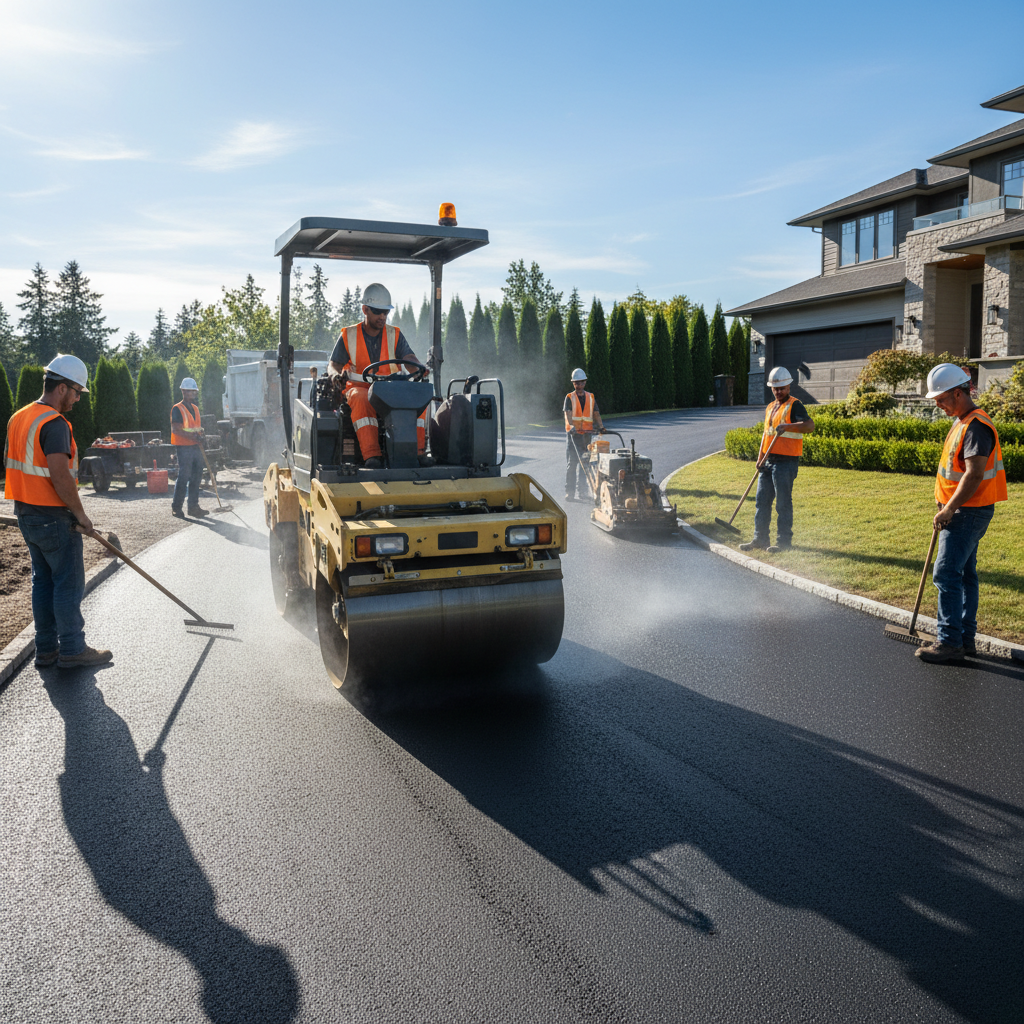
Driveway paving options and costs in Wychwood
In Wychwood, Ontario, homeowners usually want a driveway surface that looks good year-round but can handle Toronto’s freeze–thaw cycles without buckling or heaving. With a population of 14,349 (Statistics Canada, 2021 Census), the area may be small, but it has steady owner-driven demand—especially where older housing stock and mature landscaping require careful base work and clean edging to keep water from migrating under the surface. Most private driveways in this Toronto pocket are tied to detached-home lots, where access routes and vehicle weights are consistent, making driveway resurfacing and full replacement both common.
In the Toronto economic region, frost depth and freezing to roughly 3–4 feet means the base and drainage design are decisive cost factors. Contractors build a deeper, properly compacted granular base so water can’t sit below the pavement and expand when it freezes. That same climate also compresses the paving season to late spring through early fall, so prime scheduling can raise labour pressure and pricing when crews are booked solid—particularly around busy pockets like Davenport/Forest Hill-adjacent streets where equipment access and tight timing matter.
Below are typical Wychwood price bands by material and use case, plus what you can realistically expect for lifespan and upkeep. Use this table to compare apples to apples before you request itemised quotes.
| Material |
Lifespan |
Maintenance |
Best For |
Price per sq ft |
Price Range |
| Asphalt (new installation, proper base) |
15–25 years |
Seal coat every 3–5 years; crack filling as needed |
Solid performance with the lowest upfront cost |
$6.00–$10.00 |
$3,500–$8,000 |
| Asphalt (overlay on existing gravel base) |
10–18 years |
Seal coat every 3–5 years; more frequent patching if base is weak |
Budget installs when subgrade drainage is confirmed |
$5.00–$9.00 |
$3,000–$7,000 |
| Interlocking concrete pavers |
25–35 years |
Joint sand top-ups; re-leveling sections if needed |
High curb appeal and easy, local repairs |
$14.00–$22.00 |
$9,000–$20,000 |
| Poured concrete (broom finish) |
20–30 years |
Sealants every 4–8 years; crack repairs as required |
Clean, durable look with a straightforward surface |
$10.00–$18.00 |
$6,000–$15,000 |
| Exposed aggregate concrete |
20–30 years |
Sealer as recommended by finish type; patching for chips |
Slip resistance and premium appearance |
$12.00–$21.00 |
$7,000–$16,500 |
| Gravel / crushed stone (budget option) |
3–10 years |
Re-grade and re-top annually; weed control |
Short-term solution or low-traffic lots |
$2.50–$6.00 |
$2,000–$5,500 |
Prices are estimates only and vary by project scope, site access and material selection.
What affects the price of paving in Wychwood
In the Toronto region, it’s not unusual for quotes for the “same size” driveway to swing 30–50% once you account for how deep the frost-protected base needs to be, how much tear-out is required, and whether drainage corrections are included. Two driveways that look identical at the street can have very different subgrade conditions—one may drain well and compact cleanly, while the other can hold water and require additional granular layers or swales. That difference alone can move a job from the low end of the asphalt band into the higher end, especially with limited summer access and tight crew schedules.
Frost depth and freeze–thaw cycles are decisive cost factors across the Toronto economic region. With ground freezing to roughly 3–4 feet, deeper, properly compacted granular base is needed to reduce heaving and cracking; in Ontario this typically means you plan around 6–12 inches of total granular thickness (depending on existing condition, soil type, and drainage). Asphalt mix design also matters because the hot-mix asphalt has to meet local freeze–thaw requirements to reduce early cracking. On top of that, the paving season is effectively shorter—hot-mix asphalt placement relies on suitable air and base temperatures—so demand concentrates into late spring through early fall, and rush scheduling can raise installed costs.
Concrete costs can move either direction in Wychwood. For example, an air-entrained mix and proper jointing can help manage freeze–thaw expansion, but if your driveway edges need structural forms and sawcut control joints are added, the job trends toward the higher end of the concrete band (often closer to $6,000–$15,000). Conversely, a straight layout with good access and minimal prep can keep concrete nearer the mid-range. In practice, even a $1,000–$2,000 difference in excavation and disposal can separate a “base-only” repair approach from a full rebuild in Toronto.
| Price Factor |
Why It Matters |
Cost Impact |
| Driveway area in sq ft |
Materials and equipment time scale with square footage |
Largest driver; often explains 50%+ of total variation |
| Base depth required |
Frost line determines granular thickness and compaction effort |
Deeper base can add thousands and extend excavation |
| Grading and drainage work |
Proper slope and drainage keeps water from freezing under the surface |
May add regrading, new stone, and re-test compaction |
| Tear-out of existing surface |
Breaking, loading, hauling, and disposal vary by material and depth |
Concrete/old asphalt tear-out commonly increases cost materially |
| Edge restraints and curbing |
Edges prevent paver spread and reduce differential movement |
Often a “small line item” that prevents expensive failures |
| Sealing requirement |
Asphalt needs sealing after initial cure to slow oxidation |
Adds annual/periodic cost; protects long-term value |
| Site access |
Narrow gates, long walks, or tight turns slow equipment movement |
Can require more labour hours and smaller loads |
| Asphalt mix specifications |
Freeze–thaw-rated mixes improve performance in Toronto winters |
Higher material cost; reduces early cracking risk |
Permits & regulations in Ontario
For most homeowners in Wychwood, paving your private driveway within your own property typically does not require a building permit. However, permits and approvals can come into play when your driveway ties into municipal infrastructure. The work that often requires municipal approval includes: new curb cuts or changes to an existing curb opening, alterations to the boulevard or city-owned right-of-way, and modifications that affect storm drainage patterns (for example, changing how water runs toward an existing catch basin). If your project includes any change in how water is managed in the municipal area, don’t assume it’s “just asphalt” — confirm requirements first.
Step-by-step, here’s how a Wychwood homeowner should protect themselves and verify the job is legal and safe:
- Call Ontario One Call to locate buried utilities before any excavation.
- Ask the contractor to describe exactly what area will be excavated (property-only vs. any right-of-way impacts).
- Request the contractor’s Ontario business licence details (where applicable to their operations) and confirm they’re insured for the work scope.
- Verify liability insurance by reviewing the certificate of insurance for active coverage and limits suitable for driveway-scale paving.
- Confirm WSIB/WCB coverage (coverage should align with who is performing the work and their employment status).
- Ask for the clearance letter (if applicable) and confirm the effective dates match your scheduled start.
- If lot grading may be affected, ask what grading restrictions apply and whether approval is required for your specific lot.
When in doubt, have the contractor outline what approvals (if any) are needed before work begins, and get those steps written into your quote.
Asphalt vs pavers vs concrete for Wychwood driveways
Choosing between asphalt, interlocking pavers, and concrete in Wychwood is mostly about balancing upfront cost, winter resilience, and how you want to handle repairs. In Toronto’s freeze–thaw climate, all three need the right base and drainage, but they behave differently under movement. Asphalt is usually the lowest upfront option in this market (often the $3,500–$8,000 band for properly built driveways) and performs well when sealed regularly; it’s also flexible enough to tolerate some movement, but it will still age and needs crack filling and sealing every 3–5 years. Interlocking pavers typically sit higher in the $9,000–$20,000 band because of base materials, bedding sand, and the paver system, but they’re the most homeowner-friendly for targeted repairs—if a section settles, it can be lifted and reset without replacing the entire surface.
Poured concrete usually lands in the $6,000–$15,000 range. It’s durable, but Toronto winters and de-icing practices can reveal issues if the slab isn’t air-entrained and joints aren’t correctly planned. Exposed aggregate offers better slip resistance but is still dependent on correct finishing and curing to reduce surface scaling. For Toronto, your driveway should also be designed around drainage so water doesn’t freeze beneath the pavement; that’s where the cost rises or falls depending on whether drainage corrections are required.
Is it worth paying the paver premium? If you have a driveway that sees frequent ploughing contact at the edges, pavers can be a smart long-term choice because localized repair can save money versus full-surface replacement. For example, if your asphalt quote is closer to $5,000 but the paver option comes in around $12,500, the extra upfront spend may pencil out if you expect to maintain the look for decades and want easy section repairs after winter damage.
| Material |
Frost Resistance |
Curb Appeal |
Repair Method |
Lifespan |
Price Band |
| Asphalt (sealed regularly) |
Good with proper base and freeze–thaw-rated mix |
Medium (clean, uniform black surface) |
Patch and seal localized areas |
15–25 years |
$3,500–$8,000 |
| Interlocking concrete pavers |
Very good; system tolerates minor movement |
High (upgrade in appearance and options) |
Lift/reset a section; re-sand and recompact base |
25–35 years |
$9,000–$20,000 |
| Poured concrete (air-entrained) |
Good when joints and drainage are engineered |
Medium to high (clean finished look) |
Crack repair or partial slab replacement |
20–30 years |
$6,000–$15,000 |
| Exposed aggregate concrete |
Good with air-entrainment and correct curing |
High (premium texture and colour) |
Chip repair and selective patching |
20–30 years |
$7,000–$16,500 |
| Permeable pavers (drainage grid) |
Good where drainage design prevents saturation |
Medium to high (modern, functional look) |
Localized reset; monitor surface for clogging |
20–30 years |
$10,000–$22,000 |
| Chip seal / tar-and-chip |
Moderate; depends heavily on base and maintenance |
Low to medium |
Spot re-chip and recoat areas |
6–12 years |
$3,000–$6,500 |
How to choose a paving contractor in Wychwood
For Wychwood driveway paving, start by verifying the contractor’s insurance and coverage in a way you can document. Ask for their liability insurance certificate (active policy date, sufficient limits, and your address listed where needed). For worker protection, confirm WSIB/WCB coverage for anyone performing the work; request the clearance letter or documentation showing coverage is current. If they can’t provide it quickly, that’s a risk flag.
Next, get 2–3 quotes that are truly itemised. You want a breakdown showing labour and materials (excavation, base stone, asphalt/pavers/concrete, edging, disposal, and any sealant). Avoid “lump sum” quotes unless the scope is extremely detailed. Read what’s excluded: is permit work included if municipal drainage is affected, is disposal included for tear-out, and who supplies traffic control if required? For warranty, ask for workmanship warranty length, product/manufacturer warranty terms, and whether it’s transferable to future owners.
Payment schedule matters. A reputable paving contractor should never demand large upfront sums; keep initial payment typically around 10–15%, then release progress payments as milestones are completed. Hold back until the job is finished, cleaned up, and (for asphalt) the curing and sealing plan is documented. Finally, insist on a written timeline with start date, weather-related hold points, and completion estimate.
- Confirm WSIB/WCB coverage and request clearance documentation.
- Review a current liability insurance certificate (not expired).
- Ask which paving base and drainage layers they will install and the target compaction method.
- Require an itemised labour/material breakdown (no vague allowances).
- Check if disposal of removed concrete/asphalt is included.
- Clarify whether seal coating for asphalt is included and when it will be applied (after cure).
- Request details on edging/restraints for pavers (so they don’t spread).
- Ask how cracks are addressed—cut-and-seal vs. patch vs. full-depth rebuild.
- Confirm jointing plan for concrete (spacing, sawcut timing) and finishing method.
- Get start date, completion estimate, and weather policy in writing.
- Ask who will protect landscaping and handle settlement checks after winter.
- Ensure warranty terms are written, including what “workmanship” covers.
Common Wychwood red flags: (1) no proof of insurance or WSIB/WCB, (2) refusal to provide an itemised scope, (3) skipping granular base thickness or drainage without explaining why, (4) demanding more than a small upfront deposit, and (5) vague timelines with no weather contingency plan.
Frequently asked questions — paving in Wychwood
Is it worth sealing a new driveway right away in Wychwood?
In Ontario, for an asphalt driveway, sealing “right away” isn’t the goal—timing after cure is. In Wychwood and across the Toronto area, asphalt needs time for the binder to cure so the sealer can bond properly rather than trap moisture. A typical approach is to wait until the surface is ready (often several weeks depending on weather and mix), then apply a proper seal coat. If you seal too early, you can increase risk of premature wear and patchy blotches. Budget-wise, sealing is usually far cheaper than a major resurfacing later; it’s one reason asphalt can deliver good value within the $3,500–$8,000 band when homeowners plan for maintenance every 3–5 years.
What is a chip seal driveway and is it suited to Wychwood?
Chip seal (tar-and-chip) is a sprayed binder with small aggregate broadcast on top. It can be a cost-effective option when the base is engineered and drainage is solid, because the system depends on the underlying compaction and how water behaves. In Wychwood, Toronto’s freeze–thaw cycles can be hard on chip seal if the base is saturated or drainage is off, so success is very site-specific. It’s sometimes used for lower-traffic lanes or budget builds where you accept shorter lifespan and more frequent touch-ups. If you’re comparing costs, chip seal often falls below the main asphalt band, but you should also factor annual maintenance and the likelihood of re-chipping. If your driveway sees regular ploughing and heavy vehicle turns, asphalt or pavers usually perform more reliably long-term.
How much does driveway crack repair cost in Wychwood?
Crack repair in Wychwood typically depends on whether the cracks are “hairline surface” issues or signs of base/subgrade movement. Simple crack filling and sealing of narrow cracks is usually a smaller line item, while routing and sealing wider or alligator-type cracking can cost more because it needs more labour and prep. As a rule of thumb, smaller repairs can be closer to the lower end of maintenance pricing (often within the $300–$1,500 range), but larger localized patch work after inspection may run higher. If your driveway is already well beyond its useful age, a contractor may recommend targeted patching plus sealing, or full resurfacing depending on frost-related heaving. The most accurate estimate comes after they verify drainage and assess whether water is entering under the pavement.
What base thickness do I need for pavers in Wychwood?
For pavers in Wychwood, the base thickness isn’t one universal number—it depends on soil type, existing subgrade condition, drainage, and local frost considerations. Given the Toronto region’s freeze depth of about 3–4 feet, contractors typically design a deeper granular build to prevent frost heave and water retention. In Ontario, a common practice is using a total base assembly that can land around 6–12 inches of granular material (with proper compaction), then topping with bedding sand to set the pavers. If your current base is soft or drains poorly, the contractor may need additional excavation and new stone, which changes cost. The best quotes will state the base layers they’ll install and how they’ll confirm compaction before paver placement.
How do I get the most accurate paving quote in Wychwood?
To get an accurate quote in Wychwood, avoid relying only on driveway width and length estimates. Ask for a site visit so the contractor can check drainage, soil condition, and whether the existing base is stable. Make sure they describe: what will be excavated, what granular layers and thicknesses they’ll use, whether tear-out/disposal is included, and how they’ll handle edges and restraints. Request an itemised quote separating labour from materials, and confirm whether sealing is included for asphalt (and when it will be applied after cure). Also verify their coverage and ask about utility locates before digging. This reduces “surprise” changes later and helps you compare quotes fairly against the expected bands—like asphalt often landing around $3,500–$8,000 for properly built installs.
How much does it cost to pave a driveway in Wychwood?
For Wychwood homeowners, total driveway paving cost depends primarily on square footage, required base depth for frost protection, drainage corrections, and how much existing material needs removal. In the Toronto region market, asphalt driveway paving commonly lands in the $3,500–$8,000 range when installed with a proper base. Interlocking concrete pavers often run higher—commonly $9,000–$20,000—because of excavation, base layers, and paver system materials. Poured concrete is frequently in the $6,000–$15,000 range, with air-entrainment and jointing design affecting final cost. If your driveway requires significant tear-out or regrading, expect pricing to move toward the upper part of these bands. The most reliable way to confirm your number is a written, itemised quote after a base and drainage assessment.