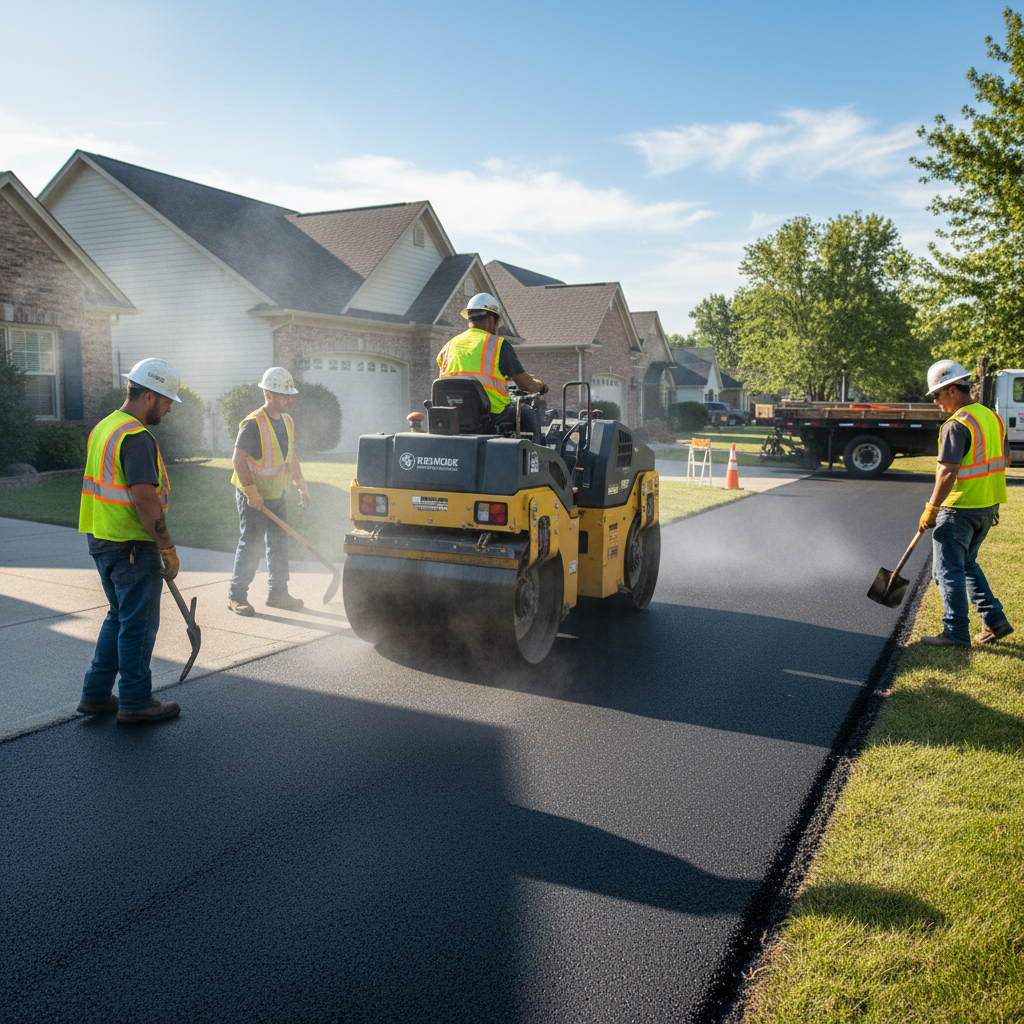
Driveway paving options and costs in Elms-Old Rexdale
In Elms-Old Rexdale, Ontario, homeowners typically want a driveway that looks sharp but also survives Toronto’s freeze–thaw winters without heaving, potholes, or alligator cracking. With a local population of 9,456 (Statistics Canada, 2021 Census), you’ll see a lot of neighbourhood demand tied to long-standing residential streets—especially around older housing pockets where driveways were poured or asphalted decades ago and are now being renewed. The good news is that you’ve got several proven options: asphalt for the lowest upfront cost, interlocking pavers for maximum curb appeal, and concrete for a long, clean-looking surface when it’s built and drained correctly.
Pricing is shaped by the Toronto economic region’s primary cost drivers: frost depth and freeze–thaw cycles. Ground freezing to roughly 3–4 feet means you generally need deeper, well-compacted granular base plus dependable drainage so water can’t sit beneath the pavement and expand during winter. Also, paving in Ontario is effectively concentrated into late spring through early fall—because hot-mix asphalt needs warm air/ground conditions—so prime dates can book quickly and push pricing toward the higher end of the local ranges.
In Elms-Old Rexdale, areas near the older commercial/residential transition along Rexdale Boulevard often see high turnover for driveway refreshes, since curb appeal matters to both homeowners and their neighbours. If you’re comparing bids, use the table below to sanity-check what each system should cost before you talk scope—then we’ll dig into what drives real price differences.
| Material |
Lifespan |
Maintenance |
Best For |
Price per sq ft |
Price Range |
| Asphalt (new installation, proper base) |
12–20 years |
Seal coat every 3–5 years; patching as needed |
Value-focused driveways with moderate traffic |
$3.50–$6.50 |
$3,500–$8,000 |
| Asphalt (overlay on existing gravel base) |
10–15 years |
Seal coat; monitor base settlement |
When you’re keeping costs down and the base is sound |
$3.25–$6.00 |
$3,500–$7,500 |
| Interlocking concrete pavers |
25–35+ years |
Occasional joint sand top-up; replace individual stones |
Highest curb appeal and easy spot repairs |
$10.00–$16.00 |
$9,000–$20,000 |
| Poured concrete (broom finish) |
20–30 years |
Crack control (sealing as needed); manage drainage |
Clean, low-fuss surface for long-term use |
$8.00–$13.00 |
$6,000–$15,000 |
| Exposed aggregate concrete |
20–30 years |
Sealer as recommended; patching if damage occurs |
Decorative finish with improved slip resistance |
$10.00–$16.50 |
$7,500–$18,000 |
| Gravel / crushed stone (budget option) |
3–7 years |
Re-grade and top up annually; weed control |
Temporary solution or very low budget |
$2.00–$4.00 |
$1,800–$5,500 |
Prices are estimates only and vary by project scope, site access and material selection.
What affects the price of paving in Elms-Old Rexdale
If you receive two quotes for what sounds like the same driveway, it’s not unusual to see a 30–50% swing across Toronto and Ontario. The difference usually comes down to the hidden part of the work: excavation depth, base materials and compaction, drainage corrections, and how much tear-out/haul-away is involved. When contractors price properly for frost depth and water control, the project gets more material and more labour—even though the finished driveway footprint looks identical.
In the Toronto economic region, frost depth and freeze–thaw cycles are decisive cost factors. With ground freezing roughly 3–4 feet, you can’t “skimp” on granular base thickness; deeper frost typically means you need a thicker compacted granular foundation than in milder climates. That translates to more ¾-inch crushed stone, more lifts, more roller time, and more careful grading. Labour and equipment are also scheduled around the paving season—hot-mix asphalt requires air temperatures above about 10°C—so late-spring and summer work windows get busy and push demand up, which is one reason asphalt projects can land nearer the upper end of the $3,500–$8,000 band during peak dates.
Concrete pricing can move for similar reasons. For example, if your old driveway has sections with poor drainage, you may need subgrade rework and new slope to daylight, which can add significant excavation and replacement. Conversely, a smaller driveway with good existing base and clean access can keep concrete closer to the $6,000–$15,000 range. In Elms-Old Rexdale, many driveways were installed when water management standards were less strict—so drainage fixes can be the difference between “cheap overlay” and a full rebuild that performs in winter.
| Price Factor |
Why It Matters |
Cost Impact |
| Driveway area in sq ft |
Material quantity and time scale directly with surface area |
High (primary driver) |
| Base depth required |
Frost line determines granular thickness to prevent heaving and cracking |
High (more stone + more compaction) |
| Grading and drainage work |
Proper slope and edge drainage keeps water from pooling under the pavement |
Medium to high |
| Tear-out of existing surface |
Breaking and hauling concrete or old asphalt adds equipment time |
Medium to high |
| Edge restraints and curbing |
Prevents paver spread and asphalt edge failure under freeze–thaw movement |
Medium |
| Sealing requirement |
Asphalt needs sealing after placement to protect against winter moisture damage |
Low to medium (ongoing cost) |
| Site access |
Narrow driveways or tight turns slow equipment movement and increase labour |
Medium |
| Asphalt mix specifications |
Freeze–thaw-rated mix designs and binder selection cost more but perform better |
Medium |
Permits & regulations in Ontario
For most homeowners in Elms-Old Rexdale, paving a private driveway within your own property typically does not require a building permit. That includes removing the old surface, excavating and placing base, and installing asphalt, interlocking pavers, or concrete within the lot limits. However, you may need municipal approval (and sometimes a permit) when your driveway work touches public infrastructure or changes stormwater handling.
Work that does typically require municipal approval includes: creating or changing a new curb cut, altering the boulevard, changing or reconnecting storm drainagelot-grading rules that restrict how close a hard surface can be to property lines and how runoff must be directed.
Before excavation, always arrange utility locates through Ontario One Call to mark buried services. Then, verify your contractor’s compliance in a homeowner-friendly way: (1) check their Ontario business details and any applicable contractor registration information, (2) request a Certificate of Insurance showing liability coverage for driveway work, and (3) confirm WSIB coverage for workers (or an equivalent clearance letter/coverage evidence your contractor provides). Ask for these documents before the first shovel hits the ground so you’re protected.
Asphalt vs pavers vs concrete for Elms-Old Rexdale driveways
Choosing asphalt, interlocking pavers, or concrete in Elms-Old Rexdale comes down to three things: freeze–thaw survival, how you want the driveway to look, and how much maintenance you’re willing to do as winters pile up. Asphalt is usually the lowest upfront option, but it relies on correct base depth and drainage—and it needs regular sealing every 3–5 years to slow water penetration. Interlocking concrete pavers cost more at the start, yet they’re highly forgiving in our climate because individual stones can be removed and reset if a section settles. Poured concrete usually falls in the middle on cost, but it has a higher risk of visible cracking if it isn’t properly air-entrained, jointed, and drained for Toronto’s winter routine (salt, snow storage, and plough traffic).
With Toronto frost effects (ground freezing roughly 3–4 feet), all three systems need engineered base and drainage. In practice, asphalt and pavers both benefit from deeper, well-compacted granular foundations and restrained edges so movement doesn’t translate into open joints or edge failures. Concrete needs control joints and a slope that sheds water—otherwise freeze–thaw can expose weakness. In day-to-day use, pavers tend to handle plough contact well because repairs are localized; asphalt performs well when sealed, but pothole patches can be more noticeable than paver resets. Concrete can look great, but if the subgrade isn’t stabilized, cracks can show and become a recurring “maintenance conversation.”
Example: if your driveway quotes at roughly $3,500–$8,000 for asphalt versus $9,000–$20,000 for pavers, the extra cost is often justified when you want a long curb-appeal lifespan and the ability to repair only a damaged area after a base correction. If you prefer lower first cost and are comfortable with sealing, asphalt can be the smarter fit.
| Material |
Frost Resistance |
Curb Appeal |
Repair Method |
Lifespan |
Price Band |
| Asphalt (sealed regularly) |
Good when base is deep and drainage is right |
Medium |
Patch and re-level localized areas |
12–20 years |
$3,500–$8,000 |
| Interlocking concrete pavers |
Excellent with proper base and restrained edges |
High |
Lift/reset individual stones; re-sand joints |
25–35+ years |
$9,000–$20,000 |
| Poured concrete (air-entrained) |
Good when air-entrained and jointed for freeze–thaw |
Medium to high |
Crack repair/seal; localized patches as needed |
20–30 years |
$6,000–$15,000 |
| Exposed aggregate concrete |
Good with proper mix and curing |
Very high |
Patch matching finish; more skilled labour needed |
20–30 years |
$7,500–$18,000 |
| Permeable pavers (drainage grid) |
Excellent where drainage design is engineered correctly |
High |
Remove/reset affected units; maintain underdrain |
25 years+ with correct maintenance |
$10,000–$22,000 |
| Chip seal / tar-and-chip |
Moderate; can wear faster in heavy traffic |
Low to medium (utility look) |
Spot chip repairs; reseal schedule |
7–12 years |
$3,000–$7,000 |
How to choose a paving contractor in Elms-Old Rexdale
For Elms-Old Rexdale homeowners, good paving is more about process than marketing. Start with Ontario compliance: ask the contractor for their liability insurance certificate (shows you they’re covered for jobsite incidents), and confirm WSIB coverage for their workers (or provide the appropriate clearance documentation). To verify quickly, look at the certificate’s policy holder, expiry date, and coverage limits, and ask your contractor to match the work scope on the COI to your driveway paving type. If their staff are subcontracted, confirm coverage still applies to your project.
Next, get 2–3 itemised written quotes that break down labour and materials (excavation, base, asphalt mix/pavers/concrete, edging/restraints, disposal, compaction, and any sealing). Avoid vague “supply and install” pricing where base depth and drainage corrections are not defined—those omissions are exactly where bids separate. Review what’s excluded: is disposal included? Are permit/municipal approvals included if the work touches the right-of-way? Is saw-cutting and jointing included for concrete? If not, the “cheap” quote can become expensive at change order time.
Warranty matters too: ensure the workmanship warranty length is stated clearly, and know whether the warranty covers material failures or only installation. Also ask if the warranty is transferable to future owners. For payment, never pay more than about 10–15% upfront; hold back until completion and final cleanup. Get a written start date and completion estimate—Ontario schedules in Toronto can tighten when temperatures allow paving, so timing should be explicit.
- Confirm liability insurance certificate and coverage limits
- Confirm WSIB clearance/coverage evidence before excavation
- Use an itemised quote with base thickness and drainage scope stated
- Ask who supplies and hauls away excavated material (disposal included?)
- Verify site access assumptions (equipment placement, haul routes, driveway width)
- Confirm edge restraints/curbing are included (especially for pavers)
- Request compaction method details (roller type and lift-by-lift compaction)
- For asphalt, ask about tack coat and whether a seal coat is included after the cure period
- For concrete, ask for air-entrained mix and joint/control plan
- Check warranty terms: workmanship length, exclusions, and what “repair” means
- Agree on a payment schedule with a holdback until final inspection
- Get schedule in writing: start date, weather contingencies, and completion target
Red flags in Elms-Old Rexdale include: vague base depth (“we’ll do what’s needed” with no measurements), no written drainage plan (water pooling risks), refusal to provide insurance/WSIB proof, quoting with no disposal/haul-away line item, and pushing heavy upfront payments or an “all-cash today” schedule without a signed scope.
Frequently asked questions — paving in Elms-Old Rexdale
What base thickness do I need for pavers in Elms-Old Rexdale?
In Elms-Old Rexdale, base thickness is driven by Toronto’s freeze–thaw conditions and the local expectation of frost penetration. Most quality paver builds in this area include a compacted granular base layered in lifts, followed by a bedding sand layer and then joint sand. A typical target for driveway-scale pavers is a deeper crushed stone base than you’d use in milder regions—often in the “several inches to more” range depending on subgrade condition, where settlement risk is highest at the edges. The real way to confirm is a site assessment: the contractor should measure existing soil stability, look for moisture issues, and propose a base depth and grading plan accordingly. (If water can’t drain properly, even a thick base can underperform in winter.)
How do I get the most accurate paving quote in Elms-Old Rexdale?
To get an accurate quote in Elms-Old Rexdale, insist on an on-site visit and an itemised scope, not just a phone estimate. Ask the contractor to include measurements (length × width), existing surface condition, and an explicit plan for excavation, base thickness, compaction, edging/restraints, and drainage corrections. If you’re choosing asphalt, request whether a seal coat is included and when it’s applied (after cure). If you’re choosing concrete, ask about air-entrainment, joint/control details, and how they handle drainage. Make sure disposal/haul-away is listed. When quotes are itemised, the price difference is easier to justify—because Toronto frost depth and the freeze–thaw schedule translate into measurable base and labour costs.
How much does it cost to pave a driveway in Elms-Old Rexdale?
Cost depends mainly on driveway size, base and drainage work, and whether there’s tear-out. For a typical homeowner driveway in Elms-Old Rexdale, asphalt paving is often in the $3,500–$8,000 band when the base is properly engineered for frost protection. Interlocking concrete pavers commonly fall in the $9,000–$20,000 band, largely due to materials and edging/restraint requirements. Poured concrete tends to land around $6,000–$15,000 depending on finish (broom finish vs exposed aggregate) and how much subgrade work is required. Also, because Ontario’s paving season is compressed into late spring through early fall, peak scheduling can push costs toward the higher side.
Asphalt vs interlocking pavers vs concrete — which is best in Elms-Old Rexdale?
In Elms-Old Rexdale, “best” depends on how you weigh upfront cost versus long-term flexibility. Asphalt usually wins for lowest upfront cost and quicker installation, but you need sealing every 3–5 years and a properly drained, frost-ready base to prevent water-related heaving. Interlocking pavers are often the best choice if you want top curb appeal and repairability—if one section settles, stones can be lifted and reset without replacing the entire driveway. Concrete can be a great long-term option (especially if air-entrained and jointed), but it’s more sensitive to drainage mistakes and freeze–thaw cracking patterns if the subgrade isn’t prepared right. If you’re comparing budgets, the jump from asphalt’s $3,500–$8,000 to pavers’ $9,000–$20,000 is usually justified when you expect heavy winter wear and want easier localized fixes.
How long does a paved driveway last in Elms-Old Rexdale?
With correct base preparation, drainage, and workmanship, asphalt driveways typically last about 12–20 years; sealing and timely patching help the most. Interlocking pavers commonly last 25–35+ years because individual units can be replaced and joint sand can be replenished as needed. Poured concrete often lasts 20–30 years when air-entrained mix design, control joints, and slope/drainage are done properly for Toronto’s freeze–thaw climate. The biggest driver of shorter lifespan is water trapped under the surface—so ask contractors how they manage drainage and edging restraints. In Elms-Old Rexdale, where winters are hard and plowing/salt is part of routine maintenance, good base compaction and water control matter as much as the surface material.
When is the best time of year to pave in Elms-Old Rexdale?
The best time is typically late spring through early fall in Ontario—when air temperatures and base conditions are favourable for placement and compaction. Asphalt is especially temperature-sensitive; hot-mix asphalt placement generally requires warm air/ground conditions (around 10°C or higher is commonly referenced), which is why the season feels “compressed” in Toronto. Scheduling too early can compromise compaction and bonding, while pushing too late can affect curing and readiness for winter freeze-ups. If you’re planning around snow storage and driveway use, it’s worth booking ahead for the first openings in late spring. A reputable contractor should also specify weather contingencies in writing so the job isn’t rushed when conditions aren’t right.