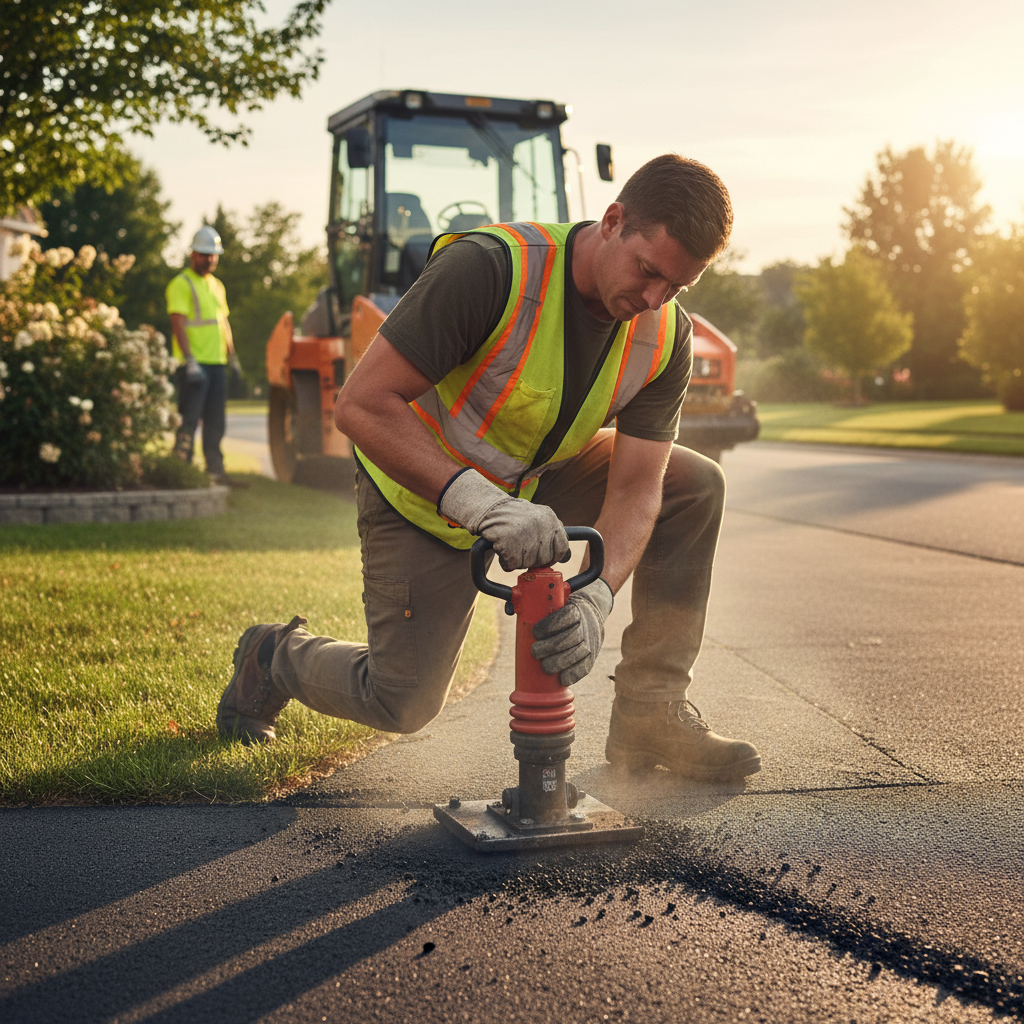
Driveway paving options and costs in Greenstone
Greenstone, Ontario driveway paving usually starts with one big decision: which surface best fits how your property gets used and how hard the winter is on pavement. With about 87.2% of dwellings being single-detached homes (Statistics Canada, 2021 Census), most driveways are built for regular family traffic, snowbank stacking, and repeat ploughing rather than heavy commercial loads. It also matters that many local homes were built before 1981 (79.9%), because older driveways often sit on compromised gravel, have poor drainage, or need curb/edge repairs before you can pave successfully.
In Northwestern Ontario, the cost of paving isn’t just “material vs material.” Deep frost penetration and frequent freeze–thaw cycles force contractors to build a thicker, well-compacted granular base and to manage water carefully. That means more excavation, more hauling, and more attention to drainage grading than in milder areas. The shorter paving season also tightens scheduling—hot-mix asphalt needs suitable warm weather for compaction, and concrete must be properly protected to cure—so availability and mobilization can add to the price. In Greenstone, this trade is especially busy around Schreiber and the surrounding local service areas where older roads and driveways are common and where winter maintenance is intense.
Below are typical price ranges homeowners see for driveways in Greenstone, assuming normal access and a proper base for the chosen material. Use the table to compare upfront cost and long-term upkeep, then we can narrow it to your exact scope.
| Material |
Lifespan |
Maintenance |
Best For |
Price per sq ft |
| Asphalt (new installation, proper base) |
15–25 years |
Seal every 3–5 years (timing depends on weather and traffic) |
Lowest upfront cost with good overall performance when base/drainage are done right |
$7,00 – $14,00 |
| Asphalt (overlay on existing gravel base) |
8–15 years |
Seal every 3–5 years; monitor for edge breakdown |
When the existing base is solid and drainage is acceptable |
$6,50 – $12,50 |
| Interlocking concrete pavers |
25–40 years |
Re-level/replace individual stones as needed; joint sand top-ups |
Curb appeal and easy, localized repairs |
$18,00 – $35,00 |
| Poured concrete (broom finish) |
20–30 years |
Sealer recommended; patching hairline cracks early |
Clean, durable surface where you want fewer seams than pavers |
$14,00 – $28,00 |
| Exposed aggregate concrete |
20–30 years |
Sealer and crack monitoring; avoid aggressive de-icing on unsealed surfaces |
Slip resistance and premium look |
$16,00 – $32,00 |
| Gravel / crushed stone (budget option) |
3–10 years (varies with grading and base) |
Regrade and top up every 1–3 years |
Temporary solution or low-budget entries |
$3,00 – $8,00 |
Prices are estimates only and vary by project scope, site access and material selection.
What affects the price of paving in Greenstone
Two homeowners in Greenstone can receive quotes that differ by 30–50% for the “same size” driveway, largely because paving contractors price the realities of frost protection, water control, and site conditions—not just the asphalt or concrete you can see. In the Northwest economic region, freeze–thaw cycling is aggressive enough that the base system becomes a major portion of the work. Deeper frost protection and the need to keep water from migrating into subgrade often drives more excavation and thicker compacted granular base. Depending on soil and grade, base designs can require substantially more depth than you’d see in milder climates. Where coastal areas may manage with less granular thickness, Greenstone installs typically need a robust system (often around 4 feet of frost protection depth as a minimum design consideration, with thicker base builds needed in colder/poorer-drainage conditions).
Asphalt also has a season-driven cost component. Hot-mix asphalt requires air temperatures above roughly 10°C for best compaction, and Greenstone’s shorter paving window compresses demand into late spring through early fall. That can mean higher mobilization, scheduling premiums, and tighter crew availability than southern Ontario.
Concrete costs can move with durability choices. For example, air entrainment increases material cost but improves freeze–thaw durability; skipping it—or using a weaker mix—can lead to earlier cracking and patching. Drainage changes matter too: if your driveway currently ponds, contractors may have to reshape the subgrade and install additional grading to move water away from the pavement structure. A similar driveway might come in closer to the asphalt price band of $7,00 – $14,00 if the base is already stable, or move upward toward the concrete band of $14,00 – $28,00 if tear-out, regrading, and drainage upgrades are needed.
| Price Factor |
Why It Matters |
Cost Impact |
| Driveway area in sq ft |
Most labour and material scale directly with square footage |
Larger drives can increase total cost quickly even if unit pricing looks similar |
| Base depth required |
Freeze protection demands thicker, well-compacted granular layers |
Extra excavation/aggregate can add major cost, especially on clay or poor drainage |
| Grading and drainage work |
Correct slope and water shedding reduces freeze–thaw damage |
Drainage corrections often add labour, equipment time, and haul disposal |
| Tear-out of existing surface |
Old asphalt or concrete may require breaking, removal and hauling |
Tear-out is one of the biggest swing factors—can move a job by thousands |
| Edge restraints and curbing |
Pavers and many asphalt edges need containment to resist spreading |
Restraining systems add materials and skilled labour |
| Sealing requirement |
Asphalt sealing protects from moisture and oxidation |
Typically adds cost if you want the best lifespan; otherwise the driveway ages faster |
| Site access |
Narrow lanes and tight turns slow equipment and increase labour time |
Crane/mini-excavator work or additional trips can raise the installed price |
| Asphalt mix specifications |
Freeze–thaw-rated mixes and proper binder improve durability |
Upgraded mix designs cost more but can reduce early raveling and cracking |
Permits & regulations in Ontario
For most Greenstone homeowners, paving on your own property typically does not require a building permit. New driveway paving and replacing an existing driveway surface on private land are usually handled as a property improvement rather than a structural build requiring a permit. That said, rules can change when work touches the public boundary or affects drainage that serves the roadway.
Work that usually requires municipal approval includes anything in the municipal right-of-way such as a new or modified curb cut, changes to boulevard grading, or alterations that affect storm drainage. If your driveway ties into municipal drainage infrastructure or you need to adjust a ditch/boulevard outlet, expect review requirements. Some municipalities also have lot-grading bylaws that restrict how close hard surfaces can be to property lines and how water must be managed to avoid directing runoff onto neighbours’ lots.
Step-by-step, here’s how to verify a contractor before you sign:
- Ask for their Ontario licence (and confirm the trade category on the provincial registry if applicable for the work they’re doing).
- Request a certificate of liability insurance naming you as an additional insured (or provide proof they carry adequate coverage).
- Confirm WSIB clearance where applicable (and ask for the clearance letter or evidence of coverage).
- Use a one-call locate—before any excavation, confirm they register with Ontario One Call (it’s their responsibility to locate utilities before digging).
- Have the contractor put the scope in writing: grading plan, thickness/base notes, and disposal details.
Asphalt vs pavers vs concrete for Greenstone driveways
In Greenstone’s freeze–thaw climate, all three main driveway materials can perform well, but they shine in different ways. Asphalt is usually the lowest upfront option and gives a smooth driving surface, but it relies on a proper granular base and needs sealing every 3–5 years to slow moisture penetration. Interlocking concrete pavers cost more upfront, yet they’re highly repairable: if a section shifts or subgrade settles, a contractor can lift and re-install only the affected pattern. That matters in northern Ontario where localized frost heave or drainage issues can show up after a few winters. Poured concrete sits in the middle for cost and aesthetics, but it must be air-entrained and finished correctly to tolerate repeated freeze–thaw; otherwise, cracking and spalling can develop sooner—especially with frequent salt use and plough contact.
Base preparation is the deciding factor across all options. Northwest frost protection considerations typically mean a thicker, well-compacted granular base system (often around 4 feet of frost protection design as a minimum, with deeper or upgraded builds in extreme or poorly draining conditions). If drainage is wrong—ponding at the low end, water trapped near the edge—any surface will struggle, but pavers and asphalt can sometimes better mask minor movement while concrete may crack more visibly.
Where the price difference is justified: if asphalt is quoted at roughly $7,00 – $14,00 per sq ft and pavers at $18,00 – $35,00, pavers can be worth the premium when you want long-term curb appeal and the ability to replace sections without redoing the entire driveway. If you’re mainly focused on value and you have good site access and drainage plans, asphalt is often the best fit—provided the base and sealing are done properly.
| Material |
Frost Resistance |
Curb Appeal |
Repair Method |
Lifespan |
Price Band |
| Asphalt (sealed regularly) |
Good with proper base and drainage; improves when sealed on schedule |
Moderate |
Mill and patch localized failures |
15–25 years |
$7,00 – $14,00 |
| Interlocking concrete pavers |
Very good due to segment flexibility and re-lay capability |
High |
Lift, recompact base, and replace only affected stones |
25–40 years |
$18,00 – $35,00 |
| Poured concrete (air-entrained) |
Good when air-entrained and properly cured; cracking risk if base/drainage are off |
Moderate to high |
Patch and seal cracks; replace slabs only if severe |
20–30 years |
$14,00 – $28,00 |
| Exposed aggregate concrete |
Good with correct mix and curing; surface can help traction |
High |
Patch at joints/cracks; localized slab repair |
20–30 years |
$16,00 – $32,00 |
| Permeable pavers (drainage grid) |
Excellent when designed correctly to infiltrate/manage water |
High (modern look) |
Replace grid units and re-level sections if needed |
25–40 years (system-dependent) |
$20,00 – $40,00 |
| Chip seal / tar-and-chip |
Variable; works best with strong base and proper maintenance |
Low to moderate |
Spot patch and re-surface periodically |
5–12 years |
$6,00 – $10,00 |
How to choose a paving contractor in Greenstone
Choosing the right paving contractor in Greenstone comes down to proof and clarity. Start with Ontario licensing: ask which licence number they hold and what work their coverage applies to. Next, request a certificate of liability insurance—make sure the policy is active and that coverage limits are appropriate for driveway-sized projects with heavy equipment. For labour coverage, confirm WSIB (or evidence of clearance) where the contractor is required to carry it; you should be able to see the clearance letter or WSIB account proof.
Then get 2–3 itemised written quotes. You want a breakdown that separates excavation/grading, base construction, asphalt/concrete supply, thickness notes, compaction steps, and disposal—rather than a single lump-sum number. Ask whether the quote includes permit pulling (when right-of-way work is involved), and whether disposal of removed asphalt/concrete is included. For projects with older drives—common with pre-1981 housing stock—tear-out can be significant, so itemization is essential.
Warranty should be spelled out: workmanship warranty length, and whether the product/manufacturer warranty is provided in writing. Also confirm if warranties are transferable if you sell the home. Payment matters too: never pay more than 10–15% upfront, and hold back funds until you’re satisfied with completion and cleanup. Finally, ask for a written timeline with a start date estimate and completion range—weather and the short paving window in Northwestern Ontario affect scheduling, but good contractors will communicate it clearly.
- Provide a written scope with thicknesses and base materials.
- List what’s included/excluded (tear-out, hauling, disposal, topsoil restoration).
- Confirm drainage plan: slope, ditch tie-ins, and water direction away from the driveway.
- Verify liability insurance certificate is current.
- Verify WSIB coverage/clearance letter where required.
- Confirm Ontario licence number and trade scope.
- Ask who compacts the base and what compaction method is used.
- Request sample asphalt mix details (freeze–thaw rated binder/mix notes).
- Get concrete mix details including air-entrainment and curing approach.
- Ask about edge restraints (especially for pavers) and jointing/sanding materials.
- Discuss sealing timing for asphalt and include it if you want the best lifespan.
- Set a payment schedule tied to milestones; keep a holdback for final acceptance.
Red flags I’d watch for in Greenstone: (1) quotes that skip base depth or drainage explanation, (2) no written timeline or weather-protection plan, (3) pressure to pay a large deposit upfront, (4) unclear warranty terms (no workmanship length in writing), and (5) no proof of insurance/WSIB clearance or refusal to provide itemized labour/material breakdown.
Frequently asked questions — paving in Greenstone
How do I get the most accurate paving quote in Greenstone?
To get a reliable quote in Greenstone (and avoid surprises), ask contractors to measure your driveway area on site and to document existing conditions. The biggest driver is usually not the finish—it’s the base and drainage. Make sure the contractor assesses whether there’s ponding, soft spots, or edge breakdown from freeze–thaw. Bring up your driveway’s current construction if you know it (many local homes are older, and pre-1981 builds often have older base systems). Then request an itemised quote showing excavation/grading, base thickness, compaction steps, and material thickness. For asphalt, ask whether the mix is freeze–thaw appropriate, and whether sealing is included or will be recommended after curing.
How much does it cost to pave a driveway in Greenstone?
Pricing in Greenstone depends on thickness/base work and whether tear-out is needed, but typical installed ranges fall into the local Northwest bands. Many homeowners land in the asphalt range of $7,00 – $14,00 per sq ft when the base and drainage are addressed. If your contractor finds that you need significant regrading, deeper granular build-up, and disposal, your total can move toward the higher end. Concrete commonly comes in around $14,00 – $28,00 per sq ft depending on finishes and slab preparation. Interlocking pavers are usually the premium option at $18,00 – $35,00 per sq ft, but they’re repair-friendly if a localized frost issue ever appears.
Asphalt vs interlocking pavers vs concrete — which is best in Greenstone?
In Greenstone, “best” depends on how you want to manage winter impacts. If you want the most cost-effective durable surface and you’ll commit to maintenance, asphalt is often the best value—especially if sealing is planned every 3–5 years. With freeze–thaw cycles and deep frost, the base and drainage design matter as much as the surface. If you prioritize curb appeal and easy repair (lifting and re-laying only affected sections), interlocking pavers are strong for northern weather because they can tolerate minor localized movement better and are simple to fix section-by-section. If you want a clean, solid look and fewer joints, poured concrete can work well when air-entrained, properly cured, and built on a stable granular base. Concrete may crack if drainage or base compaction is off.
How long does a paved driveway last in Greenstone?
With correct base preparation, drainage, and proper product selection, lifespans are typically: asphalt about 15–25 years with regular sealing, concrete about 20–30 years, and interlocking pavers often 25–40 years. The harsh part in Ontario’s Northwest isn’t just cold—it’s the repeated freeze–thaw cycling that stresses pavements and can push water into weak subgrade. That’s why older homes and older driveway bases can shorten life if the granular structure isn’t rebuilt. If sealing is skipped or done too late, asphalt tends to age faster under moisture and oxidation. In short: lifespans aren’t “guaranteed by the finish,” they’re driven by base thickness, compaction, and how well water is managed.
When is the best time of year to pave in Greenstone?
The best time is late spring through summer—when temperatures support compaction and, for concrete, safe curing. In Greenstone’s Northwestern Ontario conditions, paving crews generally avoid the coldest spring start and any early fall dips because asphalt compaction and concrete set/strength gain can be compromised below ideal temperatures. Asphalt also needs adequate warm air temperature (commonly above about 10°C for best compaction results), which is why the season is tighter in the north. That short window affects scheduling, so booking earlier helps. If you want concrete, ask the contractor what curing and protection methods they use for cooler nights. Good contractors will provide an expected start/completion window in writing based on weather forecasts.
How deep should the base be for Greenstone's frost?
Base depth isn’t a one-size number because it depends on soil type, drainage, and the driveway’s grade and thickness design. That said, in Northwestern Ontario, frost protection design considerations often start around 4 feet as a minimum design baseline for frost protection, with some northern/poor-drainage scenarios requiring deeper or upgraded base systems. Practically, that means contractors build a thicker, well-compacted granular foundation rather than paving over weak or saturated subgrade. If you have clay or water that tends to pond, expect the contractor to specify additional granular thickness and more aggressive drainage grading. The safest approach is to have a contractor review your site and provide the base thickness notes in the quote, not just the driveway surface price.