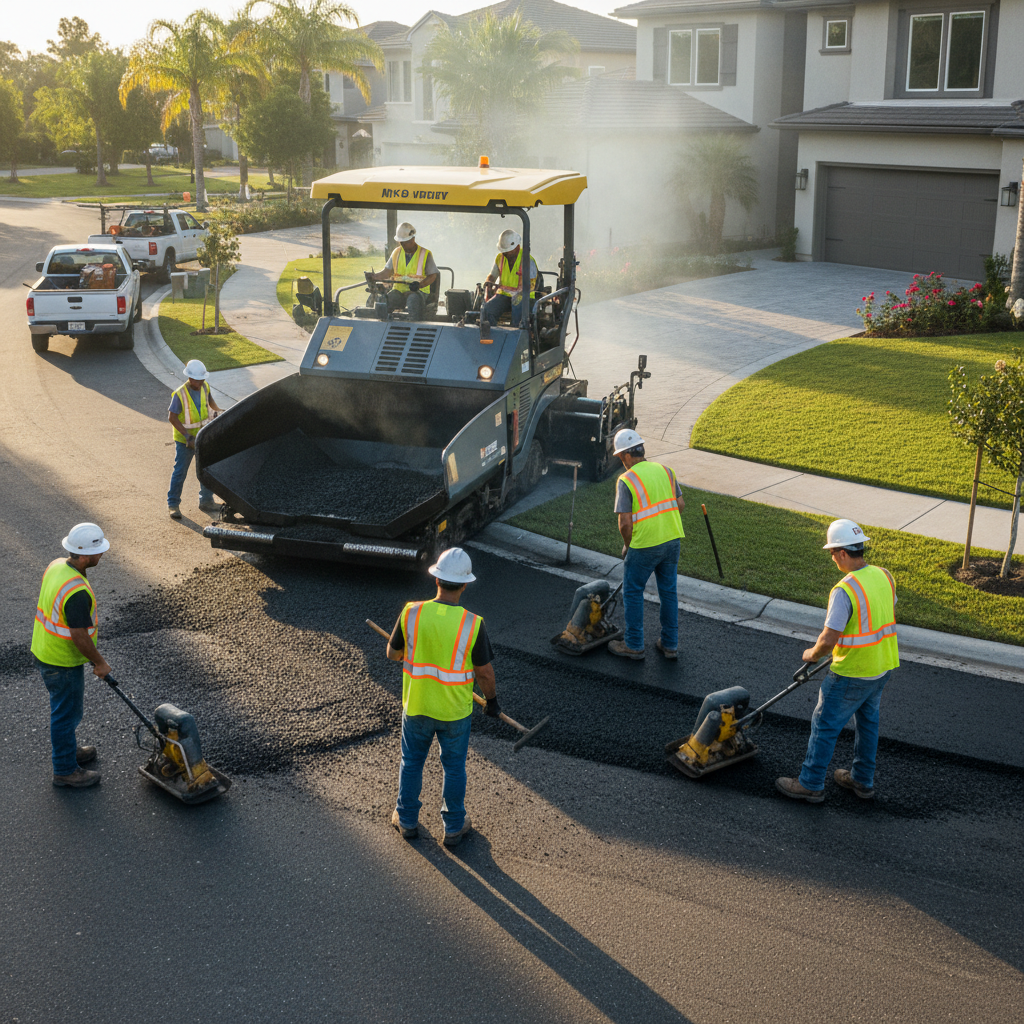
Driveway paving options and costs in Centennial Scarborough
Centennial Scarborough, Ontario is a busy, family-oriented area where driveways are typically tied to single-attached property types—Centennial Scarborough’s population is 13,362 (Statistics Canada, 2021 Census)—so demand for driveway paving is steady rather than seasonal-only. In practical terms, most homeowners are dealing with either a full replacement or a rebuild of an older asphalt or gravel driveway, and the pricing discussions you’ll hear from contractors are usually about one thing: the engineering of the base to survive Toronto’s freeze–thaw cycle.
In the Toronto economic region, frost depth and repeated freeze–thaw cycles are the primary cost drivers. Local studies commonly put ground freezing to roughly 3–4 feet in the Toronto area, which means contractors need a deeper, properly compacted granular base and dependable drainage so water can’t sit under the pavement. That extra excavation, hauling, and compaction is a major reason a driveway quote can feel higher here than in milder markets. It also compresses the paving season into late spring through early fall, so prime dates can be in high demand—especially around neighbourhoods with lots of older lots and resurfacing needs, such as the Ellesmere Road / Scarborough Golf Club area.
Below is a realistic comparison of common driveway materials and what homeowners typically pay in Centennial Scarborough, assuming competent installation with appropriate base prep for this climate. Use this as a starting point, then we’ll narrow it down with your site conditions and measurements in your quote.
| Material |
Lifespan |
Maintenance |
Best For |
Price per sq ft |
Price Range |
| Asphalt (new installation, proper base) |
15–25 years |
Seal every 3–5 years; patch as needed |
Most cost-conscious installs with good longevity |
$6–$12 |
$3,500–$8,000 |
| Asphalt (overlay on existing gravel base) |
8–15 years (depends on base quality) |
Seal regularly; more frequent patching if base is weak |
When you want a mid-budget improvement fast |
$7–$13 |
$3,700–$7,200 |
| Interlocking concrete pavers |
25–40 years |
Periodic joint stone top-up; spot repairs |
Curb appeal and repairability after freeze–thaw |
$14–$26 |
$9,000–$20,000 |
| Poured concrete (broom finish) |
20–30 years |
Minimal routine maintenance; address surface scaling early |
Clean, durable surface with straightforward care |
$10–$20 |
$6,000–$15,000 |
| Exposed aggregate concrete |
25–35 years |
Sealer as recommended; keep drainage clear |
High visual texture and slip resistance |
$12–$24 |
$7,000–$18,000 |
| Gravel / crushed stone (budget option) |
5–10 years |
Re-grade and re-top annually; edge maintenance |
Short-term solution or overflow parking |
$3–$7 |
$2,000–$5,500 |
Prices are estimates only and vary by project scope, site access and material selection.
What affects the price of paving in Centennial Scarborough
In Toronto and across Ontario, quotes for the “same” driveway can swing by 30–50% because a driveway is never just the visible surface—most of the cost lives underground and in how the work is sequenced. Two contractors may quote asphalt at the same square-foot price, but one may include proper subgrade evaluation, a frost-protected granular base build, and drainage correction, while the other may assume existing conditions are sound. In a city where the paving season is effectively late spring through early fall, rushed scheduling for prime dates can also push labour costs up when crews and equipment are booked tight.
Frost depth and freeze–thaw cycles are the decisive cost factors in the Toronto economic region. When ground freezing reaches roughly 3–4 feet, contractors typically need deeper, well-compacted granular thickness to prevent heaving and cracking. In Ontario, this often means base work tallies beyond what homeowners expect, compared with milder regions. Asphalt mix design also matters: freeze–thaw-rated performance is built into the mix and can affect material pricing, even before you lay a single tonne.
Concrete costs can move differently. If your Centennial Scarborough driveway ties into an existing walkway or garage threshold, jointing and drainage details can add time; poorly drained water at edges can lead to surface scaling or premature cracking, while a well-planned approach reduces callbacks. For dollars, many homeowners end up deciding between asphalt in the $3,500–$8,000 band and paver work in the $9,000–$20,000 band. The “upgrade” is often justified when curb appeal matters or when you want the ability to lift-and-replace a section instead of redoing the whole driveway.
| Price Factor |
Why It Matters |
Cost Impact |
| Driveway area in sq ft |
Material, base, and labour scale directly with surface area. |
Usually the largest single line item; can swing the total by thousands. |
| Base depth required |
Frost line conditions drive how thick the compacted granular layers must be. |
Deeper frost protection adds excavation, hauling, and compaction time. |
| Grading and drainage work |
Proper slope and drainage keep water from pooling under the driveway. |
Can add meaningful cost if soils are saturated or the grade is out. |
| Tear-out of existing surface |
Old asphalt or concrete removal requires breaking, loading, and disposal. |
Often increases cost significantly versus “no demo” overlays. |
| Edge restraints and curbing |
Interlock and concrete need proper restraint to prevent spread and joint opening. |
Extra materials and forming/setting labour; improves long-term performance. |
| Sealing requirement |
Asphalt relies on sealing to slow binder oxidation and surface raveling. |
Typical maintenance budget; delaying seal can shorten lifespan. |
| Site access |
Narrow drives and tight landscaping slow equipment movement. |
May require smaller equipment, extra labour, or careful staging. |
| Asphalt mix specifications |
Freeze–thaw-rated mixes improve durability under Toronto winters. |
Costs more per tonne, but reduces early cracking and patching. |
Permits & regulations in Ontario
For most homeowners in Ontario, paving a private driveway within your own property typically does not require a building permit. In Centennial Scarborough, you’re usually working on ground that stays inside your lot lines—such as removing old asphalt, rebuilding the base, and installing new asphalt, interlock, or concrete on your property.
Where approvals are often required is when the work affects the municipal right-of-way or municipal services. Examples include creating or altering a curb cut, changing the boulevard area, modifying storm drainage patterns that run through or near the road allowance, or any work that changes how water flows toward municipal drainage infrastructure. Those are the types of changes where the municipality may require an approval before excavation and final paving.
Before any digging, confirm utility locations using Ontario One Call to mark buried services—this is critical even for small saw cuts or base excavation. Then, verify lot-grading rules with the local municipality because some areas have restrictions on how close a hard surface and drainage outlets can be to property lines and how storm water should be managed.
To verify a contractor in Centennial Scarborough step-by-step: (1) check the contractor’s Ontario business licensing or registration where applicable (and any trade designation the company claims), (2) request a certificate of insurance and confirm it covers the paving scope (general liability for the project), (3) verify WSIB/WCB coverage for the workers involved—ask for the current clearance letter or coverage proof, and (4) keep copies of all documents with your contract so there’s no confusion later.
Asphalt vs pavers vs concrete for Centennial Scarborough driveways
For Centennial Scarborough driveways, the decision usually comes down to freeze–thaw tolerance, maintenance comfort, and the look you want year-round. Asphalt is the lowest upfront option, and when it’s installed over a properly compacted, well-drained base, it performs reliably through Ontario winters. The trade-off is maintenance: plan on sealing every 3–5 years, and be ready for patching at the edges where plowing and salt can be harsh. In the Toronto market, asphalt typically falls into the $3,500–$8,000 band for many standard residential drives.
Interlocking concrete pavers have the highest upfront cost, but they’re the most forgiving under freeze–thaw because sections can be lifted, re-levelled, and reset if there’s a localized settlement or a drainage issue. The bonus is curb appeal—sharp lines and colour options can make an older home look updated. In Centennial Scarborough, pavers often land in the $9,000–$20,000 band depending on design complexity and excavation depth.
Poured concrete sits in the middle for cost and can be durable with air-entrainment and correct control joints. However, if drainage is off or joints are poorly planned, freeze–thaw and de-icing salt can accelerate cracking and scaling. In a typical Toronto driveway, proper base and drainage are still decisive—surface material alone won’t “fix” water pooling.
Example: if your driveway estimate is $7,000 for asphalt versus $12,000 for pavers, that $5,000 difference is easiest to justify when you want the look and the ability to repair a small area instead of resurfacing the whole driveway—especially if you foresee future grading or tree/shrub adjustments near the approach. Either way, the base build is what protects your investment through winter.
| Material |
Frost Resistance |
Curb Appeal |
Repair Method |
Lifespan |
Price Band |
| Asphalt (sealed regularly) |
Good when base is engineered and drainage is correct |
Moderate (clean, smooth finish) |
Mill/patch and resurface as needed |
15–25 years |
$3,500–$8,000 |
| Interlocking concrete pavers |
Very good with correct base and jointing |
High (design flexibility and sharp edges) |
Lift/reset individual units or sections |
25–40 years |
$9,000–$20,000 |
| Poured concrete (air-entrained) |
Good with air-entrainment, proper joints and drainage |
Moderate to high (clean lines) |
Spot repair is limited; sometimes partial re-pour or overlay |
20–30 years |
$6,000–$15,000 |
| Exposed aggregate concrete |
Good to very good when properly cured and sealed |
High (texture and slip resistance) |
More challenging than pavers; partial repairs vary by system |
25–35 years |
$7,000–$18,000 |
| Permeable pavers (drainage grid) |
Good when installed with engineered sub-drainage |
Moderate to high (clean, modern look) |
Lift/reset units; maintain infiltrating base |
20–30 years (system dependent) |
$10,000–$22,000 |
| Chip seal / tar-and-chip |
Variable; better for low-speed surfaces |
Lower (more rustic texture) |
Spot re-chip and maintenance cycles |
5–10 years |
$2,500–$6,500 |
How to choose a paving contractor in Centennial Scarborough
Choosing the right paving contractor in Centennial Scarborough is mostly about confirming credentials, then comparing truly like-for-like scopes. Start by verifying Ontario requirements: ask for proof of liability insurance and confirm coverage limits are adequate for the project. For worker coverage, request WSIB/WCB proof—reputable paving crews can provide a current clearance letter or coverage documentation on request. Don’t accept “we’re covered” as an answer; paperwork matters when you’re signing a contract.
Next, request 2–3 itemised written quotes. Good quotes break down labour, haulage/equipment, excavation and base materials, and (where applicable) disposal and reinstatement of edges. Avoid lump-sum quotes that only show a total—ask for measurements and unit rates so you can compare apples to apples. Pay close attention to what’s excluded: removal and disposal of old asphalt/concrete, permit/municipal approval responsibility (if right-of-way work is involved), landscaping restoration, and whether the quote includes proper edging restraints and drainage improvements.
Warranty should be written in plain language: workmanship warranty length, what’s covered (cracking from poor compaction versus surface wear), and whether it’s transferable to future owners. Product/manufacturer warranties apply to the materials, while workmanship warranties apply to installation—both should be clarified. Payment scheduling matters: never pay more than 10–15% upfront; hold back until the job is completed and reviewed. Finally, insist on a start date and a completion estimate in writing so you’re not left waiting for backlog in the short late-spring to early-fall window.
- Confirm WSIB/WCB coverage with a current clearance letter or proof before work starts.
- Verify general liability insurance and ensure the certificate matches your address and job scope.
- Ask for a detailed breakdown: excavation, compaction, base type/thickness, material quantities.
- Check whether drainage correction (ditching/slope) is included or excluded.
- Confirm edge restraints/curbing are included—no restraint means more spread and movement.
- For asphalt: confirm sealing timeline and whether the “first seal” is recommended after proper curing.
- For concrete: confirm air-entrainment, curing method, and control joint plan.
- Request disposal included in the price if demo is part of the scope.
- Make sure access limits (gate width, driveway approach) are addressed in the quote.
- Clarify what happens if frost depth conditions require deeper base than assumed.
- Get the warranty in writing and define claim process and coverage boundaries.
- Confirm payment milestones and retainage (holdback until final completion/clean-up).
Red flags I see too often in Centennial Scarborough: vague scopes with no base specs, no insurance/WSIB proof, quotes that treat drainage as optional, pressure for large upfront payments, and no clear warranty terms in the contract.
Frequently asked questions — paving in Centennial Scarborough
How long does a paved driveway last in Centennial Scarborough?
A driveway longevity in Centennial Scarborough is driven by base preparation and drainage as much as by surface material. With a properly engineered asphalt driveway (proper granular base, compaction, and water control), many homeowners expect roughly 15–25 years. If sealing is neglected, surface aging can speed up, and you may start seeing raveling or accelerated patching sooner. Interlocking pavers, when installed over the correct base and restraints, commonly perform for 25–40 years with spot repairs possible after settlement. Poured concrete, with air-entrainment and properly spaced control joints, often reaches 20–30 years. Because Toronto’s freeze–thaw cycles can be tough on edging and pooled water, the most common early failures are usually drainage-related rather than “material failure.” (Statistics Canada, 2021 Census)
When is the best time of year to pave in Centennial Scarborough?
In Ontario, the practical paving window is late spring through early fall. Hot-mix asphalt is typically placed when air and pavement temperatures are warm enough to ensure proper compaction and a good bond—many crews plan work when conditions are consistently above about 10°C. Trying to push too early in spring or too late in fall increases the odds of poor compaction and premature surface distress, especially with Toronto’s freeze–thaw cycle ramping up again. For homeowners, the best approach is to schedule base work as early as weather allows (so drainage and compaction can cure/settle appropriately), then pave during the warm stretch. Because demand peaks in busy Toronto submarkets, booking ahead helps avoid rush pricing and schedule changes.
How deep should the base be for Centennial Scarborough's frost?
Toronto-area frost conditions generally require deeper granular thickness than homeowners expect. While every site differs, the region commonly sees ground freezing to about 3–4 feet, which drives the need for a properly compacted granular base and a drainage-first design. In practical terms for Ontario residential driveways, contractors typically build base layers thicker than what you’d see in mild climates—often involving substantial granular depth plus excellent subgrade preparation. If your driveway sits on clay or previously saturated soil, base depth and moisture conditions may increase. The safest way to confirm is a quote that specifies base thickness and compaction standards, along with drainage corrections if water is currently pooling. If you’re quoted an asphalt or paver install without base thickness details, that’s a gap you should address before signing.
How often should I seal my asphalt driveway?
For asphalt in Centennial Scarborough, sealing is usually recommended every 3–5 years, depending on sun exposure, traffic, and winter wear from plowing and salt. A fresh asphalt driveway typically needs time to cure before the first seal; then you seal on a schedule that prevents oxidation and helps maintain a tight surface. If you’re aiming for the long end of the asphalt lifespan (closer to 20+ years), sealing on time is one of the most cost-effective steps you can take. Homeowners often delay sealing and then pay for more frequent patching. In a typical driveway, sealing maintenance should be treated as part of the overall budget—alongside minor repairs after the first few winters.
Why does my driveway crack and heave in winter?
Cracking and heaving in winter are usually symptoms of water and frost interacting with the base. If water collects under the asphalt or at the edges—because of poor slope, missing drainage correction, or inadequate base separation—it can freeze and expand, pushing the surface upward (heave) and opening cracks. Toronto’s freeze–thaw cycles also stress joints and transitions, especially near garage thresholds, walkways, and where plow contact chips the surface. Another common cause is insufficient compaction or base depth: if the granular layers aren’t dense enough, they deform during freeze and thaw. The underlying fix is engineering—drainage and base correction—not just patching. If you’re seeing repeated failures in the same zone, it’s a strong signal the base or drainage needs to be addressed in your next contract.
Do I need a permit to pave my driveway in Ontario?
In Ontario, paving a private driveway within your own property usually does not require a building permit. However, if your project touches the municipal right-of-way—such as altering a curb cut, changing boulevard areas, or modifying storm drainage near the road allowance—municipal approval is commonly required. Centennial Scarborough homeowners should also pay attention to lot-grading rules if hard surface drainage or placement near property lines affects how water flows. Before excavation, use Ontario One Call for utility locates, even for small base work. When interviewing contractors, ask whether they handle permit/approval steps if your scope includes right-of-way changes, and confirm disposal, reinstatement, and drainage responsibilities are clearly stated in the quote.