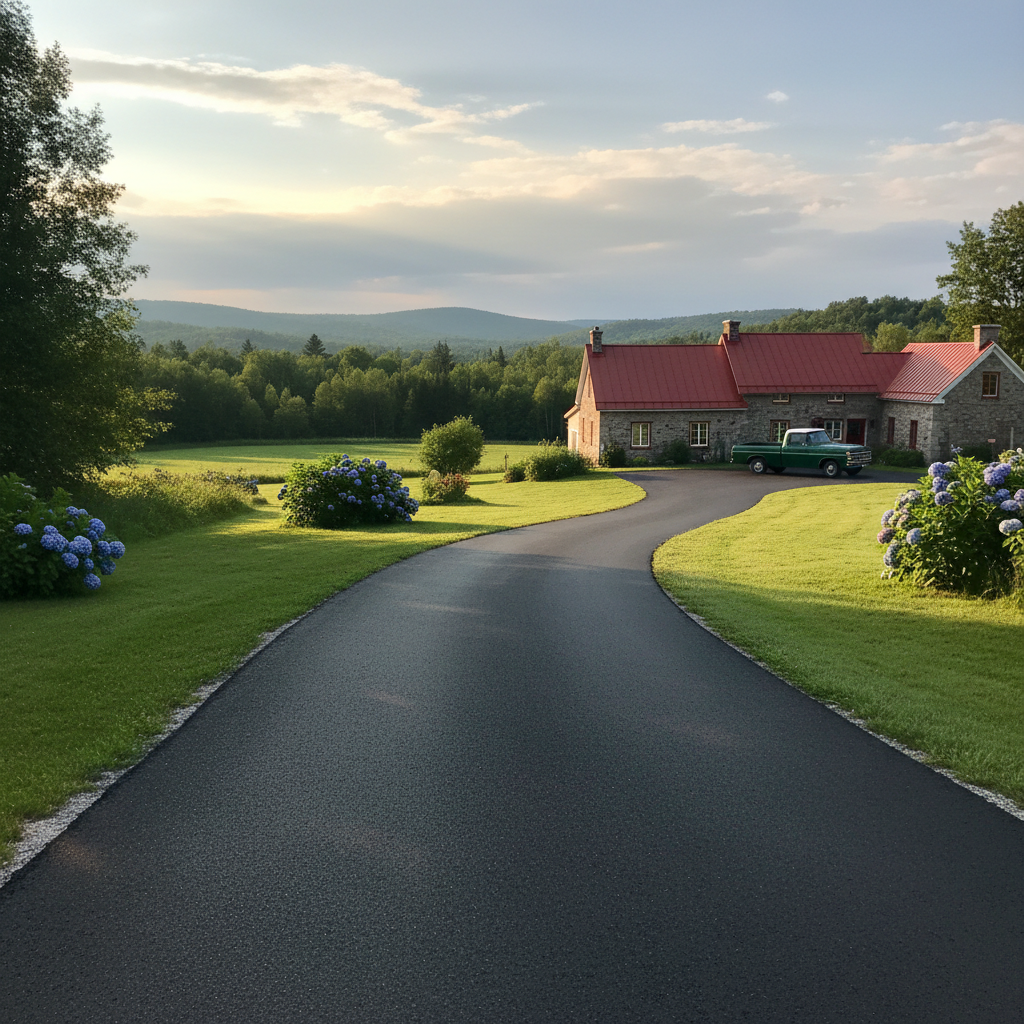
Driveway paving options and costs in Dryden
Dryden homeowners typically have driveway decisions shaped as much by frost and drainage as by price. With 7,388 residents (Statistics Canada, 2021 Census) and a housing mix where about 76.6% of dwellings are single-detached homes (Statistics Canada, 2021 Census), most driveways in town are private and tied to detached lots—meaning you’re usually planning for long winter service and fast spring thaw conditions. In fact, 73.1% of households own their homes, so upgrades and resurfacing are common, not “temporary fixes” (Statistics Canada, 2021 Census).
In Northwestern Ontario, deep frost penetration and freeze–thaw cycles are the drivers behind higher installed costs than you’d see farther south. Asphalt, pavers, and concrete all rely on a thick, well-compacted granular base and proper runoff control to limit frost heave and surface breakup. The shorter paving season in Dryden (late spring through early fall) also tightens scheduling and can increase mobilization costs for crews hauling aggregate and asphalt mix north.
Trade demand is especially steady around Victoria Avenue and the downtown core, where access is tighter and customers often want quick, clean installs that can handle winter maintenance. If your current surface is failing, you’ll often end up comparing either a full rebuild or an overlay—each with different base requirements.
Below is a practical cost comparison for common driveway materials in Dryden to help you budget before site measurements and base design are finalized.
| Material |
Lifespan |
Maintenance |
Best For |
Price per sq ft |
| Asphalt (new installation, proper base) |
15–25 years |
Seal every 3–5 years; crack repair as needed |
Good value with a strong base and drainage plan |
$7,00 – $14,00 |
| Asphalt (overlay on existing gravel base) |
8–15 years |
Seal every 3–5 years; patching for localized failures |
When you can improve/confirm base quality |
$6,50 – $12,50 |
| Interlocking concrete pavers |
25–35 years |
Re-sand joints; replace individual stones if needed |
Curb appeal and modular repairs |
$18,00 – $35,00 |
| Poured concrete (broom finish) |
20–30 years |
Minor crack sealing; manage de-icing use |
Clean, straightforward look |
$14,00 – $28,00 |
| Exposed aggregate concrete |
20–30 years |
Reseal as recommended; crack monitoring |
Slip resistance and premium appearance |
$16,00 – $32,00 |
| Gravel / crushed stone (budget option) |
3–10 years |
Top up and re-grade annually |
Lowest initial cost; temporary surfaces |
$3,00 – $6,00 |
Prices are estimates only and vary by project scope, site access and material selection.
What affects the price of paving in Dryden
The same driveway can come in 30–50% apart across Northwestern Ontario and even within Ontario because the cost is mostly driven by what your contractor must do under the surface—not just the finish you can see. In Dryden, pricing differences are commonly explained by base design (depth and compaction), drainage correction, haul distance for aggregates and asphalt mix, and the short construction window when crews can work. If a contractor has to mobilize early for limited-season scheduling, you may see a premium versus a later-season slot.
Frost protection is decisive. With deep frost penetration and aggressive freeze–thaw cycles, the granular base often needs to be thick and well-drained to prevent heaving and cracking. In practical Ontario cold-zone work, base thickness is typically on the order of 4–6 feet for driveway/frost protection design in many local cases, and deeper or upgraded designs may be needed where soils are clayey or poorly drained. That base work is where the budget can jump from, say, an asphalt range around $7,00 – $14,00 toward the top end when extra excavation and imported granular material are required.
Concrete pricing shifts too: if your driveway requires significant tear-out and regrading, you may find concrete moving toward the upper $14,00 – $28,00 band. Two common Dryden examples: (1) clay subgrade that holds water often forces additional depth and upgraded drainage layers; (2) tight corners and roadside slopes increase grading time and edge restraint costs. Asphalt mix design that’s rated for local freeze–thaw performance can also add cost but helps reduce early bleeding and raveling during winter plowing and thaw periods.
| Price Factor |
Why It Matters |
Cost Impact |
| Driveway area in sq ft |
All major materials and labour scale with square footage |
High (often the biggest single driver) |
| Base depth required |
Frost line determines granular thickness to limit heave/cracking |
Medium–High (excavation + imported base) |
| Grading and drainage work |
Slope corrections and drainage move meltwater away from structure |
Medium (can become High on wet/clay sites) |
| Tear-out of existing surface |
Breaking, hauling and disposal for old asphalt or concrete |
Medium–High depending on thickness |
| Edge restraints and curbing |
Prevents paver spread and protects driveway edges under frost movement |
Low–Medium (but critical for pavers) |
| Sealing requirement |
Asphalt seal coats after cure help protect from winter moisture intrusion |
Low–Medium over the first years |
| Site access |
Narrow driveways slow equipment movement and increase setup time |
Low–Medium (can rise in downtown lots) |
| Asphalt mix specifications |
Freeze–thaw-rated mix and polymer-modified binder cost more |
Medium (often offsets early failures) |
Permits & regulations in Ontario
For Dryden homeowners, the permit question is usually straightforward: paving a private driveway within your own property typically does not require a building permit. However, any work that touches the municipal right-of-way (the area between your property line and the road) commonly needs municipal approval. That includes things like new or altered curb cuts, modifications to boulevard grading, changes to storm drainage, or any adjustments that affect how water leaves the road area.
How to verify what’s required, step-by-step: first, ask your contractor to list exactly what they will do and where (property-side limits versus boulevard/right-of-way). Second, confirm with the municipality whether a permit/approval is needed for the specific curb/boulevard changes. Third, before any excavation, ensure utility locates are completed by calling Ontario One Call (utilities will mark buried services). This is non-negotiable for asphalt, concrete, and paver base installation.
To protect yourself, you should also verify the contractor’s credentials before signing. Start with their Ontario licence and business details, then request a certificate of liability insurance showing adequate coverage for paving work. For worker coverage, confirm whether they carry WSIB (or provide the appropriate clearance documents where applicable). Where to look: ask for the certificate of insurance directly, check the clearance/coverage documentation they provide, and verify licence/business standing through Ontario’s public resources. Don’t accept “we’re covered” without documents.
Asphalt vs pavers vs concrete for Dryden driveways
Choosing between asphalt, interlocking pavers, and concrete in Dryden is really a choice between upfront cost, long-term repair flexibility, and how each surface handles winter wear. Asphalt is typically the lowest upfront option, often landing in the $7,00 – $14,00 range when the base is built correctly. It also responds well to maintenance—if you seal it every 3–5 years, you limit moisture ingress that drives potholes and edge failures. In Dryden winters, that matters because meltwater refreezes around plow activity and tire traffic.
Interlocking concrete pavers usually cost more upfront (commonly $18,00 – $35,00) because of the materials and labour intensity. The trade-off is curb appeal and repairability: if a section heaves or a utility repair happens, a contractor can lift and reset stones without replacing the whole driveway. For many older Dryden properties—where 67.2% of homes were built before 1981 (Statistics Canada, 2021 Census)—pavers can be attractive when you anticipate future drainage corrections or localized fixes.
Poured concrete sits in the middle (often $14,00 – $28,00) but needs the right construction to survive freeze–thaw. Air-entrainment and proper curing are key; poor base prep can still lead to cracking. Salt and brine used aggressively on concrete can accelerate surface deterioration, so homeowners should be careful with de-icing habits.
Base preparation and drainage design are the deciding factors across all three. If your site has clay or poor drainage, the cost increases for every option—so the material choice should be made after confirming you’ll get a thick, compacted granular base and a workable runoff plan.
| Material |
Frost Resistance |
Curb Appeal |
Repair Method |
Lifespan |
Price Band |
| Asphalt (sealed regularly) |
Good with a thick, well-drained base |
Mid (clean, dark finish) |
Patch and re-seal; localized milling possible |
15–25 years |
$7,00 – $14,00 |
| Interlocking concrete pavers |
Very good when base is firm and edges restrained |
High (variety of styles and colours) |
Lift/reset individual units; targeted sections |
25–35 years |
$18,00 – $35,00 |
| Poured concrete (air-entrained) |
Good with proper air entrainment and base prep |
Mid–High (depending on finish) |
Crack sealing and localized patching; full replacement if widespread |
20–30 years |
$14,00 – $28,00 |
| Exposed aggregate concrete |
Good when cured properly and sealed as advised |
High (textured premium look) |
Surface management plus patching; panel-level repairs |
20–30 years |
$16,00 – $32,00 |
| Permeable pavers (drainage grid) |
Excellent where drainage design is correct |
High (clean grid/stone layouts) |
Replace sections; maintain infill/aggregate layers |
20–30 years+ |
$22,00 – $40,00 |
| Chip seal / tar-and-chip |
Moderate; depends heavily on surface prep |
Low–Mid (functional finish) |
Top-ups; reseal/chip rework |
7–12 years |
$6,00 – $10,00 |
How to choose a paving contractor in Dryden
Start by verifying licensing and coverage. In Ontario, ask your contractor for proof of Ontario business/licensing and request a certificate of liability insurance that covers paving work at your address. For worker protection, confirm WSIB coverage (or provide the relevant clearance/coverage documentation they carry). If you can’t get documents before work begins, that’s a major warning sign.
Next, get 2–3 itemised written quotes that break out labour and materials separately (including base thickness and drainage layers), rather than a single lump sum. Scope gaps are where surprises happen—especially in Dryden where base and drainage can be more substantial than people expect after spring thaw. Have them clearly list: what’s included in tear-out, disposal, compaction testing (if used), and whether permit/municipal approval work is included when you need right-of-way changes.
Warranty matters for workmanship and materials. Ask how long the workmanship warranty is, whether any product/manufacturer warranty applies, and if it’s transferable to future owners. Payment should be controlled: never pay more than about 10–15% upfront, and hold back the remainder until the job is complete and cleaned up.
Timeline should be written too—start date, cure/settlement expectations, and completion estimate—so you know what “finished” means before winter starts tightening the schedule.
- Request Ontario licence details and confirm they match the contractor on the invoice.
- Get a certificate of liability insurance before signing.
- Verify WSIB coverage with clearance/coverage documentation.
- Demand itemised pricing for base, drainage, and surfacing (not a blank lump sum).
- Confirm frost protection/base design thickness for your subgrade conditions.
- Ask who handles disposal for removed asphalt/concrete.
- Ensure drainage is addressed: slope, culverts/ties, and runoff direction.
- For pavers, confirm edge restraints are included (not “optional”).
- Ask about compaction method and whether they will compact in lifts.
- Clarify sealing plan for asphalt (timing after cure and product used).
- Confirm warranty length for workmanship and how claims are handled.
- Get a written schedule: start date, weather allowances, and completion.
Red flags I see too often in Dryden include: quoting asphalt without discussing base thickness or drainage; offering only verbal promises about permits or disposal; demanding large upfront payments; refusing to provide insurance/WSIB proof; and providing a quote that doesn’t specify what happens if the base is unsuitable after tear-out.
Frequently asked questions — paving in Dryden
What is a driveway apron and do I need one in Dryden?
A driveway apron is the transition section at the road edge where your driveway meets the municipality’s right-of-way/curb area—often where a curb cut or grade adjustment is needed so vehicles can climb in without damaging the edge. In Dryden, you may need approval if your work affects boulevard grading, drainage, or creates/changes a curb cut. If you’re only repaving within your property limits (existing driveway footprint and no right-of-way changes), it often doesn’t trigger the same approvals. Always ask your contractor to specify whether the scope includes work at the road/boulevard, then confirm with the municipality before excavation. This is also when utility locates matter most because curb-area work commonly crosses services.
How do I maintain my driveway through Dryden winters?
In Dryden and across Northwestern Ontario, winter maintenance should focus on preventing water entry and protecting edges. For asphalt, keep plow blades adjusted to avoid gouging the surface and edges—small edge damage lets moisture infiltrate and accelerates freeze–thaw failure. After thaw cycles, clean off sand/grit buildup that can trap moisture at joints and cracks. For concrete, use de-icing thoughtfully: avoid over-salting and prefer sand where possible, because salts can increase surface deterioration over time. For pavers, watch joint sand depth and don’t let water pool—if you see a low spot, address it early so the base stays stable. A properly sealed asphalt driveway plus routine crack patching typically holds up best to plowing patterns.
Is it worth sealing a new driveway right away in Dryden?
Yes, sealing is usually worth it, but timing matters. Asphalt needs to cure so the surface is stable and dry enough for the sealer to bond. In Dryden, contractors typically plan sealing after the asphalt has cooled and cured—often within the first season, and frequently after a short waiting period so the binder is ready. If you seal too early, you can trap moisture and reduce adhesion. Once sealed correctly, you’re protecting the driveway from water penetration that drives freeze–thaw cracking. Budget for routine maintenance: many asphalt projects target a lifespan of 15–25 years when sealed every 3–5 years. If you’re comparing costs, asphalt projects commonly fall around $7,00 – $14,00, but sealing is the step that helps keep you closer to the long end of performance.
What is a chip seal driveway and is it suited to Dryden?
Chip seal (tar-and-chip) is a surface treatment where asphalt binder is sprayed and covered with aggregate chips to create a textured, drivable finish. It can be suited to Dryden when the goal is a lower-cost surface and the base is prepared correctly—especially for driveways where budgets are tight and you can accept periodic rework. However, it’s generally not as durable or smooth as full asphalt paving, and it can require more frequent top-ups depending on traffic volume and winter plowing intensity. In the Dryden market, chip seal pricing is often lower than full paving (commonly below the main asphalt band, around $6,00 – $10,00), but that lower upfront cost can be offset if you end up needing earlier resurfacing. If your subgrade is wet or clayey, the prep and drainage plan are still critical.
How much does driveway crack repair cost in Dryden?
Crack repair cost in Dryden depends on crack width, length, and whether it’s surface-only sealing or involves patching and base stabilization. For many homeowners, sealing joints and filling cracks after cleaning the area is a relatively quick service compared to full resurfacing—often priced in the general “sealing & repair” band of about $1,00 – $4,00 per square foot of affected area, or as a line item based on the crack length and labour required. If the crack is accompanied by edge failure, pumping, or soft spots from freeze–thaw movement, the scope typically expands to include partial tear-out and base work, which increases the cost. The most economical route is usually early intervention: small repairs before the crack turns into potholes or structural breakup.
What base thickness do I need for pavers in Dryden?
For pavers in Dryden, base thickness depends on your soil condition and how much frost protection the overall design needs to handle deep freeze–thaw movement. In practice, most stable paver installs require a compacted granular base built in layers with proper compaction, then a bedding layer for the pavers themselves. When subgrade is clayey or drains poorly, the base design typically needs more depth and upgraded materials to resist heave and settlement. That’s why your quote should specify base thickness and drainage (not just the paver surface). A well-built paver base in Northwestern Ontario is one reason pavers can last 25–35 years. If you’re comparing bids, make sure the quoted base spec is comparable—otherwise pricing can look similar but performance won’t be.